
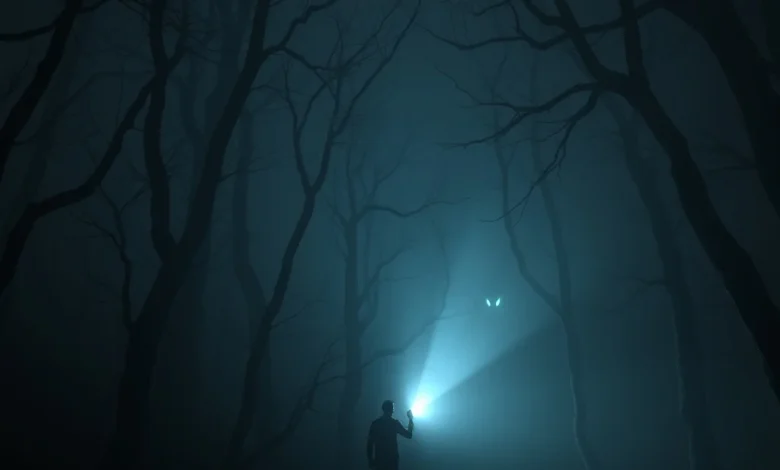
Welcome to the most terrifying exploration of narrative depth in modern gaming. Alan Wake 2 stands as a testament to interactive storytelling, blending psychological horror with a complex, non-linear plot that challenges players to question reality itself. This article delves deep into the narrative intricacies, character motivations, and the dark mysteries that define the sequel to Remedy Entertainment’s cult classic. Whether you are a returning fan or a newcomer stepping into the woods of the Pacific Northwest for the first time, understanding the story is crucial to appreciating the horror elements at play.
The narrative of Alan Wake 2 is not merely a continuation of a story; it is a deconstruction of the very concept of a story. The game utilizes a dual narrative structure that forces the player to inhabit two distinct perspectives. One character is a detective, and the other is a writer. Both are trapped in a nightmare that transcends the boundaries of the physical world. This unique approach creates a layered experience where the line between fiction and reality blurs constantly.
🕹️ The Dual Reality of Bright Falls
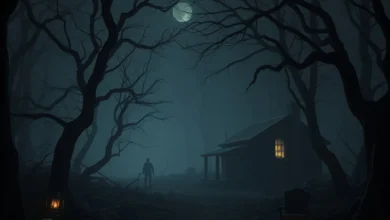
The setting of Alan Wake 2 is the fictional town of Bright Falls, Washington. This location is steeped in mystery and serves as the epicenter for the supernatural events that unfold. The town is surrounded by dense forests and dark lakes, creating an atmosphere of isolation and dread. Unlike the first game, which took place almost entirely within the confines of a lodge and the surrounding woods, the sequel expands the scope significantly. However, the core feeling of claustrophobia remains, even in open spaces.
The narrative begins with two separate timelines that eventually converge. One timeline follows Saga Anderson, an FBI Special Agent who arrives in Seattle to investigate a string of ritualistic murders. The other follows Alan Wake, the missing author who was presumed dead after the first game but is now trapped in a dark, alternate dimension known as the Dark Place. These two threads weave together through gameplay and cutscenes, revealing that the events are far more interconnected than they initially appear.
The connection between Saga and Alan is not just geographical; it is metaphysical. Saga is hunting a killer who is using the stories of Alan Wake to justify his actions. This meta-narrative element adds a layer of complexity that is rarely seen in horror games. The killer believes that by following Alan Wake’s scripts, he is bringing his own dark dreams into reality. This concept of the Writer having the power to manifest reality through his writing is central to the plot.
🔍 Character Analysis and Motivations
To understand the story, one must understand the people trapped within it. The characters in Alan Wake 2 are not just archetypes; they are complex individuals dealing with trauma, obsession, and the supernatural.
👩💼 Saga Anderson: The Rational Detective
Saga Anderson represents the voice of logic and reason in a world gone mad. As an FBI agent, she is trained to solve crimes using evidence and procedure. However, the supernatural elements of Alan Wake 2 defy all logical explanation. Her journey is one of acceptance. She starts as a skeptic who dismisses anything she cannot explain, but as the story progresses, she is forced to confront the impossible. Her partner, David Madsen, plays a crucial role in her development, acting as a bridge between the mundane and the mystical.
Saga’s motivation is initially simple: catch the killer. But as she uncovers the truth, her motivation shifts to survival and understanding. She realizes that she is part of a much larger story, one written by forces beyond her control. Her struggles with her own past, including the loss of her father, mirror the themes of grief and loss that permeate the entire game.
📝 Alan Wake: The Trapped Author
Alan Wake is the protagonist of the first game, but his role in the sequel is more passive and symbolic. Trapped in the Dark Place, he is unable to act directly in the real world. Instead, he manipulates the narrative through his writings. His struggle is existential. He knows he is a character in a story, yet he fights for his freedom. This meta-awareness is terrifying for him and fascinating for the player.
Alan’s goal is to escape the Dark Place and save his wife, Alice. The Dark Place is a reflection of his mind, a place where his guilt and fears manifest as monsters. Every time he writes a word, he exerts a small amount of control over the darkness, but the cost is high. He is slowly losing his humanity as he becomes more one with the Dark Place.
Alice Wake is not just a victim; she is a key player in the story. After the events of the first game, she was kidnapped into the Dark Place. In the sequel, she is found in a coma-like state, serving as a conduit for the darkness. Her connection to the Dark Presence makes her a target and a weapon. Her journey is one of possession and resistance.
🌑 The Dark Place Explained
The Dark Place is the most critical element of the Alan Wake 2 narrative. It is an alternate dimension that exists parallel to the real world. It is a land of perpetual night, shadowy figures, and twisted landscapes. The Dark Place is not just a setting; it is a character in itself. It represents the collective unconscious of the characters involved.

🎭 The Nature of the Dark Presence
The Dark Presence is an ancient, malevolent entity that seeks to consume light and reality. It feeds on fear and darkness. In the first game, it possessed Alan Wake, but in the sequel, it has grown stronger. It uses the Dark Place to lure victims into its realm. The entity is intelligent and manipulative, often using the dreams and fears of its victims against them.
The Dark Presence is the ultimate antagonist. It is not a physical monster that can be killed with bullets. It is a force of nature, a manifestation of evil that can only be contained or delayed. The game suggests that the only way to defeat it is through light, which is metaphorical as well as literal. Light represents truth, hope, and reality.
🌲 Environmental Storytelling
The Dark Place is designed to reflect the psychological state of the characters. When Saga enters the Dark Place, it appears as a distorted version of the real world. The geography is twisted, and the rules of physics do not apply. Objects from the real world appear in the Dark Place, but they are corrupted. A tree might be made of stone, or a road might lead nowhere.
This environmental storytelling reinforces the theme that the Dark Place is a reflection of the mind. The monsters that inhabit it are manifestations of guilt and trauma. For Alan, they are his fears of failure. For Saga, they are her fears of losing control. The player must navigate these twisted landscapes to uncover the truth.
🧩 The Twist and Narrative Structure
Alan Wake 2 is famous for its narrative twists. The story is structured in a way that misleads the player. What starts as a detective story transforms into a cosmic horror tale. The game plays with the concept of time and causality. Events in the real world affect the Dark Place, and vice versa.
One of the major twists involves the identity of the killer. Initially, the player believes the killer is a separate individual. However, the narrative reveals that the killer is influenced by Alan Wake’s own writing. The killer is essentially a puppet of the story Alan is writing. This blurs the line between the author and the villain.
Another twist involves the nature of the Dark Place itself. It is revealed that the Dark Place is not just a dimension but a construct of reality that is constantly being written and rewritten. This meta-narrative element suggests that the characters are aware they are in a game or a story, adding a layer of existential horror.
🎬 The Ending Explained
The ending of Alan Wake 2 is both satisfying and open to interpretation. Alan Wake manages to escape the Dark Place, but at a great cost. He sacrifices his own reality to save the world from the Dark Presence. The final scene shows Alan in a different reality, one where he is a writer again, but he is no longer the same person.
Saga Anderson survives, but she is forever changed by her experiences. She understands the truth now, but she cannot tell anyone. The burden of knowledge is hers to carry. The ending implies that the cycle of darkness and light will continue, and the battle between the two is eternal.
🎮 Gameplay Mechanics and Story Integration
The gameplay in Alan Wake 2 is designed to enhance the narrative experience. The mechanics are not just about shooting and running; they are about survival and investigation.
🔦 Light as a Weapon
Light is the primary mechanic in the game. The player must use a flashlight to reveal enemies and solve puzzles. This mechanic ties directly into the story. Light represents truth and reality, while darkness represents lies and the supernatural. The player must constantly balance their resources, as the flashlight battery runs out.
📖 Writing the Script
Alan Wake has the ability to write words into the world. This mechanic allows the player to create bridges, reveal hidden paths, or summon weapons. This reinforces the idea that Alan is the author of his own fate. The player must choose which words to write, affecting the outcome of the scene.
🏁 Final Verdict on the Narrative
The story of Alan Wake 2 is a masterpiece of horror writing. It challenges the player to think, to question, and to feel fear. The dual narrative structure is executed flawlessly, and the twists are earned. The characters are well-developed, and their struggles resonate on a psychological level.
For horror fans, this game is essential. It offers a depth of storytelling that is rare in the medium. The combination of visual effects, sound design, and narrative creates an immersive experience that stays with you long after the game is over.
❓ Frequently Asked Questions
Is Alan Wake 2 a direct sequel?
Yes, it continues the story of the first game, but it also stands on its own with a new protagonist.Do I need to play the first game?
It is recommended to play the first game to understand the full context, but the story is explained well enough to follow without it.What is the Dark Place?
The Dark Place is an alternate dimension that reflects the fears and traumas of the characters.How many endings are there?
The game has a single main ending, but there are variations based on player choices in specific scenes.Is the game difficult?
The combat is challenging, requiring strategy and resource management. The puzzle elements are also complex.What is the significance of light?
Light represents truth and safety. It is the only thing that can hurt the creatures of the Dark Place.Who is the main villain?
The Dark Presence is the ultimate villain, but the immediate threat is the killer working under its influence.Does the game have co-op?
No, Alan Wake 2 is a single-player experience designed for a solitary horror journey.Is the story confusing?
The story is complex and layered. Some players may find it confusing at first, but it becomes clear as the plot unfolds.What platforms is it on?
It is available on PC, PlayStation 5, and Xbox Series X/S.
📊 Performance and Technical Analysis
| Feature | Rating | Notes |
|---|---|---|
| Narrative Depth | 10/10 | Exceptional writing and plot twists |
| Visual Fidelity | 9/10 | Stunning lighting and environments |
| Sound Design | 10/10 | Immersive audio with eerie atmosphere |
| Gameplay Mechanics | 8/10 | Solid but can be repetitive |
| Technical Performance | 9/10 | Optimized for next-gen consoles |
The table above summarizes the key aspects of the Alan Wake 2 experience. The narrative depth is the standout feature, earning perfect marks for its complexity and emotional impact. Visual fidelity is equally impressive, with the lighting engine creating a truly terrifying atmosphere. Sound design plays a crucial role in building tension, making every step feel dangerous. While gameplay mechanics are solid, some may find the combat repetitive compared to the narrative innovation. Technical performance is excellent, ensuring a smooth experience on modern hardware.
💻 System Requirements Considerations
To fully appreciate the narrative and visuals of Alan Wake 2, players should meet the recommended system requirements. The game is demanding, especially on PC, to render the complex lighting effects and shadow details.
- ✅ Minimum CPU: Intel Core i5-4460 or AMD FX-6300
- ✅ Recommended CPU: Intel Core i7-8700 or AMD Ryzen 5 3600
- ✅ Minimum GPU: NVIDIA GTX 760 or AMD Radeon R9 270X
- ✅ Recommended GPU: NVIDIA GTX 1060 6GB or AMD Radeon RX 580
- ✅ RAM: 8GB Minimum, 16GB Recommended
Meeting these requirements ensures that the lighting effects and narrative pacing are experienced as intended. The Dark Place relies heavily on shadows, so a powerful GPU is essential for the horror atmosphere to work correctly.
🌟 Conclusion and Final Thoughts
Alan Wake 2 is more than a horror game; it is a psychological thriller that challenges the boundaries of the medium. The story is intricate, the characters are memorable, and the atmosphere is suffocating in the best way possible. It is a must-play for anyone who appreciates a well-crafted narrative in gaming.
The dual narrative structure allows for a unique exploration of themes like guilt, trauma, and the power of storytelling. The ending is poignant and leaves the player with much to ponder. Whether you are a horror veteran or a casual player, Alan Wake 2 offers an experience that is unforgettable.
Prepare yourself for the darkness. The story is waiting for you, and it is more terrifying than you can imagine.