
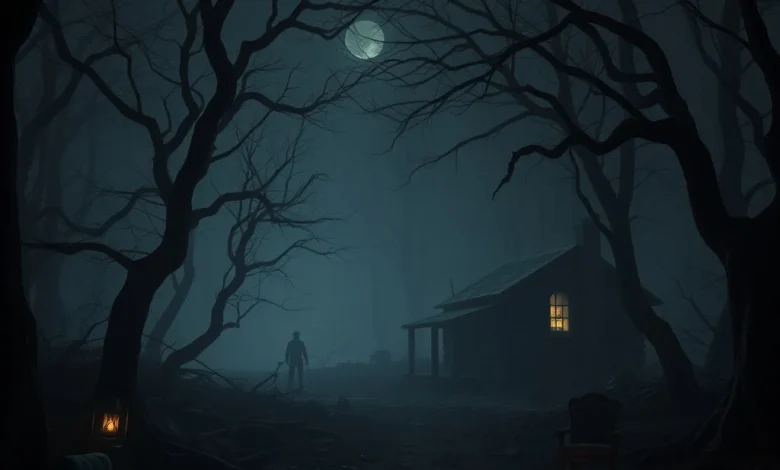
The art of horror gaming is not for the faint-hearted. It’s a world where every shadow hides a threat, every creak of a floorboard could be your doom, and the line between sanity and madness blurs with every eerie sound. Horror survival games challenge players to do more than just jump at jump scares—they demand strategy, quick thinking, and an unshakable will to endure. Whether you’re escaping a haunted asylum, surviving a zombie apocalypse, or uncovering the dark secrets of a cursed village, these games test your nerves like nothing else. If you crave a gaming experience that will leave you gripping your controller in terror, this list is your ultimate guide to the best horror survival games that will push you to your limits.
🎮 Introduction: The Thrill of Horror Survival Games
Horror survival games have carved a unique niche in the gaming world, blending psychological tension, atmospheric dread, and strategic gameplay into unforgettable experiences. Unlike action-packed shooters or story-driven RPGs, survival horror games focus on scarcity—limited resources, scarce ammunition, and the constant threat of annihilation. This genre thrives on making players feel vulnerable, forcing them to rely on wits, stealth, and sheer willpower to outlast the horrors that lurk around every corner.
These games often pit players against overwhelming odds, whether it’s hordes of undead, supernatural entities, or deranged killers. The challenge lies not only in surviving but also in unraveling the mysteries that drive the story forward. From the claustrophobic corridors of a haunted hospital to the sprawling, eerie landscapes of an abandoned town, horror survival games create worlds that feel alive with dread. The developers behind these titles understand that true horror isn’t just about what you see—it’s about what you *imagine* lurking in the darkness.
The genre has evolved significantly over the years, from early classics like Resident Evil and Silent Hill to modern masterpieces like Resident Evil Village and The Evil Within 2. Today, survival horror games are more immersive than ever, thanks to advanced graphics, dynamic sound design, and AI-driven enemy behavior. Whether you’re a seasoned horror veteran or a newcomer looking to test your nerves, the games on this list offer a variety of experiences that will keep you on the edge of your seat.
The following games represent the pinnacle of the horror survival genre, each offering a unique blend of terror, challenge, and storytelling. Whether you’re looking for a solo adventure or a cooperative experience, these titles will push your survival skills to the limit.
- 🎮 Genre: Horror Survival, Psychological Horror, Action Horror
- 📅 Release Dates: Varies by title (ranging from 1996 to 2026)
- 🏢 Developers and Publishers: Capcom, Konami, Bethesda, Square Enix, Frictional Games, and others
- 👻 Why They Gained Attention: Innovative gameplay mechanics, atmospheric storytelling, and immersive sound design
- 👥 Target Audience: Fans of horror, challenge seekers, and players who enjoy strategic gameplay
- 🌍 Market Impact: Defined and redefined the horror gaming genre, inspiring countless indie developers
🕵️♂️ Story Overview and Narrative Analysis: Why Horror Survival Games Stick with You
At the heart of every great horror survival game is a story that lingers long after the credits roll. These narratives often explore themes of isolation, madness, and the supernatural, drawing players into worlds where the line between reality and nightmare blurs. Unlike action games where the plot takes a backseat to gameplay, survival horror games prioritize storytelling, using environmental details, cryptic notes, and haunting sound design to build tension.
Take Silent Hill 2, for example. The game’s protagonist, James Sunderland, receives a letter from his deceased wife, leading him into the fog-shrouded town of Silent Hill. As players explore, they uncover fragments of James’s past, each revelation more disturbing than the last. The game’s story isn’t just about escaping monsters—it’s about confronting personal demons and the weight of grief. This psychological depth sets survival horror apart from other genres, making the experience feel deeply personal.
Another standout is Amnesia: The Dark Descent, where players take on the role of Daniel, a man suffering from amnesia while trapped in a nightmarish castle. The game’s narrative unfolds through journals and environmental storytelling, forcing players to piece together Daniel’s fractured memories. The absence of combat mechanics amplifies the horror, as players must rely solely on stealth and problem-solving to survive. This approach creates an intimate connection between the player and the protagonist, making every decision feel consequential.
The best horror survival games don’t just tell a story—they make *you* a part of it. Whether it’s uncovering the dark history of a cursed village in Outlast or piecing together the fate of a missing expedition in The Forest, these games immerse players in worlds that feel alive with dread. The stories are often ambiguous, leaving room for interpretation and replayability. This narrative richness is what keeps players coming back, eager to uncover new secrets or experience the story from a different perspective.
🔥 The Role of Atmosphere in Storytelling
Atmosphere is the backbone of horror survival games. A well-crafted world feels oppressive, claustrophobic, and suffused with an almost palpable sense of dread. Developers achieve this through a combination of visual design, soundscapes, and lighting. For instance, Resident Evil 7: Biohazard uses first-person perspective and a decaying plantation house to create an intimate, unsettling experience. The constant creaking of floorboards, distant whispers, and flickering lights all contribute to an atmosphere that feels inescapable.
In contrast, Dead Space leverages its sci-fi setting to create a different kind of horror. The eerie silence of a derelict spaceship, punctuated by sudden screams or the groan of metal, forces players to stay alert. The game’s use of sound is particularly noteworthy—enemies don’t just attack; they *stalk* you, using the environment to their advantage. This level of detail makes the world feel alive, heightening the player’s sense of vulnerability.
👻 Character Development and Psychological Horror
Psychological horror is a hallmark of the genre, and the best games use character development to amplify the terror. SOMA, for example, explores themes of identity and consciousness through its protagonist, Simon Jarrett. As players delve deeper into the underwater facility PATHOS-II, they encounter NPCs who challenge Simon’s (and the player’s) perception of reality. The game’s narrative forces players to question what it means to be human, making the horror feel deeply personal.
Similarly, Until Dawn employs a branching narrative where every choice affects the outcome. The game’s characters are flawed, relatable, and often comically flawed, which makes their fates all the more impactful. The horror isn’t just about survival—it’s about the relationships between characters and the consequences of their actions. This emotional investment makes the game’s scares feel more visceral.
🕹️ Gameplay Mechanics and Systems: The Core of Survival Horror
Horror survival games are defined by their mechanics—how players interact with the world, how they defend themselves, and how they adapt to the challenges thrown at them. Unlike traditional action games, survival horror thrives on scarcity and tension. Limited resources, unpredictable enemies, and a lack of reliable weapons force players to think strategically. The best games in the genre balance these elements perfectly, ensuring that every decision feels meaningful.
One of the most iconic mechanics in survival horror is the inventory system. Games like Resident Evil and Silent Hill limit the number of items players can carry, forcing them to prioritize what to keep and what to leave behind. This adds a layer of strategy to exploration, as players must decide whether to hoard ammunition, healing items, or keys. The tension of managing resources creates a unique gameplay loop that keeps players engaged.
Another defining feature is the combat system—or lack thereof. Many survival horror games, such as Amnesia: The Dark Descent and Outlast, strip away traditional combat mechanics entirely. Players can’t fight back effectively, which forces them to rely on stealth, evasion, and quick thinking. This approach heightens the sense of vulnerability, making every encounter with an enemy feel like a life-or-death struggle.
AI-driven enemies are also a critical component of survival horror. Unlike scripted antagonists in action games, enemies in survival horror games often exhibit unpredictable behavior. They might stalk the player, communicate with each other, or even adapt to the player’s tactics. This unpredictability keeps players on their toes, ensuring that no two playthroughs feel the same.
- ✅ Limited resources – Ammunition, health items, and keys are scarce.
- 🎯 Stealth mechanics – Avoiding enemies is often more effective than fighting.
- 🔄 Inventory management – Players must prioritize what to carry.
- 👹 Unpredictable AI – Enemies adapt to player behavior.
- 🧩 Puzzle-solving – Environmental puzzles often block progression.
- 🎭 No traditional combat – Many games lack reliable weapons or health systems.
⚔️ Combat System and Core Controls: Fighting Back (or Not)
The combat systems in survival horror games vary widely, from the over-the-top action of Dead Space to the desperate melee combat of Until Dawn. In Dead Space, players wield the Plasma Cutter, a weapon that allows for surgical dismemberment of enemies. The game’s strategic combat system rewards precision over brute force, making every encounter a tactical challenge. The use of a dismemberment mechanic also adds a visceral layer of horror, as players literally tear enemies apart.
In contrast, Until Dawn employs a quick-time event (QTE) combat system, where players must press buttons in time to fend off attackers. This mechanic is risky—failure results in a jump scare or a character’s death—but it adds a layer of tension that traditional combat systems lack. The game’s combat isn’t about dealing damage; it’s about survival in the most desperate moments.
For games that eschew combat entirely, like Amnesia: The Dark Descent, the focus shifts to evasion and hiding. Players must rely on their wits, using environmental objects to barricade doors or lure enemies away. This approach creates a uniquely intimate experience, where every noise can mean the difference between life and death. The lack of a traditional combat system forces players to engage with the world in a way that feels more organic and immersive.
🌍 Map Design and Exploration: The World as a Character
The world design in survival horror games is often as important as the story itself. Games like Resident Evil and Silent Hill use labyrinthine environments to disorient players, creating a sense of claustrophobia and helplessness. These maps are meticulously designed to guide players toward their goals while also offering plenty of opportunities for exploration and discovery.
In Resident Evil 2 Remake, the Raccoon City Police Department is a sprawling, multi-floor nightmare. Players must navigate tight corridors, puzzle rooms, and hidden areas to progress, all while avoiding the relentless pursuit of the game’s iconic enemies. The map’s design ensures that players feel both trapped and challenged, with every corner hiding a new threat or a valuable resource.
Open-world survival horror games, like The Forest, take a different approach. The game’s dense forest and labyrinthine caves create a sense of isolation and dread, with players forced to explore vast, unforgiving terrain in search of supplies and shelter. The world feels alive, with dynamic weather, wildlife, and even cannibalistic mutants lurking in the shadows. This open-ended design encourages players to take risks, whether it’s building a shelter or venturing into uncharted territory.
- Map Design: Labyrinthine environments disorient players and create tension.
- Exploration Freedom: Hidden areas and secrets reward curious players.
- Mission Structure: Objectives are often nonlinear, allowing for multiple approaches.
- Replay Value: Multiple endings and hidden content encourage repeat playthroughs.
🎨 Graphics and Audio Quality: Immersing the Player in Horror
Horror survival games rely heavily on their presentation to create a truly immersive experience. Graphics and audio work together to build tension, disorient the player, and evoke a primal sense of fear. The best games in the genre use cutting-edge technology to push the boundaries of what’s possible, from photorealistic environments to dynamic soundscapes that react to the player’s actions.
Graphics in survival horror games serve two primary purposes: to create atmosphere and to elicit emotional responses. A decaying mansion in Silent Hill or a ruined spacecraft in Dead Space isn’t just a setting—it’s a character that shapes the player’s experience. The attention to detail in these environments, from flickering lights to bloodstains on the walls, adds layers of realism that make the horror feel tangible.
Lighting plays a crucial role in setting the mood. Horror games often use dim, flickering lighting to create uncertainty and dread. Shadows become active threats, and players are left guessing what lurks in the darkness. Games like Resident Evil 7: Biohazard take this further, using first-person perspective to put players directly in the protagonist’s shoes, making every creak of the floorboard feel personal.
🖥️ Visual Quality and Engine: Bringing Horror to Life
The engine behind a survival horror game can make or break its atmosphere. Modern titles like Resident Evil Village and The Evil Within 2 use advanced engines like RE Engine and id Tech 7 to deliver stunning visuals that push the boundaries of realism. These engines allow for dynamic lighting, realistic physics, and detailed character models that make the horror feel more immersive than ever.
In Resident Evil Village, the RE Engine is used to great effect, creating a gothic, fairy-tale-inspired world that feels both beautiful and terrifying. The game’s use of ray tracing and global illumination enhances the eerie atmosphere, with light bouncing realistically off surfaces and casting long, menacing shadows. The attention to detail is staggering, from the way blood splatters on walls to the realistic animations of the game’s grotesque enemies.
Indie horror games, on the other hand, often rely on stylized graphics to create their unique brand of terror. Layers of Fear, for example, uses a painterly art style to evoke the works of H.P. Lovecraft, creating a surreal, dreamlike world that feels both familiar and alien. The game’s visuals are complemented by its haunting soundtrack, which blends orchestral scores with unsettling ambient noise.
- 🎨 Game Engine: RE Engine, id Tech 7, Unity, Unreal Engine
- 🖼️ Texture Quality: High-fidelity textures enhance realism and immersion.
- 💡 Lighting: Dynamic lighting creates tension and uncertainty.
- 🌑 Shadows: Long, menacing shadows disorient and terrify players.
- 🌪️ Environmental Effects: Rain, fog, and blood splatters add layers of realism.
🔊 Sound Effects and Music: The Unsung Heroes of Horror
If graphics are the eyes of a horror game, then sound is its heartbeat. A well-crafted soundscape can make the difference between a forgettable experience and one that haunts players for years. Survival horror games use sound to build tension, mislead players, and deliver jump scares that feel genuinely terrifying. The best games in the genre understand that sound isn’t just background noise—it’s a tool for storytelling and immersion.
Music in survival horror games often employs dissonant chords, slow-building crescendos, and sudden silences to create a sense of unease. The Silent Hill series is a masterclass in this technique, with its eerie, looping themes that evolve alongside the player’s emotional state. The music isn’t just a soundtrack—it’s a character that shapes the player’s experience.
Sound effects are equally important. The creak of a floorboard, the distant whisper of a child, or the groan of a rusty door can all contribute to a sense of dread. Games like Amnesia: The Dark Descent use binaural audio to create a 3D soundscape, making it feel as though the horrors are lurking just outside the player’s field of vision. Even the absence of sound can be terrifying, as seen in Outlast, where the quiet corridors of an asylum make every distant scream feel like a personal threat.
Voice acting also plays a crucial role in immersion. A well-delivered line of dialogue can make a character feel real, while poor voice acting can break the spell of horror. Games like SOMA and Until Dawn excel in this area, with voice actors who bring depth and nuance to their roles. The result is a cast of characters that players genuinely care about—or fear.
🚀 Key Features Section: What Makes These Games Stand Out
Survival horror games share a core set of features that define the genre, but the best titles elevate these mechanics into something truly special. Whether it’s innovative combat systems, groundbreaking storytelling, or unparalleled atmosphere, these games offer experiences that linger in the player’s mind long after the credits roll. Below are some of the standout features that set these horror survival games apart from the rest.
One of the most defining features of survival horror is the lack of resources. Players must scavenge for ammunition, health items, and keys, often making do with whatever they can find. This scarcity creates a constant sense of tension, as players must decide whether to use a precious health pack or save it for later. Games like Resident Evil 2 Remake and Resident Evil 4 master this mechanic, forcing players to manage their inventory carefully while navigating treacherous environments.
Another hallmark of the genre is the emphasis on stealth. Unlike action games where players can mow down enemies with ease, survival horror games often strip away traditional combat mechanics. Players must rely on hiding, evasion, and quick thinking to survive. This approach creates a uniquely intimate experience, where every noise can mean the difference between life and death. Games like Amnesia: The Dark Descent and Outlast take this to an extreme, leaving players with no reliable way to fight back against their pursuers.
The best survival horror games also excel in storytelling, using environmental details and cryptic notes to build a rich, immersive world. Games like Silent Hill 2 and SOMA weave complex narratives that explore themes of madness, identity, and existential dread. These stories aren’t just window dressing—they’re integral to the gameplay experience, rewarding players who take the time to explore and piece together the lore.
The genre also thrives on innovation, with developers constantly pushing the boundaries of what’s possible. Dead Space, for example, introduced a dismemberment combat system that rewards precision and strategy over brute force. Resident Evil 7: Biohazard brought first-person perspective to the series, creating an intimate, claustrophobic experience that felt fresh and terrifying. Even indie titles like Signalis and Darkwood have redefined the genre with their unique art styles and gameplay mechanics.
- 🔦 Limited resources – Scarcity of ammunition, health items, and keys forces strategic decision-making.
- 🕵️♂️ Stealth mechanics – Avoiding enemies is often more effective than fighting.
- 📜 Environmental storytelling – Lore is hidden in notes, audio logs, and environmental details.
- 🎭 Psychological horror – Themes of madness, identity, and existential dread.
- 💀 Innovative combat systems – Unique mechanics like dismemberment or QTE-based combat.
- 🌌 Dynamic worlds – Environments that feel alive and react to the player’s actions.
📊 Pros and Cons: The Good, the Bad, and the Terrifying
✅ Advantages of Horror Survival Games
Horror survival games offer a unique blend of challenge, atmosphere, and storytelling that few other genres can match. For players who crave tension, unpredictability, and deep immersion, these games provide an unparalleled experience. One of the biggest advantages of survival horror is its ability to create a sense of vulnerability. Unlike action games where players are often overpowered, survival horror games force players to confront their fears and limitations. This vulnerability creates a uniquely intimate experience, where every decision feels consequential.
Another advantage is the genre’s emphasis on storytelling. Survival horror games often explore complex themes like madness, identity, and existential dread, using environmental details and cryptic notes to build rich, immersive worlds. Games like Silent Hill 2 and SOMA are as much about narrative depth as they are about gameplay, making them stand out from more action-oriented titles.
The genre also encourages replayability. Many survival horror games feature multiple endings, hidden secrets, and nonlinear gameplay, rewarding players who take the time to explore and experiment. This replay value ensures that even after the initial playthrough, the game remains fresh and engaging. The best titles also offer adjustable difficulty settings, allowing players to tailor the experience to their skill level.
Finally, survival horror games are often at the forefront of technological innovation. Developers constantly push the boundaries of what’s possible, using advanced graphics, dynamic sound design, and AI-driven enemy behavior to create experiences that feel more immersive than ever. Games like Resident Evil Village and Dead Space Remake showcase the genre’s potential, delivering visuals and audio that rival Hollywood blockbusters.
- ✅ Immersive atmosphere – Atmospheric worlds that feel alive with dread.
- ✅ Deep storytelling – Rich narratives that explore complex themes.
- ✅ Replayability – Multiple endings, secrets, and nonlinear gameplay.
- ✅ Technological innovation – Cutting-edge graphics and sound design.
- ✅ Unique gameplay mechanics – Stealth, resource management, and psychological horror.
❌ Disadvantages of Horror Survival Games
While survival horror games offer many strengths, they’re not without their flaws. One of the biggest challenges players face is the genre’s reliance on jump scares and cheap thrills. Some games prioritize shock value over genuine tension, using loud noises and sudden appearances to elicit reactions rather than building real dread. This can make the experience feel gimmicky or repetitive, especially for players who have experienced the genre for a long time.
Another common issue is the genre’s difficulty curve. Many survival horror games are punishingly hard, with limited resources, unforgiving AI, and no room for error. While this can be appealing for challenge-seekers, it can also frustrate players who just want to enjoy the story or atmosphere. Games like Amnesia: The Dark Descent and Outlast are notorious for their difficulty spikes, which can detract from the overall experience if not handled carefully.
Technical issues also plague some survival horror games. Glitches, bugs, and performance problems can break immersion and disrupt gameplay. For example, Resident Evil 7: Biohazard was criticized for its clunky controls and awkward melee combat, which detracted from the otherwise immersive experience. Similarly, Dead Space Remake faced issues with its new control scheme, which some players found unintuitive.
Finally, survival horror games can be polarizing due to their reliance on psychological horror. While some players thrive on the genre’s unsettling themes, others may find them too disturbing or uncomfortable. Games that delve into trauma, grief, or existential dread may not resonate with all audiences, making the genre less accessible to some players.
- ❌ Over-reliance on jump scares – Some games prioritize shock value over genuine tension.
- ❌ Punishing difficulty – Limited resources and unforgiving AI can frustrate players.
- ❌ Technical issues – Glitches, bugs, and performance problems disrupt immersion.
- ❌ Psychological intensity – Themes of trauma and existential dread may not appeal to all players.
- ❌ Accessibility concerns – Some games may be too disturbing or uncomfortable for certain audiences.
💻 Performance and Technical Analysis: Running Horror Survival Games
🖥️ PC System Requirements: What You Need to Play
Horror survival games vary widely in their technical demands, from lightweight indie titles to graphically intensive AAA games. Whether you’re playing on a high-end gaming PC or a budget machine, there’s a survival horror game that will work for you. Below is a breakdown of the system requirements for some of the genre’s most popular titles, along with performance insights to help you decide which games are right for your setup.
| Game | Minimum Requirements | Recommended Requirements | Notes |
|---|---|---|---|
| Resident Evil 7: Biohazard | Intel Core i5-4590 / AMD FX-8350, 8GB RAM, GeForce GTX 660 2GB / Radeon HD 7870 | Intel Core i7-3770 / AMD FX-9590, 8GB RAM, GeForce GTX 1060 6GB / Radeon RX 580 | Runs well on most mid-range PCs, but ray tracing and high settings require a stronger GPU. |
| Dead Space Remake | Intel Core i5-9600K / AMD Ryzen 5 3600, 16GB RAM, GeForce GTX 1070 / Radeon RX 5700 | Intel Core i7-10700K / AMD Ryzen 7 5800X, 16GB RAM, GeForce RTX 3080 / Radeon RX 6800 XT | Demands a powerful CPU and GPU for 4K and ray tracing. Lower settings run well on mid-range hardware. |
| Resident Evil Village | Intel Core i5-7500 / AMD Ryzen 3 1200, 8GB RAM, GeForce GTX 1050 Ti 4GB / Radeon R9 380 | Intel Core i7-8700 / AMD Ryzen 5 3600, 16GB RAM, GeForce RTX 2060 / Radeon RX 5700 XT | Optimized for 60 FPS at 1080p on mid-range hardware. Ray tracing requires an RTX 30 series GPU. |
| Amnesia: The Dark Descent | Intel Core 2 Duo E4300 / AMD Athlon 64 X2 3600+, 2GB RAM, GeForce 7600 GT / Radeon X1600 Pro | Intel Core i3-6100 / AMD Ryzen 3 1200, 4GB RAM, GeForce GTX 960 / Radeon HD 7870 | Runs well even on budget PCs. Modern remasters like Amnesia Collection have higher requirements. |
| Outlast | Intel Core 2 Duo E8400 / AMD Athlon 64 X2 6000+, 4GB RAM, GeForce GTX 260 / Radeon HD 4850 | Intel Core i5-4590 / AMD FX-8350, 8GB RAM, GeForce GTX 960 / Radeon R9 380 | Lightweight and runs well on most systems. Outlast 2 has slightly higher requirements. |
For players with high-end PCs, games like Resident Evil Village and Dead Space Remake offer stunning visuals and immersive experiences. These titles take full advantage of ray tracing, 4K resolution, and advanced physics, delivering a level of detail that rivals blockbuster films. However, even mid-range PCs can handle most survival horror games at 1080p with medium settings, making the genre accessible to a wide audience.
Players with older or budget hardware should look for indie titles or remasters of classic games. Titles like Amnesia: The Dark Descent and Outlast are lightweight and run well on most systems, while remasters like Resident Evil 2 Remake and Resident Evil 3 Remake offer improved visuals without requiring a high-end PC.
📱 Android Performance: Horror on the Go
For players who prefer gaming on mobile devices, the survival horror genre has evolved to accommodate their needs. While mobile horror games may not offer the same level of visual fidelity as their PC counterparts, they still deliver tense, immersive experiences tailored for smaller screens. Games like Dead by Daylight Mobile and Friday the 13th: The Game bring the thrill of survival horror to smartphones and tablets, albeit with some compromises.
One of the biggest challenges for mobile horror games is performance. Many titles are designed to run smoothly on mid-range devices, but they often sacrifice graphical quality for stability. Games like Dying Light Mobile and Dead Trigger 2 use simplified graphics and touch controls to ensure smooth gameplay, while still delivering a satisfying horror experience. However, players with high-end devices may find that even these games struggle to maintain 60 FPS on high settings.
Another consideration is battery life. Horror games are often taxing on hardware, leading to increased heat and battery drain. Players should expect to recharge their devices more frequently when playing intensive titles like Resident Evil Village Mobile or The Evil Within Mobile. Battery-saving modes and lower graphics settings can help mitigate this issue, but they may also detract from the overall experience.
Storage space is another factor to consider. Modern horror games can be surprisingly large, with some titles exceeding 50GB on PC. Mobile versions of these games are often compressed to fit on smaller devices, which can result in lower-quality assets and reduced detail. Players should check the game’s storage requirements before downloading to ensure they have enough space.
- ✅ Accessibility – Playable on most Android devices with touch controls.
- ✅ Portability – Enjoy horror gaming anywhere, anytime.
- ❌ Compromised graphics – Simplified visuals compared to PC versions.
- ❌ Performance issues – Some games struggle to maintain stable FPS on low-end devices.
- ❌ Battery drain – Intensive games can quickly deplete battery life.
- ❌ Storage requirements – Large file sizes may be prohibitive for some users.
🏁 Final Verdict and Conclusion: Are You Brave Enough?
Horror survival games are a unique breed, offering experiences that are as challenging as they are terrifying. They demand more than just reflexes—they require strategy, adaptability, and a willingness to confront the unknown. Whether you’re navigating the claustrophobic corridors of a haunted asylum, surviving a zombie apocalypse, or uncovering the dark secrets of a cursed town, these games test your nerves in ways that few other genres can. But for those brave enough to take the challenge, the rewards are unparalleled: unforgettable stories, heart-pounding tension, and a sense of accomplishment that comes from overcoming insurmountable odds.
If you’re new to the genre, start with accessible titles like Resident Evil 2 Remake or Until Dawn. These games offer a balance of challenge and storytelling, making them perfect for newcomers. For seasoned horror veterans, games like Silent Hill 2 and SOMA provide deep narratives and psychological horror that will keep you up at night. And for those who crave innovation, Dead Space Remake and Resident Evil Village push the boundaries of what’s possible in survival horror.
No matter which games you choose, one thing is certain: survival horror will push you to your limits. It will make you question your sanity, force you to think on your feet, and leave you with memories that linger long after the credits roll. But if you’re willing to take the plunge, the thrill of overcoming these challenges is unlike anything else in gaming. So, are you brave enough to test your nerves?
❓ Frequently Asked Questions
-
Are horror survival games suitable for beginners?
Horror survival games can be challenging for beginners due to their reliance on stealth, resource management, and psychological tension. However, many titles offer adjustable difficulty settings and tutorials to ease new players into the experience. Games like Resident Evil 2 Remake and Until Dawn are great starting points for those new to the genre.
-
Do I need a high-end PC to play horror survival games?
Not necessarily. While some AAA titles like Dead Space Remake and Resident Evil Village require powerful hardware for 4K and ray tracing, many survival horror games run well on mid-range PCs. Indie titles like Amnesia: The Dark Descent and Outlast are lightweight and accessible to most players.
-
Can I play survival horror games on Android?
Yes! Many survival horror games have mobile versions or are designed specifically for Android devices. Titles like Dead by Daylight Mobile and Friday the 13th: The Game offer thrilling experiences tailored for touch controls. However, expect some compromises in graphics and performance compared to PC versions.
-
Are horror survival games only about jump scares?
No. While jump scares are a common tool in the genre, the best survival horror games focus on building tension through atmosphere, storytelling, and strategic gameplay. Games like Silent Hill 2 and SOMA use psychological horror and environmental storytelling to create a deeply immersive experience.
-
Do I need a controller to play survival horror games?
It depends on the game. Many horror survival games are designed for mouse and keyboard, especially on PC. However, some titles like Resident Evil Village and Dead Space Remake support controllers, which can enhance the immersion. Mobile games obviously use touch controls.
-
Are there multiplayer horror survival games?
Yes! Games like Dead by Daylight and Friday the 13th: The Game are designed for multiplayer, where one player takes on the role of the killer while others try to survive. These games offer a social and competitive twist on the survival horror genre.
-
Can horror survival games be too scary for some players?
Absolutely. Survival horror games often explore disturbing themes like trauma, grief, and existential dread. If you’re sensitive to psychological horror or jump scares, these games may be too intense. However, most titles allow players to adjust the difficulty or even turn off certain features like jump scares.
-
Do horror survival games have replay value?
Yes! Many survival horror games feature multiple endings, hidden secrets, and nonlinear gameplay, encouraging players to replay them for different outcomes. Games like Until Dawn and SOMA are particularly known for their replayability.
-
Are indie horror survival games worth playing?
Definitely. Indie titles like Signalis, Darkwood, and Layers of Fear offer unique art styles, innovative gameplay mechanics, and deep storytelling. These games often push the boundaries of the genre, delivering experiences that AAA titles can’t match.
-
Which horror survival game is the best for a first-time player?
For beginners, Resident Evil 2 Remake and Until Dawn are excellent choices. Resident Evil 2 Remake offers a balance of action and survival, while Until Dawn focuses on narrative and quick-time events. Both games are accessible to newcomers and provide a satisfying introduction to the genre.