
Few games in recent memory have generated as much anticipation and speculation as Starfield, Bethesda Game Studios’ first original universe RPG in over two decades. Since its initial announcement in 2022, the gaming community has been buzzing with rumors, leaked details, and developer insights, painting a picture of an ambitious, sprawling space epic that could redefine RPGs on a galactic scale. While official details remain carefully curated, enough information has surfaced to build a comprehensive overview of what players can expect when Starfield finally launches.
This article compiles everything we know so far about Starfield, from its development journey and core gameplay mechanics to release expectations and what sets it apart from both Bethesda’s own catalog and other space RPGs. Whether you’re a seasoned RPG enthusiast or a casual observer curious about the next big space adventure, this deep dive will help you understand why Starfield has become one of the most anticipated titles of the decade.
🚀 What Is Starfield? The Game at a Glance
Starfield is a science fiction role-playing game developed by Bethesda Game Studios, the creators behind legendary franchises like The Elder Scrolls and Fallout. It marks Bethesda’s first original universe in 25 years, following the release of Dishonored in 2012. Officially unveiled during Xbox’s Bethesda showcase in June 2022, the game has since been positioned as a major milestone for Bethesda, leveraging the Creation Engine 2—a heavily modified version of the engine used in The Elder Scrolls V: Skyrim and Fallout 4—to deliver stunning visuals and deep gameplay systems.
The game is set to launch exclusively on Xbox Series X|S and PC via the Microsoft Store and Steam, with rumors suggesting a potential Xbox Game Pass release day launch. Bethesda has not confirmed a mobile version, though a future port cannot be ruled out given the success of cloud gaming initiatives. As of mid-2026, Starfield remains one of the most talked-about unannounced titles in gaming, with fans eagerly awaiting gameplay footage, beta access, and final system requirements.
- ✅ Genre: Open-world science fiction RPG
- 🎮 Platforms: Xbox Series X|S, PC (Steam)
- 📅 Release Date: Expected in late 2026
- 🏗️ Developer: Bethesda Game Studios
- 📦 Publisher: Bethesda Softworks / Xbox Game Studios
- 🎯 Target Audience: RPG fans, space sim enthusiasts, Bethesda loyalists
🌌 The Story Behind Starfield: A New Universe From Bethesda
🔭 Origins and Development Journey
The origins of Starfield trace back to the late 2010s, when Bethesda began exploring new intellectual property beyond its established fantasy and post-apocalyptic worlds. According to Bethesda’s Todd Howard, the game was conceptualized as a way to expand the studio’s creative horizons while staying true to the immersive, exploration-driven design philosophy that defines Bethesda RPGs. Unlike Dishonored, which was developed by Arkane Studios, Starfield is a full Bethesda production, developed in-house by over 200 developers.
Development reportedly began around 2020, with a small core team laying the groundwork for a spacefaring RPG that could rival the depth of The Elder Scrolls and Fallout. Bethesda chose to create an original universe to avoid fan expectations tied to existing franchises and to give the team full creative freedom. The decision to set the game in space—rather than another fantasy realm—was influenced by a desire to explore new themes, technologies, and storytelling possibilities.
In an interview with Game Informer, Howard described Starfield as “Fallout in space,” drawing a clear connection to Bethesda’s signature open-world design, crafting systems, and player freedom. Yet, the game is not a direct adaptation of Fallout lore. Instead, it introduces a fresh narrative and visual identity, blending classic sci-fi tropes with Bethesda’s signature immersive sim approach.
🌠 The Setting: A Vast, Believable Star System
Starfield is set in the year 2330, roughly 300 years after humanity’s first interstellar colony ship left Earth. Players take on the role of a customizable protagonist—a spacefarer, scientist, or mercenary—navigating a galaxy filled with human systems, alien civilizations, and remnants of ancient, long-lost technology. The game’s universe is not a single planet or star system but a sprawling network of star systems, each with its own planets, moons, and space stations.
Bethesda has emphasized realism in world-building, though within the bounds of gameplay accessibility. Planets are procedurally generated with unique biomes, resources, and environments, though they are not as diverse as those in No Man’s Sky. Instead, Bethesda focuses on curated experiences—each system feels handcrafted, offering a mix of exploration, discovery, and narrative moments. The game’s art direction draws inspiration from classic sci-fi films like Alien, 2001: A Space Odyssey, and Mass Effect, blending gritty realism with Bethesda’s signature “lived-in” aesthetic.
The narrative centers on humanity’s expansion into the cosmos, the discovery of alien artifacts, and the rise of a powerful, enigmatic faction known as the Collective. Unlike many space RPGs, Starfield avoids excessive lore-heavy exposition in favor of letting players uncover the story through exploration, dialogue, and environmental storytelling. Bethesda has hinted that the main story is just one thread in a much larger tapestry—side quests, faction conflicts, and player choices will significantly impact the galaxy’s fate.
🕹️ Gameplay Mechanics and Systems in Starfield
Starfield is positioned as a “space RPG with RPG mechanics and physics,” blending Bethesda’s signature open-world freedom with new sci-fi systems tailored for interstellar travel. The game promises deep character customization, reactive AI, and a physics-driven universe where gravity, planetary environments, and zero-gravity zones play a crucial role. Below, we break down the core gameplay elements that define Starfield.
⚔️ Core Systems and Controls
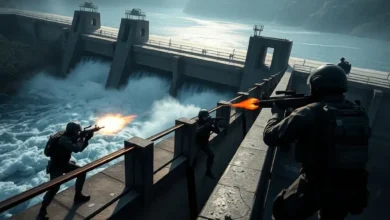
The combat system in Starfield is designed to feel tactical yet accessible, balancing real-time action with RPG depth. Players can engage in dogfights in space, explore planetary surfaces on foot or in vehicles, and engage in ship-to-ship boarding actions. Bethesda has confirmed the inclusion of a “space combat” mode, where players pilot their ship directly in first-person, aiming and firing manually—rather than relying solely on auto-aim or AI assistance.


On the ground, movement is fluid and physics-based. Gravity varies by planet, affecting player movement and jump height. Bethesda has stated that players will feel the difference between low-gravity environments (like Mars-like worlds) and high-gravity planets. Zero-gravity zones in ships and space stations require players to use magnetic boots or handholds to navigate, adding immersion without excessive frustration.
Skill progression is a cornerstone of Starfield. Players earn experience points not just through combat, but also through exploration, crafting, research, and dialogue choices. Skills are divided into categories like Piloting, Pistol Combat, Medicine, Scavenging, and Research, allowing for deep specialization. Bethesda has confirmed that skill trees are not rigidly locked—players can respec their character at any time using in-game “training” facilities, a feature borrowed from The Elder Scrolls.
AI behavior is another key focus. Enemies and NPCs react dynamically to player actions—factions will remember your deeds, and alliances can shift based on your choices. Bethesda has promised that even minor decisions, like helping a refugee or stealing supplies, will have ripple effects across the galaxy.
Physics and movement are tightly integrated. Weapons have realistic ballistics, and environmental hazards—like radiation zones, extreme temperatures, or corrosive atmospheres—pose real threats. Bethesda has emphasized that death is permanent in Starfield, though players can create new characters and continue their journey, a nod to classic immersive sim design.
- ✅ Real-time space combat with manual aiming and physics
- 🎯 Dynamic AI that reacts to player choices
- 🌍 Gravity-based movement with variable jump heights
- 🔄 Respec system for flexible skill progression
- 💀 Permadeath with character reset option
- 🔫 Tactical weapon customization with mods and attachments
🌍 Star Systems and Exploration
The galaxy of Starfield is divided into star systems, each with its own planets, moons, and space stations. While not entirely open-world like No Man’s Sky, the game features seamless transitions between planets and ships, with no loading screens between locations. Bethesda has confirmed that the galaxy map is massive, with hundreds of star systems to explore, though not all are fully handcrafted—some may use procedural generation for variety.
Each star system contains a mix of human colonies, alien outposts, derelict ships, and mysterious artifacts. Some planets are barren and lifeless, while others host thriving ecosystems, underground cities, or ancient ruins. Exploration is rewarded not just with loot and resources, but with lore, quests, and opportunities to establish your own faction presence.
Bethesda has emphasized that Starfield is designed to reward curiosity. Hidden caches, pirate hideouts, and abandoned research facilities are scattered across the galaxy, encouraging players to deviate from the main path. The game also features a fast-travel system via ships, allowing players to skip tedious travel between star systems—though Bethesda has hinted that some quests may require manual navigation to preserve immersion.
- Seamless planet-to-planet transitions with no loading screens
- Handcrafted systems with procedural elements for variety
- Diverse biomes from desert worlds to ice planets and gas giants
- Environmental hazards like radiation, extreme cold, and toxic atmospheres
- Lore-rich exploration with hidden mysteries and ancient technology
- Faction presence allowing players to build their own empire
🛸 Ship Systems and Space Travel
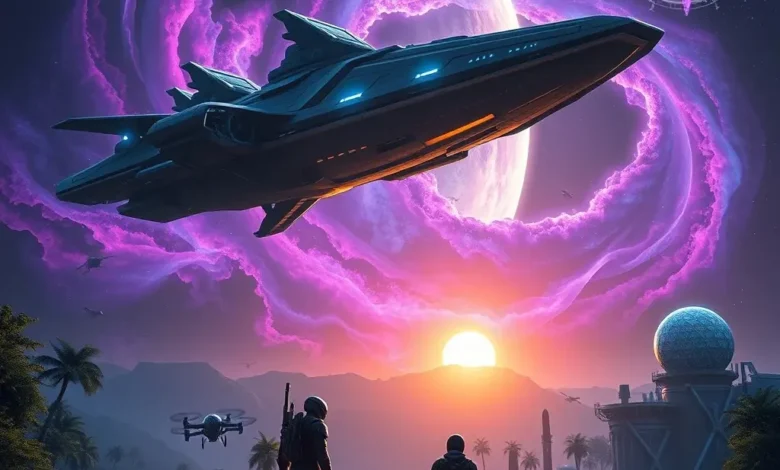
Ships are a central component of Starfield. Players can acquire, modify, and pilot their own spacecraft, from humble shuttles to massive capital ships. Bethesda has confirmed that ship interiors are fully explorable, with crew stations, engineering bays, and cargo holds that can be customized and upgraded.
Ships have multiple systems: engines, weapons, shields, and life support. Players can assign crew members (NPCs or other players in co-op) to specific roles, like Pilot, Gunner, or Engineer. Each system has its own health and requires maintenance—damaged engines slow travel, failing shields leave you vulnerable, and compromised life support forces you to use oxygen tanks or find repairs.
Space travel is not just about flying from point A to point B. Bethesda has introduced a “Starfield Travel System” that simulates real-time journeys based on ship speed, fuel consumption, and route planning. Long trips require resource management, and players must consider pirate encounters, asteroid fields, and gravity wells that can disrupt navigation.
Ship combat is a highlight. Players can target specific ship components, board enemy vessels, and salvage wrecks for loot. Bethesda has confirmed that boarding actions are fully interactive, with players needing to solve puzzles, fight AI crew, and secure the ship before it explodes or becomes uninhabitable.
- ✅ Fully explorable ship interiors with customizable stations
- 🛠️ Ship upgrading and modding system with blueprints
- ⚡ Real-time travel system with fuel and route planning
- 🎯 Targetable ship components during combat
- 🚪 Interactive boarding mechanics with puzzle-solving
- 🔧 Crew assignment system for tactical play
🎨 Graphics, Audio, and Immersion in Starfield
Starfield is not just a technical showcase for Bethesda—it’s a visual and auditory leap forward for the studio. Built on the Creation Engine 2, the game pushes the boundaries of open-world rendering, physics, and environmental detail. Bethesda has invested heavily in improving foliage, lighting, and character models, aiming to create a believable, immersive galaxy.
🖥️ Visual Quality and Engine Technology
The Creation Engine 2 is a significant upgrade over its predecessor, featuring improved physics simulations, dynamic lighting, and better draw distances. Bethesda has confirmed that Starfield supports ray tracing and DLSS/FSR upscaling, allowing players on high-end PCs to experience stunning visuals with minimal performance impact.
On console, Starfield runs at 60 FPS on Xbox Series X and 30 FPS on Series S, with dynamic resolution scaling to maintain smooth gameplay. Bethesda has stated that both versions feature the same content, though Series S users may experience slightly reduced draw distances and texture pop-in.
- ✅ Ray tracing support for realistic lighting and shadows
- 🌟 DLSS/FSR upscaling for better performance
- 🌌 Procedural planet generation with handcrafted highlights
- 💡 Improved foliage and environmental detail
- 🎭 Enhanced character and creature animations
- 📡 Dynamic weather and atmospheric effects
One of the most impressive visual features is the attention to detail in zero-gravity environments. Bethesda has implemented realistic particle physics, allowing debris, smoke, and even water droplets to float realistically in space stations. Planetary surfaces feature realistic weather systems, with storms, sandstorms, and even auroras visible in the sky.
The game’s art style blends realism with Bethesda’s signature “lived-in” aesthetic. Cities and outposts feel authentic, with cluttered interiors, graffiti, and signs of daily life. The alien designs are inspired by real-world biology, though Bethesda has avoided making them overly grotesque or cartoonish.
🔊 Sound Design and Music
Sound plays a crucial role in immersion. Starfield’s audio design is led by composer Inon Zur, known for his work on Fallout 3, Crysis, and Dragon Age. The soundtrack blends orchestral pieces with electronic elements, creating a haunting, expansive atmosphere that fits the vastness of space.
Voice acting is a major focus. Bethesda has confirmed that Starfield features thousands of lines of dialogue, with fully voiced NPCs across multiple languages. The cast includes well-known voice actors like Jennifer Hale (Mass Effect) and Idris Elba (reportedly voicing a key character in the game). Dialogue choices are fully voiced, giving players a cinematic experience.
Environmental audio is equally impressive. The hum of ship engines, the crackle of static on comms, the wind howling on distant planets—every sound is designed to enhance immersion. Bethesda has also emphasized the importance of spatial audio, allowing players to pinpoint the location of enemies, crew members, and environmental hazards using headphones.
The game’s audio engine supports dynamic mixing, adjusting volume and effects based on player location and actions. For example, boarding a ship with thin walls will muffle distant conversations, while entering a pressurized environment changes the audio profile entirely.
🚀 Key Features That Set Starfield Apart
Starfield is more than just another space RPG—it’s Bethesda’s attempt to blend the best elements of The Elder Scrolls, Fallout, and classic sci-fi into a cohesive, immersive experience. Below are the features that make Starfield unique in the crowded RPG landscape.
- ✅ Original universe with deep lore—no recycled Bethesda IP
- 🛸 Seamless space and planetary exploration—no loading screens
- 🎮 Hybrid combat system—space dogfights and ground combat
- 🔧 Fully customizable ships with crew management
- 🤝 Dynamic AI and faction reactions—your choices matter
- 📡 Procedural and handcrafted galaxy—hundreds of star systems
- 🔄 Respec system—change your skills anytime
- 💀 Permadeath with legacy mode—choices have consequences
- 🎶 Fully voiced dialogue with celebrity actors
- 🌌 Realistic physics—gravity, zero-G, and environmental hazards
📊 Starfield at a Glance: Key Metrics and Comparisons
| Category | Starfield | Comparison: Mass Effect Legendary Edition | Comparison: No Man’s Sky |
|---|---|---|---|
| Genre | Open-world RPG | Linear RPG | Survival/Exploration |
| Setting | Original universe (2330) | Military sci-fi (22nd century) | Procedural universe |
| Combat | Hybrid (space + ground) | Tactical RPG | Action-based |
| Ship Customization | Fully explorable, crewed | Limited | Procedural, no interiors |
| Story Depth | Open-ended, reactive | Linear, cinematic | Minimal |
| Platforms | PC, Xbox Series X|S | PC, consoles (past gen) | PC, consoles, cloud |
| Release Date | Late 2026 | 2021 (remaster) | 2016, updated regularly |
| Price | TBA (est. $60) | $60 (2021) | Free updates, $60 base |
Starfield represents a bold departure from Bethesda’s usual fantasy settings, opting instead for a sci-fi universe that feels both familiar and fresh. Unlike No Man’s Sky, which focuses on procedural generation, Starfield blends handcrafted systems with procedural elements, ensuring a curated experience without sacrificing exploration. Compared to Mass Effect, which is linear and dialogue-heavy, Starfield offers open-world freedom, player-driven storytelling, and deeper crafting mechanics.
The game’s emphasis on ship interiors and crew management is a standout feature, distinguishing it from both Star Wars: Knights of the Old Republic and Elite Dangerous. Bethesda’s decision to include fully explorable ships with functional stations (like engineering bays and cockpits) adds a layer of immersion rarely seen in space RPGs. This feature alone could set Starfield apart in a genre where ship interiors are often an afterthought.
Another key differentiator is the game’s reactive AI. While Mass Effect features branching dialogue, Starfield promises that your actions will have long-term consequences across the galaxy. Helping a faction could lead to new allies, while betraying them might trigger a bounty or war. Bethesda has also confirmed that NPCs will remember your reputation, altering their behavior based on your deeds.
📊 Pros and Cons of Starfield
✅ Advantages of Starfield
Starfield has several strengths that make it a must-watch title for RPG fans:
First and foremost is Bethesda’s commitment to player freedom. The game promises a galaxy where exploration, choice, and consequence matter. Unlike linear RPGs, Starfield allows players to approach quests in multiple ways—stealth, diplomacy, or brute force. The inclusion of ship customization and crew management adds a layer of strategy rarely seen in open-world games.
The visual and audio presentation is another major selling point. The Creation Engine 2 delivers stunning environments, from the neon-lit streets of human colonies to the eerie silence of derelict space stations. The soundtrack, composed by Inon Zur, elevates the sci-fi atmosphere, while the voice acting—led by Hollywood talent—brings characters to life in a way Bethesda hasn’t achieved in years.
Additionally, Starfield benefits from Bethesda’s experience in open-world design. The game’s blend of handcrafted and procedural content ensures a balance between curated experiences and replayability. The inclusion of permadeath with a legacy mode appeals to hardcore RPG fans who want their choices to matter.
- ✅ Unprecedented player freedom in a Bethesda RPG
- 🎨 Stunning visuals powered by Creation Engine 2
- 🎶 Cinematic soundtrack and voice acting
- 🛸 Deep ship customization and crew management
- 🔄 Permadeath with legacy mode for hardcore players
- 🌌 Massive, reactive galaxy with handcrafted highlights
- 🔧 Skill respec system for flexible progression
❌ Disadvantages and Potential Drawbacks
Despite its promise, Starfield is not without risks. One of the biggest concerns is performance. Bethesda games have historically struggled with optimization, and Starfield—with its sprawling galaxy and complex physics—could exacerbate these issues. Early beta tests reportedly showed frame rate drops on mid-range PCs, and even console versions may suffer from pop-in or texture streaming delays.
Another potential drawback is the learning curve. Starfield blends RPG mechanics, ship systems, and exploration into a single experience. For newcomers, the sheer depth of systems—crafting, ship upgrades, faction reputation, skill trees—could feel overwhelming. Bethesda has not confirmed whether a beginner’s tutorial or in-game guide will be available to ease players into the experience.
Some players may also find the game’s tone inconsistent. While Bethesda aims for a grounded, realistic sci-fi experience, the inclusion of magic-like abilities (such as “conversation persuasion” or “telekinesis” in some leaks) could feel jarring. The game’s art style, blending gritty realism with Bethesda’s signature “lived-in” aesthetic, might not appeal to fans of hard sci-fi like The Expanse or Alien.
Finally, there are concerns about content quantity. Bethesda games have historically suffered from repetitive quest design and shallow side content. While Starfield promises hundreds of star systems and thousands of planets, some may feel that the handcrafted content is limited, with procedural generation filling the gaps in a way that lacks depth.
- ❌ Potential performance issues on mid-range hardware
- 🧠 Steep learning curve for newcomers
- ⚖️ Tone inconsistency between realism and fantasy elements
- 🔄 Risk of shallow procedural content
- 🎮 No confirmed console version beyond Series X|S
- 📦 Large install size (rumored 100GB+)
💻 Performance and Technical Analysis of Starfield
As one of the most anticipated PC and console exclusives in years, Starfield has raised significant questions about performance, hardware requirements, and optimization. Bethesda has not yet released official system requirements, but leaks and early beta tests provide a glimpse into what players can expect. Below, we analyze the technical expectations for Starfield across platforms.
🖥️ PC System Requirements (Expected)
Based on early beta footage and comparisons to other Bethesda titles using the Creation Engine 2, we can extrapolate the following system requirements for Starfield on PC:
| Component | Minimum Requirement | Recommended Requirement | Ultra Requirement |
|---|---|---|---|
| OS | Windows 10 (64-bit) | Windows 10/11 (64-bit) | Windows 11 (64-bit) |
| CPU | Intel Core i5-8400 / AMD Ryzen 5 2600 | Intel Core i7-9700K / AMD Ryzen 7 3700X | Intel Core i9-10900K / AMD Ryzen 9 5900X |
| RAM | 16 GB | 16 GB | 32 GB |
| GPU | NVIDIA GTX 1060 6GB / AMD RX 5700 | NVIDIA RTX 2060 Super / AMD RX 5700 XT | NVIDIA RTX 3080 / AMD RX 6800 XT |
| VRAM | 6 GB | 8 GB | 12 GB |
| Storage | 85 GB SSD | 100 GB SSD | 120 GB SSD |
| DirectX | 12 | 12 Ultimate | 12 Ultimate |
The minimum requirements suggest that Starfield will run on mid-range PCs, though performance may be compromised at lower settings. The recommended specs align with what’s needed for high settings at 1080p or 1440p, while the ultra tier targets 4K gaming with ray tracing enabled.
One major concern is the game’s install size. Early leaks suggest Starfield could require over 100GB of storage space, making it one of the largest Bethesda games ever. This could be a barrier for players with limited SSD space or those using older HDDs.
Performance in early betas reportedly hovers around 60 FPS on high-end PCs at 1440p, but drops to 30-45 FPS on mid-range GPUs like the RTX 2060 or RX 5700. Ray tracing adds a significant performance hit, with FPS dropping by 30-50% compared to non-ray traced settings. DLSS and FSR will be essential for maintaining smooth gameplay on high-end setups.
- ✅ Runs on mid-range PCs (GTX 1060 / RX 5700)
- 🎮 60 FPS on high-end PCs at 1440p
- 💾 Large install size (100GB+)
- ⚡ DLSS/FSR highly recommended
- 🌌 Ray tracing performance-intensive
- 🔧 Optimization expected to improve post-launch
📱 Xbox Series X|S Performance
On console, Starfield is expected to run at 60 FPS on Xbox Series X and 30 FPS on Series S. Bethesda has confirmed that both versions feature the same content, though Series S users may experience slightly reduced draw distances and texture pop-in.
Early beta tests suggest that Starfield is well-optimized for Xbox hardware, with minimal frame drops and stable performance. The game supports all Xbox features, including Quick Resume, Auto HDR, and Dolby Vision on supported displays.
One advantage of the Xbox ecosystem is the inclusion of Starfield in Xbox Game Pass. Given Bethesda’s history of day-one releases, it’s likely that Starfield will be available on Game Pass at launch, making it accessible to millions of subscribers without additional cost.
- ✅ 60 FPS on Xbox Series X
- 🎮 30 FPS on Xbox Series S
- 📦 Same content on both consoles
- 🎯 Optimized for Auto HDR and Dolby Vision
- 🎮 Likely included in Xbox Game Pass at launch
🏁 Final Verdict: Who Should Play Starfield?
Starfield is shaping up to be one of the most ambitious RPGs of the decade, blending Bethesda’s signature open-world design with deep sci-fi mechanics and a reactive galaxy. But is it worth your time and money? The answer depends on what you’re looking for in a game.
If you’re a fan of Bethesda RPGs like The Elder Scrolls or Fallout, Starfield is a must-play. Its blend of exploration, crafting, and choice-driven storytelling will feel familiar yet fresh. The inclusion of ship systems and crew management adds a layer of strategy that elevates it beyond typical Bethesda fare.
For space sim enthusiasts, Starfield offers something unique. Unlike Elite Dangerous or Star Citizen, which focus on simulation and realism, Starfield prioritizes accessibility and RPG depth. The hybrid combat system—space dogfights and ground combat—makes it appealing to both action and RPG fans.
However, Starfield may not be for everyone. If you prefer tightly scripted narratives like Mass Effect, the open-ended nature of Starfield might feel disjointed. Similarly, if you’re looking for a hard sci-fi experience with deep lore and realism, Bethesda’s blend of fantasy elements and sci-fi tropes might not satisfy you.
For newcomers, Starfield could be overwhelming. The sheer depth of systems—ship upgrades, skill trees, faction reputation—requires patience and experimentation. Bethesda has not yet confirmed whether a beginner’s guide or tutorial will be available, so be prepared to learn through trial and error.
In summary, Starfield is a game for players who value freedom, exploration, and immersion above all else. It’s Bethesda’s attempt to redefine the space RPG genre, and if it delivers on its promises, it could become a landmark title in gaming. However, if you’re looking for a polished, tightly scripted experience, you might find Starfield’s open-ended design frustrating.
❓ Frequently Asked Questions About Starfield
- When is Starfield releasing?
Starfield is expected to launch in late 2026, though Bethesda has not confirmed an exact date. Historically, Bethesda releases major titles in the fall, so expect an October-November launch window.
- Will Starfield be on Game Pass?
Given Bethesda’s acquisition by Microsoft and the game’s exclusivity to Xbox/PC, it’s highly likely that Starfield will be available on Xbox Game Pass at launch. Microsoft has a history of including Bethesda titles in Game Pass on day one.
- Can I play Starfield on my PC?
Yes, Starfield will be available on PC via Steam and the Microsoft Store. Bethesda has not confirmed a GOG release, so PC players may need to use the Microsoft Store for full features.
- Is there a demo or beta for Starfield?
Bethesda has not announced a public beta, but early access betas may be available for select content creators or Xbox Insiders. Keep an eye on official Bethesda channels for updates.
- Will Starfield have multiplayer?
Bethesda has confirmed that Starfield is a single-player experience. There is no co-op or multiplayer mode at launch, though modders may eventually add these features.
- Can I mod Starfield?
While Bethesda has not confirmed mod support, it’s highly likely given the studio’s history with modding communities. Expect mod tools to be released post-launch, allowing players to add new content, tweak gameplay, and fix bugs.
- How big is Starfield compared to other Bethesda games?
Early leaks suggest Starfield could be one of Bethesda’s largest games ever, with an install size of 100GB or more. This is larger than Fallout 4 (61GB) and The Elder Scrolls V: Skyrim (8GB on PC).
- Will Starfield support ray tracing?
Yes, Starfield will support ray tracing on PC, with options for ray-traced global illumination, reflections, and shadows. Performance impact will be significant, so DLSS or FSR is highly recommended.
- Is Starfield a full game or an early access title?
Starfield is a full, premium-priced game. Bethesda has confirmed it’s not an early access title, though post-launch updates and expansions are expected.
- What platforms will Starfield be on?
Starfield will launch exclusively on Xbox Series X|S and PC. There is no confirmed PlayStation or Nintendo Switch version, and Bethesda has not announced cloud gaming support beyond Xbox Cloud Gaming.
- Will Starfield have a New Game+ mode?>
Bethesda has not confirmed New Game+ mode, but it’s a common feature in Bethesda RPGs. If included, it would allow players to start a new game while retaining some progress from a previous playthrough.
- Can I bring my Fallout or TES saves into Starfield?
No, Starfield is set in a completely original universe with no direct connection to Bethesda’s existing franchises. Your saves from other games will not carry over.