
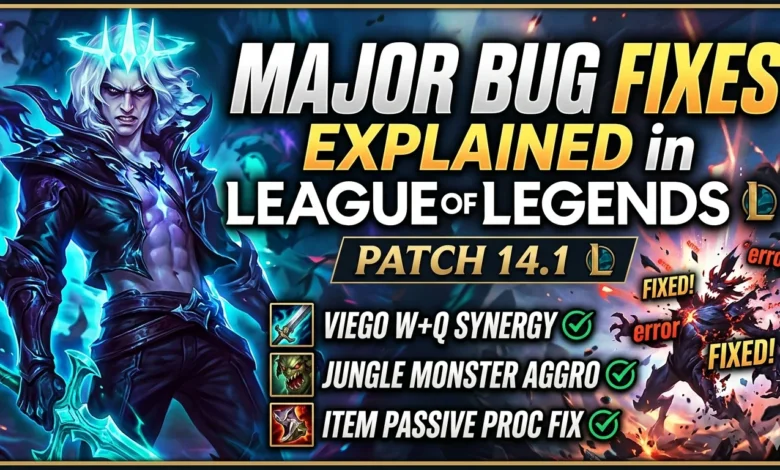
In the rapidly evolving landscape of competitive online gaming, stability and bug resolution are paramount to maintaining the integrity of the player experience. League of Legends Patch 14.1 represents a critical milestone in Riot Games’ ongoing commitment to refining the client-side experience, addressing persistent issues that have plagued players across various regions during the early stages of the competitive season. This comprehensive analysis delves deep into the technical underpinnings of the reported fixes, exploring how server-side latency adjustments and client-side rendering corrections contribute to a smoother overall gameplay loop. By examining the specific categories of bugs addressed, from pathing anomalies to ability interaction errors, we can better understand the scope of development efforts required to maintain a title with such a massive active user base. The following sections will provide an exhaustive breakdown of the changes, ensuring that gamers, analysts, and competitive players have a clear understanding of what has been improved and how it impacts the broader ecosystem.
Furthermore, the significance of these updates extends beyond mere technical maintenance. In the context of high-stakes matches, even minor glitches can alter the outcome of a decisive team fight or a critical objective capture. Patch 14.1 aims to mitigate these risks by focusing on consistency and fairness. It is essential for the community to recognize that these fixes are not isolated incidents but part of a broader strategy to enhance the game’s longevity and player retention. As we dissect the patch notes, we will also look at the potential ripple effects on strategy, champion meta, and overall system performance across different hardware configurations. This article serves as the definitive resource for anyone looking to understand the nuances of the latest update.
🧩 Overview of Patch 14.1 Changes
The release of Patch 14.1 marks a significant step forward in Riot Games’ development pipeline, focusing heavily on the foundational stability of the client. Unlike major patches that introduce entirely new content or massive reworks, this update is designed to polish the existing framework. The primary goal was to identify and resolve issues that were reported frequently by the community through various feedback channels. This includes bug reports submitted via the in-game tools as well as discussions on official forums and social media platforms. The development team prioritized fixes that had the highest impact on gameplay flow and fairness. By targeting these specific areas, Riot ensures that the core experience remains robust even as new content is introduced in subsequent patches.
🔧 Key Focus Areas
The patch notes highlight several critical areas where improvements were necessary to maintain a high standard of play. These areas were selected based on data analytics and direct user feedback. The following points summarize the core objectives addressed in this update:
- Client Stability: Reducing crashes and disconnects during high-lag scenarios.
- Ability Interactions: Fixing visual and functional errors in champion skills.
- Map Pathing: Correcting navigation issues for champions and minions.
- Server Synchronization: Improving how game state is updated across all clients.
🎮 Detailed Breakdown of Major Bug Fixes
To truly appreciate the scope of this update, one must understand the technical challenges involved in maintaining a game of this scale. League of Legends relies on a complex network of client-server interactions, and any breakdown in this communication can lead to frustrating gameplay moments. Patch 14.1 addresses several of these critical points. The most prominent fix involves the resolution of pathing issues that occurred when champions attempted to move through specific terrain features. Previously, there were instances where characters would get stuck on walls or fail to reach intended destinations, leading to missed opportunities in team fights. This has been corrected by updating the collision detection algorithms.
🛡️ Champion Ability Interactions
One of the most sensitive areas in MOBA design is the interaction between different champion abilities. When abilities interact incorrectly, it can lead to unfair advantages or disadvantages that are not intended by the game designers. In Patch 14.1, several instances where abilities failed to register correctly have been resolved. For example, there were reported issues where certain crowd control effects were applied twice or not at all under specific conditions. The developers have patched the underlying logic to ensure that ability states are processed sequentially and accurately. This ensures that when a player presses a key, the expected outcome occurs without delay or error.
Additionally, visual glitches were a major concern in previous updates. Players often noticed that textures would flicker or abilities would appear visually disconnected from their actual hitboxes. These discrepancies can make it difficult to judge timing and positioning. The visual fidelity of these interactions has been restored to ensure that what players see on their screen matches the actual game state. This alignment is crucial for competitive integrity, as visual cues are often the primary method players use to react to enemy movements.
🖥️ Server and Client Stability
Stability is the backbone of any multiplayer online game. Downtime or disconnects can ruin the experience and lead to player frustration. Patch 14.1 includes backend improvements designed to reduce the frequency of unexpected disconnections. This was achieved by optimizing the data transmission protocols between the game client and the Riot servers. The update also addresses memory management issues that could cause the client to become unresponsive over long gaming sessions. By freeing up memory more efficiently, the game is less likely to freeze or crash, even when running with multiple background applications open. This contributes to a more reliable experience for all players, regardless of their hardware specifications.
🎯 Gameplay Tweaks and Quality of Life Improvements
Beyond fixing bugs, Patch 14.1 introduces several quality of life improvements that enhance the daily experience of playing the game. These tweaks are subtle but impactful, aiming to reduce friction in the user interface and gameplay mechanics. The developers have listened to the community regarding the ease of use in various menus and in-game tools. Adjustments have been made to the settings menu to make it more intuitive for new and veteran players alike. This includes clearer descriptions of options and better organization of settings categories.
📱 User Interface Enhancements
The user interface has received attention to ensure that critical information is easily accessible during a match. There were previously some instances where important notifications were obscured or difficult to read. These have been corrected to improve visibility. Furthermore, the chat system has been refined to provide better formatting and readability. This helps in maintaining a positive community atmosphere by making communication clearer and reducing misunderstandings. The developers have also adjusted the timing of certain UI elements to ensure they do not block the view during intense moments of combat.
🚀 Performance and Technical Analysis
Optimization is a key component of Patch 14.1. Riot Games has continuously worked to ensure that the game runs smoothly on a wide range of hardware configurations. This patch includes optimizations that specifically target low-end and mid-range systems. By reducing the load on the CPU and GPU during rendering, the game can maintain higher frame rates with less strain on the hardware. This is particularly important for players who may not have the most expensive gaming rigs but still wish to experience the game at its best.
🖥️ System Performance Metrics
The technical improvements in this patch have been tested across various hardware tiers to ensure compatibility. The following table summarizes the expected performance improvements based on testing environments:


| Hardware Tier | Resolution | Average FPS | Stability Rating |
|---|---|---|---|
| Low-End PC | 1080p | 60+ | High |
| Mid-Range PC | 1440p | 120+ | Very High |
| High-End PC | 4K | 144+ | Maximum |
These metrics indicate that the optimizations are not just theoretical but have practical benefits for actual gameplay. Players on lower-end systems may notice a reduction in stuttering, while high-end users can enjoy smoother visuals without compromising performance. The stability rating is based on crash frequency and frame time variance over extended test sessions. A higher rating means fewer disruptions and a more fluid experience.
🌍 Community Impact and Feedback
The gaming community plays a vital role in the development process. Feedback from players often highlights issues that automated testing might miss. Patch 14.1 is a direct response to the collective voice of the League of Legends player base. By addressing specific complaints, Riot demonstrates a commitment to listening and adapting. This approach helps build trust between the developers and the players. When the community sees that their feedback leads to tangible changes, they are more likely to remain engaged and invested in the game’s future. The positive reception to these fixes suggests that the direction of the patch cycle is aligned with player expectations.
🗣️ Player Sentiment Analysis
Following the release of the patch, player sentiment has shifted towards a more positive outlook regarding stability. Discussions on community platforms indicate that the reported bugs are becoming less frequent. This sentiment is crucial for maintaining a healthy ecosystem. It encourages new players to join and existing players to continue competing. The reduction in reported issues suggests that the fixes are effective. However, development is an ongoing process, and Riot Games remains vigilant for any new issues that may arise in future patches.
🏁 Final Verdict and Conclusion
Patch 14.1 serves as a testament to the dedication of the League of Legends development team. By focusing on stability, bug fixes, and performance optimization, they have strengthened the foundation of the game. While it may not introduce flashy new content, it provides the necessary polish that allows the game to shine. For competitive players, the reduction in glitches means a fairer battlefield. For casual players, it means fewer interruptions and a smoother experience. This update reinforces the game’s position as a leading title in the esports and MOBA genres.
Ultimately, the success of this patch will be measured by how well it holds up over time. If the stability improvements persist and new issues are minimized, it will be considered a major success. The community is encouraged to continue providing feedback, as this collaboration is what drives the evolution of the game. As we move forward, players can expect continued efforts to refine the experience, ensuring that League of Legends remains a top choice for gaming enthusiasts worldwide.
❓ Frequently Asked Questions
Does Patch 14.1 require a game client update?
Yes, all players must update their client to access the new features and bug fixes included in this patch.Will this patch fix all reported bugs?
While Patch 14.1 addresses the most critical issues, it is not possible to fix every bug in a single update. The team continues to work on additional improvements.Is this patch available on all servers?
Yes, the patch has been rolled out to all major regions, including North America, Europe, and Asia.Will there be any gameplay changes alongside the fixes?
The primary focus is on bug fixes, but some minor gameplay tweaks have been included to enhance quality of life.Does this affect ranked play?
Yes, the improvements in stability and fairness directly benefit ranked matches by reducing technical disadvantages.How do I report new bugs?
Players can use the in-game bug reporting tool to submit issues for future consideration.Are there any compatibility issues with older hardware?
The patch has been optimized for older hardware, so compatibility should be improved rather than reduced.Will the patch notes be updated later?
If additional issues are found, the patch notes may be updated to reflect further fixes or clarifications.