Base Game vs Expansion: Red Dead Redemption 2 and Undead Nightmare Comparison – Which Should You Play?

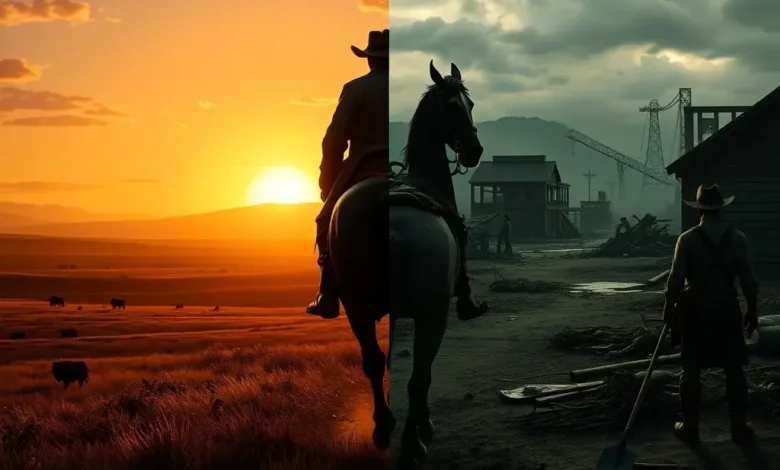
When Rockstar Games released Red Dead Redemption 2 in 2018, it wasn’t just a game—it was a masterpiece that redefined open-world storytelling, immersive gameplay, and cinematic experiences. Set in the late 1800s, the game follows Arthur Morgan, a loyal member of the Van der Linde gang, as they navigate a world on the brink of change. With unparalleled attention to detail, emotional depth, and a living, breathing world, the base game remains one of the most celebrated titles in gaming history.
The game’s expansion, Undead Nightmare, launched in 2010 as a standalone title (later bundled with Red Dead Redemption’s re-release), offers a drastically different experience. Instead of gunslingers and heists, players face a supernatural zombie apocalypse. While not part of the original Red Dead Redemption 2 storyline, Undead Nightmare is often included in modern re-releases and digital storefronts, making it a point of comparison for fans deciding which version to experience first—or at all.
This comparison dives deep into Red Dead Redemption 2’s base game and Undead Nightmare, analyzing their narratives, gameplay mechanics, visuals, performance, and player experiences. Whether you’re a fan of Westerns, zombie survival, or just looking for the most content-rich version, this guide will help you decide which experience suits your gaming preferences.
Below is a structured breakdown of the two experiences, covering everything from story and mechanics to performance and replay value.
🌟 Overview: What Defines Each Experience?
Red Dead Redemption 2 (Base Game) is a narrative-driven open-world action-adventure game developed by Rockstar Games. It features a gripping story focused on Arthur Morgan’s moral journey, immersive world interactions, realistic physics, and a meticulously crafted Wild West setting. The game emphasizes realism, with dynamic weather, wildlife behavior, and detailed character animations that create a living world. It supports both single-player and multiplayer modes through Red Dead Online, though the latter received mixed reception initially.
Undead Nightmare, while initially released as an expansion for Red Dead Redemption (2010), was reimagined and included in the Red Dead Redemption 2 Complete Edition. It transforms the Western setting into a post-apocalyptic zombie horror scenario. The story follows a new protagonist—an unnamed cowboy—as they search for a cure to a mysterious plague that has turned most of the population into the undead. The tone shifts from gritty realism to dark humor and survival horror, with new mechanics, weapons, and missions designed specifically for the zombie theme.
These two experiences serve vastly different audiences. One is a cinematic masterpiece rooted in historical drama and player freedom; the other is a genre-bending, lighthearted (yet eerie) zombie romp. Let’s explore how they stack up in every major category.
📋 Quick Comparison Summary
- ✅ Base Game: Rich narrative, realistic world, emotional depth, open-world exploration, and deep role-playing elements.
- ✅ Undead Nightmare: Zombie survival, dark humor, unique missions, supernatural elements, and a fresh take on the Wild West.
- ⚠️ Genre Shift: The base game is a dramatic Western; Undead Nightmare is a horror-comedy.
- 🎯 Replay Value: Base game offers high replay due to side content; Undead Nightmare is shorter but replayable for achievements and fun.
🎭 Story and Narrative: Drama vs. Dark Comedy
🏹 Red Dead Redemption 2: A Western Epic
The base game of Red Dead Redemption 2 tells the story of Arthur Morgan, a senior member of the Van der Linde gang, as they flee from lawmen and rival gangs across five U.S. states in 1899. The narrative is divided into chapters, each advancing the gang’s quest for survival while exploring themes of loyalty, redemption, moral decay, and the end of the Old West era.
The writing is among the best in gaming, with fully voice-acted characters, emotionally charged dialogue, and morally complex choices that influence Arthur’s honor level and the story’s outcome. Arthur’s internal monologue adds depth, making him one of gaming’s most relatable and tragic protagonists. The game also features a layered cast of supporting characters—from Dutch Van der Linde, the gang’s charismatic but increasingly unstable leader, to John Marston, whose fate is tied to the original game.
The world isn’t just a backdrop; it’s a character itself. Towns, forests, and rivers feel alive with NPC routines, wildlife interactions, and dynamic events like random encounters, train robberies, or wildlife attacks. The story’s pacing is deliberate, allowing time for exploration, side quests, and personal growth. The finale is widely regarded as one of the most powerful conclusions in gaming history, offering closure to Arthur’s journey and setting up Red Dead Redemption.
This level of storytelling depth is rare in open-world games. It’s not just about completing missions—it’s about living in a world that feels real, with consequences that matter.
🧟 Undead Nightmare: A Zombie Apocalypse in the Wild West
Undead Nightmare begins with a simple premise: what if the Spanish flu outbreak of 1918 never ended—and instead, the dead rose as zombies? The protagonist, a cowboy searching for his family, wakes up in a world overrun by the undead. The tone is a mix of dark humor and eerie survival, with a narrator (played by Rob Wiethoff, who voices John Marston) delivering witty commentary that contrasts sharply with the horror unfolding around him.


Unlike the base game, there’s no overarching gang or moral dilemma. Instead, the player embarks on a mission to find four mythical ingredients—each tied to a legendary figure like Abraham Lincoln or Santa Claus—to create a cure. The story is episodic, with each ingredient leading to a new area and boss fight. The humor comes from absurd situations, like riding a zombie horse or fighting a zombie John F. Kennedy.
The narrative is shorter and lighter, designed for fun rather than emotional weight. It doesn’t aim to be a deep drama but rather a playful, offbeat adventure that subverts expectations of the Western genre. The expansion was originally released as DLC for Red Dead Redemption (2010), but its inclusion in Red Dead Redemption 2’s Complete Edition makes it a legitimate part of the modern experience.
The humor and pacing make Undead Nightmare feel like a breath of fresh air after the intensity of the base game. It’s ideal for players who want something lighthearted but still within the same universe.
🎯 Which Story Suits You Better?
- Base Game: Ideal for players who love deep, emotional storytelling with moral complexity and immersive world-building.
- Undead Nightmare: Perfect for those who want a break from serious themes and enjoy a humorous, fast-paced zombie adventure.
🕹️ Gameplay Mechanics and Systems: Realism vs. Chaos
⚔️ Core Gameplay in Red Dead Redemption 2
The base game is built on a foundation of realism. Every action—from shooting to riding a horse—feels weighty and deliberate. The combat system is tactical: players must consider stamina, weapon recoil, and positioning. Melee combat is brutal, with animations that reflect real-world impacts. The game also features a dynamic honor system, where your actions (helping strangers, avoiding violence) affect how NPCs treat you and even the game’s ending.
Horses aren’t just transportation; they’re living entities with health, stamina, and moods. Players must care for them, feed them, and even bond with them to improve performance. Wildlife is also reactive—deer flee when hunted, predators stalk weak animals, and even birds react to gunfire. These details create a world that feels alive and unpredictable.
The game’s physics engine simulates everything from cloth movement to blood splatter when shooting enemies. The AI is sophisticated: enemies flank you, call for backup, and react to your tactics. The open world encourages exploration, with easter eggs, collectibles, and dynamic events that make every playthrough unique.
Key Gameplay Features in Base Game:
- ✅ Realistic gunplay with recoil and stamina management
- ✅ Dynamic honor system affecting NPC reactions and endings
🧟 Core Gameplay in Undead Nightmare
Undead Nightmare strips away the realism in favor of chaotic, over-the-top gameplay. Zombies shamble slowly but swarm in large numbers. Combat is simplified: melee weapons like shovels and rifles are effective, and the player can use fire magic, lightning guns, and even a zombie horse to turn the tide. The game balances horror with humor—zombies groan and moan, but the protagonist delivers dry one-liners as he stumbles through the wasteland.
New mechanics include necromancy, which allows the player to raise dead allies or enemies. The game introduces new weapons, like the Holy Water Launcher, and a quest system focused on collecting ingredients. The world is still open, but the focus shifts from realistic exploration to survival and discovery.
AI behavior is more predictable in Undead Nightmare—zombies follow simple pathing, and NPCs are either survivors or infected. The game’s tone allows for more creative problem-solving, with solutions like luring zombies into traps or using fire to clear areas.
Key Gameplay Features in Undead Nightmare:
- ✅ Over-the-top zombie combat with magic and absurd weapons
- ✅ Lighthearted tone with dark humor and satirical elements
🌍 Open World and Exploration
Both games feature vast open worlds, but they serve different purposes.
Base Game: The world of Red Dead Redemption 2 is meticulously crafted, with five distinct regions—Lemoyne, New Hanover, Ambarino, West Elizabeth, and Guarma (an island DLC). Each area has its own culture, architecture, and ecosystem. The world feels alive with NPC routines, wildlife, and dynamic events like ambushes or animal attacks. Side quests range from trivial (helping a rancher) to morally complex (aiding a family fleeing an abusive husband). The game rewards exploration with hidden treasures, legendary animals, and lore entries.
Undead Nightmare: The world is smaller but still expansive, with the same regions repurposed into zombie-infested wastelands. Towns are in ruins, roads are blocked, and survivors hide in safe houses. The focus is less on realism and more on survival and discovery. The game introduces new locations like Blackwater (now a zombie-infested ghost town) and Wallace Station, where the player finds the first ingredients. While less detailed than the base game, the post-apocalyptic aesthetic is atmospheric in its own way.
Exploration in Undead Nightmare is more linear, with quests guiding the player toward specific objectives. However, the game encourages experimentation—players can ride into zombie hordes, raise the dead, or even ignore the main story to hunt legendary creatures (like a zombie grizzly bear).
🎨 Graphics and Audio: Cinematic Realism vs. Stylized Chaos
🖥️ Visual Quality in Red Dead Redemption 2
Red Dead Redemption 2 is a benchmark for open-world graphics. Developed using Rockstar’s proprietary RAGE engine (with enhancements for the re-release), the game features:
- ✅ Realistic lighting and weather: Dynamic time cycles, realistic cloud systems, and weather effects that impact gameplay (rain makes roads slippery, snow affects visibility).
- ✅ High-detail textures: Characters have realistic facial animations, and environments are rich with detail—from bark on trees to fabric on clothing.
- ✅ Advanced physics: Cloth simulation, destructible environments, and realistic animal behaviors (hunting, grazing, fleeing).
- ✅ Cinematic presentation: Cutscenes are film-quality, with camera angles and performances rivaling Hollywood productions.
The game’s art direction is inspired by classic Western films like The Good, the Bad and the Ugly and Once Upon a Time in the West. The world is beautiful but also gritty—towns are dirty, forests are overgrown, and the passage of time is evident in the decaying structures.
On PC, the game supports 4K resolution, HDR, and up to 60 FPS (with uncapped framerates in windowed mode). Even on consoles, the visuals are stunning, with minimal pop-in and smooth draw distances.
🖥️ Visual Quality in Undead Nightmare
Undead Nightmare uses the same engine but adapts it for a different aesthetic. The world is still detailed, but the tone is darker and more surreal. Key visual features include:
- ✅ Zombie design: The undead are grotesque but stylized—some are missing limbs, others have exposed bones, and their movements are slow but relentless.
- ✅ Post-apocalyptic environments: Buildings are in ruins, streets are littered with debris, and the sky is often overcast with a sickly green tint. The contrast between the beautiful base game and the decaying Undead Nightmare world is striking.
- ✅ Creative enemy designs: Boss fights include historical figures like Abraham Lincoln (now a giant zombie) and Santa Claus (riding a zombie reindeer).
- ✅ Lighting effects: The game uses moody, desaturated colors to enhance the horror atmosphere. Fire and lightning effects stand out against the dreary backdrop.
While not as graphically advanced as the base game (due to being an older expansion), Undead Nightmare makes up for it with creativity and atmosphere. The visual contrast between the two experiences is one of the most noticeable differences.
🔊 Sound Design and Music
Both games feature exceptional audio design, but in different styles.
Base Game: The soundtrack is a mix of original compositions by Woody Jackson and licensed tracks from the late 1800s and early 1900s. The score is orchestral, with sweeping strings and haunting melodies that underscore the game’s emotional moments. Sound effects are hyper-realistic—gunshots echo through canyons, horses whinny in the distance, and Arthur’s breathing becomes labored after sprinting. Voice acting is top-tier, with Roger Clark delivering one of gaming’s best performances as Arthur Morgan.
Undead Nightmare: The soundtrack shifts to a more eerie, ambient tone, with dissonant strings and unsettling choir music. The licensed tracks are replaced with original compositions that evoke a sense of dread. The voice acting is still strong, with Rob Wiethoff’s deadpan narration adding a layer of dark humor. Sound effects are exaggerated for comedic effect—zombies groan loudly, and gunshots have a satisfyingly loud boom. The contrast between the base game’s realism and Undead Nightmare’s absurdity is reflected in the audio design.
🏆 Key Features Comparison Table
| Feature | Red Dead Redemption 2 (Base Game) | Undead Nightmare |
|---|---|---|
| Genre | Open-world Western drama | Zombie survival horror-comedy |
| Narrative Depth | ⭐⭐⭐⭐⭐ (Emotional, complex, cinematic) | ⭐⭐⭐ (Lighthearted, episodic, humorous) |
| Gameplay Realism | ⭐⭐⭐⭐⭐ (Tactical combat, dynamic AI, living world) | ⭐⭐ (Chaotic, simplified, over-the-top) |
| Exploration | ⭐⭐⭐⭐⭐ (Vast, detailed, rewarding) | ⭐⭐⭐ (Smaller, atmospheric, quest-driven) |
| Visual Quality | ⭐⭐⭐⭐⭐ (Cinematic, realistic, detailed) | ⭐⭐⭐⭐ (Stylized, moody, creative) |
| Audio Design | ⭐⭐⭐⭐⭐ (Orchestral score, realistic sound effects) | ⭐⭐⭐⭐ (Atmospheric, humorous, eerie) |
| Replay Value | ⭐⭐⭐⭐⭐ (Side quests, collectibles, online mode) | ⭐⭐⭐ (Achievements, secret endings, fun factor) |
| Platform Availability | PC, PlayStation 4/5, Xbox One/Series X|S | PC, PlayStation 3/4/5, Xbox 360/One/Series X|S |
The table above highlights the stark differences between the two experiences. The base game excels in depth, realism, and emotional impact, while Undead Nightmare prioritizes creativity, humor, and a fresh take on the Western genre. Neither is objectively “better”—it depends on what you’re looking for in a gaming experience.
✅ Pros and Cons: Which Experience Wins?
✅ Advantages of Red Dead Redemption 2 (Base Game)
The base game is a masterclass in open-world design, storytelling, and immersion. Its strengths are numerous and well-documented by critics and players alike.
First and foremost is the narrative depth. Arthur Morgan’s journey is one of the most compelling in gaming, with a story that evolves based on player choices. The characters are fully realized, with motivations, flaws, and arcs that feel real. The game’s attention to detail—from the way Arthur’s coat sways in the wind to the way NPCs react to your honor level—creates an unparalleled sense of immersion.
The world design is another standout feature. Each region in the game feels distinct, with its own culture, architecture, and geography. The dynamic events, wildlife, and NPC routines make the world feel alive. Whether you’re hunting legendary animals, participating in a train robbery, or just riding through the countryside, the game rewards exploration.
The combat and mechanics are refined and realistic. Gunplay feels weighty, melee combat is brutal, and the honor system adds a layer of strategy to your playthrough. The game also features a robust crafting system, allowing you to upgrade weapons, craft ammunition, and even brew tonics for health regeneration.
Lastly, the replay value is immense. With hundreds of side quests, collectibles, and online content through Red Dead Online, players can spend hundreds of hours in the game without exhausting its content.
Summary of Strengths:
- ✅ Unmatched narrative depth and emotional impact
- ✅ Immersive, living open world with realistic AI and physics
- ✅ Tactical, realistic combat with a dynamic honor system
- ✅ Stunning visuals and cinematic presentation
- ✅ High replay value with endless side content
❌ Disadvantages of Red Dead Redemption 2 (Base Game)
Despite its many strengths, the base game has some notable weaknesses. For starters, the pacing can feel slow. The game is long—easily 60+ hours for the main story—and some players may find the deliberate pacing tedious. The story is divided into chapters, and some missions can drag on, especially in the early game.
The honor system, while innovative, can feel restrictive. If you want to play as a “good” Arthur, you’ll have to avoid violence and help strangers, which can limit your options in combat. Conversely, playing as a “bad” Arthur means you’ll face more enemy attention and harsher NPC reactions.
The game’s difficulty is also a point of contention. While the combat is realistic, it can feel punishing, especially against multiple enemies. The game’s AI is smart, but it can also feel unfair at times, with enemies flanking you or calling in backup unexpectedly.
Lastly, the multiplayer mode, Red Dead Online, has received mixed reviews. While it offers a fun social experience, it lacks the depth and polish of the single-player campaign. Frequent updates have improved it, but many players still prefer the solo experience.
Summary of Weaknesses:
- ❌ Slow pacing and long playtime
- ❌ Honor system can feel restrictive
- ❌ Combat can feel punishing and unfair
- ❌ Red Dead Online is underwhelming compared to single-player
- ❌ Some missions can feel repetitive
✅ Advantages of Undead Nightmare
Undead Nightmare may be a lighter experience, but it has a charm all its own. Its strengths lie in its creativity, humor, and fresh take on the Western genre.
The game’s tone and humor are standout features. The dark comedy and satirical elements make it a refreshing break from the base game’s seriousness. The narrator’s witty commentary, the absurd boss fights, and the chaotic zombie hordes create a unique experience that’s unlike anything else in gaming.
The gameplay variety is another highlight. While the base game focuses on realism, Undead Nightmare embraces chaos. The introduction of necromancy, new weapons, and magical abilities adds a layer of creativity to the gameplay. Players can experiment with different strategies, whether it’s luring zombies into traps or raising the dead to fight for them.
The atmosphere is also a strength. The post-apocalyptic world is eerie and immersive, with a moody color palette and unsettling sound design. The contrast between the base game’s beautiful landscapes and Undead Nightmare’s decaying ruins is striking and adds to the game’s appeal.
Summary of Strengths:
- ✅ Unique, humorous tone that subverts expectations
- ✅ Creative gameplay with necromancy and magical abilities
- ✅ Fresh take on the Western genre
- ✅ Atmospheric post-apocalyptic world
- ✅ Replayable for achievements and fun factor
❌ Disadvantages of Undead Nightmare
While Undead Nightmare has its charms, it also has some notable weaknesses. For starters, the story is shorter and less impactful than the base game. The episodic structure means that the narrative lacks the emotional depth and complexity of the main campaign.
The gameplay can feel repetitive. While the combat is chaotic and fun, the game relies heavily on zombie swarms and boss fights. There’s less variety in side content compared to the base game, and the missions can feel formulaic after a while.
The world design is also less detailed than the base game. While the post-apocalyptic aesthetic is atmospheric, the environments feel empty compared to the base game’s living, breathing world. NPCs are either survivors or zombies, and there’s less interaction with the environment.
Lastly, the game’s age is a factor. Originally released in 2010, Undead Nightmare doesn’t have the same level of polish as the base game. The graphics and mechanics feel dated, and the game lacks some of the refinements found in modern titles.
Summary of Weaknesses:
- ❌ Shorter, less impactful story
- ❌ Gameplay can feel repetitive and formulaic
- ❌ Less detailed world design compared to the base game
- ❌ Dated graphics and mechanics
- ❌ Limited replay value outside of achievements
💻 Performance and Technical Analysis
🖥️ PC Performance (Base Game)
Red Dead Redemption 2 is a demanding game, even on PC. Rockstar has optimized it well, but high-end hardware is recommended for the best experience. Below is a performance breakdown for different hardware tiers:
| Hardware Tier | Resolution | Average FPS | Stability | Visual Quality | Notes |
|---|---|---|---|---|---|
| Low-End (e.g., GTX 1050, Ryzen 5 3600) | 1080p | 30–45 | Good | Medium | Playable with minor stuttering in crowded areas |
| Mid-Range (e.g., RTX 2060, Ryzen 7 5800X) | 1080p | 60 | Excellent | High | Smooth performance with minor texture pop-in |
| Mid-Range (1440p) | 1440p | 50–60 | Very Good | High | Minor drops in dense areas like cities |
| High-End (e.g., RTX 3080, Ryzen 9 5950X) | 4K | 60 | Excellent | Ultra | Stable performance with ray tracing enabled |
| Extreme (e.g., RTX 4090, i9-13900K) | 4K | 70–90 | Perfect | Ultra + RT | No issues, even with advanced graphics settings |
The game supports a wide range of graphics options, including:
- ✅ Graphics Presets: Low, Medium, High, Very High, and Ultra
- ✅ Advanced Settings: Volumetric lighting, tessellation, ambient occlusion, and depth of field
- ✅ Ray Tracing: Available in compatible hardware, adding realistic reflections and shadows
- ✅ DLSS/FSR: Improves performance in demanding scenes
The game runs best on NVIDIA GPUs, but AMD cards (like the RX 6800 XT) also perform well. CPU is less of a bottleneck, but a high-core-count processor (like a Ryzen 7 or i7) helps with draw calls in crowded areas.
Performance Verdict: The base game is a smooth experience on mid-range and high-end PCs, but low-end systems will struggle with stuttering and lower frame rates. The game’s optimization is solid, but its demanding nature means it’s not suitable for all hardware.
🖥️ Console Performance (Base Game)
On consoles, Red Dead Redemption 2 runs at 30 FPS on PlayStation 4 and Xbox One, with a dynamic resolution system that improves performance in demanding scenes. On PlayStation 5 and Xbox Series X|S, the game supports 60 FPS with improved load times and visuals. The next-gen versions also feature:
- ✅ Faster load times (up to 50% improvement)
- ✅ Ray tracing support
- ✅ Higher draw distances
- ✅ 60 FPS mode on PS5 and Xbox Series X|S
The console versions are well-optimized, with minimal frame drops and smooth gameplay. The only notable issue is texture pop-in, which is more noticeable on the original PS4 and Xbox One versions.
📱 Android Performance (Undead Nightmare)
Undead Nightmare is available on Android as part of the Red Dead Redemption Complete Edition. Performance varies depending on the device, but the game is optimized for:
- ✅ Mid-range devices: Runs smoothly at 30 FPS with medium settings
- ✅ High-end devices: Supports 60 FPS with high settings
- ✅ Storage: Requires about 5–6 GB of space
- ✅ Battery: Moderate drain, but not excessive
The game supports touch controls, but a Bluetooth controller is highly recommended for a better experience. The controls are responsive, but the lack of a dedicated button layout can make combat feel clunky.
Performance Verdict: Undead Nightmare is playable on most modern Android devices, but it’s not as polished as the base game. The graphics are dated, and the gameplay can feel repetitive after extended sessions.
🏁 Final Verdict: Which One Should You Play?
Choosing between Red Dead Redemption 2 and Undead Nightmare ultimately depends on what you’re looking for in a gaming experience. If you value deep storytelling, immersive worlds, and realistic gameplay, the base game is a must-play. It’s one of the greatest games of all time, and its emotional impact is unmatched. However, if you’re craving something fresh, weird, and fun, Undead Nightmare delivers a unique twist on the Western genre that’s worth experiencing at least once.
For most players, the base game is the clear winner. It’s a masterpiece of game design, with a story that lingers long after the credits roll. Undead Nightmare is best enjoyed as a bonus experience—something to break up the intensity of the main campaign or revisit for a laugh. Neither experience is objectively “better,” but they serve vastly different purposes.
Who Should Play the Base Game?
- ✅ Fans of deep, emotional storytelling
- ✅ Players who love immersive open worlds
- ✅ Those who enjoy realistic gameplay mechanics
- ✅ Gamers who appreciate cinematic presentation
- ✅ Anyone looking for a game with high replay value
Who Should Play Undead Nightmare?
- ✅ Players who want a break from serious themes
- ✅ Fans of zombie survival and horror-comedy
- ✅ Those who enjoy creative, over-the-top gameplay
- ✅ Gamers looking for a short, fun experience
- ✅ Players who appreciate satire and absurd humor
Final Recommendation: Play the base game first. Immerse yourself in Arthur Morgan’s journey, explore the stunning world, and experience one of gaming’s greatest stories. Once you’ve completed it (or if you’re craving something different), dive into Undead Nightmare for a hilarious, chaotic adventure. Together, they offer a complete and unforgettable experience in the world of Red Dead Redemption.
❓ Frequently Asked Questions
- Can I play Undead Nightmare separately, or is it part of Red Dead Redemption 2?
Undead Nightmare was originally released as an expansion for Red Dead Redemption (2010). However, it was included in the Red Dead Redemption 2 Complete Edition for PC, PlayStation 4/5, and Xbox One/Series X|S. If you own the Complete Edition, you have access to both experiences.
- Which version of Red Dead Redemption 2 is best for performance?
The PlayStation 5 and Xbox Series X|S versions of Red Dead Redemption 2 offer the best performance, with 60 FPS modes and faster load times. On PC, an RTX 3080 or better is recommended for 4K 60 FPS gameplay.
- Is Undead Nightmare available on all platforms?
Undead Nightmare is available on PC (via Rockstar Games Launcher or Steam), PlayStation 3/4/5, and Xbox 360/One/Series X|S. It’s not available on Nintendo Switch.
- Which game has better graphics, the base game or Undead Nightmare?
The base game has significantly better graphics due to its modern development and optimization. Undead Nightmare uses the same engine but is visually dated, with lower-resolution textures and less detailed environments.
- Can I transfer my save files between the base game and Undead Nightmare?
No, the two experiences are separate. Undead Nightmare has its own save files and does not interact with the base game’s story or progression.
- Is Undead Nightmare worth playing if I didn’t like the base game?
Probably not. If you didn’t enjoy the base game’s story or gameplay, Undead Nightmare’s lighter tone and shorter length may not be enough to win you over. However, if you’re curious about the zombie twist, it’s worth trying as a standalone experience.
- Does Red Dead Online work with both the base game and Undead Nightmare?
No. Red Dead Online is tied to the base game of Red Dead Redemption 2 and does not include content from Undead Nightmare.
- Which game is better for replayability?
The base game offers far greater replay value due to its side quests, collectibles, and online mode. Undead Nightmare is shorter and has less content, but it’s fun to replay for achievements or a quick laugh.
- Does Undead Nightmare have multiplayer?
No, Undead Nightmare is a single-player-only experience. Multiplayer is only available in the base game through Red Dead Online.
- Which game has better sound design?
The base game has superior sound design, with a sweeping orchestral score and realistic sound effects. Undead Nightmare’s soundtrack is eerie and atmospheric, but it lacks the depth of the base game’s audio.