
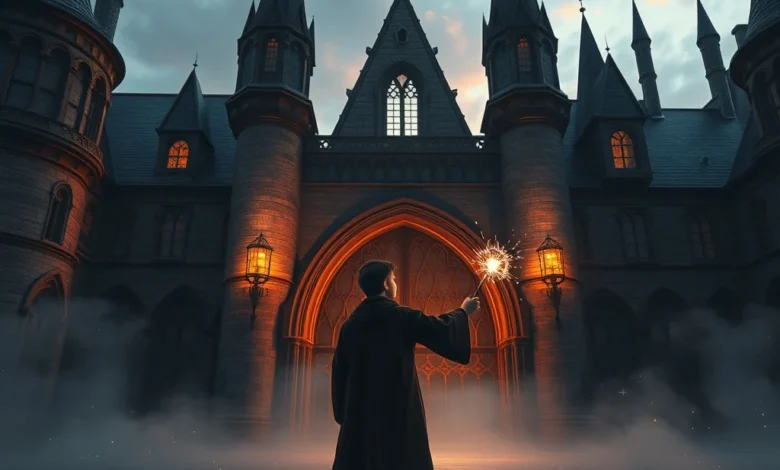
The world of wizards has always captivated audiences with its promise of magic, mystery, and adventure. When Hogwarts Legacy was announced, it immediately became one of the most anticipated titles in modern gaming history. Players had waited decades to finally step into the shoes of a student at the iconic school of witchcraft and wizardry. Upon its official release, the game shattered sales records and dominated global conversation across social media platforms, streaming services, and gaming forums. However, the journey from announcement to player satisfaction was complex, filled with highs and lows that defined the launch experience.
This comprehensive analysis delves deep into the collective voice of the gaming community following the initial rollout. We examine the spectrum of feedback ranging from technical frustrations to narrative triumphs. Understanding these reactions provides crucial insight for potential buyers and helps developers understand what matters most to the RPG audience today. The reception was not monolithic; it varied wildly depending on the platform played, the hardware used, and the personal expectations held by each individual gamer.
🌍 Community Sentiment Overview
🔥 Initial Excitement Versus Reality
The launch period witnessed a surge of unbridled enthusiasm that rivaled major cultural events. The sheer scale of the open-world recreation of Hogwarts Castle alone generated thousands of hours of exploration footage shared by fans eager to find secret passages and hidden rooms. Early streamers reported feeling an emotional connection to the environment that few games have managed to achieve in recent memory. The attention to detail in architecture, from the Great Hall to the forbidden forest, resonated deeply with long-time fans of the franchise.
However, as the first wave of reviews solidified, a split emerged in the community. While many praised the immersion and scope, others pointed out significant hurdles that impacted the overall enjoyment. The excitement did not fade completely, but it matured into a more nuanced discussion. Players began comparing their experiences with friends who owned different consoles or PCs, leading to conversations about performance disparities. This polarization created a dynamic landscape where the game was celebrated for its artistry but scrutinized for its execution.
- ✅ High praise for world building
- ⚠️ Performance issues on older systems
- 🎯 Strong demand for future content
🕹️ Gameplay Mechanics Reception
⚔️ Combat and Magic Systems
The core appeal of any wizard simulator lies in the ability to cast spells and engage in combat. Hogwarts Legacy introduced a fluid combat system that allowed players to weave together various magical abilities seamlessly. Community feedback highlighted the satisfaction derived from mastering spell combos and utilizing the environment to gain tactical advantages. The feeling of disarming an enemy or stunning a group of foes with a precise timing window was frequently cited as a highlight of the experience.
Despite the fun factor, some players noted that the difficulty scaling could feel inconsistent. Certain encounters felt trivial while others became frustratingly punishing, often depending on the chosen difficulty setting. This inconsistency led to debates on forums regarding whether the balance was intentional or a result of poor tuning. Nevertheless, the variety of spells available offered enough depth to keep engagement high throughout the main campaign. Many users appreciated the progression system that unlocked new powers as they advanced through their schooling years.
Control responsiveness was another critical metric discussed by the community. On console versions, the mapping of buttons felt intuitive for most users, allowing for quick transitions between movement and magic. PC players, however, debated the effectiveness of keyboard and mouse configurations compared to traditional controllers. Some argued that the precision of a mouse enhanced aiming for spells, while others preferred the ergonomic comfort of a gamepad for extended play sessions.
- 🎮 Fluid combat animations
- 🛡️ Varied defensive options
- 🔄 Progression feels rewarding
🖥️ Technical Performance Analysis
🚀 PC Optimization Challenges
One of the most significant areas of discussion surrounding the launch was technical performance on personal computers. The game utilized a demanding engine that pushed graphics cards to their limits, particularly when ray tracing features were enabled. Players with mid-range hardware reported experiencing stuttering and frame rate drops that disrupted the immersion. This issue sparked numerous threads dedicated to troubleshooting and optimizing settings to achieve playable framerates.
The development team responded quickly with patches aimed at improving stability and reducing memory leaks. These updates were generally welcomed by the community, though the initial friction left a lasting impression. Users expressed frustration that a title of such magnitude should have been better optimized at launch. However, subsequent improvements demonstrated a commitment to fixing the foundational issues rather than ignoring them.
| Graphics Setting | Average FPS | Stability | Notes |
|---|---|---|---|
| Low | 90+ | High | Suitable for older GPUs |
| Medium | 60 | Very High | Standard balance |
| Ultra | 30-45 | Moderate | Requires powerful hardware |
The data presented above illustrates the variance in performance based on graphical fidelity. Interpreting these benchmarks reveals that achieving sixty frames per second often required sacrificing visual effects like shadows and ambient occlusion. For competitive players who prioritize smoothness over visuals, lowering these settings proved essential. Conversely, those seeking photorealistic imagery accepted lower framerates in exchange for visual splendor. The choice ultimately depended on the individual hardware configuration and personal preference.
📱 Mobile and Console Variations
While the PC version faced the brunt of optimization criticism, console players experienced a smoother ride due to fixed hardware targets. PlayStation and Xbox versions maintained consistent framerates, though texture streaming issues occasionally caused pop-in in distant environments. Battery consumption on handheld modes was also a topic of concern for portable gamers traveling on the go. Despite these minor grievances, the console experience remained largely stable and enjoyable for the majority of users.
🤝 Ethical and Narrative Debates
🏳️ Cultural Representation Concerns
No discussion of player reaction would be complete without addressing the broader cultural conversations that surrounded the game. There were significant ethical debates regarding the creator of the original literary work and how her public statements affected the consumer base. A portion of the fanbase chose to boycott the game entirely based on ideological differences, regardless of the game content itself. This resulted in a vocal minority expressing strong opposition on social media channels.


Conversely, another segment of the audience separated the creator from the creative product, focusing solely on the quality of the game. They argued that the opportunity to explore the wizarding world deserved recognition independent of external political factors. This dichotomy created a unique situation where the game became a lightning rod for wider societal discussions. Developers navigated this carefully by keeping the game focused on original storylines rather than adapting existing controversial elements.
The decision to include diverse house selection and character customization was met with mixed reactions. Some players felt it added richness to the role-playing aspect, allowing them to project themselves into the world more effectively. Others felt that certain choices diluted the traditional lore established in previous adaptations. Regardless of stance, the inclusion of player agency in defining their character identity remained a popular feature among those who engaged with the narrative.
📈 Long-Term Retention and Support
🔄 Post-Launch Updates
In the months following the initial release, the community shifted focus toward long-term viability. The expectation was for regular content drops that would extend the lifespan of the game beyond the main storyline. Seasonal events and cosmetic updates were highly anticipated by players who had completed the primary objectives. While the roadmap was initially vague, the eventual introduction of new challenges kept the active player base engaged.
Feedback on the update schedule suggested that players wanted faster delivery of new features. Waiting periods between patches were sometimes criticized for slowing momentum. However, the quality of the additions generally outweighed the wait times. Players appreciated the effort put into expanding the world map and adding new dungeons that rewarded exploration.
📊 Key Points Summary
To summarize the multifaceted reception, we can categorize the feedback into several distinct pillars. Each pillar represents a different facet of the player experience that contributed to the overall score of the launch.
| Category | Rating | Notes |
|---|---|---|
| Visuals | 9/10 | Exceptional art direction |
| Gameplay | 8/10 | Fun but repetitive later |
| Tech | 7/10 | Optimization needed fixes |
| Story | 8/10 | Engaging but familiar tropes |
Analyzing this table reveals that the strongest asset of the game was undoubtedly its visual presentation and art design. Even critics acknowledged the technical achievement in recreating the castle so faithfully. The gameplay received high marks for its magic system but dipped slightly due to side quest repetition. Technical performance remains the weakest link, primarily affecting PC users. Finally, the story was praised for capturing the essence of the franchise despite relying on familiar hero’s journey structures.
❌ Pros and Cons Breakdown
✅ Advantages
The strengths of Hogwarts Legacy are undeniable and form the basis of its enduring popularity. The sense of discovery is unparalleled, offering moments of genuine awe when exploring the grounds. Players can spend hours simply wandering the library or flying on broomsticks without completing a single mission. This sandbox freedom empowers users to create their own stories within the established framework.
The audio design also deserves special mention. Voice acting was consistently praised for bringing characters to life with emotion and nuance. The musical score complemented the scenes perfectly, enhancing the magical atmosphere without being intrusive. Sound effects ranged from the crackle of spells to the creaking of old doors, adding layers of realism to the virtual world.
- 🌟 Immersive open world
- 🧙♂️ Deep spell combination system
- 🎨 Beautiful artistic style
❌ Disadvantages
Despite the accolades, there are notable weaknesses that prevent perfection. The main story, while engaging, follows a predictable path that seasoned RPG veterans may find lacking in surprise. Side missions often repeat the same objectives with minor variations, leading to fatigue after extended play. Additionally, the lack of multiplayer functionality disappointed some who hoped for cooperative wizarding adventures.
Technical issues persist on certain hardware configurations, requiring manual tweaking to resolve. Storage requirements are also quite high, consuming significant disk space that may be problematic for users with limited SSD capacity. These factors combined mean that while the game is excellent, it is not without flaws that detract from the flawless experience some expected.
🏁 Final Verdict and Conclusion
In conclusion, the player reaction after the launch of Hogwarts Legacy was overwhelmingly positive despite significant hurdles. The game succeeded in delivering a fantasy fulfillment that had been missing from the market for years. While technical optimizations were required to polish the experience, the core foundation was strong enough to withstand criticism. For those who love the wizarding genre, this title remains a definitive recommendation.
Players should approach the game with realistic expectations regarding hardware requirements. Ensuring your system meets the recommended specifications will drastically improve satisfaction levels. As updates continue to roll out, the longevity of the title looks promising. Whether you are a casual explorer or a hardcore combatant, there is something here to enjoy.
❓ Frequently Asked Questions
- Does the game run on Windows 10? Yes, the game is fully compatible with Windows 10 operating systems, provided you meet the minimum system requirements for optimal performance.
- Is internet connection required to play? An internet connection is required for the initial installation and verification, but single-player campaigns can be enjoyed offline once installed.
- Does it support controller input? Absolutely, full controller support is available for both PlayStation and Xbox controllers on PC, as well as native support on consoles.
- Is the game available on mobile devices? Currently, Hogwarts Legacy is designed for PC and console platforms and does not have a native mobile version released yet.
- Can I transfer save files between platforms? Cross-progression is not currently supported, meaning save files remain locked to the platform where they were created.
- Are there microtransactions? The game focuses on in-game progression through gameplay rather than pay-to-win mechanics, ensuring fair competition.
- How long is the main story? Completing the main storyline typically takes around thirty to forty hours depending on your playstyle and pace.
- Will there be downloadable content? Future content updates and expansions have been planned to add new regions and quests to the world.
- Does the game feature online multiplayer? No, the game is strictly a single-player experience focused on personal storytelling and exploration.
- Is it suitable for younger audiences? The game contains mild violence and fantasy themes, making it appropriate for teenagers but parental discretion is advised for younger children.