
Gameplay Breakdown of Age of Empires IV – Early Game Tactics and Resource Management

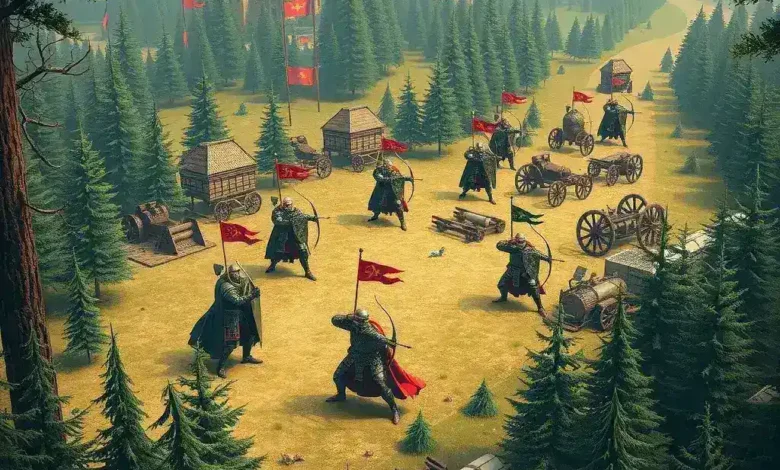
Age of Empires IV stands as a cornerstone of the real-time strategy genre, blending historical authenticity with deeply layered macro and micro-management systems. The game demands precise resource allocation, rapid economic scaling, and disciplined early-game positioning. Success in the opening minutes often dictates the entire match trajectory, making foundational build orders and scouting protocols absolutely critical. Players must master the balance between military pressure, technological advancement, and economic stability to outmaneuver opponents effectively.
This comprehensive analysis explores the most effective opening strategies, breaking down economy optimization, faction-specific build orders, map control techniques, and hardware performance considerations. Whether you are navigating the dense forests of Normandy or managing the open plains of the Mongolian steppes, understanding these core principles will elevate your tactical execution. The following sections provide actionable insights, technical breakdowns, and competitive recommendations tailored for players seeking consistent victories.
- ✅ Genre: Real-Time Strategy / Historical Warfare
- 🎯 Developer: Relic Entertainment
- 📜 Publisher: Xbox Game Studios
- 🌍 Platform Focus: PC and Console
- 🧠 Target Audience: Competitive RTS players, history enthusiasts, and tactical strategists
- 📈 Market Impact: Revitalized the classic RTS formula with modern networking, dynamic campaigns, and refined economy systems
🌍 Platform Compatibility and Target Audience
Age of Empires IV is primarily optimized for PC and console environments, delivering a highly responsive experience across keyboard-mouse and controller inputs. The PC version offers the deepest customization, supporting high refresh rates, ultrawide monitors, and extensive keybinding options. Console players benefit from streamlined UI scaling and adaptive difficulty curves. The game is explicitly designed for players who appreciate methodical pacing, economic foresight, and precise unit micro-management. Casual players may find the learning curve steep, but dedicated practice yields rapid improvement.
📜 Historical Context and Campaign Narrative
The campaign structure in Age of Empires IV diverges from traditional linear storytelling by focusing on faction-specific historical arcs. Each civilization features a dedicated narrative campaign that explores pivotal moments in medieval warfare, from the Norman conquests to the rise of the Abbasid dynasty. These campaigns are not merely cinematic interludes but serve as interactive tutorials that introduce unique mechanics, terrain advantages, and civilization-specific bonuses. The narrative design emphasizes strategic adaptation, forcing players to overcome historical constraints while leveraging period-accurate military doctrines.
Unlike fantasy-driven strategy titles, the game grounds its lore in documented historical conflicts, providing educational value alongside competitive gameplay. Players experience the logistical challenges of medieval supply lines, the tactical importance of terrain elevation, and the political ramifications of territorial expansion. This historical authenticity enhances immersion while reinforcing the core strategic loop: adapt to your environment, exploit enemy weaknesses, and maintain economic momentum.
🏰 Faction Lore and Early Game Identity
Each civilization possesses distinct early-game identities that directly influence opening strategies. The English faction excels in defensive positioning and economic resilience, making them ideal for players who prefer methodical expansion. The Mongols prioritize rapid mobility and aggressive scouting, rewarding players who master hit-and-run tactics. The Abbasids focus on market-driven economy and religious infrastructure, enabling swift technological transitions. Understanding these inherent bonuses allows players to tailor their build orders to match faction strengths rather than fighting against them.
🧠 Core Mechanics and Early Game Systems
The opening phase of Age of Empires IV revolves around three interconnected pillars: resource gathering, military positioning, and technological progression. Players begin with a town center, a handful of villagers, and a scout unit. The immediate priority is establishing a sustainable economy while maintaining map awareness. Efficient resource routing prevents bottlenecks, while strategic building placement minimizes vulnerability to early raids. The game rewards players who can simultaneously manage macro-economy and micro-unit control without sacrificing long-term positioning.
Early game tactics require disciplined execution. Deviating from established build orders without a clear strategic reason often leads to economic collapse or military defeat. Players must learn to read opponent scouting patterns, anticipate aggression, and adjust their economy accordingly. The margin for error is narrow, but consistent practice transforms chaotic openings into controlled, predictable expansions.
⚔️ Resource Gathering and Economy Optimization
Resource management forms the backbone of every successful opening strategy. Wood, food, gold, and stone must be allocated with precision to support both military and economic growth. The standard early-game approach involves balancing villager distribution across food and wood sources while delaying gold and stone until the feudal age transition. Players should prioritize efficient drop-off points, minimize villager travel distance, and maintain continuous worker production. Stalling villager production for even a few seconds compounds into significant economic deficits over time.
- ✅ Food Priority: Maintain a steady stream of villagers on boar, sheep, or berry patches to sustain town center queueing
- 🎯 Wood Management: Assign dedicated woodcutters early to support building construction and feudal age requirements
- ⚠️ Gold Delay: Avoid early gold investment unless pursuing a specific military rush or technology-dependent strategy
- 🛡️ Stone Conservation: Reserve stone for defensive structures and castle age transitions rather than early expansion
🗺️ Map Control and Scouting Protocols
Map control dictates early-game momentum. The starting scout unit serves as your primary intelligence tool, revealing enemy positioning, resource locations, and potential expansion sites. Effective scouting involves tracking opponent villager routes, identifying early military production, and securing strategic chokepoints. Players who neglect scouting often fall victim to unexpected rushes or lose valuable expansion territory to aggressive opponents. Maintaining constant map awareness allows for proactive adjustments rather than reactive panic.
🎨 Visual Fidelity and Audio Design
Age of Empires IV utilizes a highly optimized rendering engine that balances historical aesthetics with competitive clarity. The visual design prioritizes unit readability, terrain contrast, and environmental storytelling without sacrificing performance. Lighting effects, weather transitions, and architectural details enhance immersion while maintaining the fast-paced responsiveness required for high-level play. The audio landscape complements the visual presentation with period-accurate instrumentation, distinct unit voice lines, and dynamic combat soundscapes that provide crucial tactical feedback.
🖥️ Engine Performance and Environmental Details
The game engine handles large-scale battles with remarkable stability, utilizing efficient draw distance management and optimized particle effects. Terrain deformation, water reflections, and foliage physics contribute to a living battlefield that responds dynamically to player actions. Competitive players benefit from consistent frame rates and minimal input latency, ensuring that micro-management remains precise even during intense engagements. The engine scales effectively across mid-range and high-end hardware, maintaining visual fidelity without compromising strategic clarity.

🔊 Soundscapes and Historical Authenticity
Audio design in Age of Empires IV serves both atmospheric and functional purposes. Distinct weapon impacts, cavalry charges, and siege engine deployments provide immediate battlefield feedback. Voice lines for unit selection, command execution, and historical narration reinforce faction identity while maintaining competitive focus. The soundtrack adapts dynamically to match the pacing of engagements, shifting from tense ambient tones during scouting phases to orchestral intensity during large-scale battles. This audio-layered approach enhances immersion without distracting from strategic decision-making.
🚀 Key Strategic Features and Build Orders
The most effective opening strategies revolve around standardized build orders that balance economic stability with military readiness. The standard feudal age transition remains the most reliable approach, prioritizing rapid villager production, secure resource routing, and timely military deployment. Players who master the two-gate, three-gate, and economy-focused variations can adapt to opponent aggression while maintaining long-term momentum. Each build order requires precise timing, disciplined execution, and continuous map awareness to prevent economic collapse or military overextension.
- Standard Feudal Rush – Focuses on early military pressure while maintaining economic stability
- Castle Age Tech Transition – Delays military engagement to secure advanced technologies and siege capabilities
- Economy-First Expansion – Prioritizes resource nodes and villager production over early aggression
- Scout Harassment Loop – Utilizes mobile units to disrupt opponent economy while securing map control
- Defensive Turtle Strategy – Builds fortified positions to weather early aggression and counter-attack later
📊 Performance Metrics and Technical Breakdown
| Category | Rating | Notes |
|---|---|---|
| Economy Scaling | 9/10 | Highly responsive villager queueing and efficient resource routing |
| Military Micro | 8.5/10 | Precise unit control with strong formation and targeting systems |
| Map Control | 9/10 | Scouting mechanics and terrain utilization reward strategic foresight |
| Build Order Flexibility | 8/10 | Standardized openings work well, but require adaptation to opponent patterns |
| Hardware Optimization | 8.5/10 | Stable performance across mid-range and high-end PC configurations |
The performance metrics highlight a game that excels in economic management and tactical positioning while maintaining competitive integrity. Economy scaling receives top marks due to the seamless villager production system and efficient resource drop-off mechanics. Military micro-management benefits from precise targeting, formation controls, and responsive unit AI, allowing players to execute complex engagements without input lag. Map control mechanics reward players who prioritize scouting and terrain utilization, creating a strategic environment where foresight directly translates to victory. Build order flexibility remains strong but requires continuous adaptation, as rigid execution often leads to predictable patterns that experienced opponents can exploit. Hardware optimization ensures consistent performance across various system configurations, maintaining competitive stability without sacrificing visual clarity.
📈 Advantages and Strategic Strengths
Age of Empires IV delivers a highly refined real-time strategy experience that rewards disciplined execution and tactical foresight. The game excels in economic management, offering seamless villager production, efficient resource routing, and clear progression pathways. Military engagements benefit from precise micro-controls, formation systems, and terrain-based advantages that reward strategic positioning. The faction diversity ensures that each civilization offers unique early-game identities, preventing repetitive gameplay and encouraging adaptive strategies. Competitive integrity remains high due to balanced matchmaking, consistent performance optimization, and a dedicated player base that values skill-based progression.
- ✅ Seamless Economy Scaling: Villager queueing and resource routing minimize bottlenecks
- 🎯 Precise Military Micro: Formation controls and targeting systems enhance tactical execution
- 🗺️ Dynamic Map Control: Scouting and terrain utilization reward strategic foresight
- 🏰 Faction Diversity: Unique civilization bonuses prevent repetitive opening strategies
- ⚡ Competitive Stability: Balanced matchmaking and consistent performance ensure fair engagements
⚠️ Disadvantages and Common Pitfalls
Despite its strengths, Age of Empires IV presents challenges that can hinder newer players and even experienced strategists. The learning curve remains steep, requiring mastery of build order timing, resource allocation, and unit micro-management before achieving consistent victories. Early-game aggression can feel punishing for players who prioritize economic expansion, as neglecting military positioning often results in rapid defeats. The game also demands continuous map awareness, and players who fail to scout effectively frequently fall victim to unexpected rushes or lost expansion territory. Additionally, rigid adherence to standard build orders without adaptation can lead to predictable patterns that skilled opponents easily counter.
- ⚠️ Steep Learning Curve: Requires mastery of timing, economy, and micro-management
- ⚠️ Early Aggression Punishment: Neglecting military positioning leads to rapid defeats
- ⚠️ Scouting Dependency: Failure to maintain map awareness results in unexpected rushes
- ⚠️ Build Order Rigidity: Predictable patterns become easily counterable by experienced players
- ⚠️ Hardware Demands: High settings require mid-range to high-end PC configurations for optimal performance
💻 Technical Optimization and Hardware Requirements
| Component | Minimum Requirement | Recommended Requirement |
|---|---|---|
| Processor | Intel Core i5-6600 / AMD Ryzen 5 1600 | Intel Core i7-9700 / AMD Ryzen 7 3700X |
| Memory | 8 GB RAM | 16 GB RAM |
| Graphics | NVIDIA GTX 970 / AMD RX 570 | NVIDIA RTX 3060 / AMD RX 6600 XT |
| Storage | 50 GB SSD | 50 GB NVMe SSD |
| Network | Stable broadband connection | Fiber optic or low-latency wired connection |
Hardware requirements reflect the game’s emphasis on stable performance and responsive input handling. The minimum specifications ensure playable frame rates at standard settings, while recommended configurations deliver consistent high refresh rates and minimal input latency. Players utilizing mid-range hardware should prioritize SSD storage and stable network connections to prevent loading delays and matchmaking instability. Competitive players benefit from wired internet connections to eliminate packet loss and maintain synchronization during large-scale engagements. The game scales efficiently across hardware tiers, but neglecting storage upgrades or network optimization can introduce unnecessary performance bottlenecks that hinder strategic execution.
🏁 Final Verdict and Competitive Outlook
Age of Empires IV remains a definitive real-time strategy experience that rewards disciplined execution, tactical foresight, and continuous adaptation. The game excels in economic management, military micro-control, and faction diversity, creating a competitive environment where skill progression directly translates to victory. Players who master standard build orders, prioritize map control, and maintain economic stability will consistently outperform opponents who rely on reactive strategies. The hardware optimization ensures stable performance across various system configurations, while the audio-visual presentation enhances immersion without compromising competitive clarity.
This title is best suited for players who appreciate methodical pacing, strategic depth, and skill-based progression. Casual players may find the learning curve challenging, but dedicated practice yields rapid improvement and long-term satisfaction. Competitive enthusiasts will appreciate the balanced matchmaking, consistent performance optimization, and faction diversity that prevent repetitive gameplay. If you are prepared to invest time in mastering economy scaling, scouting protocols, and build order adaptation, Age of Empires IV delivers a highly rewarding strategic experience that stands as a modern RTS benchmark.
❓ Frequently Asked Questions
- Does Age of Empires IV run smoothly on Windows 10 and Windows 11? Yes, the game is fully optimized for both operating systems, delivering stable performance and consistent input responsiveness. Players should ensure their graphics drivers are updated to prevent compatibility issues and maintain optimal frame rates during competitive engagements.
- Does the game support controller input for competitive play? Yes, controller support is fully integrated, featuring adaptive UI scaling and customizable button mapping. While keyboard-mouse remains the preferred input for high-level micro-management, controllers offer a viable alternative for players who prioritize comfort and streamlined navigation.
- Is an internet connection required for single-player campaigns? No, single-player campaigns and skirmish matches against AI opponents function entirely offline. However, online multiplayer, ranked matchmaking, and community features require a stable broadband connection to synchronize gameplay and maintain competitive integrity.
- Is this the complete version with all civilizations and updates? Yes, the base game includes all core civilizations, campaigns, and multiplayer features. Post-launch content expansions introduce additional factions, historical scenarios, and balance adjustments, but the base release remains fully functional and competitively viable.
- How does the game handle large-scale battles without performance degradation? The engine utilizes efficient draw distance management, optimized particle effects, and dynamic level-of-detail scaling to maintain stable frame rates during large engagements. Players should prioritize SSD storage and wired network connections to prevent loading delays and synchronization issues.
- Can I customize keybindings for economy and military controls? Yes, the game features extensive keybinding customization, allowing players to assign dedicated hotkeys for villager production, unit selection, formation controls, and camera navigation. Proper keybinding setup significantly improves macro-management efficiency and reduces input latency.
- Does the game support ultrawide monitors and high refresh rates? Yes, ultrawide display support and high refresh rate compatibility are fully integrated, providing expanded field-of-view and smoother visual transitions. Competitive players benefit from reduced motion blur and enhanced spatial awareness during fast-paced engagements.
- What is the best approach for beginners to improve early-game performance? Beginners should focus on mastering standard build orders, prioritizing continuous villager production, and maintaining consistent scouting routines. Avoiding rigid aggression, adapting to opponent patterns, and practicing economy scaling will yield rapid improvement and long-term competitive stability.