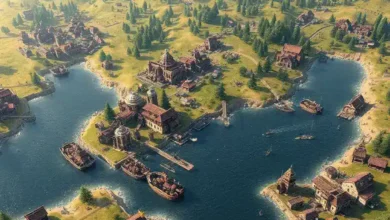

Civilization VI, developed by Firaxis Games and published by 2K, remains one of the most iconic turn-based strategy games in the world. Since its initial release in 2016, it has captivated millions of players with its deep gameplay mechanics, rich historical themes, and endless strategic possibilities. But is Civilization VI the right choice for you? That depends entirely on your gaming preferences, playstyle, and expectations. In this detailed review, we’ll explore every facet of the game to help you make an informed decision.
🧠 Introduction: Understanding Civilization VI’s Core Appeal
Civilization VI is a turn-based 4X (eXplore, eXpand, eXploit, eXterminate) strategy game where players lead a civilization from ancient times to the modern era. The game challenges you to build cities, manage resources, research technologies, engage in diplomacy, and conquer rival civilizations. Unlike real-time strategy games, Civilization VI emphasizes patience, long-term planning, and adaptability. Whether you’re a seasoned strategist or a newcomer to the genre, the game offers a depth of gameplay that rewards careful decision-making and creative problem-solving.
Civilization VI is available on multiple platforms, including PC, Mac, Linux, PlayStation 4, Xbox One, Nintendo Switch, iOS, and Android. This broad accessibility ensures that players can enjoy the game regardless of their preferred device. The game’s developer, Firaxis Games, is renowned for its expertise in turn-based strategy, having previously worked on titles like XCOM and Galactic Civilizations. Publisher 2K has ensured that the game receives consistent updates, expansions, and DLCs, keeping the experience fresh and engaging even years after its release.
The game’s target audience primarily consists of strategy enthusiasts, history buffs, and players who enjoy slow-paced, cerebral challenges. If you thrive on outsmarting opponents, optimizing resource management, and navigating complex political and military landscapes, Civilization VI is an excellent fit. However, if you prefer fast-paced action or games with minimal micromanagement, this might not be the ideal choice.
To summarize the game’s core appeal, here’s a quick overview:
– ✅ Genre: Turn-based 4X strategy
– ✅ Release Date: October 21, 2016
– ✅ Developer: Firaxis Games
– ✅ Publisher: 2K
– ✅ Platforms: PC, Mac, Linux, PlayStation 4, Xbox One, Nintendo Switch, iOS, Android
– ✅ Why It Stands Out: Deep strategy, historical setting, endless replayability
– ✅ Target Audience: Strategy gamers, history enthusiasts, players who enjoy long-term planning
🏛️ Story Overview and Narrative Analysis: The Historical Journey
Civilization VI does not follow a traditional narrative with a fixed plot or character progression. Instead, the game presents a broad historical canvas where players shape their own stories through exploration, diplomacy, warfare, and cultural development. Each civilization—led by a historically inspired leader such as Augustus, Cleopatra, or Gandhi—has unique abilities, units, and traits that influence gameplay. For example, Cleopatra’s civilization excels in trade and diplomacy, while Gandhi’s focuses on peaceful expansion and cultural influence.
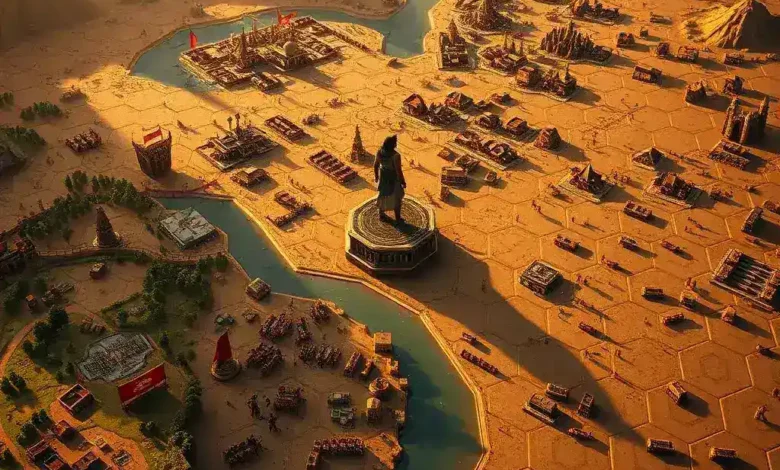
The game’s world is divided into hexagonal tiles, each representing different terrain types like forests, mountains, deserts, and rivers. These tiles provide resources essential for city growth, military strength, and technological advancement. The historical immersion is further enhanced by the game’s art style, which blends stylized 3D models with vibrant colors and detailed animations. Each era—from the ancient period to the futuristic space age—features unique architectural styles, units, and technologies, allowing players to witness the evolution of human civilization firsthand.
The lack of a traditional storyline might disappoint players seeking a linear narrative, but Civilization VI compensates with its emergent storytelling. Every game creates a unique historical timeline based on your decisions. Did you prioritize science and launch a rocket into space? Did you conquer rival civilizations with overwhelming military force? Did you establish a cultural empire by building world wonders and promoting great artists? The possibilities are nearly endless, and each playthrough tells a different story.
One of the game’s most compelling aspects is its ability to blend education with entertainment. Players often find themselves researching real historical technologies, such as the printing press or industrialization, while also engaging in fictional scenarios like discovering electricity or developing nuclear weapons. The game’s historical accuracy is impressive, though it occasionally takes creative liberties for gameplay balance. For example, the Great Library wonder allows instant technology sharing, a concept inspired by the Library of Alexandria but simplified for strategic purposes.
The narrative depth of Civilization VI also extends to its diplomacy system. Leaders have personalities and agendas that evolve based on your interactions. A once-friendly civilization might turn hostile if you betray their trust or expand too aggressively into their territory. This dynamic system ensures that every diplomatic negotiation feels meaningful and consequential, adding another layer of immersion to the historical experience.
🎮 Gameplay Mechanics and Systems: Mastering the Art of Strategy
Civilization VI’s gameplay revolves around four core pillars: exploration, expansion, exploitation, and extermination. These principles guide every decision you make, from founding your first city to engaging in global domination. The game’s mechanics are designed to encourage strategic depth and adaptability, ensuring that no two playthroughs are identical. Let’s break down the key systems that define Civilization VI’s gameplay.
The game’s turn-based structure allows you to take your time to assess situations, plan moves, and react to your opponents’ actions. Each turn represents a fixed period—usually a few years—and advances the game’s timeline. This pacing might feel slow to some players, especially those accustomed to fast-paced action games, but it is essential for deep strategic thinking. The ability to pause and review the map at any time further enhances the game’s accessibility, allowing you to make informed decisions without rushing.
Below is a breakdown of the game’s primary gameplay systems:
- ✅ City Management: Founding, growing, and defending cities is the foundation of your empire. Each city produces units, buildings, and improvements that contribute to your civilization’s strength.
- ✅ Technology and Civics: Researching technologies unlocks new units, buildings, and wonders, while civics shape your government’s policies and cultural development.
- ✅ Diplomacy and Alliances: Interacting with rival civilizations through trade, treaties, and warfare is crucial for survival and expansion.
- ✅ Military and Combat: Building armies, engaging in battles, and conquering rival cities are key to achieving domination victories.
- ✅ Culture and Tourism: Promoting cultural development attracts tourists, which can lead to a cultural victory by spreading your civilization’s influence globally.
- ✅ Religion: Establishing a religion and spreading its beliefs can provide unique bonuses and influence other civilizations.
- ✅ Espionage: Spies can sabotage rival civilizations, steal technologies, and gather intelligence to gain a strategic advantage.
⚔️ Combat System and Core Controls: The Art of War in Civilization VI
Combat in Civilization VI is turn-based and grid-based, with units moving across hexagonal tiles. Each unit has specific strengths, weaknesses, and ranges, requiring players to carefully consider positioning and tactics. The game’s combat system is deceptively simple but offers incredible depth when mastering advanced mechanics like flanking, zone of control, and promotions.
Units are divided into several categories, including melee, ranged, siege, naval, and air. Melee units like Warriors and Swordsmen excel in close combat but are vulnerable to ranged attacks. Ranged units such as Archers and Catapults deal damage from a distance but are fragile and require protection. Siege units like Trebuchets can bombard cities, making them essential for sieges, while naval units like Triremes and Caravels control the seas and enable exploration and trade. Air units, introduced in the Rise and Fall expansion, provide aerial support and can attack ground and naval units.
The game’s AI behavior is another critical aspect of combat. Rival leaders will respond to your actions in predictable but occasionally unpredictable ways. For example, if you declare war on a civilization, their allies might join the conflict, or they might attempt to negotiate a peace treaty. The AI also adapts to your playstyle, meaning that a peaceful player might face more aggressive civilizations over time. This dynamic AI ensures that every game feels fresh and challenging, even after hundreds of hours of playtime.
Physics and movement in Civilization VI are straightforward but require strategic foresight. Units can only move a limited number of tiles per turn, and terrain features like mountains, forests, and rivers can hinder movement or provide defensive bonuses. Players must carefully plan their unit movements to avoid being caught in unfavorable positions or surrounded by enemy forces. The game’s physics also extend to city defenses, with walls and defensive buildings providing bonuses against ranged attacks and melee units.
Skill progression in Civilization VI is tied to unit promotions. When a unit survives combat, it gains experience points that can be spent on promotions to enhance its abilities. Promotions range from increasing combat strength to granting healing bonuses or enabling units to move through forests without penalty. This system encourages players to invest in their units, creating powerful armies that can dominate the battlefield.
Difficulty balance is another area where Civilization VI excels. The game offers a range of difficulty levels, from Settler (easiest) to Deity (most challenging). Each level adjusts the AI’s aggression, resource availability, and starting bonuses to provide a tailored experience. For newcomers, lower difficulty levels offer a gentler introduction to the game’s mechanics, while experienced players can test their skills against the game’s hardest challenges.
🌍 Open World and Level Design: A Living, Breathing World
Civilization VI’s world is procedurally generated, meaning that no two maps are identical. The game’s hexagonal tile system creates a sense of depth and realism, with each tile representing a distinct terrain type or resource. The map design emphasizes strategic decision-making, as players must balance the need for expansion with the limitations of their starting location. For example, founding a city near a river provides access to fresh water, while settling near a mountain offers defensive bonuses but limits growth due to the terrain’s restrictions.
Exploration freedom is one of Civilization VI’s greatest strengths. Players can choose to focus on science, culture, religion, domination, or a mix of these paths, creating unique playstyles tailored to their preferences. The game’s technology tree is vast and interconnected, allowing for diverse strategies. For instance, a science-focused player might prioritize researching industrial technologies to unlock powerful units like tanks, while a culture-oriented player might focus on building wonders and attracting tourists to achieve a cultural victory.
The mission structure in Civilization VI is flexible, with players able to pursue multiple objectives simultaneously. The game’s victory conditions—domination, science, culture, religion, and diplomacy—provide clear goals but allow for creative approaches. For example, a domination victory might involve conquering rival civilizations through military force, while a science victory could require launching a spaceship to Alpha Centauri. This flexibility ensures that players remain engaged and motivated, as they can adapt their strategies based on the game’s progression.
Replay value is one of Civilization VI’s most impressive features. With numerous civilizations, leaders, leaders, and victory conditions to explore, players can experience the game in countless ways. The game’s expansions—such as Rise and Fall, Gathering Storm, and Leader Pass—add even more depth, introducing new mechanics like governors, eras, disasters, and additional leaders. Whether you’re a casual player or a hardcore strategist, Civilization VI offers endless opportunities for experimentation and discovery.
🎨 Graphics and Audio Quality: A Visual and Auditory Feast
Civilization VI’s graphics and audio design play a crucial role in immersing players in its historical world. The game features a stylized art style that blends 3D models with vibrant colors and detailed animations, creating a visually appealing experience that is both accessible and engaging. The hexagonal tile system adds a layer of complexity to the visual design, with each terrain type and resource represented by unique textures and models. This attention to detail enhances the game’s strategic depth, allowing players to quickly assess the value of each tile and make informed decisions.
Below is a breakdown of the game’s visual quality and technical specifications:
- ✅ Game Engine: The game uses a modified version of the Unreal Engine 4, which provides robust graphics capabilities and smooth performance.
- ✅ Texture Quality: Textures are detailed and varied, with each terrain type and unit featuring unique designs. The game’s art style is inspired by historical aesthetics, with buildings and units reflecting their respective civilizations’ architectural styles.
- ✅ Lighting: Lighting effects are dynamic, with day-night cycles and weather conditions like rain and snow influencing the visual experience. These effects not only enhance immersion but also provide tactical advantages, such as using nighttime to hide military movements.
- ✅ Shadows: Shadows are soft and realistic, adding depth to the game’s environments and helping players assess unit positioning and terrain features.
- ✅ Environmental Effects: Environmental effects like fog of war, unit animations, and city growth animations contribute to the game’s visual appeal. The fog of war mechanic obscures unexplored areas, encouraging players to explore and expand their empires.
🖥️ Visual Quality and Engine: A Closer Look
The visual quality of Civilization VI is a significant improvement over its predecessor, Civilization V. The hexagonal tile system allows for more strategic depth and visual variety, with each tile featuring unique terrain features like forests, rivers, and mountains. The game’s art style is inspired by historical aesthetics, with buildings and units reflecting their respective civilizations’ architectural styles. For example, Roman units feature classical armor and weapons, while Egyptian units are adorned with hieroglyphic designs.
The game’s lighting system is another standout feature. Day-night cycles and weather conditions like rain and snow create a dynamic visual experience that enhances immersion. Players can use these effects to their advantage, such as launching surprise attacks under the cover of night or utilizing foggy weather to obscure military movements. The game’s shadows are soft and realistic, adding depth to environments and helping players assess unit positioning and terrain features.
Environmental effects like fog of war, unit animations, and city growth animations contribute to the game’s visual appeal. The fog of war mechanic obscures unexplored areas, encouraging players to explore and expand their empires. Unit animations are fluid and detailed, with each unit featuring unique movements and attack animations that reflect their historical counterparts. City growth animations show buildings being constructed and citizens working the land, providing a satisfying sense of progression.
Civilization VI’s visual design also extends to its user interface, which is clean, intuitive, and customizable. The game’s UI features a minimalist design that prioritizes clarity and accessibility, with essential information like unit health, production queues, and diplomatic messages displayed prominently. Players can adjust the UI’s size and transparency to suit their preferences, ensuring a comfortable and personalized experience.
🔊 Sound Effects and Music: A Symphony of Strategy
The audio design in Civilization VI is equally impressive, with a rich soundscape that enhances the game’s immersion and strategic depth. The game features a dynamic music system that adapts to the game’s progression, with different tracks playing during exploration, combat, and diplomacy. The music is composed by Geoff Knorr, Roland Rizzo, and Griffin Cohen, and it blends orchestral and electronic elements to create a unique and engaging auditory experience.
Sound effects in Civilization VI are meticulously crafted to reflect the game’s historical setting. Unit sounds vary depending on the civilization and era, with ancient units featuring primitive weapons and armor, while modern units utilize advanced technology and weaponry. The game’s sound effects also include ambient noises like city chatter, construction sounds, and battle cries, which add to the game’s realism and immersion.
Voice acting in Civilization VI is another standout feature. Each leader is voiced by a talented actor who brings their personality and historical persona to life. For example, Cleopatra’s voice acting emphasizes her diplomatic prowess and regal demeanor, while Genghis Khan’s voice acting conveys his aggressive and expansionist nature. The game’s diplomacy system is further enhanced by voice acting, with leaders reacting to your actions through spoken dialogue that reflects their historical counterparts.
The game’s music system is dynamic and adaptive, with tracks changing based on the game’s progression and your actions. For example, the music might shift from a peaceful exploration theme to an intense combat theme when a battle begins. This dynamic music system ensures that the audio experience remains engaging and immersive throughout the game.
The combination of sound effects, voice acting, and dynamic music creates a rich and immersive auditory experience that complements the game’s visual and strategic depth. Whether you’re exploring new territories, engaging in diplomatic negotiations, or leading your armies to victory, Civilization VI’s audio design enhances every aspect of the gameplay.
🚀 Key Features Section: What Makes Civilization VI Stand Out?
Civilization VI is packed with features that set it apart from other strategy games. From its deep strategic mechanics to its rich historical setting, the game offers a unique and engaging experience that appeals to a wide range of players. Below are some of the game’s most notable features, which contribute to its enduring popularity and critical acclaim.
One of Civilization VI’s most innovative features is its district system. Unlike previous entries in the series, cities in Civilization VI do not expand outward in a circular pattern. Instead, they grow in a more organic and realistic manner, with districts—such as commercial hubs, industrial zones, and holy sites—placed strategically around the city center. This system encourages players to plan their cities carefully, balancing the need for growth with the limitations of available space and resources.
Another standout feature is the game’s government system, which allows players to adopt policies that reflect their playstyle. Governments are unlocked through civics, and each policy provides unique bonuses that can enhance your civilization’s strengths. For example, a militaristic government might grant bonuses to military units, while a religious government could boost faith generation. This system adds another layer of strategic depth, as players must carefully consider which policies to adopt based on their long-term goals.
The game’s diplomacy system is also a major highlight. Civilization VI features a dynamic and reactive AI that responds to your actions in meaningful ways. Leaders have personalities, agendas, and historical rivalries that influence their behavior, creating a sense of realism and immersion. For example, playing as Gilgamesh of Sumeria might provoke aggressive responses from neighboring civilizations due to his expansionist playstyle. This dynamic diplomacy system ensures that every negotiation feels consequential and engaging.
Civilization VI also introduces a new victory condition: the religious victory. This victory condition requires players to spread their religion across the globe, converting rival civilizations and establishing a dominant faith. The religious system is deep and complex, with players able to found religions, spread beliefs, and utilize religious units like missionaries and inquisitors. This system adds a new layer of strategy, as players must balance their religious goals with other objectives like military conquest or cultural dominance.
Below is a numbered list of Civilization VI’s key features, which contribute to its status as one of the greatest strategy games of all time:
- District System: Encourages strategic city planning with modular districts.
- Government System: Adopt policies that reflect your playstyle and provide unique bonuses.
- Dynamic Diplomacy: Leaders have personalities and agendas that influence their behavior.
- Religious Victory: Spread your faith across the globe to achieve victory.
- Expansions and DLCs: Regular updates and expansions add new civilizations, leaders, and mechanics.
- Multiplayer Support: Compete against friends or random opponents in online matches.
- Mod Support: Customize and enhance your experience with community-created mods.
- Historical Immersion: Rich visuals, sound design, and mechanics that reflect historical settings.
📊 Detailed Feature Comparison Table
| Feature | Civilization VI | Civilization V | XCOM 2 |
|---|---|---|---|
| Gameplay Type | Turn-based 4X Strategy | Turn-based 4X Strategy | Turn-based Tactical Combat |
| District System | Yes | No | No |
| Government System | Yes | No | No |
| Religious Victory | Yes | No | No |
| Dynamic Diplomacy | Yes | Limited | No |
| Expansions and DLCs | Multiple | Moderate | Limited |
| Multiplayer Support | Yes | Yes | Yes |
| Mod Support | Yes | Yes | Yes |
| Historical Immersion | High | Moderate | Moderate |
The table above compares Civilization VI to its predecessor, Civilization V, and another popular strategy game, XCOM 2. Civilization VI stands out for its district system, government system, and religious victory, which add new layers of strategic depth and replayability. While Civilization V introduced the hexagonal tile system and the great person mechanic, Civilization VI refines these systems with the district system, which encourages more thoughtful city planning.
The government system in Civilization VI is another significant improvement, allowing players to adopt policies that reflect their playstyle and provide unique bonuses. This system adds another layer of strategy, as players must carefully consider which policies to adopt based on their long-term goals. The religious victory condition is also a standout feature, as it introduces a new way to achieve victory that focuses on spreading your faith across the globe.
Compared to XCOM 2, Civilization VI offers a broader and more open-ended gameplay experience. While XCOM 2 focuses on tactical combat and squad management, Civilization VI emphasizes long-term strategy, city management, and diplomacy. This difference in focus makes Civilization VI a better choice for players who enjoy deep strategic planning and emergent storytelling, while XCOM 2 appeals to those who prefer tactical combat and squad-based gameplay.
🌟 Pros and Cons: Weighing the Strengths and Weaknesses
Like any game, Civilization VI has its strengths and weaknesses. Understanding these can help you determine whether the game is the right fit for your gaming preferences. Below, we’ll explore the game’s advantages and disadvantages in detail, providing a balanced perspective to aid your decision-making process.
✅ Advantages: Why Civilization VI Shines
Civilization VI’s greatest strength lies in its depth and replayability. The game offers countless hours of engaging gameplay, with each playthrough presenting unique challenges and opportunities. The district system, government policies, and religious victory condition add new layers of strategy that keep the experience fresh and exciting. Whether you’re a casual player or a hardcore strategist, Civilization VI offers something for everyone.
One of the game’s most significant advantages is its accessibility. While Civilization VI is deep and complex, it is also designed to be approachable for newcomers. The game’s UI is intuitive and customizable, with essential information displayed prominently. Additionally, the game offers a range of difficulty levels, allowing players to tailor their experience to their skill level. This accessibility ensures that even players new to the genre can enjoy Civilization VI without feeling overwhelmed.
The game’s historical immersion is another standout feature. Civilization VI’s visuals, sound design, and mechanics reflect its historical setting, creating a rich and engaging experience. The game’s art style is vibrant and detailed, with each civilization featuring unique architectural styles and unit designs. The dynamic music system and voice acting further enhance the immersion, making players feel like they’re leading a civilization through history.
Civilization VI also excels in its mod support and expansions. The game’s modding community is active and creative, with thousands of user-generated mods available to enhance and customize the experience. Official expansions like Rise and Fall and Gathering Storm add new mechanics, civilizations, and leaders, ensuring that the game remains fresh and engaging even years after its release.
Below is a bullet list summarizing Civilization VI’s primary advantages:
- ✅ Endless Replayability: Countless strategies, civilizations, and victory conditions to explore.
- ✅ Accessibility: Intuitive UI and customizable difficulty levels for newcomers.
- ✅ Historical Immersion: Rich visuals, sound design, and mechanics that reflect its setting.
- ✅ Mod Support: Thousands of community-created mods to enhance and customize the experience.
- ✅ Expansions and DLCs: Regular updates and expansions add new content and mechanics.
- ✅ Multiplayer Support: Compete against friends or random opponents in online matches.
- ✅ Strategic Depth: District system, government policies, and religious victory add new layers of strategy.
❌ Disadvantages: Potential Drawbacks to Consider
Despite its many strengths, Civilization VI is not without its weaknesses. One of the most common criticisms of the game is its slow pacing. The turn-based nature of the game can feel tedious to some players, especially those accustomed to fast-paced action games. Each turn represents a fixed period, and players must carefully plan their moves to avoid falling behind. This pacing might feel slow to casual players, who may find the game’s strategic depth overwhelming or unengaging.
Another potential drawback is the game’s microtransactions. While Civilization VI does not feature a pay-to-win model, it does offer cosmetic DLCs and expansions that add new civilizations, leaders, and mechanics. These purchases are optional and do not affect the core gameplay, but they can add up over time. Players who are on a budget might find the game’s DLCs and expansions to be an unnecessary expense.
The game’s AI can also be a source of frustration for some players. While the AI is dynamic and reactive, it can occasionally make unrealistic or illogical decisions. For example, the AI might declare war on you for no apparent reason or adopt policies that contradict its historical persona. These quirks can break the game’s immersion and make diplomacy feel less meaningful. Additionally, the AI’s aggression can feel overwhelming on higher difficulty levels, making it difficult for players to enjoy a peaceful playthrough.
The game’s performance can also be a concern, especially on lower-end hardware. Civilization VI is a demanding game, with complex AI calculations and detailed graphics that can strain older or less powerful systems. Players with mid-range or low-end PCs might experience performance issues like lag, stuttering, or long load times. The game’s performance is further impacted by mods, which can add additional strain to your system.
Civilization VI’s multiplayer experience is another area that could be improved. While the game supports online multiplayer, the experience can feel clunky and unintuitive compared to other strategy games. Matchmaking can be slow, and the lack of dedicated servers can lead to connectivity issues. Additionally, the multiplayer mode lacks the depth and variety of the single-player experience, making it less appealing for players seeking a competitive or cooperative challenge.
Below is a bullet list summarizing Civilization VI’s primary disadvantages:
- ❌ Slow Pacing: Turn-based gameplay can feel tedious to players accustomed to fast-paced action.
- ❌ Microtransactions: Optional DLCs and expansions can add up over time.
- ❌ AI Quirks: The AI can make unrealistic or illogical decisions, breaking immersion.
- ❌ Performance Issues: Demanding graphics and AI calculations can strain lower-end hardware.
- ❌ Multiplayer Limitations: Matchmaking can be slow, and the experience feels less polished than single-player.
- ❌ Complexity for Newcomers: The game’s depth can be overwhelming for players new to the genre.
💻 Performance and Technical Analysis: Running Civilization VI Smoothly
Civilization VI is a demanding game that requires a capable system to run smoothly. The game’s performance is influenced by several factors, including your hardware specifications, graphics settings, and installed mods. Below, we’ll explore the game’s system requirements and performance metrics to help you determine whether your setup can handle Civilization VI without issues.
🖥️ PC System Requirements
Civilization VI is available on PC, Mac, and Linux, with the PC version offering the most flexibility in terms of hardware and customization. Below is a detailed breakdown of the game’s system requirements for PC, including minimum and recommended specifications:
| Component | Minimum Requirement | Recommended Requirement |
|---|---|---|
| Operating System | Windows 7 64-bit | Windows 10 64-bit |
| Processor | Intel Core i3 2.5 GHz or AMD Phenom II 2.6 GHz | Intel Core i5 2.5 GHz or AMD Ryzen 5 1500X |
| Memory (RAM) | 4 GB | 8 GB |
| Graphics Card | Intel HD Graphics 4000 or AMD Radeon HD 5570 | NVIDIA GeForce GTX 770 or AMD Radeon R9 290 |
| Storage | 8 GB | 12 GB |
| DirectX | Version 11 | Version 12 |
The table above outlines the minimum and recommended system requirements for Civilization VI on PC. Players with lower-end hardware may experience performance issues, such as lag, stuttering, or long load times. These players can optimize their settings by lowering the graphics quality, disabling shadows, or reducing the resolution to improve performance.
Players with mid-range or high-end hardware can enjoy Civilization VI at higher settings with minimal performance issues. The game’s performance scales well with hardware upgrades, with improvements in FPS and load times becoming noticeable as you upgrade your CPU, GPU, or RAM. However, even high-end systems may experience performance issues when running multiple mods or during large-scale battles with hundreds of units on screen.
Civilization VI also supports DirectX 12, which can provide performance improvements on compatible hardware. Enabling DirectX 12 can reduce load times and improve FPS, especially on systems with NVIDIA GPUs. However, some players may experience graphical glitches or crashes when using DirectX 12, so it’s worth testing both DirectX 11 and 12 to determine which works best for your setup.
📱 Android Performance
Civilization VI is available on mobile devices, including iOS and Android. The mobile version of the game is designed to run smoothly on a wide range of devices, from mid-range smartphones to high-end tablets. However, performance can vary significantly depending on your hardware specifications and graphics settings. Below is an overview of Civilization VI’s performance on Android devices:
The game’s storage size is approximately 2.5 GB, which is relatively large for a mobile game. Players should ensure they have enough free space on their device before installing Civilization VI. The game also requires a stable internet connection for online multiplayer and cloud saves, though offline play is supported for single-player modes.
Battery consumption is another consideration for mobile players. Civilization VI is a demanding game that can drain your device’s battery quickly, especially during long play sessions. Players should use a charging cable or power bank to ensure their device remains powered throughout their gaming sessions.
Graphics settings on mobile devices are more limited than on PC, with options for low, medium, and high-quality graphics. Players with older or mid-range devices should opt for the low or medium settings to maintain smooth performance. The game’s touch controls are intuitive and responsive, though some players may prefer using a stylus or game controller for more precise input.</p
Below is a bullet list summarizing Civilization VI’s performance on Android devices:
- ✅ Compatibility: Runs smoothly on mid-range and high-end Android devices.
- ✅ Storage Size: Approximately 2.5 GB.
- ✅ Battery Consumption: Moderate to high; use a charging cable or power bank.
- ✅ Graphics Settings: Low, medium, and high-quality options available.
- ✅ Touch Controls: Intuitive and responsive, with support for stylus and game controllers.
- ✅ Online Multiplayer: Requires a stable internet connection for cloud saves and matchmaking.
🏁 Final Verdict and Conclusion: Is Civilization VI Worth Your Time?
Civilization VI is a masterpiece of turn-based strategy that has earned its place as one of the greatest games in the genre. Its deep mechanics, historical immersion, and endless replayability make it a must-play for fans of strategy games. However, the game’s slow pacing, demanding performance requirements, and occasional AI quirks might not appeal to everyone. Whether Civilization VI is right for you depends on your gaming preferences, playstyle, and expectations.
For players who enjoy long-term strategic planning, emergent storytelling, and immersive historical settings, Civilization VI is an excellent choice. The game offers countless hours of engaging gameplay, with each playthrough presenting unique challenges and opportunities. The district system, government policies, and religious victory condition add new layers of strategy that keep the experience fresh and exciting. Whether you’re leading the Romans to glory, spreading your faith as Gandhi, or dominating the world as Genghis Khan, Civilization VI delivers a rich and rewarding experience.
However, if you prefer fast-paced action, simple mechanics, or games with minimal micromanagement, Civilization VI might not be the ideal fit. The game’s turn-based pacing can feel tedious, and its depth might overwhelm newcomers. Additionally, the game’s performance requirements and occasional AI quirks can detract from the overall experience. Players on a budget or with lower-end hardware may also find the game’s DLCs and expansions to be an unnecessary expense.
Ultimately, Civilization VI is a game that rewards patience, creativity, and strategic thinking. If you’re willing to invest the time and effort to master its systems, you’ll be rewarded with an experience that is both intellectually stimulating and endlessly entertaining. Whether you’re playing solo, competing online, or modding the game to your liking, Civilization VI offers something for everyone.
In conclusion, Civilization VI is a timeless classic that continues to captivate players years after its release. Its depth, replayability, and historical immersion make it a standout in the turn-based strategy genre. If you’re a fan of strategy games or looking for a challenging and rewarding experience, Civilization VI is absolutely worth your time and money.
❓ Frequently Asked Questions
- Does Civilization VI support mods?
Yes, Civilization VI has robust mod support, with thousands of user-generated mods available on platforms like Steam Workshop. These mods can enhance graphics, add new civilizations, introduce gameplay changes, or even create entirely new game modes. Modding is a great way to extend the game’s lifespan and customize your experience to suit your preferences.
- Can I play Civilization VI offline?
Yes, Civilization VI supports offline play for single-player modes. However, an internet connection is required for online multiplayer, cloud saves, and the Steam Workshop. Players who prefer offline gaming should ensure they download all necessary content and mods before disconnecting from the internet.
- Does Civilization VI have a story mode?</b
No, Civilization VI does not feature a traditional story mode. The game focuses on emergent storytelling, where your decisions shape the narrative of your civilization’s journey. Each playthrough tells a unique story based on your strategies, victories, and interactions with rival civilizations.
- Is Civilization VI available on Mac and Linux?
Yes, Civilization VI is available on Mac and Linux in addition to PC. The game’s performance and features are consistent across all platforms, though Mac and Linux users may experience slightly different UI layouts or control schemes compared to PC players.
- Does Civilization VI have multiplayer support?
Yes, Civilization VI supports online multiplayer, allowing you to compete against friends or random opponents in turn-based matches. The multiplayer experience includes features like ranked matches, custom lobbies, and co-op play. However, matchmaking can be slow, and the multiplayer mode lacks the depth of the single-player experience.
- What are the best settings for Civilization VI on PC?
For optimal performance on PC, players should adjust their graphics settings based on their hardware. Lowering the resolution, disabling shadows, and reducing the number of units on screen can significantly improve FPS. Enabling DirectX 12 can also provide performance benefits on compatible systems. Players with mid-range or high-end hardware can enjoy the game at higher settings with minimal performance issues.
- Does Civilization VI have a mobile version?
Yes, Civilization VI is available on mobile devices, including iOS and Android. The mobile version features touch controls and optimized graphics for smaller screens. However, performance can vary depending on your device’s specifications, and the game may drain your battery quickly during long play sessions.
- Is Civilization VI suitable for beginners?
Civilization VI can be overwhelming for beginners due to its depth and complexity. However, the game’s accessibility features, such as customizable difficulty levels and an intuitive UI, make it easier for newcomers to learn. Players new to the genre should start with lower difficulty levels and experiment with different civilizations to find a playstyle that suits them.
- What are the system requirements for Civilization VI on PC?
The minimum system requirements for Civilization VI on PC include a Windows 7 64-bit operating system, an Intel Core i3 2.5 GHz processor, 4 GB of RAM, an Intel HD Graphics 4000 or AMD Radeon HD 5570 graphics card, and 8 GB of storage. The recommended requirements include a Windows 10 64-bit operating system, an Intel Core i5 2.5 GHz processor, 8 GB of RAM, an NVIDIA GeForce GTX 770 or AMD Radeon R9 290 graphics card, and 12 GB of storage.
- Does Civilization VI have any expansions or DLCs?
Yes, Civilization VI has multiple expansions and DLCs that add new content and mechanics. Notable expansions include Rise and Fall, which introduces governors and eras, and Gathering Storm, which adds disasters and climate change mechanics. The game also features leader pass DLCs that add new leaders and civilizations. These expansions are optional and do not affect the core gameplay.