
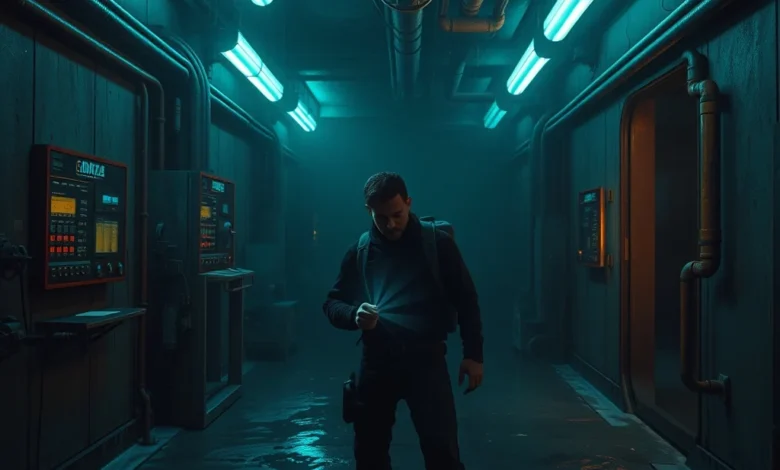
SOMA is a critically acclaimed horror-adventure game developed by Frictional Games, the masterminds behind Amnesia: The Dark Descent. Released in 2015, this psychological horror masterpiece immerses players in a futuristic underwater world filled with existential dread, intricate puzzles, and a haunting narrative. Unlike traditional horror games that rely solely on jump scares, SOMA thrives on atmosphere, mystery, and intellectual challenges, making it a unique experience for players who crave more than just terror.
Navigating the depths of Pathos-II, an abandoned underwater research facility, requires more than just quick reflexes. Players must solve a series of complex puzzles that are deeply integrated into the game’s story. These puzzles often blend logic, observation, and creativity, forcing players to think critically while staying vigilant against the game’s unsettling atmosphere. Whether you’re a seasoned horror fan or a puzzle enthusiast, SOMA offers a deeply rewarding yet challenging experience. However, even the most patient players can find themselves stuck on certain puzzles, especially in the early stages of the game.
This guide is designed to be your lifeline through the dark corridors of Pathos-II. Below, you’ll find detailed walkthroughs for every major puzzle in the game, complete with step-by-step instructions, visual aids, and pro tips to ensure you progress smoothly. We’ll also explore the hidden mechanics behind these puzzles, helping you understand the logic behind their design so you can approach future challenges with confidence. By the end of this guide, you’ll have all the tools you need to conquer the horrors—and the puzzles—of SOMA.
Before diving into the walkthroughs, it’s essential to understand the core mechanics that govern SOMA’s puzzles. The game features two primary types of challenges: environmental puzzles and interactive object-based puzzles. Environmental puzzles often require you to observe your surroundings carefully, looking for clues hidden in the game’s eerie atmosphere. These might include deciphering symbols, aligning objects, or manipulating the environment to progress. Interactive puzzles, on the other hand, typically involve using items or interfaces to solve a problem, such as rewiring systems, inputting codes, or operating machinery.
The puzzles in SOMA are not just obstacles; they are narrative devices that deepen the story and immerse you in the world of Pathos-II. Many puzzles are tied to the game’s themes of identity, consciousness, and survival, making their solutions feel more meaningful than in a typical puzzle game. For example, some puzzles require you to listen to audio logs or examine notes to uncover the history of the facility, while others challenge you to think like the game’s AI-driven characters, such as WAU or the automated systems of the station.
Another key aspect of SOMA’s puzzles is their non-linear progression. While the game is linear in structure, many puzzles can be solved in different ways, allowing for creative problem-solving. This flexibility means that even if you get stuck, there’s often another path or method to approach the challenge. However, it also means that some solutions might not be immediately obvious, requiring you to experiment or revisit earlier areas with new knowledge.
One of the most intimidating aspects of SOMA for new players is its lack of a traditional HUD. There are no clear indicators of what you can interact with, which often leaves players pressing buttons aimlessly or missing crucial objects. To combat this, always examine your surroundings closely. Look for glowing objects, unusual textures, or interactive prompts that suggest something can be done. The game rewards patience and attention to detail, so take your time to explore every corner of Pathos-II.
🔥 Early Game Puzzles – Navigating the Wreckage of Pathos-II
🏴☠️ The First Puzzle – Reactivating the Power
Your journey begins in the wreckage of Pathos-II, a vast underwater facility that has been submerged for centuries. The first major challenge you’ll face is reactivating the power to gain access to deeper sections of the station. This puzzle is relatively simple but sets the tone for the kind of challenges you’ll encounter throughout the game.
To solve this puzzle, you’ll need to:
- 🎯 Locate the power generator: Head to the room where the power generator is located. You’ll find it in a small chamber with a large, cylindrical machine emitting a soft hum. This is your first interactive object.
- ✅ Examine the generator: Approach the generator and interact with it. You’ll see a control panel with several buttons and a screen displaying a cryptic message.
- 🔧 Input the correct sequence: The screen will show a sequence of numbers or symbols. You need to match this sequence by pressing the buttons in the correct order. Pay close attention to the audio cues, as they often provide hints.
- ⚡ Activate the generator: Once the correct sequence is entered, the generator will hum to life, and the lights in the area will flicker back on. This will unlock the path to the next section of the game.
This puzzle is a great introduction to SOMA’s puzzle design. It teaches players to pay attention to audio cues and to examine interactive objects thoroughly. While it’s not particularly difficult, it establishes the game’s emphasis on environmental storytelling and the importance of observation.
🌊 The Water Flow Puzzle – Adjusting the Floodgates
As you progress deeper into Pathos-II, you’ll encounter a section where the station is flooded, and you need to adjust the floodgates to drain the water and proceed. This puzzle is more complex than the first and requires you to understand the station’s hydrodynamics.
Here’s how to solve it:
- 🌊 Locate the floodgate controls: You’ll find these in a small room with a control panel. The panel will show the current water levels in different sections of the station.
- 🔍 Examine the water levels: Note which sections are flooded and which are not. The goal is to drain the water from your current area to proceed.
- 🔄 Adjust the floodgates: Use the control panel to adjust the floodgates, allowing water to flow from the flooded areas into the lower sections of the station. You’ll need to experiment with different configurations to find the right balance.
- 🚪 Proceed once drained: Once the water level in your current area drops sufficiently, a door will unlock, allowing you to continue your journey.
This puzzle is a great example of how SOMA integrates its puzzles into the game’s narrative and atmosphere. The flooding of Pathos-II is a central theme of the game, and this puzzle reinforces that sense of impending doom and urgency. It also teaches players to think logically about cause and effect, a skill that will be crucial for solving more complex puzzles later on.
🧩 Mid-Game Challenges – Unraveling the Secrets of WAU
⚙️ The WAU Terminal Puzzle – Deciphering the Code
One of the most iconic puzzles in SOMA is the WAU terminal puzzle, which involves deciphering a code to gain access to the WAU (WAter Utility) system. WAU is one of the game’s central characters, and this puzzle plays a crucial role in the story. Solving it requires a mix of logic, observation, and creativity.
Here’s how to tackle this challenge:
- 🖥️ Locate the WAU terminal: You’ll find this terminal in a room filled with machinery and flickering lights. The terminal itself is a large, circular device with a screen and several buttons.
- 📜 Examine the terminal screen: The screen will display a series of symbols or numbers. Your goal is to input the correct sequence to unlock the terminal.
- 🔢 Decipher the code: The code is not immediately obvious. You’ll need to examine the surrounding area for clues. Look for notes, audio logs, or environmental details that might provide hints. For example, you might find a note with a sequence of numbers or symbols elsewhere in the facility.
- 🔑 Input the code: Once you’ve deciphered the sequence, input it into the terminal. If correct, the terminal will activate, and you’ll gain access to WAU’s systems.
This puzzle is a turning point in the game, as it introduces players to WAU, one of SOMA’s most fascinating characters. It also demonstrates how the game blurs the line between puzzle-solving and storytelling. The code you decipher is tied to the game’s themes of identity and consciousness, making the solution feel deeply rewarding.
🤖 The WAU Transformation Puzzle – Escaping WAU’s Clutches
After gaining access to WAU’s systems, you’ll face a high-stakes puzzle that involves escaping WAU’s transformation chamber. This puzzle is one of the most intense in the game, as it combines timing, observation, and quick decision-making.
Here’s how to solve it:
- 🚪 Enter the transformation chamber: You’ll find yourself in a large room with a central platform and several buttons around the perimeter.
- ⏳ Understand the mechanics: The goal is to activate the chamber’s systems in the correct order to safely escape. This involves pressing buttons in a specific sequence while avoiding WAU’s attacks.
- 🎯 Press the buttons in order: The correct sequence is often hidden in the environment or provided through audio cues. Listen carefully to the sounds around you, as they often indicate when to press a button.
- ⚡ Escape before WAU reacts: Once you’ve completed the sequence, the chamber will deactivate, and you can proceed to the next area. However, WAU will try to stop you, so be quick!
This puzzle is a masterclass in SOMA’s design. It combines horror and puzzle-solving seamlessly, creating a tense and memorable experience. It also reinforces the game’s themes of survival and adaptation, as you’re forced to think on your feet and react quickly to WAU’s unpredictable behavior.
🎭 Late-Game Puzzles – Confronting the Truth of Pathos-II
🌑 The Simon Says Puzzle – Testing Your Memory
As you near the end of your journey in Pathos-II, you’ll encounter a puzzle that tests your memory and pattern recognition. This puzzle involves a device that requires you to repeat a sequence of lights and sounds, similar to the classic game Simon Says.
Here’s how to solve it:
- 🔘 Locate the Simon Says device: You’ll find this device in a dimly lit room with a circular panel featuring several colored buttons.
- 🎵 Listen to the sequence: The device will play a sequence of lights and sounds. Pay close attention to the order and colors of the lights.
- 🔄 Repeat the sequence: Use the buttons on the device to repeat the sequence you just heard. If you make a mistake, you’ll need to start over.
- 🔓 Unlock the door: Once you’ve successfully repeated the sequence, the device will unlock a door, allowing you to proceed to the final sections of the game.
This puzzle is a great example of how SOMA incorporates classic gameplay mechanics into its horror setting. It’s a nod to retro games, but it’s also deeply tied to the game’s themes of memory and identity. The sequence you repeat is often a metaphor for the choices you’ve made throughout the game, making it a poignant and meaningful challenge.
💀 The Final Puzzle – Choosing Your Fate
The final puzzle in SOMA is less about solving a mechanical challenge and more about making a narrative choice. This puzzle forces you to confront the game’s central themes and decide how your journey will end. There is no “wrong” answer, but your choice will significantly impact the story’s outcome and your understanding of the game’s universe.
Here’s how to approach it:
- 📜 Read the final message: You’ll be presented with a message or prompt that asks you to make a choice. This could involve selecting an option from a menu, inputting a code, or simply deciding whether to proceed in a certain direction.
- 🤔 Consider the consequences: Think carefully about the implications of your choice. How does it align with the themes of the game? What will it mean for your character and the world you’ve explored?
- ✨ Make your choice: There is no “right” or “wrong” answer here. Your decision is personal and will shape your experience of SOMA’s ending.
This final puzzle is a testament to SOMA’s brilliance. It doesn’t just challenge your problem-solving skills; it challenges your moral compass and emotional investment in the story. The game’s ending is one of the most thought-provoking in gaming, and your choice will leave a lasting impression.
🔍 Advanced Puzzle Strategies – Thinking Like a SOMA Player
🧠 Observational Skills – Noticing the Unnoticed
Observation is the key to success in SOMA. Many puzzles require you to notice small details in the environment, such as subtle changes in lighting, unusual textures, or hidden objects. Here are some tips to improve your observational skills:
- 🌟 Look for glowing objects: The game often highlights interactive objects with a faint glow. If something looks out of place or emits a soft light, it’s likely important.
- 📖 Read everything: Audio logs, notes, and even graffiti can provide crucial hints. Don’t skip over text or audio cues, as they often contain the information you need to solve a puzzle.
- 🔄 Revisit areas: If you’re stuck, go back to earlier sections of the game. You might have missed something important the first time around, or new information might help you see a puzzle in a different light.
- 🎧 Listen carefully: Audio cues are often just as important as visual ones. The sound of running water, machinery, or distant voices can provide hints about what you need to do.
The puzzles in SOMA are designed to be immersive and atmospheric, and observation is the primary tool you’ll use to navigate them. The more you pay attention to your surroundings, the easier it will be to solve the game’s challenges.
🧩 Creative Problem-Solving – Thinking Outside the Box
SOMA rewards creative thinking. Many puzzles have multiple solutions, and the game encourages you to experiment with different approaches. Don’t be afraid to try unconventional methods to solve a challenge. Here are some strategies to help you think creatively:
- 🔄 Try different sequences: If a puzzle involves inputting a code or pressing buttons in a specific order, experiment with different sequences. The correct solution might not be the first one you try.
- 🔄 Use items in unexpected ways: Some puzzles require you to use items in ways you wouldn’t normally consider. For example, you might need to use a tool to manipulate an object in a way that seems illogical at first.
- 🔄 Exploit the environment: Look for ways to use the environment to your advantage. For example, you might need to use water flow, gravity, or even the behavior of other characters to solve a puzzle.
- 🔄 Combine clues: Some puzzles require you to combine information from multiple sources. For example, you might need to use a note from one area and an audio log from another to decipher a code.
Creative problem-solving is at the heart of SOMA’s puzzle design. The game rewards players who are willing to think outside the box and experiment with different approaches. Don’t be afraid to fail—many of the game’s puzzles are designed to be challenging, and it’s okay to take your time to figure them out.
📊 Analyzing Puzzle Design – Understanding the Logic Behind SOMA’s Puzzles
To master SOMA’s puzzles, it’s helpful to understand the logic behind their design. Frictional Games has a reputation for creating immersive and atmospheric horror games, and SOMA is no exception. The puzzles in the game are not just obstacles; they are integral parts of the story and the game’s world-building. Here’s what you need to know about the game’s puzzle design:
- 📜 Narrative integration: Many puzzles in SOMA are tied to the game’s story. For example, the WAU terminal puzzle is not just a mechanical challenge; it’s a way to explore WAU’s character and the themes of identity and consciousness.
- 🌍 Environmental storytelling: The game’s puzzles often rely on environmental storytelling. For example, the water flow puzzle teaches you about the station’s hydrodynamics and the consequences of the facility’s decay.
- 🎭 Character-driven challenges: Some puzzles are designed to reflect the personalities or behaviors of the game’s characters. For example, the WAU transformation puzzle forces you to think like WAU, adapting to its unpredictable behavior.
- 🔄 Non-linear progression: While the game is linear in structure, many puzzles can be solved in different ways. This allows for creative problem-solving and rewards players who experiment with different approaches.
By understanding the logic behind SOMA’s puzzle design, you’ll be better equipped to solve the game’s challenges. The puzzles are not just arbitrary obstacles; they are tools for storytelling and immersion. The more you engage with the game’s world and characters, the easier it will be to solve its puzzles.
📋 Common Mistakes to Avoid – Steering Clear of SOMA’s Pitfalls
⚠️ Ignoring Audio Cues – Missing the Game’s Subtle Hints
One of the most common mistakes players make in SOMA is ignoring audio cues. The game is filled with subtle sounds that provide hints about puzzles, the environment, and even the story. For example, the sound of running water might indicate that you need to adjust floodgates, or a distant hum might lead you to a hidden terminal. If you’re not paying attention to audio cues, you’re missing out on crucial information that could help you solve puzzles.
Here’s how to avoid this mistake:
- 🎧 Listen carefully: Turn up the volume and focus on the sounds around you. Pay attention to anything that sounds unusual or out of place.
- 🔊 Use headphones: If you’re playing on a PC or console, using headphones can help you pick up on subtle audio cues that you might miss with speakers.
- 📝 Take notes: If you hear a sound that might be important, jot it down so you can revisit it later.
Audio cues are a core part of SOMA’s immersion, and they often hold the key to solving puzzles. Don’t let the eerie atmosphere distract you from the game’s subtle hints.
🚪 Skipping Exploration – Missing Hidden Clues and Objects
Another common mistake is skipping exploration. SOMA is a game that rewards curiosity, and many puzzles require you to explore every corner of Pathos-II. If you’re rushing through the game or skipping areas, you’re likely missing important clues, notes, or interactive objects that could help you solve puzzles.
Here’s how to avoid this mistake:
- 🔍 Take your time: Don’t rush through areas. Take the time to examine your surroundings and look for hidden objects or clues.
- 🗺️ Use a map: If the game provides a map (or if you’re using a walkthrough), use it to ensure you’ve explored every area thoroughly.
- 📜 Read everything: Audio logs, notes, and even graffiti can provide crucial hints. Don’t skip over text or audio cues.
- 🔄 Revisit areas: If you’re stuck, go back to earlier sections of the game. You might have missed something important the first time around.
Exploration is key to solving SOMA’s puzzles. The game’s world is rich with detail, and every object, note, or audio log is there for a reason. Don’t let impatience cost you the satisfaction of solving a challenging puzzle.
🎮 Relying on Walkthroughs – Stifling Your Own Creativity
While this guide is here to help you, it’s important not to rely too heavily on walkthroughs. SOMA is a game that rewards creativity and experimentation, and using a walkthrough too early can rob you of the satisfaction of solving a puzzle on your own. Instead of immediately turning to a guide when you’re stuck, try to think through the problem first. Use the tips and strategies in this guide to guide your problem-solving, but don’t let them replace your own creativity.
Here’s how to avoid over-reliance on walkthroughs:
- 🧠 Try to solve puzzles first: Before consulting a walkthrough, take some time to think through the puzzle. What clues have you gathered? What objects or notes might be relevant?
- 💡 Use hints sparingly: If you’re truly stuck, use a walkthrough for a hint rather than the full solution. This way, you can still experience the satisfaction of figuring out the puzzle yourself.
- 🔄 Take breaks: If you’re frustrated, take a break and come back later. Sometimes, a fresh perspective is all you need to solve a puzzle.
Walkthroughs are a tool, not a crutch. Use them wisely, and don’t let them diminish the sense of accomplishment you’ll feel when you solve a challenging puzzle on your own.
🏆 Final Tips and Tricks – Mastering SOMA’s Puzzles
🔧 Save Frequently – Avoiding Frustration
SOMA is a game that demands patience and persistence. Some puzzles can be frustratingly difficult, and a single mistake might send you back to a previous save. To avoid unnecessary frustration, save your game frequently using the quick save feature (F5 on PC). This way, you can experiment with different solutions without fear of losing progress.
Here are some additional tips for saving effectively:
- 💾 Save after every major puzzle: Once you’ve solved a puzzle, save your game before moving on to the next challenge. This ensures you have a recent save to fall back on if something goes wrong.
- 🔄 Use manual saves: In addition to quick saves, use manual saves (F9 on PC) to create multiple save points. This gives you more flexibility if you need to backtrack.
- ⚠️ Don’t overwrite saves: If you’re experimenting with different solutions to a puzzle, create a new save file rather than overwriting an old one. This way, you can always go back to a previous attempt if needed.
Saving frequently is one of the best ways to reduce frustration in SOMA. The game’s puzzles are designed to be challenging, but they’re also deeply rewarding. Don’t let a single mistake derail your progress—save often and experiment freely.
🎧 Adjust Audio Settings – Enhancing Immersion
The audio in SOMA is a crucial part of the game’s atmosphere, and adjusting your audio settings can enhance your immersion and help you pick up on subtle cues. Here are some tips for optimizing your audio experience:
- 🔊 Use headphones: Headphones will help you pick up on subtle audio cues, such as distant machinery, whispers, or environmental sounds.
- 🎚️ Adjust volume levels: Make sure the volume levels for dialogue, ambient sounds, and music are balanced. You don’t want to miss important audio cues because they’re too quiet.
- 📡 Enable subtitles: If you’re playing with subtitles, make sure they’re enabled and easy to read. This can help you catch important dialogue or audio logs that you might have missed otherwise.
Audio is a core part of SOMA’s storytelling, and optimizing your audio settings can make the game feel even more immersive. Don’t underestimate the power of sound in enhancing your experience.
📱 Experiment with Controls – Finding What Works for You
SOMA is a game that requires precision and attention to detail, so it’s important to find controls that work for you. Whether you’re playing on PC, console, or mobile, take some time to experiment with the controls and find a setup that feels comfortable. Here are some tips for optimizing your controls:
- 🖱️ PC players: If you’re playing on PC, consider remapping the controls to something that feels more natural. For example, you might want to assign the interact button to a key that’s easy to reach.
- 🎮 Console players: If you’re playing on a console, experiment with different controller layouts. Some players prefer to use the analog sticks for movement, while others prefer the d-pad.
- 📱 Mobile players: If you’re playing on mobile, consider using a controller for better precision. Many mobile games support Bluetooth controllers, which can make a huge difference in your ability to solve puzzles.
Controls are a personal preference, and what works for one player might not work for another. Take some time to experiment and find a setup that feels comfortable and intuitive for you.
🌟 Why SOMA Stands Out Among Horror Puzzle Games
🧠 Psychological Depth – More Than Just a Puzzle Game
SOMA is often described as a horror-adventure game, but it’s so much more than that. It’s a psychological journey that challenges players to confront their fears, question their assumptions, and explore the depths of their own consciousness. The puzzles in the game are not just obstacles; they are tools for storytelling that deepen the narrative and immerse players in the world of Pathos-II.
What sets SOMA apart from other horror puzzle games is its thematic depth. The game explores complex ideas such as identity, consciousness, and the nature of existence, making it a thought-provoking experience as well as a terrifying one. The puzzles are designed to reinforce these themes, forcing players to think critically about the choices they make and the consequences of their actions.
For example, the WAU terminal puzzle is not just about inputting a code; it’s about understanding WAU’s character and the moral dilemmas it faces. Similarly, the Simon Says puzzle is a metaphor for the choices you’ve made throughout the game, challenging you to reflect on your own decisions. These puzzles elevate SOMA from a typical horror game to a narrative masterpiece.
🎭 Atmosphere and Immersion – A Horror Experience Like No Other
Atmosphere is everything in SOMA. The game’s eerie underwater setting, combined with its haunting soundtrack and unsettling visuals, creates an immersive experience that draws players in and refuses to let go. The puzzles are seamlessly integrated into this atmosphere, making them feel like a natural part of the game’s world rather than arbitrary obstacles.
The game’s sound design is particularly noteworthy. The ambient sounds of creaking metal, distant machinery, and eerie whispers create a sense of unease that lingers long after you’ve turned off the game. The puzzles themselves often rely on audio cues, forcing players to listen carefully to their surroundings. This blend of auditory and visual storytelling makes SOMA feel like a truly immersive experience.
Another key aspect of SOMA’s atmosphere is its lack of traditional combat. Unlike many horror games that rely on jump scares and combat mechanics, SOMA focuses on stealth, puzzle-solving, and psychological horror. This approach makes the game feel more intimate and personal, as you’re forced to confront your fears rather than fight them. The puzzles are a core part of this experience, as they require you to engage with the game’s world and characters on a deeper level.
🏆 Critical Acclaim – Why SOMA is Considered a Masterpiece
SOMA has received widespread critical acclaim since its release, with many reviewers praising its storytelling, atmosphere, and puzzle design. The game has been described as a masterpiece of psychological horror and a thought-provoking exploration of identity and consciousness. It’s no surprise that SOMA has been included in numerous best horror games of all time lists and has garnered a dedicated fanbase.
One of the reasons SOMA stands out is its narrative depth. The game’s story is told through a mix of environmental storytelling, audio logs, and in-game interactions, making it feel like a truly immersive experience. The puzzles are not just obstacles; they are integral parts of the narrative, forcing players to engage with the story on a deeper level.
The game’s unpredictable AI is another factor in its critical acclaim. Characters like WAU and the automated systems of Pathos-II behave in ways that are often unpredictable, adding a layer of tension and immersion to the game. This unpredictability is reflected in the puzzles, which often require players to adapt to changing circumstances and think creatively.
Finally, SOMA is praised for its emotional impact. The game’s story is deeply personal, exploring themes of identity, loss, and redemption. The puzzles and the game’s atmosphere work together to create an experience that is both terrifying and thought-provoking. It’s a game that lingers in your mind long after you’ve finished playing, making it a standout in the horror genre.
🔮 Frequently Asked Questions – Everything You Need to Know About SOMA’s Puzzles
- 🤔 Are the puzzles in SOMA mandatory, or can I skip them?
All puzzles in SOMA are mandatory. The game is designed to be linear, and you cannot progress without solving the puzzles. However, some puzzles have multiple solutions, allowing for creative problem-solving.
- 🧩 How difficult are the puzzles in SOMA?
The puzzles in SOMA range from simple to extremely challenging. Early puzzles are relatively straightforward, but as you progress, the puzzles become more complex and require careful observation and experimentation. The game is designed to be challenging, but it’s also deeply rewarding once you solve a puzzle.
- 🌊 Are there any puzzles that involve water mechanics?
Yes! There are several puzzles in SOMA that involve adjusting water flow or draining flooded areas. These puzzles often require you to understand the station’s hydrodynamics and experiment with floodgate controls.
- 🔊 How important are audio cues in solving puzzles?
Audio cues are extremely important in SOMA. Many puzzles rely on subtle sounds to provide hints, such as the hum of machinery, the sound of running water, or distant whispers. Paying attention to audio cues can often mean the difference between solving a puzzle and getting stuck.
- 💀 Is there a time limit for solving puzzles?
No, there is no time limit for solving puzzles in SOMA. The game encourages you to take your time and explore your surroundings thoroughly. However, some puzzles, such as the WAU transformation puzzle, require quick decision-making.
- 🎮 Can I use a walkthrough for SOMA’s puzzles?
Yes, walkthroughs are available for SOMA, and they can be a helpful resource if you’re truly stuck on a puzzle. However, it’s recommended to try solving puzzles on your own first, as the game rewards creativity and experimentation.
- 🧠 How can I improve my observational skills for solving puzzles?
To improve your observational skills, take your time to explore every corner of Pathos-II. Look for glowing objects, unusual textures, and hidden notes or audio logs. Pay attention to audio cues, such as the sound of running water or distant machinery. The more you observe, the easier it will be to solve puzzles.
- 🔄 Are there any puzzles with multiple solutions?
Yes! Some puzzles in SOMA have multiple solutions, allowing for creative problem-solving. For example, you might be able to solve a puzzle by experimenting with different sequences or using items in unexpected ways.
- 🎧 How can I optimize the audio settings for SOMA?
To optimize the audio settings, use headphones to pick up on subtle cues. Adjust the volume levels for dialogue, ambient sounds, and music to ensure you don’t miss important audio cues. Enable subtitles if you’re playing with audio logs or dialogue-heavy scenes.
- 💾 How often should I save my game in SOMA?
It’s recommended to save your game frequently in SOMA, especially after solving major puzzles. Use the quick save feature (F5 on PC) to create save points, and consider using manual saves (F9 on PC) to create multiple save files. This way, you can experiment with different solutions without fear of losing progress.
- 🌟 What makes SOMA’s puzzles different from other horror games?
SOMA’s puzzles are deeply integrated into the game’s narrative and atmosphere. They are not just obstacles; they are tools for storytelling that deepen your understanding of the game’s world and characters. The puzzles also explore complex themes such as identity, consciousness, and survival, making them more than just mechanical challenges.
- 🏆 Why is SOMA considered a masterpiece of psychological horror?
SOMA is considered a masterpiece for its narrative depth, atmosphere, and emotional impact. The game’s story is thought-provoking, exploring themes of identity and existence. Its eerie underwater setting, haunting soundtrack, and unsettling visuals create an immersive experience. The puzzles are seamlessly integrated into this atmosphere, making them feel like a natural part of the game’s world.
🎯 Conclusion – Embracing the Challenge of SOMA’s Puzzles
SOMA is a game that defies expectations. It’s not just a horror game; it’s a psychological journey that challenges players to think critically, observe carefully, and engage deeply with its story. The puzzles in the game are more than just obstacles—they are integral parts of the narrative, designed to immerse you in the eerie world of Pathos-II and force you to confront its horrors.
Solving SOMA’s puzzles is a deeply rewarding experience. Each challenge is a step deeper into the game’s world, a chance to uncover its secrets, and an opportunity to engage with its themes. Whether you’re navigating the flooded corridors of the station, deciphering WAU’s cryptic codes, or making a final choice that defines the game’s ending, every puzzle is a moment of discovery and growth.
This guide is designed to be your companion through SOMA’s challenges. Use it as a resource when you’re stuck, but don’t let it diminish the satisfaction of solving a puzzle on your own. The game rewards patience, observation, and creativity, and the more you engage with its world, the more rewarding your journey will be.
So, take a deep breath, steel your nerves, and dive into the depths of Pathos-II. The horrors—and the puzzles—await. Will you emerge victorious, or will the darkness consume you? The choice is yours.