
🚀 Article Overview and Genre Breakdown
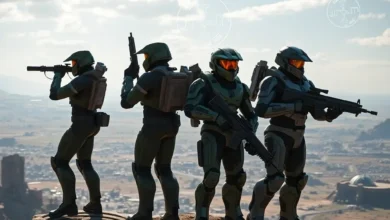
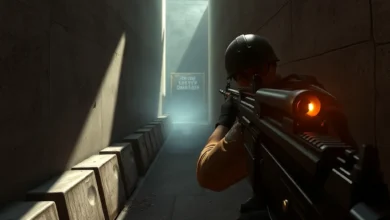
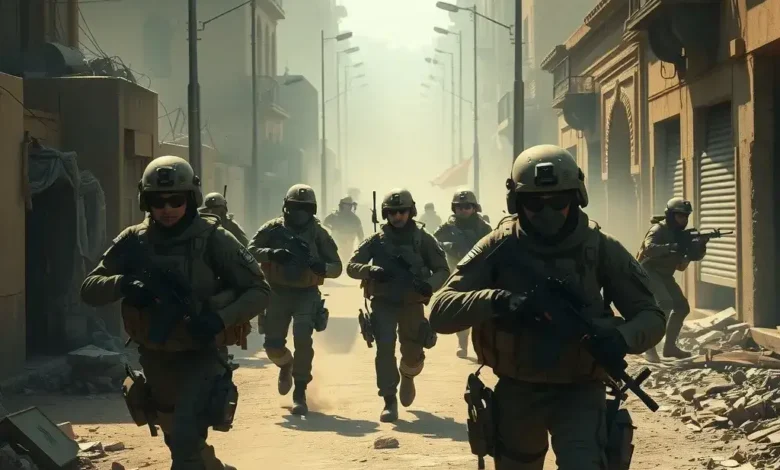
The landscape of military simulation has evolved dramatically over the past decade, shifting from arcade-style shooters toward deeply immersive, historically grounded experiences. Realistic war games prioritize authenticity, tactical depth, and environmental fidelity over fast-paced action. These titles demand patience, strategic planning, and a thorough understanding of ballistics, squad coordination, and battlefield psychology. Players who step into this genre are not just pressing buttons; they are stepping into the shoes of soldiers navigating complex combat scenarios where every decision carries weight. The market impact of these simulations has been substantial, attracting both hardcore tactical enthusiasts and casual players seeking a more grounded gaming experience. Developers now invest heavily in motion capture, historical consulting, and advanced physics engines to deliver experiences that mirror real-world military operations.
Target audiences for realistic war games typically include veterans, history buffs, tactical strategy fans, and players who value precision over reflexes. Unlike mainstream shooters that reward aggressive playstyles, these simulations reward discipline, communication, and situational awareness. The genre has carved out a dedicated niche that continues to grow as hardware capabilities improve and player expectations shift toward authenticity. Whether you are analyzing ballistics trajectories, managing ammunition logistics, or coordinating squad movements across a sprawling battlefield, the focus remains firmly on realism and tactical execution.
- ✅ Genre Focus: Tactical military simulation and historical combat recreation
- 🎯 Target Audience: Strategy enthusiasts, history buffs, and tactical shooters
- ⚔️ Core Appeal: Authentic ballistics, squad coordination, and environmental immersion
- 🌍 Market Impact: Growing demand for historically accurate and mechanically complex war games
- 📅 Release Trends: Continuous updates and community-driven modding support in 2026
🎯 Story Overview and Narrative Analysis
Narrative design in realistic war games operates differently from traditional story-driven titles. Instead of relying on scripted cutscenes or dramatic character arcs, these games weave their stories through environmental storytelling, mission briefings, and emergent gameplay moments. Players experience the weight of command, the chaos of frontline combat, and the moral complexities of military operations through carefully crafted scenarios. Historical accuracy plays a massive role, with developers consulting military archives, veteran interviews, and tactical manuals to ensure every mission feels grounded in reality. The narrative emerges from your choices, your squad’s survival, and the consequences of your tactical decisions on the battlefield.
Character development in these simulations is often subtle but deeply impactful. You do not play as a superhero; you play as a soldier with limited stamina, realistic weapon handling, and genuine vulnerability. This approach creates a powerful emotional connection, as every firefight feels tense and every victory hard-earned. The game world reflects this philosophy, featuring weather systems that affect visibility, terrain that dictates movement speed, and AI opponents that adapt to your tactics. Unlike competitors that prioritize spectacle, realistic war games prioritize immersion, making every mission feel like a genuine military operation rather than a scripted entertainment sequence.
🕹️ Gameplay Mechanics and Authentic Combat Systems
The core gameplay loop in realistic war games revolves around preparation, execution, and adaptation. Players must study maps, understand weapon ballistics, manage inventory weight, and coordinate with AI or human teammates before engaging enemies. Combat is rarely instantaneous; it requires positioning, cover utilization, and calculated engagement distances. The simulation extends to medical systems, where injuries affect movement and accuracy, and logistics, where ammunition and equipment must be carefully managed. This depth creates a rewarding experience for players who enjoy mastering complex systems and applying real-world tactical principles in a virtual environment.
⚔️ Core Systems and Tactical Controls
Combat mechanics in these titles are built around realism and consequence. Weapon recoil patterns are modeled after actual firearms, requiring players to control their fire rate and manage muzzle climb. AI behavior is highly adaptive, with enemy units flanking, suppressing, and retreating based on your positioning and firepower. Physics systems govern bullet drop, penetration, and ricochet, meaning you cannot simply spray and pray. Control responsiveness is tuned for precision rather than speed, encouraging deliberate movements and tactical positioning. Difficulty balance scales with player knowledge, rewarding those who learn the mechanics and punishing reckless aggression.
- ✅ Ballistic Simulation: Realistic bullet drop, penetration, and trajectory modeling
- 🎯 AI Adaptation: Enemy units flank, suppress, and adjust tactics dynamically
- ⚔️ Physics Integration: Environmental destruction and realistic weapon handling
- 🔧 Control Precision: Deliberate aiming and movement for tactical advantage
- 📉 Difficulty Scaling: Rewards preparation and punishes reckless playstyles
🌍 Level Design and Battlefield Immersion
Map design in realistic war games prioritizes tactical depth over linear progression. Environments are sprawling, featuring multiple routes, elevation changes, and destructible cover that influence engagement strategies. Exploration freedom is balanced with mission objectives, allowing players to approach targets from various angles while maintaining operational security. Mission structure often includes reconnaissance phases, infiltration segments, and extraction protocols, mirroring real military operations. Replay value is exceptionally high due to dynamic weather, randomized enemy patrols, and player-driven outcomes that change with each playthrough.
- Map Design: Multi-layered environments with tactical chokepoints and flanking routes
- Exploration Freedom: Open approach vectors balanced with objective constraints
- Mission Structure: Recon, infiltration, engagement, and extraction phases
- Replay Value: Dynamic AI patrols, weather shifts, and player-driven outcomes
🎨 Graphics and Audio Quality in Modern Warfare Simulations
Visual and audio fidelity are critical pillars of the realistic war game experience. Developers utilize advanced rendering techniques to create environments that feel lived-in and historically accurate. Lighting systems simulate time-of-day transitions, affecting visibility and tactical planning. Audio design goes beyond background music, incorporating directional gunfire, distant artillery, radio chatter, and environmental ambiance that enhances situational awareness. Together, these elements create a sensory experience that immerses players in the chaos and discipline of modern combat.
🖥️ Visual Fidelity and Engine Technology
Modern war simulations run on highly optimized engines capable of rendering massive battlefields with minimal performance loss. Texture quality captures the wear and tear of military equipment, from mud-caked boots to scratched optics. Lighting and shadow systems dynamically respond to weather conditions, creating realistic visibility challenges during dawn or dusk operations. Environmental effects include dust clouds, rain accumulation, and foliage interaction, all contributing to a believable battlefield. These technical achievements ensure that every frame supports tactical decision-making rather than distracting from it.
- ✅ Game Engine: Custom or heavily modified engines optimized for large-scale combat
- 🎨 Texture Quality: High-resolution materials with realistic wear and environmental interaction
- 💡 Lighting Systems: Dynamic time-of-day and weather-responsive illumination
- 🌑 Shadow Rendering: Accurate occlusion for tactical cover assessment
- 🌪️ Environmental Effects: Dust, rain, and foliage physics enhancing immersion
🔊 Sound Design and Battlefield Atmosphere
Audio engineering in realistic war games is meticulously crafted to support gameplay mechanics. Sound effects are spatially accurate, allowing players to identify enemy positions, weapon types, and vehicle movements through audio cues alone. Voice acting features authentic military radio protocols, with squad leaders issuing clear, concise commands under pressure. Immersion is heightened by ambient battlefield noise, including distant explosions, wind interference, and equipment handling sounds. This auditory layer transforms passive observation into active tactical analysis, rewarding players who listen as much as they look.
🚀 Key Features of Realistic War Games
What separates realistic war games from mainstream shooters is their commitment to simulation over spectacle. These titles feature extensive weapon customization, realistic medical systems, squad management tools, and dynamic mission generation. Players must manage stamina, hydration, and equipment weight, adding a layer of logistical strategy rarely seen in other genres. The integration of historical campaigns, modern conflict scenarios, and community-driven mods ensures long-term engagement. Every feature is designed to reinforce the core philosophy: war is complex, demanding, and unforgiving.
- ✅ Weapon Customization: Detailed attachments, optics, and ballistic tuning
- 🏥 Medical Systems: Injury simulation affecting movement and combat effectiveness
- 👥 Squad Management: AI or player-controlled team coordination and role assignment
- 📦 Logistics & Inventory: Weight management and equipment prioritization
- 🌐 Mod Support: Community-driven content extending replayability indefinitely
📊 Key Points and Performance Metrics
| Category | Rating | Notes |
|---|---|---|
| Tactical Depth | 9.5/10 | Exceptional squad coordination and mission planning mechanics |
| Visual Fidelity | 9.0/10 | Advanced lighting and environmental effects enhance immersion |
| Audio Design | 9.2/10 | Directional sound cues support tactical awareness |
| Learning Curve | 8.5/10 | Steep but rewarding for dedicated players |
| Replay Value | 9.8/10 | Dynamic missions and mod support ensure longevity |
The performance metrics above highlight why realistic war games maintain a dedicated player base. Tactical depth and replay value consistently score highest, reflecting the genre’s emphasis on strategic planning and emergent gameplay. Visual and audio ratings demonstrate the technical investment developers pour into creating believable environments. The learning curve, while steep, is balanced by the satisfaction of mastering complex systems. Players who invest time in understanding ballistics, squad commands, and environmental navigation are rewarded with deeply engaging experiences that mainstream shooters simply cannot replicate. These metrics confirm that realism, when executed properly, translates directly to long-term player retention and community growth.
📊 Pros and Cons of High-Realism Combat
✅ Advantages of Authentic Military Simulations
Realistic war games offer unparalleled immersion and strategic depth. Players experience the tension of tactical planning, the satisfaction of precise execution, and the consequences of battlefield decisions. These titles foster teamwork, communication, and critical thinking, making them excellent for cooperative play. The attention to historical and mechanical accuracy appeals to enthusiasts who value authenticity over arcade-style convenience. Long-term engagement is supported by robust modding communities, regular updates, and dynamic mission generation that keeps gameplay fresh across hundreds of hours.
- ✅ Deep Tactical Gameplay: Rewards preparation, positioning, and squad coordination
- 🎯 Historical Authenticity: Accurate weapons, uniforms, and mission structures
- 👥 Cooperative Focus: Encourages communication and team-based strategy
- 🔄 High Replayability: Dynamic AI, weather systems, and mod support
- 📚 Educational Value: Teaches real-world military tactics and logistics
❌ Disadvantages and Learning Curves
Despite their strengths, realistic war games are not suited for every player. The steep learning curve can frustrate newcomers accustomed to fast-paced shooters. Technical requirements are often demanding, requiring capable hardware to maintain stable framerates during large-scale engagements. Some players may find the pacing too slow or the UI overly complex. Additionally, the emphasis on realism can limit creative freedom, as players must adhere to strict tactical constraints rather than experimenting with unconventional strategies. These titles are best approached with patience and a willingness to learn.
- ⚠️ Steep Learning Curve: Complex mechanics require significant time to master
- 💻 Hardware Demands: High system requirements for optimal performance
- 🐢 Pacing Issues: Slower gameplay may not suit action-oriented players
- 🎮 UI Complexity: Information-heavy interfaces can overwhelm beginners
- 🚫 Restricted Creativity: Realism constraints limit unconventional tactics
💻 Performance and Technical Analysis
🖥️ PC System Requirements and Optimization
| Component | Minimum Requirement | Recommended Requirement |
|---|---|---|
| CPU | Intel Core i5-8400 / AMD Ryzen 5 2600 | Intel Core i7-10700K / AMD Ryzen 7 5800X |
| GPU | NVIDIA GTX 1060 / AMD RX 580 | NVIDIA RTX 3060 Ti / AMD RX 6700 XT |
| RAM | 8 GB | 16 GB |
| Storage | 50 GB SSD | 100 GB NVMe SSD |
| OS | Windows 10 64-bit | Windows 11 64-bit |
Running realistic war games smoothly requires a balanced hardware setup. The minimum specifications ensure baseline functionality, but the recommended tier delivers stable framerates, faster load times, and higher visual fidelity. CPU performance heavily influences AI behavior and physics calculations, while GPU power dictates texture quality and lighting effects. RAM capacity affects squad management and large-map streaming. Players should prioritize SSD storage to reduce asset loading delays during fast-paced tactical movements. Optimization settings like shadow quality, draw distance, and post-processing effects should be adjusted based on hardware capabilities to maintain competitive responsiveness without sacrificing immersion.
📱 Mobile and Cross-Platform Performance
Mobile adaptations of realistic war games face significant hardware limitations, requiring streamlined mechanics and optimized asset streaming. Device compatibility varies widely, with mid-range smartphones handling basic tactical gameplay while flagship devices support higher texture quality and smoother framerates. Storage size typically ranges between 2GB and 8GB, depending on the title and installed updates. Battery consumption is notable during extended sessions, as continuous AI processing and network synchronization drain power quickly. Graphics settings on mobile are heavily tiered, allowing players to prioritize performance over visual fidelity. Stability improvements in recent years have made cross-platform play more viable, though competitive balance remains a challenge due to input differences.
- ✅ Device Compatibility: Optimized for mid-range to flagship Android devices
- 💾 Storage Size: 2GB to 8GB depending on content and updates
- 🔋 Battery Consumption: Moderate to high during extended tactical sessions
- 🎨 Graphics Scaling: Tiered settings for performance vs. visual balance
- 🌐 Cross-Platform Stability: Improved networking but input disparity remains
🏁 Final Verdict and Conclusion
Realistic war games represent a pinnacle of tactical simulation, offering experiences that blend historical accuracy, mechanical depth, and immersive storytelling. They are not designed for casual pick-up-and-play sessions; they demand patience, strategy, and a willingness to learn complex systems. Players who embrace this philosophy are rewarded with some of the most engaging and intellectually stimulating combat experiences available today. The genre continues to evolve with better optimization, expanded mod support, and refined AI behavior, ensuring long-term relevance in the gaming landscape.
These titles are best suited for tactical enthusiasts, history buffs, cooperative players, and anyone seeking a grounded alternative to arcade shooters. If you value precision over speed, preparation over reflexes, and authenticity over spectacle, realistic war games will deliver unmatched satisfaction. Dive into the battlefield, master your equipment, coordinate with your squad, and experience combat as it was meant to be simulated. The war zone awaits your command.
❓ Frequently Asked Questions
- Does this genre run smoothly on Windows 10? Yes, Windows 10 64-bit is fully supported and provides stable performance for most realistic war titles. Ensure your drivers are updated and background applications are minimized to maintain consistent framerates during large-scale engagements.
- Do these games support game controllers? Most realistic war games offer full controller support with customizable dead zones and sensitivity curves. However, keyboard and mouse remain the preferred input for precision aiming and tactical menu navigation.
- Is an internet connection required to play? Single-player campaigns and local co-op modes typically function offline. Multiplayer, squad coordination, and mod downloads require a stable internet connection for synchronization and content verification.
- Are these titles the full version or early access? The majority of realistic war games released in recent years are complete, polished products. Some community-driven projects may offer early access, but official titles deliver full feature sets at launch.
- Can I play with friends across different platforms? Cross-platform play is increasingly common, though competitive balance varies due to input differences. Dedicated servers and matchmaking filters help maintain fair gameplay environments.
- How difficult is the learning curve for beginners? The learning curve is steep but manageable. New players should start with tutorial missions, adjust sensitivity settings, and focus on squad commands before attempting high-difficulty scenarios.
- Do these games feature historical campaigns? Yes, many realistic war titles include historically accurate campaigns spanning multiple conflicts. Developers consult military archives and veteran testimonies to ensure authenticity in mission design and equipment modeling.
- What happens if my squad takes heavy casualties? Realistic medical and reinforcement systems mean casualties impact mission success. Players must manage evacuation routes, prioritize healing, and adapt tactics when squad strength diminishes during prolonged engagements.