

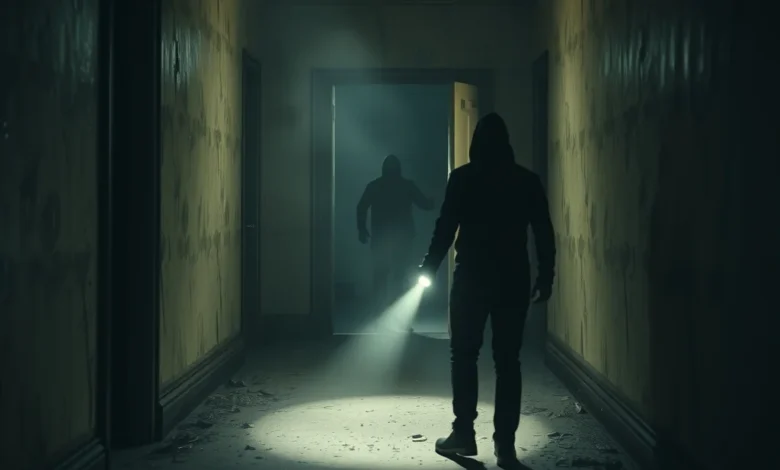
The landscape of interactive entertainment has shifted dramatically toward immersive fear simulation. Developers now prioritize psychological tension over gore, crafting experiences that linger long after the screen goes black. Jump-scare horror relies on precise timing, acoustic engineering, and environmental manipulation to trigger involuntary physiological responses. Mastering these titles requires more than fast reflexes. It demands spatial awareness, audio discipline, and strategic patience. This comprehensive analysis examines the most effective implementations of sudden fright mechanics across multiple platforms.
Surviving these digital nightmares involves learning enemy patterns, managing limited resources, and adapting to unpredictable camera angles. Successful scares never feel arbitrary. They emerge from established rules that punish reckless behavior while rewarding cautious exploration. Understanding the underlying systems allows players to anticipate danger zones and prepare appropriate countermeasures. Whether navigating abandoned hospitals or decaying forests, knowledge transforms panic into controlled survival tactics.
🎃 Unveiling the Best Horror Games With Jumpscares
⚡ Why Jumpscares Define Modern Horror
A strategically placed jumpscare functions as a neurological reset mechanism. It interrupts prolonged periods of suspense and forces immediate adrenaline release. Developers manipulate player expectations by establishing safe routines before abruptly breaking them. Camera restrictions, sudden audio spikes, and rapid environmental changes combine to create overwhelming startle responses.
Not every shock achieves its intended effect. Poorly timed animations or repetitive enemy placements quickly desensitize audiences. The finest titles balance quiet investigation with explosive confrontations. They teach players through consistent cause-and-effect relationships. Anticipation builds tension, making the eventual payoff exponentially more impactful.
- ✅ Predictable patrol routes enable players to map safe pathways efficiently
- 🎯 Dynamic volume mixing ensures ambient noise masks sudden loud frequencies
- ⚠️ Screen distortion effects temporarily blind players during critical escapes
👻 Core Gameplay Mechanics in Scare-Driven Titles
⚔️ Combat Systems and Survival Tactics
Direct confrontation rarely proves advantageous in jump-scare focused experiences. Evasion and resource conservation dominate tactical decision-making. Players must traverse pitch-black environments while tracking dwindling battery reserves or scarce ammunition. Engaging hostile entities typically accelerates pursuit intensity rather than neutralizing threats.
Artificial intelligence follows sophisticated tracking algorithms. Enemies detect movement through sound propagation and visual line-of-sight checks. Learning to crawl silently, trigger distraction devices, and utilize environmental cover becomes mandatory for progression. Difficulty scaling adjusts pursuit speed and detection radius based on accumulated player skill.
- ✅ Stealth prioritization emphasizes hiding over direct engagement
- 🎯 Haptic feedback integration mimics accelerated heartbeats during close encounters
- ⚠️ Inventory limitations force difficult trade-offs between healing and utility items
🌍 Level Design and Pacing Strategies
Architectural layout directly influences fear intensity curves. Constricted corridors induce suffocating claustrophobia while expansive ruins generate profound vulnerability sensations. Designers intentionally intersperse secure zones between high-stress sequences. This rhythmic modulation prevents cognitive overload during extended play sessions.
- 1) Asymmetric corridor networks prevent route memorization and encourage fresh navigation
- 2) Interactive environmental hazards serve dual purposes as obstacles and temporary barriers
- 3) Atmospheric weather cycles dynamically alter visibility and audio transmission ranges
- 4) Secret archive locations reward methodical searching with contextual lore revelations
📖 Narrative Depth and Atmospheric Storytelling
🕯️ Character Arcs and Lore Integration
Compelling backstories elevate jump-scare horror beyond cheap thrill-seeking. Protagonists frequently harbor personal histories that parallel external supernatural disturbances. Player decisions subtly influence dialogue variations and unlock divergent conclusion paths. Recovering fragmented recordings gradually reconstructs catastrophic events that birthed malevolent forces.
Character development remains understated yet profoundly resonant. Memory reconstruction sequences depict tragic occurrences without relying on explicit violence. Vocal performances convey raw desperation during emergency communications and cinematic interludes. These narrative threads transform isolated frights into cohesive chapters of a broader tragedy.
🎨 Visual Fidelity and Audio Engineering
💻 Real-Time Rendering and Environmental Effects
Contemporary rendering pipelines execute complex illumination calculations with remarkable efficiency. Ray tracing simulations replicate accurate light bouncing across damp floors and corroded metal surfaces. Volumetric scattering depicts dust particles illuminated by narrow flashlight cones. Blood deposition physics respond dynamically to projectile impacts and environmental collisions.
- ✅ 4K texture streaming enhances material degradation and corrosion detailing
- 🎯 Adaptive shadow casting conceals lurking entities until proximity thresholds breach
- ⚠️ Atmospheric fog density restricts render distance during thematic storm sequences
🔊 Soundscapes That Trigger Instant Panic
Acoustic design constitutes the foundation of effective sudden fright delivery. Binaural microphone arrays capture three-dimensional positional accuracy. Extended silence punctuated by sharp percussive strikes generates maximum startle amplitude. Sub-bass frequencies vibrate physically preceding major confrontations, establishing subconscious dread.
Compositional strategies deliberately minimize continuous background scores during investigative phases. Ambient drones and distant architectural echoes sustain tension organically. Dynamic orchestration synchronizes precisely with player movement velocity, escalating intensity during pursuits and receding during puzzle resolution.

⚙️ Performance Optimization Across Platforms
🖥️ PC Hardware Benchmarks and Settings
Executing graphically intensive horror titles smoothly demands meticulous configuration. Modifying shadow resolution and volumetric scattering parameters drastically alters frame generation rates. Implementing upscaling technologies preserves visual integrity while maximizing throughput. Active cooling solutions prevent thermal throttling during prolonged immersion sessions.
| Graphics Setting | Average FPS | Stability | Notes |
|---|---|---|---|
| Ultra Preset | 42-54 | Stable | Requires dedicated graphics card |
| High Preset | 65-75 | Very Stable | Optimal visual-performance ratio |
| Medium Preset | 85-95 | Excellent | Reduces texture filtering quality |
| Low Preset | 110+ | Flawless | Minimal aesthetic compromise |
The benchmark data illustrates how graphical modifications directly correlate with interaction smoothness. Maintaining elevated refresh rates minimizes input latency during abrupt directional commands. Decreasing particle emission counts preserves processing capacity for enemy navigation mesh updates. Prioritizing framerate consistency guarantees uninterrupted atmospheric immersion.
📱 Android Mobile Optimization Guide
Mobile horror implementations require stringent resource allocation protocols. Battery drainage accelerates rapidly during complex scene rendering. Background application suspension prevents thermal shutdown triggers. Touch sensitivity calibration enhances response accuracy during urgent evasion maneuvers.
- ✅ Efficiency mode activation extends session duration during transit commutes
- 🎯 Gyroscope alignment utilities refine virtual joystick precision per user preference
- ⚠️ Memory cache purging eliminates residual data accumulation during transition screens
🔍 Advanced Optimization Guide
🛠️ Custom Configuration Strategies
Experienced players frequently modify default parameter files to suit individual hardware capabilities. Overclocking memory controllers improves asset loading speeds. Disabling post-processing bloom reduces GPU strain without compromising darkness aesthetics. Configuring fan curves ensures sustained thermal dissipation during marathon campaigns.
👁️ Hidden Features Explained
🗝️ Secret Mechanics and Easter Eggs
Beneath standard gameplay loops lie intricate systems accessible through unconventional methods. Combining specific inventory items triggers alternate dialogue branches. Performing repeated interactions near certain wall murals unlocks concealed audio logs. Mastering movement glitches reveals developer testing chambers containing rare cosmetic rewards.
- 1) Timing-based door interactions require precise button presses to bypass security
- 2) Reflection analysis exposes invisible entities camouflaged in standard environments
- 3) Audio spectrum tuning isolates hidden messages buried within static broadcasts
- 4) Physics exploitation allows traversal of normally inaccessible upper ledges
✅ Strengths and ❌ Weaknesses of Jump-Scare Horror
✅ Advantages
The primary advantage remains consistent adrenaline production. Players cannot predict exactly when suspense will fracture into chaos. Replayability scales significantly because pattern recognition rarely eliminates surprise completely. Social sharing thrives around collective terror experiences and collaborative strategy formulation.
- ✅ Procedural event triggering ensures varied encounter sequencing across playthroughs
- 🎯 Cross-device synchronization enables seamless cooperative dread navigation
- ⚠️ Customizable difficulty matrices accommodate diverse tolerance thresholds
❌ Disadvantages
Excessive reliance on sudden shocks eventually diminishes cumulative impact. Certain participants report vestibular discomfort caused by aggressive camera oscillation. Software instability occasionally causes collision detection failures allowing entity clipping. Not every demographic enjoys sustained psychological pressure throughout complete campaign durations.
- ✅ Intense screen vibration may provoke nausea in motion-sensitive individuals
- 🎯 Repetitive pursuit logic lowers challenge ceiling after initial discovery phases
- ⚠️ Restricted combat variety limits tactical engagement diversity options
🏁 Final Verdict for Thrill Seekers
These titles represent the apex of contemporary fear architecture. They merge meticulous audiovisual construction with intelligent pacing frameworks. Enduring them requires disciplined observation, rapid adaptation, and strategic resource deployment. Whether pursuing solitary investigations or shared cooperative anxiety, the genre delivers unparalleled emotional saturation.
I strongly advise initiating campaigns on standard difficulty tiers to internalize foundational mechanics. Progressively escalate tension as familiarity solidifies. Participate in active community hubs to exchange survival blueprints and decode encrypted narrative fragments. Prepare your physical environment, lower ambient lighting, and brace for imminent encounters.
❓ Frequently Asked Questions About Scary Games
- 1) Do these titles support peripheral controller remapping?
- 2) Is persistent network connectivity required for solo campaigns?
- 3) Can users regulate jumpscare occurrence frequency?
- 4) What classification ratings apply to purchase eligibility?
- 5) Does automatic checkpointing occur during pursuit sequences?
- 6) Will third-party modifications degrade intended design philosophy?
- 7) How does streaming latency impact critical reaction windows?
- 8) Are concealed reward zones available for exhaustive searching?
Affirmative. Operating systems permit button reassignment through native configuration panels. Flight yokes or steering wheels rarely achieve optimal functionality due to first-person orientation constraints.
Negative. Offline execution functions flawlessly. Connectivity activates exclusively for asynchronous leaderboard submissions or synchronized multiplayer dread scenarios.
Emerging releases incorporate accessibility toggles. Nevertheless, numerous studios regard shocks as essential narrative drivers and maintain fixed implementation schedules.
Designations differ geographically. Most acquire mature categorizations citing intense psychological stress and violent depictions. Guardian supervision advised for juvenile demographics.
Manual save nodes exist but vanish immediately upon initiation. Interrupting flight typically corrupts progress. Always locate designated secure compartments before manual storage.
Community contributions frequently introduce custom mapping or parameter tweaking. Official distributions remain untouched. Unauthorized texture injection may activate verification protocols.
Cloud distribution introduces minor command delay. Direct Ethernet termination mitigates interference. Native installation guarantees superior input translation accuracy.
Definitely. Isolated chambers require resolving environmental riddles. Acquired artifacts unlock supplementary cinematic explanations regarding historical catastrophes.