
Civilization VI vs Age of Empires IV – Features, Graphics, and Performance Compared

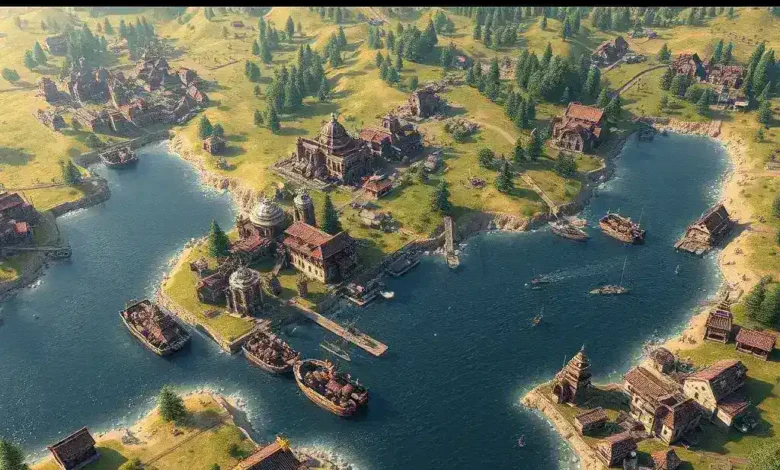
Civilization VI and Age of Empires IV stand as monumental titles in the strategy genre, each offering a distinct experience in historical conquest and empire-building. While both games share a core focus on long-term strategy and resource management, they diverge significantly in gameplay mechanics, visual design, and performance expectations. Civilization VI, developed by Firaxis Games and published by 2K, emphasizes turn-based diplomacy and technological progression, allowing players to shape the world from the Stone Age to the modern era. On the other hand, Age of Empires IV, crafted by Relic Entertainment and released by Xbox Game Studios, delivers a real-time strategy (RTS) experience where battles unfold dynamically, and historical empires rise and fall in real-time.
This comparison explores the deep mechanics, graphical fidelity, and technical performance of both games to help players decide which suits their strategic preferences. Whether you favor the turn-based elegance of Civilization VI or the real-time intensity of Age of Empires IV, we’ll break down their strengths, weaknesses, and what sets them apart in the crowded strategy gaming landscape.
🎮 Overview of Civilization VI and Age of Empires IV
Civilization VI, released in 2016 for PC and later expanded to consoles and mobile, is the sixth installment in the legendary Civilization series. Developed by Firaxis Games with creative direction from Sid Meier, the game is a turn-based 4X (eXplore, eXpand, eXploit, eXterminate) strategy masterpiece. Players guide a civilization from the dawn of time to the modern era, making diplomatic, military, and technological decisions that shape history. Its accessibility, combined with deep strategy layers, has cemented its place as one of the most influential turn-based strategy games of all time.
Age of Empires IV, launched in 2021 after a 20-year hiatus in the series, revitalized real-time strategy gaming with modern visuals and refined mechanics. Developed by Relic Entertainment and backed by the Xbox Game Studios, it returns to the series’ roots—real-time historical warfare—while incorporating contemporary design and performance improvements. The game spans four ages (Dark Age, Feudal Age, Castle Age, and Imperial Age), allowing players to construct cities, train armies, and conquer territories in a dynamic, real-time battlefield. Its emphasis on historical accuracy and fast-paced strategy has earned it critical acclaim and a dedicated fanbase.
- ✅ Civilization VI: Turn-based empire-building with deep tech trees and diplomacy
- ✅ Age of Empires IV: Real-time historical warfare with fast-paced tactical combat
- 🎯 Target Audience: Strategy fans who love long-term planning and historical depth
- ⚔️ Core Appeal: Civilization VI offers strategic depth and replayability; Age of Empires IV delivers adrenaline-fueled real-time battles
📜 Story and Narrative Depth: A Tale of Two Empires
Civilization VI does not follow a traditional narrative but instead offers a grand historical journey where each civilization’s story unfolds through its unique abilities, leaders, and historical references. The game’s lore is woven into its mechanics—each leader represents a historical figure (e.g., Cleopatra of Egypt, Gandhi of India) with special traits and units that reflect their era. The game’s world map evolves dynamically as players expand, with civilizations growing from small settlements into sprawling empires. While there is no fixed storyline, the game’s historical context and leader personalities create a rich, immersive experience that feels like shaping real history.
Age of Empires IV, in contrast, weaves a more structured historical narrative through its campaign mode. The game’s campaign follows four pivotal historical conflicts: the Norman Conquest of Britain, the rise of the Mongols, the Third Crusade, and the Hundred Years’ War. Each campaign mission is framed with cinematic storytelling, historical commentary, and strategic objectives that immerse players in the events of the time. The game’s narrative is further enhanced by its art style, which blends realistic character designs with stylized environments that evoke the aesthetics of historical artwork and architecture. This approach gives Age of Empires IV a stronger sense of storytelling compared to Civilization VI’s open-ended historical simulation.
🏛️ Historical Context and Immersion
Civilization VI emphasizes historical accuracy through its mechanics rather than storytelling. Each civilization’s unique units, buildings, and technologies are rooted in real history—for example, the English civilization’s longbowmen or the Mongol’s horse archers. The game’s dynamic world map, where natural wonders like Mount Fuji or the Grand Canyon appear as landmarks, adds to the immersion. Players can also engage with historical events like the Renaissance or World Wars through in-game technologies and policies. However, the lack of a fixed narrative means that the storytelling is abstract, relying on player imagination and the game’s historical framework.
Age of Empires IV takes a more cinematic approach to history. The game’s campaign mode features narrated cutscenes, voice acting, and detailed historical settings that transport players to medieval Europe, the Mongol steppes, or the battlefields of the Hundred Years’ War. The art direction is heavily influenced by historical manuscripts, paintings, and architecture, giving the game a painterly, almost storybook-like quality. This visual storytelling enhances the game’s historical authenticity and makes the campaigns feel like interactive history lessons. While Civilization VI excels in providing a sandbox for players to create their own historical narratives, Age of Empires IV offers a more structured, cinematic experience that guides players through pivotal historical moments.
🕹️ Gameplay Mechanics and Systems: Strategy in Action
Both Civilization VI and Age of Empires IV are rooted in strategy gaming, but their mechanics cater to fundamentally different playstyles. Civilization VI is a turn-based game where players make decisions in a sequential, deliberate manner, allowing for deep analysis and long-term planning. In contrast, Age of Empires IV is a real-time strategy game where every second counts, and split-second decisions can determine victory or defeat. This section breaks down their core systems to highlight their strengths and differences.
⚔️ Combat System and Core Controls
Civilization VI features a turn-based combat system where battles are resolved through a combination of unit strength, terrain bonuses, and randomized dice rolls. Each unit has a combat strength and ranged attack value, and battles are influenced by factors such as promotions (earned through experience), adjacency bonuses (from specialized buildings), and natural wonders. The game’s combat lacks direct player input during battles—instead, players rely on positioning, unit upgrades, and tactical planning to secure victories. This system rewards foresight and strategic thinking, as players must anticipate enemy movements and fortify their defenses accordingly.
In Age of Empires IV, combat is real-time and dynamic, requiring players to manage resources, build armies, and engage in battles simultaneously. Units are trained in barracks, stables, and other buildings, and their effectiveness depends on their type (e.g., infantry, cavalry, archers) and upgrades. Battles unfold in real-time, with players controlling formations, targeting specific enemies, and adapting to the flow of combat. The game introduces a unique