

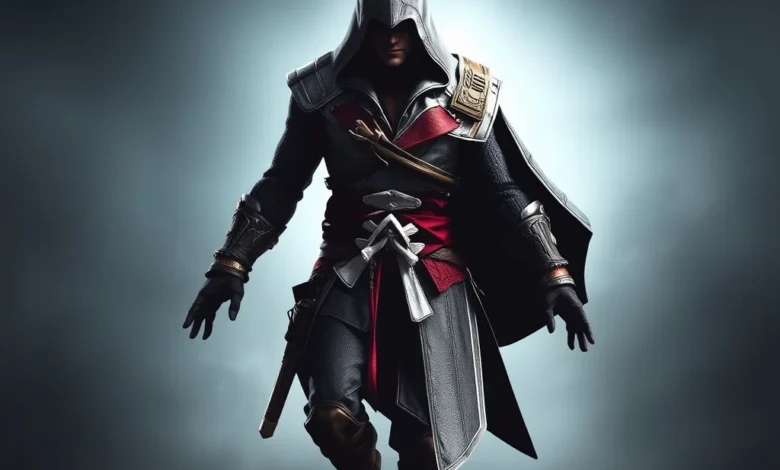
The Assassin’s Creed series has long stood as a pillar of action-adventure gaming, blending historical fiction with parkour-filled urban exploration and intense combat. Since its debut in 2007, the franchise has evolved dramatically, introducing new eras, mechanics, and narratives that keep players engaged across generations of consoles and PCs. Each entry brings something unique to the table—whether it’s the sprawling open worlds of Assassin’s Creed Odyssey, the cinematic storytelling of Assassin’s Creed II, or the futuristic twist of Assassin’s Creed Valhalla. With over a dozen mainline titles and spin-offs, choosing the best can be overwhelming. That’s why we’ve ranked the top Assassin’s Creed games based on gameplay depth, story quality, innovation, and replay value. Whether you’re a longtime fan or a newcomer, this list will help you decide which adventures are worth your time.
The Assassin’s Creed series is more than just a collection of action games—it’s a cultural phenomenon that has shaped the open-world genre. Developed by Ubisoft Montreal and published by Ubisoft, the franchise has consistently pushed boundaries in storytelling, world-building, and player freedom. Unlike many open-world games that rely on repetitive filler content, Assassin’s Creed games focus on immersive historical settings, allowing players to step into the shoes of skilled assassins navigating pivotal moments in history. From the Renaissance streets of Italy in AC II to the Viking raids of England in Valhalla, each game offers a distinct flavor while maintaining core mechanics like parkour, stealth, and social stealth.
The series is also known for its ambitious expansions. Games like Black Flag and Origins redefined what an Assassin’s Creed game could be, blending RPG elements with traditional action-adventure gameplay. Meanwhile, titles like Brotherhood and Revelations refined the formula, introducing multiplayer and deeper narrative connections. Even the less-celebrated entries, such as Unity and Syndicate, contributed unique mechanics, like cooperative multiplayer and dual protagonists. Whether you prefer narrative-driven experiences or sandbox exploration, the Assassin’s Creed series delivers something for every type of gamer.
- ✅ Genre: Action-Adventure, Open World, Historical Fiction
- 🎯 Developer: Ubisoft Montreal
- ⚔️ Release Years: 2007–2026 (ongoing)
- 🌍 Platforms: PC, PlayStation (PS3–PS5), Xbox (360–Series X|S), Nintendo Switch (select titles), Stadia
- 🔥 Why It Stands Out: Blends history, parkour, stealth, and RPG mechanics into a cohesive experience.
📜 The Evolution of Assassin’s Creed: A Brief History
The Assassin’s Creed franchise began in 2007 with the release of the original Assassin’s Creed for PS3 and Xbox 360. Developed as a spiritual successor to Prince of Persia, the game introduced players to Altaïr, an assassin navigating the Third Crusade in the Holy Land. While the first game was praised for its ambition and unique blend of historical fiction and sci-fi storytelling, it was Assassin’s Creed II (2009) that truly cemented the series as a gaming juggernaut. Ezio Auditore da Firenze’s journey through Renaissance Italy became a benchmark for open-world storytelling, with rich characters, intricate plots, and breathtaking environments.
The series continued to evolve with Assassin’s Creed: Brotherhood (2010) and Revelations (2011), which refined the combat system, introduced the Brotherhood meta-game, and concluded Ezio’s arc. A significant shift occurred with Assassin’s Creed III (2012), which moved the setting to colonial America and introduced RPG mechanics like skill trees and crafting. This trend continued with Black Flag (2013), widely regarded as one of the best in the series, thanks to its pirate-themed open world, naval combat, and Edward Kenway’s charismatic performance. Rogue (2014) and Unity (2014) followed, with the latter pushing the series into the next-gen era with its stunning recreation of Revolutionary Paris—despite its controversial launch bugs.
The franchise took another bold turn with Origins (2017), which stripped away many traditional mechanics to embrace a full-fledged RPG experience, complete with leveling, loot, and a skill tree. This was followed by Odyssey (2018), which expanded the RPG formula even further with a massive open world, dialogue choices, and branching narratives. While these changes divided fans, they also attracted a new audience. Meanwhile, Valhalla (2020) blended the Norse mythos with RPG elements, proving the franchise’s adaptability. Most recently, Mirage (2023) returned to the series’ roots with a smaller, more focused experience centered on Basim Ibn Ishaq in Baghdad, offering a nostalgic yet fresh take on the formula.
The Assassin’s Creed series has never shied away from experimentation, whether it’s the sci-fi twist of Syndicate (1868 London with twin protagonists) or the modern-day segments that tie each game together. This willingness to evolve has kept the franchise relevant for nearly two decades, even as it faces competition from other open-world titles. Below, we rank the best entries based on their storytelling, gameplay innovation, replay value, and overall impact on the series.
🏆 Top 10 Best Assassin’s Creed Games Ranked (2026 Edition)
🥇 1. Assassin’s Creed II (2009)
Assassin’s Creed II is often considered the peak of the franchise, and for good reason. Set in Renaissance Italy, the game follows Ezio Auditore da Firenze, a young nobleman who becomes an assassin after his family is betrayed by the Templars. The story is rich with historical figures like Leonardo da Vinci, Niccolò Machiavelli, and the Borgia family, blending real-world events with fictional intrigue. The game’s world is meticulously crafted, from the canals of Venice to the rolling hills of Tuscany, offering a level of detail that was unparalleled at the time. Combat is fluid, blending counter-kills with a variety of weapons, while the social stealth system allows Ezio to blend into crowds or climb nearly any surface.
What sets AC II apart is its narrative depth. Ezio’s journey from a carefree youth to a seasoned assassin is one of the most compelling character arcs in gaming. The game also introduces the Animus device, which frames the modern-day story of Desmond Miles, a descendant of Ezio’s bloodline. This meta-narrative adds layers to the historical segments, making the player feel connected to both Ezio’s struggles and Desmond’s mission. Additionally, the game’s Brotherhood update (2010) added the Assassin’s Recruitment system, allowing players to build a network of allies to aid in missions—a feature that would become a staple in future titles.


- ✅ Best Story: Ezio’s character development is unmatched.
- 🎯 Best Setting: Renaissance Italy feels alive with history and culture.
- ⚔️ Best Combat: Fluid counter-kill system with a variety of weapons.
- 🌍 Best Open World: Cities are dense with secrets and activities.
- 🔥 Why It Ranks #1: Perfect balance of story, gameplay, and innovation.
🥈 2. Assassin’s Creed IV: Black Flag (2013)
Few games in the franchise capture the spirit of adventure as perfectly as Black Flag. Set in the Golden Age of Piracy, the game follows Edward Kenway, a charismatic but morally ambiguous pirate who stumbles into the Assassin-Templar conflict. Unlike previous protagonists, Edward is not an assassin by trade—he’s a rogue who becomes entangled in the war between the two factions. This shift in perspective brings a fresh dynamic to the series, blending swashbuckling action with the familiar stealth mechanics. The game’s open world is a masterpiece of design, spanning the Caribbean with islands to explore, ships to commandeer, and naval battles to wage.
The naval combat is a standout feature, allowing players to captain the Jackdaw, a customizable pirate ship that can be upgraded and used for both exploration and combat. Naval battles are intense, requiring strategy and quick reflexes, while the ship’s crew system adds depth to the experience. On land, Edward can engage in traditional parkour and stealth, but the game also introduces a parrot companion that aids in scouting and distractions. The story is equally engaging, with Edward’s journey from a self-serving pirate to a reluctant hero who understands the weight of the Assassin creed. The game also features some of the best side content in the series, including the Assassin’s Creed III tie-in missions that expand the lore.
Visually, Black Flag is stunning, with the Caribbean rendered in vibrant colors and dynamic weather systems that affect gameplay. The voice acting is top-notch, with Edward’s sarcasm and charm making him one of the most memorable protagonists in the franchise. Whether you’re plundering merchant ships, exploring hidden coves, or engaging in high-stakes naval duels, Black Flag offers a sense of freedom and adventure that few games can match.
- ✅ Best Naval Gameplay: The Jackdaw is a highlight of the series.
- 🎯 Best Open World: The Caribbean is vast and full of activities.
- ⚔️ Best Story Character: Edward Kenway is a fan-favorite protagonist.
- 🌍 Best Setting: The pirate era is ripe for exploration and adventure.
- 🔥 Why It Ranks #2: Combines naval and land gameplay seamlessly.
🥉 3. Assassin’s Creed Origins (2017)
Assassin’s Creed Origins marked a major turning point for the franchise, shifting from a linear action-adventure game to a full-fledged RPG. Set in Ptolemaic Egypt, the game follows Bayek of Siwa, a Medjay (protector) who seeks vengeance for his son’s murder. This personal quest drives the narrative, which is divided into three acts that explore different regions of Egypt, from the bustling streets of Alexandria to the vast deserts of the Sinai. The game’s open world is one of the most immersive in the series, filled with side quests, dynamic events, and a day-night cycle that affects gameplay.
The RPG mechanics introduced in Origins include a skill tree, gear upgrades, and a leveling system that encourages players to tailor Bayek’s abilities to their playstyle. Combat is a radical departure from previous games, ditching the counter-kill system in favor of a dual-wielding system that emphasizes dodging and parrying. This change was initially controversial, but it allowed for more tactical and engaging combat encounters. The game also features a Discovery Tour mode, which turns the game into an educational tool where players can explore historical sites at their own pace, making it a hit with educators and history enthusiasts.
Storywise, Origins is one of the strongest in the series, with Bayek’s journey from a grieving father to the founder of the Assassin Brotherhood feeling earned and meaningful. The game’s world is rich with history, from the Library of Alexandria to the pyramids of Giza, and the side quests are often as compelling as the main story. While the shift to RPG mechanics wasn’t for everyone, Origins proved that the Assassin’s Creed formula could evolve without losing its core identity.
- ✅ Best RPG Mechanics: Skill trees and gear upgrades add depth.
- 🎯 Best Story: Bayek’s personal journey is emotionally gripping.
- ⚔️ Best Combat Overhaul: Dual-wielding and tactical combat.
- 🌍 Best Open World: Egypt is vast and full of historical landmarks.
- 🔥 Why It Ranks #3: Revolutionized the franchise with RPG elements.
🔥 Origins vs Black Flag: Which Is Better?
Choosing between Origins and Black Flag depends on what you value most in a game. If you prefer a more traditional action-adventure experience with a focus on naval combat and character-driven storytelling, Black Flag is the clear winner. However, if you’re a fan of RPG mechanics, deep customization, and a historically rich open world, Origins offers a more modern and immersive experience. Both games are masterpieces in their own right, but they cater to different playstyles.
💡 Verdict: If you love story and character depth, go with Origins. If you prefer action and freedom, choose Black Flag.
🏅 4. Assassin’s Creed Odyssey (2018)
Assassin’s Creed Odyssey takes the RPG formula introduced in Origins and expands it to unprecedented levels. Set in ancient Greece during the Peloponnesian War, the game allows players to choose between two protagonists: Alexios or Kassandra, both of whom are mercenaries seeking to uncover their family’s past. The game’s open world is massive, spanning the Greek mainland and islands, and is filled with dynamic events, historical figures like Socrates and Pericles, and branching questlines that can lead to multiple endings. The combat system is further refined, with a skill tree that offers a wide range of abilities, from stealth and archery to heavy melee combat.
One of the standout features of Odyssey is its dialogue system, which allows players to make choices that affect the story. While this isn’t a full “choices matter” RPG like The Witcher 3, it adds a layer of player agency that was missing in previous entries. The game also introduces a covenant system, where players can align with different factions, each offering unique quests and rewards. The naval gameplay returns in a more streamlined form, with the Adrestia, a customizable ship, serving as a hub for exploration and combat.
Visually, Odyssey is breathtaking, with Greece rendered in stunning detail, from the snow-capped peaks of Mount Olympus to the sun-drenched islands of the Aegean Sea. The voice acting is exceptional, with Kassandra (if chosen) delivering some of the most memorable lines in the series. However, the game’s shift toward RPG mechanics also means that it lacks some of the tight level design and mission structure of earlier entries. The sheer scale of the world can feel overwhelming, and the grind-heavy nature of the RPG systems may not appeal to all players.
Despite its flaws, Odyssey is a landmark title in the franchise, proving that Assassin’s Creed could successfully adapt to the expectations of modern RPG players. It’s a game that rewards exploration, experimentation, and immersion, making it a must-play for fans of the genre.
- ✅ Best Scale: Greece is one of the largest open worlds in the series.
- 🎯 Best RPG Depth: Skill trees, gear, and dialogue choices.
- ⚔️ Best Combat Variety: Archery, spear combat, and naval battles.
- 🌍 Best Historical Setting: Ancient Greece is rich with myth and history.
- 🔥 Why It Ranks #4: A bold experiment that paid off for RPG fans.
⚔️ 5. Assassin’s Creed Valhalla (2020)
Assassin’s Creed Valhalla continues the franchise’s trend of blending historical settings with RPG mechanics, this time taking players to 9th-century England during the Viking invasion. Players take on the role of Eivor, a Viking raider who leads their clan from Norway to England in search of new lands and glory. Like Odyssey, Valhalla offers a choice of protagonist gender (Eivor can be male or female), each with their own story arc. The game’s open world is vast, spanning regions like England, Vinland (North America), and even a trip to Valhalla itself in the game’s mythical final act. Combat is a mix of melee brawls, ranged attacks, and supernatural abilities granted by the “Odin Sight” system, which reveals enemy weaknesses.
The game’s narrative is divided into two main acts: the Viking invasion of England and Eivor’s journey to Valhalla. Along the way, players can engage in raids, build a settlement (the “ Ravensthorpe” hub), recruit allies, and explore a world filled with Norse mythology and historical figures like Alfred the Great. The settlement system is a major addition, allowing players to upgrade buildings, craft gear, and recruit specialists who provide bonuses. The game also features a dual-wielding combat system, which encourages aggressive playstyles but can feel clunky at times.
Visually, Valhalla is a feast for the eyes, with England’s lush forests, snow-capped mountains, and medieval villages rendered in stunning detail. The game’s soundtrack, composed by Jesper Kyd and Sarah Schachner, perfectly captures the Viking spirit with epic orchestral scores and folk-inspired melodies. However, the game’s RPG mechanics can feel bloated, with an overabundance of side quests and collectibles that pad out the experience. The main story is also somewhat repetitive, with Eivor’s quest to conquer England becoming monotonous after a while.
Despite its flaws, Valhalla is a visually stunning and ambitious game that succeeds in delivering a Viking epic unlike anything else in the franchise. It’s a game that rewards players who embrace its RPG systems, offering a level of depth and customization that previous entries lacked.
- ✅ Best Visuals: England is beautifully rendered with dynamic weather.
- 🎯 Best Mythology Integration: Norse gods and Valhalla’s afterlife.
- ⚔️ Best Settlement System: Build and upgrade your Viking stronghold.
- 🌍 Best Historical Setting: Viking-era England is a fresh take.
- 🔥 Why It Ranks #5: A bold but flawed experiment that expands the series’ horizons.
⚡ 6. Assassin’s Creed Brotherhood (2010)
Assassin’s Creed: Brotherhood is often overshadowed by its predecessors, but it deserves recognition as one of the best entries in the franchise. Serving as a direct sequel to AC II, the game follows Ezio Auditore as he returns to Rome, now under the control of the Templars. The city is in ruins, but Ezio sets out to rebuild the Assassin Brotherhood by recruiting allies, upgrading hideouts, and liberating districts from Templar influence. This “Brotherhood” meta-game is one of the most innovative additions to the series, allowing players to build a network of allies who provide missions, resources, and even backup in combat.
The combat system is refined from AC II, with Ezio able to dual-wield hidden blades and use a variety of new weapons, including crossbows and throwing knives. Social stealth returns, allowing Ezio to blend into crowds or climb nearly any surface, and the game introduces a “Notoriety” system that measures how recognizable Ezio is in different districts. As Ezio liberates areas, the Templars’ grip weakens, and the city becomes safer—but also more vibrant, with new shops, activities, and NPCs to interact with. The story is tightly connected to AC II and Revelations, making it essential for fans of Ezio’s arc.
Visually, Brotherhood is a step up from AC II, with Rome rendered in greater detail and dynamic weather systems that affect gameplay. The voice acting is excellent, with Ezio’s dry wit and determination shining through. While the game’s setting is more focused than Black Flag or Origins, it makes up for it with depth and replayability. The “Warrior Challenges” and “Contract” systems add extra layers of challenge, and the game’s ending sets the stage for Revelations.
If you loved AC II, Brotherhood is a must-play. It refines the formula while introducing fresh mechanics that keep the experience engaging. It’s a game that proves that even smaller, more focused open worlds can leave a lasting impact.
- ✅ Best Meta-Game: The Brotherhood system adds depth and replayability.
- 🎯 Best Combat Refinement: Dual-wielding and new weapons.
- ⚔️ Best Story Continuation: Perfect follow-up to AC II.
- 🌍 Best Setting: Rome is a living, breathing open world.
- 🔥 Why It Ranks #6: A refined and rewarding experience.
🌟 7. Assassin’s Creed Revelations (2011)
Assassin’s Creed: Revelations serves as the conclusion to Ezio Auditore’s arc, wrapping up his story with a blend of nostalgia and innovation. The game is divided into two main sections: the modern-day story of Desmond Miles, who uses the “Apple of Eden” to relive Ezio’s memories, and the historical segments, which take place in Constantinople during the 16th century. Ezio, now an older man, travels to the Byzantine capital in search of answers about the First Civilization and Altaïr Ibn-La’Ahad, the original Assassin from the first game. The historical world is one of the most beautiful in the series, with Constantinople’s mosques, bazaars, and rooftops offering a stunning backdrop for Ezio’s final adventure.
The game introduces several new mechanics, including the “Hookblade”, which allows Ezio to swing between buildings and pull enemies toward him, and the “Bomb Crafting” system, which lets players create custom explosives. Combat is further refined, with Ezio able to dual-wield hidden blades and use a variety of new weapons. The game also features a “Den Defense” mini-game, where players can upgrade and defend their Assassin den, and a “New Game+” mode that allows players to replay the game with all their gear and abilities intact.
Storywise, Revelations is a satisfying conclusion to Ezio’s journey, tying together loose ends from AC II, Brotherhood, and even the first game. The modern-day segments are also compelling, with Desmond uncovering secrets about the First Civilization and his own destiny. Visually, the game is a masterpiece, with Constantinople rendered in breathtaking detail and dynamic lighting that changes with the time of day. The voice acting is excellent, with Ezio’s wisdom and maturity shining through in his final adventure.
While Revelations may not be as groundbreaking as Origins or Valhalla, it’s a fitting end to one of gaming’s greatest protagonists. It’s a game that rewards players who have followed Ezio’s journey from the beginning, offering closure while also setting the stage for the franchise’s future.
- ✅ Best Story Closure: Perfect ending to Ezio’s arc.
- 🎯 Best New Mechanics: Hookblade and bomb crafting add fresh gameplay.
- ⚔️ Best Combat: Dual-wielding and refined counter-kills.
- 🌍 Best Setting: Constantinople is one of the most beautiful open worlds.
- 🔥 Why It Ranks #7: A nostalgic and rewarding farewell to Ezio.
🏴☠️ 8. Assassin’s Creed Rogue (2014)
Assassin’s Creed: Rogue is often overlooked, but it’s a hidden gem in the franchise. Set during the Seven Years’ War (1754–1763), the game follows Shay Patrick Cormac, an Assassin who becomes a Templar after a mission goes wrong in Lisbon. The game’s story explores the conflict between the Assassins and Templars from a Templar perspective, offering a unique twist on the series’ usual protagonist. The setting is a mix of North America and Europe, with players exploring locations like New York, the Arctic, and the West Indies. The game also introduces naval combat in the form of the Morrigan, a ship that can be upgraded and used for both exploration and combat.
Combat in Rogue is a mix of traditional Assassin mechanics and new features like the “Air Assassinations” and “Brutal Kills”, which allow Shay to take down multiple enemies at once. The game also features a “Wanted” system, which measures how recognizable Shay is in different regions, and a “Ship Management” system that lets players upgrade the Morrigan with new weapons and abilities. The story is compelling, with Shay’s journey from Assassin to Templar offering a fresh perspective on the series’ lore.
Visually, Rogue is a step down from Black Flag in terms of scale, but it makes up for it with detailed environments and dynamic weather systems. The voice acting is excellent, with Shay’s dry wit and determination shining through. The game also features a “Mission replayability” system, which allows players to replay missions with different objectives and modifiers.
While Rogue may not be as ambitious as Origins or Valhalla, it’s a polished and engaging experience that offers a unique take on the Assassin-Templar conflict. It’s a game that proves that even smaller, more focused entries in the franchise can leave a lasting impact.
- ✅ Best Unique Perspective: Play as a Templar for a change.
- 🎯 Best Naval Gameplay: The Morrigan is a standout feature.
- ⚔️ Best Combat Twist: Air assassinations and brutal kills.
- 🌍 Best Setting: The Seven Years’ War offers a fresh historical backdrop.
- 🔥 Why It Ranks #8: A polished and underrated gem.
🏛️ 9. Assassin’s Creed Unity (2014)
Assassin’s Creed Unity was one of the most anticipated games of its generation, thanks to its stunning recreation of Revolutionary Paris and its ambitious cooperative multiplayer mode. Set during the French Revolution, the game follows Arno Dorian, a French-Austrian Assassin who seeks vengeance for his adoptive father’s murder. The game’s open world is one of the most detailed in the series, with Paris rendered in breathtaking detail, from the cathedrals to the sewers. The game also introduces a “Parkour 2.0” system, which allows Arno to climb nearly any surface and use a variety of new traversal tools, such as “Hookshots” and “Zip Lines”.
Combat in Unity is a major overhaul, ditching the counter-kill system in favor of a “Precision System” that rewards timing and positioning. The game also features a “Co-op Mode”, which allows up to four players to team up for missions, each controlling a different Assassin from Arno’s Brotherhood. The co-op mode is a highlight of the game, offering a fresh take on the series’ signature stealth and combat mechanics. However, the game’s launch was marred by bugs and glitches, which overshadowed its ambitious design.
Despite its flaws, Unity is a visually stunning and ambitious game that pushes the boundaries of what the Assassin’s Creed franchise could achieve. The story is compelling, with Arno’s journey from a grieving young man to a seasoned Assassin feeling earned and meaningful. The game’s world is alive with historical figures like Napoleon Bonaparte and Maximilien Robespierre, and the side quests are often as engaging as the main story. While the game’s bugs were eventually patched, the damage to its reputation lingers.
If you can look past the launch issues, Unity is a masterpiece of open-world design and historical immersion. It’s a game that proves that even flawed experiments can leave a lasting impact.
- ✅ Best Historical Immersion: Paris is a living, breathing open world.
- 🎯 Best Co-Op Mode: Play with friends in a shared Assassin world.
- ⚔️ Best Combat Overhaul: Precision System rewards skill.
- 🌍 Best Setting: Revolutionary Paris is one of the most detailed open worlds.
- 🔥 Why It Ranks #9: A flawed but ambitious masterpiece.
🎭 10. Assassin’s Creed Syndicate (2015)
Assassin’s Creed Syndicate is a return to form for the franchise, blending the best elements of earlier games with fresh mechanics and a unique dual-protagonist system. Set in Victorian London during the Industrial Revolution, the game follows twins Jacob and Evie Frye, who work together to liberate the city from Templar control. The game’s open world is divided into two halves: the wealthier West End and the poorer East End, each offering a distinct flavor and mission structure. The twins have different playstyles—Jacob is a brawler who excels in melee combat, while Evie is a stealth specialist who favors precision kills. This dual-protagonist system allows players to switch between the two at any time, offering a level of flexibility that few open-world games can match.
Combat in Syndicate is a refinement of the systems introduced in Unity, with a greater emphasis on melee combat and crowd control. The game also introduces a “Gang Upgrades” system, which allows players to recruit and train gangs of thugs to aid in missions. The story is engaging, with Jacob and Evie’s sibling rivalry adding a layer of depth to their journey. The game also features a “Rook’s Gambit” mini-game, which allows players to upgrade their hideout and unlock new abilities.
Visually, Syndicate is a step up from Unity, with London rendered in stunning detail and dynamic lighting that changes with the time of day. The voice acting is excellent, with the Frye twins’ personalities shining through. The game also features a “Photo Mode”, which allows players to capture screenshots of the game’s stunning environments.
Syndicate is a polished and engaging experience that proves the Assassin’s Creed franchise could still deliver when it focused on refining its core mechanics. It’s a game that rewards players who embrace its dual-protagonist system and offers a fresh take on the series’ signature stealth and combat.
- ✅ Best Dual Protagonists: Jacob and Evie offer different playstyles.
- 🎯 Best Setting: Victorian London is vibrant and detailed.
- ⚔️ Best Combat Refinement: Melee-focused with gang upgrades.
- 🌍 Best World Design: Two halves of London offer variety.
- 🔥 Why It Ranks #10: A polished and underrated gem.
📊 Assassin’s Creed Games Comparison Table
| Rank | Game | Year | Setting | Protagonist | Best Feature |
|---|---|---|---|---|---|
| 1 | Assassin’s Creed II | 2009 | Renaissance Italy | Ezio Auditore | Story & Character Depth |
| 2 | Assassin’s Creed IV: Black Flag | 2013 | Caribbean (Pirate Era) | Edward Kenway | Naval Combat & Open World |
| 3 | Assassin’s Creed Origins | 2017 | Ptolemaic Egypt | Bayek | RPG Mechanics & Story |
| 4 | Assassin’s Creed Odyssey | 2018 | Ancient Greece | Alexios/Kassandra | Scale & RPG Depth |
| 5 | Assassin’s Creed Valhalla | 2020 | Viking-era England | Eivor | Mythology & Settlement System |
| 6 | Assassin’s Creed Brotherhood | 2010 | Rome | Ezio Auditore | Brotherhood Meta-Game |
| 7 | Assassin’s Creed Revelations | 2011 | Constantinople | Ezio Auditore | Story Closure & Hookblade |
| 8 | Assassin’s Creed Rogue | 2014 | Seven Years’ War | Shay Cormac | Templar Perspective & Naval Combat |
| 9 | Assassin’s Creed Unity | 2014 | Revolutionary Paris | Arno Dorian | Co-Op Mode & Historical Immersion |
| 10 | Assassin’s Creed Syndicate | 2015 | Victorian London | Jacob & Evie Frye | Dual Protagonists & Gang System |
The table above summarizes the top 10 Assassin’s Creed games ranked by their strengths, settings, and most notable features. Each game brings something unique to the franchise, whether it’s Ezio’s iconic journey in AC II, the swashbuckling adventure of Black Flag, or the RPG depth of Origins and Odyssey. The series has evolved dramatically over the years, but its core identity—blending history, action, and stealth—remains unchanged. Whether you’re a longtime fan or a newcomer, there’s an Assassin’s Creed game that will suit your playstyle.
🌟 Which Assassin’s Creed Game Should You Play First?
With so many games to choose from, deciding where to start can be overwhelming. The best entry point depends on what you value most in a game: story, gameplay, or exploration. If you’re new to the franchise, we recommend starting with Assassin’s Creed II or Black Flag, as these games offer the best balance of narrative depth, polished gameplay, and historical immersion. AC II is perfect for fans of character-driven storytelling, while Black Flag is ideal for those who love open-world exploration and naval combat.
If you’re a fan of RPGs and want a more modern experience, Assassin’s Creed Origins or Odyssey are excellent choices. These games offer deep customization, skill trees, and a level of player agency that earlier entries lack. However, they may feel overwhelming if you’re not used to RPG mechanics. For a fresh take on the series, Valhalla offers a Viking-themed adventure with settlement building and mythological elements, while Syndicate provides a polished and engaging experience with its dual-protagonist system.
If you’re a completionist, consider playing the games in chronological order, starting with the original Assassin’s Creed and working your way through the series. This approach allows you to see how the franchise has evolved over time and appreciate the connections between the modern-day story and the historical segments. However, keep in mind that the older games may feel dated compared to the newer entries.
🎯 Pros and Cons of the Assassin’s Creed Franchise
✅ Advantages of Assassin’s Creed Games
The Assassin’s Creed franchise has maintained its popularity for nearly two decades, and for good reason. These games offer a unique blend of action, adventure, and historical immersion that few other franchises can match. Here are some of the key advantages of the series:
- ✅ Rich Historical Settings: Each game transports players to a different era, from Renaissance Italy to Viking-era England, offering a level of immersion that few open-world games can match.
- 🎯 Polished Gameplay Mechanics: The series has refined its core mechanics—parkour, stealth, combat—over the years, resulting in smooth and satisfying gameplay.
- ⚔️ Compelling Storytelling: While not every game excels in narrative, the best entries (AC II, Black Flag, Origins) feature gripping stories with memorable characters.
- 🌍 Massive Open Worlds: The franchise is known for its sprawling environments, filled with activities, secrets, and historical landmarks to explore.
- 🔥 Evolution Over Time: The series has continuously evolved, embracing RPG mechanics (Origins, Odyssey), mythological themes (Valhalla), and fresh perspectives (Rogue).
- 💡 Educational Value: Games like Origins feature a “Discovery Tour” mode, which turns the game into an educational tool for history enthusiasts.
- 🎭 Diverse Protagonists: From Ezio Auditore to Eivor, the franchise has featured some of the most charismatic and well-developed characters in gaming.
❌ Disadvantages of Assassin’s Creed Games
Despite its strengths, the Assassin’s Creed franchise has faced criticism over the years. Some of the common complaints include:
- ❌ Repetitive Gameplay: Later entries, particularly Odyssey and Valhalla, suffer from repetitive side quests and collectibles that can feel like filler.
- 🎯 Grind-Heavy RPG Mechanics: Games like Origins and Odyssey require significant grinding to progress, which can be tedious for some players.
- ⚔️ Bugs and Glitches: Some entries, like Unity, were plagued by bugs at launch, and even polished games can suffer from occasional technical issues.
- 🌍 Mission Structure Issues: Later games often rely on “Ubisoft Towers” or repetitive mission types (e.g., assassination contracts, courier missions), which can feel formulaic.
- 🔥 Modern Story Weaknesses: The modern-day segments, which frame the historical stories, have become increasingly convoluted and less engaging over time.
- 💡 Performance Problems: Some games, like Unity and Syndicate, struggle with performance issues, including frame rate drops and pop-in.
- 🎭 Who It’s Not For: Players who dislike RPGs may find Origins and Odyssey too grindy, while fans of linear storytelling may dislike the open-ended nature of later entries.