
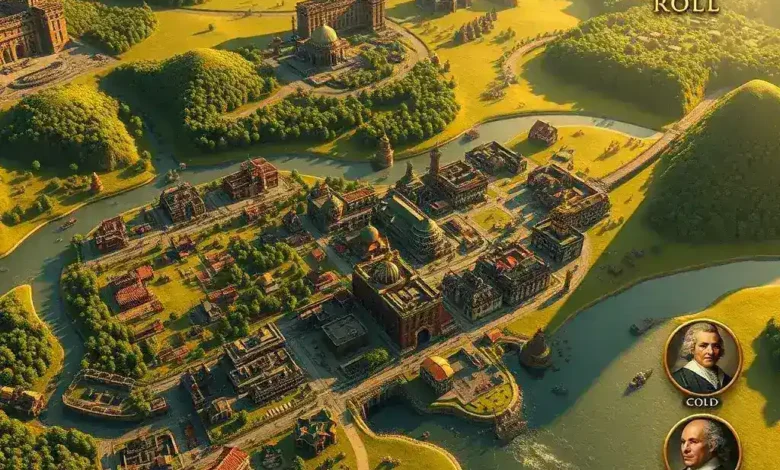
Sid Meier’s Civilization VI stands as one of the most celebrated turn-based strategy games of all time, blending deep historical strategy with modern gameplay innovations. Released in 2016 by Firaxis Games and published by 2K, this installment in the legendary Civilization series continues to captivate players with its intricate diplomacy, tactical combat, and expansive world-building mechanics. Whether you’re a seasoned veteran of the franchise or a newcomer drawn to its strategic depth, Civilization VI offers a uniquely rewarding experience that rewards patience, planning, and adaptability.
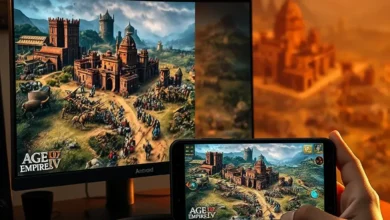
Designed for both PC and Android, Civilization VI delivers a polished experience across platforms, though its full glory shines brightest on PC. The game’s accessibility on mobile devices makes it a perfect choice for strategy enthusiasts on the go, though some features are naturally streamlined for touch controls. With its blend of historical accuracy, creative freedom, and competitive depth, Civilization VI appeals to gamers who enjoy long-term strategy, storytelling, and the thrill of building an empire from the ground up.
🧠 Introduction to Civilization VI: A Strategic Masterpiece
Civilization VI is a turn-based 4X (Explore, Expand, Exploit, Exterminate) strategy game where players guide a civilization from the Stone Age to the modern era, competing against historical leaders like Cleopatra, Genghis Khan, or Gandhi. The game blends historical themes with fantasy elements, allowing players to build cities, research technologies, engage in diplomacy, and wage war across a procedurally generated map. Its accessibility, depth, and replayability have cemented its status as a classic in the genre, appealing to both casual and hardcore strategy gamers.
The game’s release in 2016 marked a significant evolution from its predecessor, Civilization V, introducing groundbreaking mechanics such as district-based city-building and hidden natural wonders. These innovations encouraged players to think more strategically about city placement and resource allocation, adding layers of complexity that reward thoughtful decision-making. Over the years, multiple expansions—including Rise and Fall, Gathering Storm, and Leader Pass—have further enriched the experience, introducing dynamic eras, environmental disasters, and new leaders, ensuring the game remains fresh and engaging.
Targeted at players who enjoy long-term strategic planning, puzzle-like problem-solving, and interactive storytelling, Civilization VI appeals to a broad audience. It’s ideal for gamers who appreciate slow-burn challenges and the satisfaction of outmaneuvering opponents through diplomacy, culture, or sheer military might. Whether you prefer peaceful cultural victories or ruthless domination, the game offers multiple paths to success, each with its own unique challenges and rewards.
- ✅ Genre: Turn-based strategy, 4X, historical simulation
- ✅ Release Date: October 21, 2016
- ✅ Developer and Publisher: Firaxis Games, 2K
- ✅ Platforms: PC, macOS, Linux, Android, iOS
- ✅ Why It Gained Attention: Revolutionary district system, dynamic eras, and deep strategic gameplay
- ✅ Target Audience: Strategy gamers, history enthusiasts, competitive and casual players alike
- ✅ Market Impact: Revitalized the turn-based strategy genre, inspiring future 4X games and expansions
📜 Story Overview and Narrative Analysis: Building Empires Through History
Unlike many modern strategy games that emphasize narrative storytelling, Civilization VI thrives on emergent storytelling—the tales that unfold as players shape their civilizations and interact with AI opponents. The game doesn’t follow a linear plot; instead, it invites players to create their own historical narratives through exploration, diplomacy, and conquest. Each game is a unique journey, influenced by the map, the chosen leader’s traits, and the player’s strategic choices. Whether you’re playing as John Curtin, the steadfast leader of Australia, or Trajan, the expansionist emperor of Rome, the game encourages players to embody their historical counterparts, for better or worse.
The world of Civilization VI is a blend of historical accuracy and creative liberty. Cities rise and fall, natural wonders emerge, and civilizations clash in a dynamic sandbox that reflects the ebb and flow of real-world history. The game’s art style, inspired by historical paintings and architectural styles, enhances immersion, making each victory feel like a personal achievement. While the narrative isn’t driven by cutscenes or dialogue, the game compensates with victory screen cinematics that celebrate monumental achievements, such as launching a satellite or constructing the Eiffel Tower.
The game’s world design is another standout feature, with each map featuring diverse terrain, resources, and strategic positioning. For example, founding a city near a river or mountain can provide unique bonuses, while positioning districts like the Commercial Hub or Campus strategically can give your civilization a competitive edge. This attention to detail ensures that no two games feel identical, fostering replayability and encouraging players to experiment with different strategies.
🔹 Historical Leaders and Their Unique Traits
Each leader in Civilization VI brings a distinct playstyle and historical flavor to the game. For instance:
- Cleopatra (Egypt) excels in culture and production, making her ideal for players who prefer peaceful expansion and cultural dominance.
- Genghis Khan (Mongolia) is a military powerhouse, with unique abilities that boost cavalry units and make early-game expansion a breeze.
- Gandhi (India) is a diplomatic and defensive specialist, with abilities that discourage warmongering and promote peaceful coexistence.
- Pedro II (Brazil) thrives in science and culture, making him a top choice for players aiming for a cultural or scientific victory.
These leaders, along with dozens of others, add depth to the game’s strategic options, allowing players to tailor their playstyle to their preferred victory condition. The game’s expansion packs introduce even more diversity, with leaders like Teddy Roosevelt (who focuses on settler production) and Pericles (who excels in culture and great people).
🔹 The Role of Emergent Narrative in Civilization VI
One of the game’s greatest strengths is its ability to generate emergent narratives—stories that arise from player decisions rather than pre-scripted events. For example:
- A peaceful player might form a defensive pact with a neighbor, only to betray them later for territorial gain.
- A militaristic player could declare war on a rival mid-game, leading to a dramatic turn of events.
- A cultural player might convert a neighboring city through religion, sparking a diplomatic crisis.
These unpredictable moments create unforgettable gaming experiences, making each playthrough feel like a personal story. The game’s AI opponents also contribute to this narrative, with leaders reacting dynamically to your actions—declaring war, forming alliances, or even gifting you units as a peace offering.
🕹️ Gameplay Mechanics and Systems: The Heart of Civilization VI
Civilization VI’s gameplay revolves around four core systems: city-building, diplomacy, warfare, and science. Each of these systems is deeply interconnected, requiring players to balance short-term gains with long-term strategies. The game’s district-based city system is a standout feature, allowing players to specialize their cities in different areas, such as science, culture, or production. This mechanic encourages players to think carefully about city placement and district positioning, adding a layer of tactical depth that wasn’t present in previous entries.
The game also introduces governments and policies, which provide additional strategic options. Players can adopt policies that boost specific aspects of their civilization, such as early military strength or cultural output. These policies can be customized based on the player’s preferred playstyle, adding another layer of customization to the experience.
Another key innovation is the Great People system, which allows players to recruit historical figures like Leonardo da Vinci or Isaac Newton to boost their civilization’s capabilities. These Great People can be used to found cities, boost production, or enhance culture, making them invaluable in the late game.
- ⚔️ City-Building and District System: Specialized districts (Campus, Commercial Hub, Industrial Zone) encourage strategic city planning.
- ⚔️ Diplomacy and Alliances: Form treaties, declare wars, or negotiate peace deals with AI leaders.
- ⚔️ Warfare and Combat: Units have unique strengths and weaknesses, and promotions allow for customization.
- ⚔️ Science and Technology: Research techs to unlock new units, buildings, and wonders.
- ⚔️ Culture and Tourism: Spread your civilization’s influence through culture and religion.
⚔️ Combat System and Core Controls: Mastering the Art of War
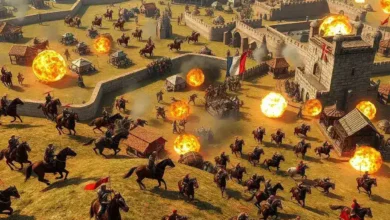
The combat system in Civilization VI is turn-based, with units moving across a hex-based map. Each unit has specific strengths and weaknesses, and promotions allow players to customize their units over time. For example, a Swordsman might gain bonuses to combat strength when fighting in open terrain, while an Archer excels at ranged attacks. The game encourages players to think tactically about unit positioning, terrain advantages, and timing when engaging in battle.
The AI in Civilization VI is designed to be challenging but fair, with leaders adopting different playstyles based on their historical personalities. For instance, Genghis Khan will prioritize military expansion, while Cleopatra focuses on cultural and economic growth. The AI’s behavior can be unpredictable at times, but it adds a layer of realism to the game, making each encounter feel unique.
The game’s physics system is relatively simple, with units moving in straight lines and terrain affecting movement and combat. However, the zone of control mechanic ensures that units can’t move freely through enemy territory without consequences, adding a strategic layer to combat. The control responsiveness is excellent, with smooth unit movement and intuitive controls that make micromanagement enjoyable rather than tedious.
Difficulty in Civilization VI scales with the AI difficulty settings, from Prince (easy) to Deity (hard). On higher difficulties, the AI receives bonuses such as increased production, faster technology research, and more aggressive military strategies. This ensures that even experienced players face a challenge, especially when playing on larger maps or against multiple AI opponents.
- ✅ Combat Mechanics: Turn-based unit movement, terrain advantages, and promotions.
- ✅ AI Behavior: Leaders adopt unique playstyles based on historical personalities.
- ✅ Physics System: Units move in straight lines, with terrain affecting movement and combat.
- ✅ Control Responsiveness: Smooth unit movement and intuitive controls.
- ✅ Difficulty Balance: AI receives bonuses on higher difficulties, ensuring a challenge.
🌍 Map Design and Exploration: A World of Endless Possibilities
The map in Civilization VI is procedurally generated, meaning no two games are identical. Each map features a mix of terrain types, including forests, mountains, rivers, and deserts, each with its own strategic advantages. For example, forests provide defensive bonuses, while rivers offer food and production bonuses. The game encourages players to explore the map early on, as uncovering natural wonders, resources, and strategic locations can give them a significant advantage.
The mission structure in Civilization VI is flexible, with players choosing between historical victory conditions (such as Domination, Science, or Culture) or custom challenges. The game’s Dynamic Difficulty Adjustment ensures that the AI adapts to the player’s progress, making the game more challenging if the player is performing well.
Replay value in Civilization VI is exceptionally high, thanks to the game’s randomly generated maps, expansion content, and multiplayer mode. Players can experiment with different leaders, victory conditions, and strategies, ensuring that no two playthroughs feel the same. The game’s modding community also adds to its longevity, with players creating custom maps, leaders, and gameplay mechanics.
- Map Design: Procedurally generated terrain with diverse strategic advantages.
- Exploration Freedom: Uncover natural wonders, resources, and strategic locations.
- Mission Structure: Flexible victory conditions, including historical and custom challenges.
- Replay Value: High replayability due to random maps, expansions, and modding community.
🎨 Graphics and Audio Quality: A Visual and Auditory Feast
Civilization VI boasts a visually stunning art style that blends historical accuracy with creative liberty. The game’s isometric perspective allows for a clear view of the map, while the detailed unit and building designs bring the world to life. The game’s animation quality is top-notch, with units moving smoothly and buildings being constructed in real-time. The lighting and shadow effects are particularly impressive, with dynamic weather and time-of-day changes adding to the immersion.
The game’s engine, a modified version of the one used in Civilization V, has been optimized for performance, ensuring smooth gameplay even on mid-range PCs. The texture quality is high, with detailed terrain and unit models that enhance the game’s visual appeal. The environmental effects, such as rivers, forests, and mountains, are also well-rendered, making the world feel alive and dynamic.
🖥️ Visual Quality and Engine: A Masterclass in Strategy Game Design
- ✅ Game Engine: Modified version of Civilization V’s engine, optimized for performance.
- ✅ Texture Quality: High-resolution textures for terrain, units, and buildings.
- ✅ Lighting: Dynamic lighting and shadow effects for immersive environments.
- ✅ Shadows: Detailed shadows that enhance realism.
- ✅ Environmental Effects: Rivers, forests, and mountains rendered with high detail.
🔊 Sound Effects and Music: Immersive Audio That Enhances the Experience
The audio design in Civilization VI is equally impressive, with a rich soundscape that enhances immersion. The game features a dynamic soundtrack that adapts to the player’s progress, with peaceful melodies during exploration and tense orchestral pieces during wartime. The voice acting is top-notch, with each leader delivering unique lines that reflect their historical personalities. For example, Cleopatra might boast about her civilization’s cultural achievements, while Genghis Khan might threaten war with a growl.
The game’s sound effects are also well-designed, with units making distinct noises when moving, attacking, or being defeated. The ambient sounds of cities, such as the hum of markets or the clanging of construction, add to the game’s immersive atmosphere. The audio quality is particularly impressive on headphones, where the spatial effects make the game feel even more dynamic.
One of the standout features of the game’s audio design is its dynamic music system, which adjusts the soundtrack based on the player’s actions. For example, the music becomes more intense during wartime or when the player is on the verge of victory. This system ensures that the game’s audio feels responsive to the player’s choices, enhancing the overall experience.
🚀 Key Features Section: What Makes Civilization VI Stand Out?
Civilization VI is packed with features that set it apart from other turn-based strategy games. Its district-based city system is a game-changer, allowing players to specialize their cities in different areas, such as science, culture, or production. This mechanic encourages strategic city placement and district positioning, adding a layer of tactical depth that wasn’t present in previous entries.
The game also introduces governments and policies, which provide additional strategic options. Players can adopt policies that boost specific aspects of their civilization, such as early military strength or cultural output. These policies can be customized based on the player’s preferred playstyle, adding another layer of customization to the experience.
Another key innovation is the Great People system, which allows players to recruit historical figures like Leonardo da Vinci or Isaac Newton to boost their civilization’s capabilities. These Great People can be used to found cities, boost production, or enhance culture, making them invaluable in the late game.
The game’s expansion packs also introduce new mechanics and leaders, such as the Dynamic Eras system in Rise and Fall, which allows civilizations to advance through historical periods at different rates. This adds a layer of unpredictability to the game, as players must adapt to the changing political landscape.
Finally, the game’s multiplayer mode allows players to compete against each other in real-time or turn-based matches, adding a competitive element to the experience. The game’s modding community is also a major strength, with players creating custom maps, leaders, and gameplay mechanics that extend the game’s lifespan.
- District-Based City System: Specialized districts encourage strategic city planning.
- Governments and Policies: Customizable policies that boost specific aspects of your civilization.
- Great People System: Recruit historical figures to enhance your civilization’s capabilities.
- Dynamic Eras (Expansion): Civilizations advance through historical periods at different rates.
- Multiplayer Mode: Compete against other players in real-time or turn-based matches.
- Modding Community: Custom maps, leaders, and gameplay mechanics extend the game’s lifespan.
📊 Key Points: A Detailed Comparison of Civilization VI’s Strengths
| Feature | Civilization VI | Comparison to Civilization V | Notable Strengths |
|---|---|---|---|
| District-Based City System | Specialized districts encourage strategic city planning. | More flexible and dynamic than the tile-based system in Civ V. | Encourages long-term planning and adaptability. |
| Governments and Policies | Customizable policies that boost specific aspects of your civilization. | New feature that adds depth to the game’s strategic options. | Allows players to tailor their playstyle to their preferred victory condition. |
| Great People System | Recruit historical figures to enhance your civilization’s capabilities. | More streamlined and interactive than Civ V’s Great People system. | Great People can be used to found cities, boost production, or enhance culture. |
| Dynamic Eras (Expansion) | Civilizations advance through historical periods at different rates. | Not present in Civilization V. | Adds unpredictability and depth to the game’s strategic options. |
| Multiplayer Mode | Compete against other players in real-time or turn-based matches. | More polished and accessible than Civ V’s multiplayer. | Adds a competitive element to the experience. |
| Modding Community | Custom maps, leaders, and gameplay mechanics extend the game’s lifespan. | More active and diverse than Civ V’s modding community. | Extends the game’s lifespan and adds new content. |
The table above highlights the key features that set Civilization VI apart from its predecessor, Civilization V. The district-based city system is a standout innovation, encouraging players to think strategically about city placement and district positioning. This mechanic adds a layer of tactical depth that wasn’t present in previous entries, making each playthrough feel unique and rewarding.
The introduction of governments and policies is another major improvement, allowing players to customize their civilization’s strengths. Whether you’re aiming for a cultural victory or a domination victory, these policies give you the tools to tailor your strategy to your preferred playstyle. The Great People system also adds depth to the late game, with historical figures like Leonardo da Vinci and Isaac Newton providing valuable boosts to your civilization’s capabilities.
The game’s expansions, particularly Rise and Fall and Gathering Storm, introduce even more innovations, such as the Dynamic Eras system and environmental disasters. These features add unpredictability to the game, ensuring that no two playthroughs feel the same. The multiplayer mode is also a major strength, allowing players to compete against each other in real-time or turn-based matches. Finally, the game’s modding community is one of its greatest assets, with players creating custom maps, leaders, and gameplay mechanics that extend the game’s lifespan.
📊 Pros and Cons: A Balanced Look at Civilization VI’s Strengths and Weaknesses
✅ Advantages: Why Civilization VI is a Must-Play
Civilization VI excels in many areas, making it a must-play for fans of turn-based strategy games. One of its greatest strengths is its strategic depth, which encourages players to think carefully about city placement, district positioning, and long-term planning. The game’s district-based city system is a standout feature, allowing players to specialize their cities in different areas, such as science, culture, or production. This mechanic adds a layer of tactical depth that wasn’t present in previous entries, making each playthrough feel unique and rewarding.
The game’s AI opponents are also well-designed, with each leader adopting a unique playstyle based on their historical personality. This ensures that every encounter feels fresh and unpredictable, adding to the game’s replayability. The expansion packs introduce even more depth, with features like the Dynamic Eras system and environmental disasters adding unpredictability to the game.
The game’s modding community is another major strength, with players creating custom maps, leaders, and gameplay mechanics that extend the game’s lifespan. The multiplayer mode is also well-implemented, allowing players to compete against each other in real-time or turn-based matches. Finally, the game’s accessibility on both PC and mobile devices makes it a great choice for strategy enthusiasts on the go.
- ✅ Strategic Depth: District-based city system encourages long-term planning and adaptability.
- ✅ AI Opponents: Leaders adopt unique playstyles based on historical personalities.
- ✅ Expansion Content: Features like Dynamic Eras and environmental disasters add unpredictability.
- ✅ Modding Community: Custom maps, leaders, and gameplay mechanics extend the game’s lifespan.
- ✅ Multiplayer Mode: Compete against other players in real-time or turn-based matches.
- ✅ Accessibility: Available on PC and mobile devices for gaming on the go.
❌ Disadvantages: Areas Where Civilization VI Falls Short
Despite its many strengths, Civilization VI is not without its flaws. One of the game’s biggest weaknesses is its AI pathfinding, which can sometimes be erratic or illogical. Units may get stuck or make poor decisions, leading to frustrating moments in combat. The game’s late-game pacing can also feel slow, particularly in multiplayer matches, where players may find themselves waiting for turns to resolve.
The game’s microtransaction system is another point of contention, particularly in the mobile version. Some players feel that the game’s premium currency is used to gate access to important features, such as new leaders or civilizations. This can create a pay-to-win atmosphere, which detracts from the game’s overall enjoyment.
Finally, the game’s performance on low-end devices can be lackluster, particularly on mobile platforms. While the game runs smoothly on high-end devices, players with older smartphones or tablets may experience lag or frame drops, which can detract from the experience.
- ❌ AI Pathfinding: Units may get stuck or make poor decisions, leading to frustrating moments.
- ❌ Late-Game Pacing: Multiplayer matches can feel slow, with long waits between turns.
- ❌ Microtransactions: Premium currency gates access to important features, creating a pay-to-win atmosphere.
- ❌ Performance on Low-End Devices: Lag and frame drops on older smartphones or tablets.
💻 Performance and Technical Analysis: Running Civilization VI Smoothly
🖥️ PC System Requirements: What You Need to Play
Civilization VI is a demanding game, particularly on higher graphics settings. The game’s system requirements vary depending on the platform, with PC players needing a relatively powerful machine to run the game smoothly. Below is a breakdown of the game’s minimum and recommended system requirements:
| Component | Minimum Requirement | Recommended Requirement |
|---|---|---|
| Operating System | Windows 7 64-bit | Windows 8.1 64-bit or later |
| Processor | Intel Core i3 2.5 GHz or AMD FX 4500 | Intel Core i5 2.5 GHz or AMD Ryzen 5 2400G |
| Memory | 4 GB RAM | 8 GB RAM |
| Graphics Card | Intel HD 4000 or NVIDIA GeForce GT 650 / AMD Radeon HD 7750 | NVIDIA GeForce GTX 960 / AMD Radeon R9 290X or equivalent |
| Storage | 25 GB available space | 25 GB available space |
| Sound Card | DirectX compatible | DirectX compatible |
On a minimum-spec PC, Civilization VI will run at around 30 FPS on low settings. However, the game’s performance improves significantly on mid-range and high-end machines, with 60 FPS possible on high settings with a powerful GPU. The game’s optimization is generally good, but some players may experience occasional lag or frame drops, particularly during large-scale battles or when managing multiple cities.
The game’s stability is also dependent on the player’s hardware, with some users reporting crashes or bugs on certain systems. These issues can often be resolved by updating drivers or adjusting graphics settings, but they can still detract from the overall experience. The game’s modding community also plays a role in performance, as some mods can significantly impact frame rates.
For players looking to maximize performance, adjusting graphics settings is key. Lowering the render scale, shadow quality, and particle effects can significantly improve FPS without sacrificing too much visual fidelity. The game also supports DirectX 12, which can provide a performance boost on compatible hardware.
📱 Android Performance: Mobile Strategy Gaming at Its Best
The Android version of Civilization VI is a well-optimized port of the PC game, offering a similar experience on mobile devices. The game runs smoothly on most modern smartphones and tablets, though some features are naturally streamlined for touch controls. The game’s storage size is around 2.5 GB, making it a relatively lightweight download compared to other mobile strategy games.
The game’s performance stability on Android is generally good, with most devices capable of running the game at 60 FPS on medium settings. However, older or low-end devices may struggle with frame drops or lag, particularly during large-scale battles or when managing multiple cities. The game’s battery consumption is also a consideration, as long play sessions can drain the battery relatively quickly.
- ✅ Device Compatibility: Runs smoothly on most modern smartphones and tablets.
- ✅ Storage Size: Around 2.5 GB, lightweight compared to other mobile strategy games.
- ✅ Battery Consumption: Moderate, though long play sessions can drain the battery.
- ✅ Graphics Settings Behavior: Adjustable for optimal performance on low-end devices.
🏁 Final Verdict and Conclusion: Is Civilization VI Worth Your Time?
Civilization VI is a masterpiece of turn-based strategy, offering a deep, engaging, and replayable experience for players of all skill levels. Its innovative district-based city system, dynamic AI opponents, and rich historical themes make it a standout title in the genre. Whether you’re a seasoned veteran of the Civilization series or a newcomer drawn to its strategic depth, the game offers a uniquely rewarding experience that rewards patience, planning, and adaptability.
The game’s expansion packs further enhance its value, introducing new mechanics, leaders, and challenges that keep the game fresh and engaging. The multiplayer mode adds a competitive element, while the modding community extends the game’s lifespan with custom content. While the game does have some flaws—such as erratic AI pathfinding and occasional performance issues—these are minor compared to the overall quality of the experience.
Civilization VI is best suited for players who enjoy long-term strategic planning, historical immersion, and emergent storytelling. It’s ideal for gamers who appreciate a challenge and the satisfaction of outmaneuvering opponents through diplomacy, culture, or sheer military might. Whether you’re aiming for a peaceful cultural victory or a ruthless domination, the game offers multiple paths to success, each with its own unique challenges and rewards.
If you’re a fan of turn-based strategy games, Civilization VI is a must-play. Its deep mechanics, rich historical themes, and high replayability make it one of the best games in the genre. Whether you’re playing on PC or mobile, the game offers a polished, immersive experience that will keep you engaged for hundreds of hours.
So, grab your favorite leader, set your sights on victory, and dive into the world of Civilization VI. The journey ahead is long, the challenges are many, and the rewards are immeasurable.
❓ Frequently Asked Questions: Everything You Need to Know About Civilization VI
- Does Civilization VI run on Windows 10?
Civilization VI is fully compatible with Windows 10 and later versions. The game runs smoothly on modern operating systems, though players may need to update their graphics drivers for optimal performance. The game also supports DirectX 12, which can provide a performance boost on compatible hardware.
- Can I play Civilization VI on Android with a controller?
Yes, the Android version of Civilization VI supports external controllers, making it easier to manage your empire on the go. The game’s touch controls are well-optimized, but a controller can enhance the experience, particularly during combat or when managing multiple cities. Simply connect your controller via Bluetooth or USB and configure the controls in the game’s settings.
- Is an internet connection required to play Civilization VI?
No, an internet connection is not required to play the single-player campaign. However, an internet connection is necessary for multiplayer matches, leaderboard features, and some community content. The game also supports offline play, allowing you to enjoy the full experience without an active connection.
- Is Civilization VI the full version, or are there in-game purchases?
The base version of Civilization VI includes the full game, with all core mechanics and features unlocked. However, there are in-game purchases available, such as civilization packs, leader packs, and expansion content. These purchases are optional and do not gate access to important gameplay features. The mobile version also includes microtransactions for premium currency, which can be used to unlock additional content.
- What are the best settings for Civilization VI on PC?
The best settings for Civilization VI on PC depend on your hardware. For high-end PCs, enabling DirectX 12, high render scale, and medium-to-high graphics settings will provide the best visual experience. For mid-range or low-end PCs, lowering the shadow quality, particle effects, and render scale can significantly improve performance without sacrificing too much visual fidelity. The game also supports vertical sync and frame rate limits, which can help reduce screen tearing and stuttering.
- How does Civilization VI perform on mid-range and low-end devices?
Civilization VI can run on mid-range and low-end devices, but performance may vary depending on the hardware. On mid-range PCs or smartphones, the game will run smoothly on medium settings with 60 FPS. On low-end devices, lowering the graphics settings and resolution may be necessary to achieve smooth performance. The game’s optimization is generally good, but some older devices may struggle with frame drops or lag, particularly during large-scale battles.
- What is the best way to optimize Civilization VI for smooth gameplay?
To optimize Civilization VI for smooth gameplay, start by adjusting the graphics settings to balance visual quality and performance. Lowering the render scale, shadow quality, and particle effects can significantly improve FPS. Enabling DirectX 12 and vertical sync can also help reduce screen tearing and stuttering. Additionally, closing background applications and updating your graphics drivers can improve stability and performance. For mobile players, reducing the graphics settings and resolution can help achieve smoother gameplay.
- How does Civilization VI compare to other turn-based strategy games?
Civilization VI stands out among turn-based strategy games for its district-based city system, dynamic AI opponents, and rich historical themes. Compared to games like XCOM 2 or Endless Legend, Civilization VI offers a more accessible and replayable experience, with multiple victory conditions and a deep modding community. However, its AI pathfinding and late-game pacing can be weaker than some competitors. Overall, Civilization VI is a must-play for fans of the genre, though players may prefer other titles for specific gameplay aspects.
- What are some beginner-friendly tips for playing Civilization VI?
For beginners, it’s important to start with a simple victory condition, such as a cultural victory or science victory, to get a feel for the game’s mechanics. Focus on expanding your empire gradually, avoiding overextension in the early game. Prioritize food and production to grow your cities quickly, and invest in scouting to uncover resources and natural wonders. Use diplomacy to form alliances and avoid unnecessary wars. Finally, don’t be afraid to experiment with different leaders and strategies to find what suits you best.
- Is Civilization VI suitable for competitive play?
Yes, Civilization VI supports competitive multiplayer, allowing players to compete against each other in real-time or turn-based matches. The game’s ranked ladder and custom lobbies provide opportunities for players to test their skills against others. However, the game’s late-game pacing can be a drawback in competitive play, as long matches may not be suitable for all players. Additionally, the game’s microtransaction system can create a pay-to-win atmosphere in some competitive scenarios, though this is less of an issue in ranked matches.