
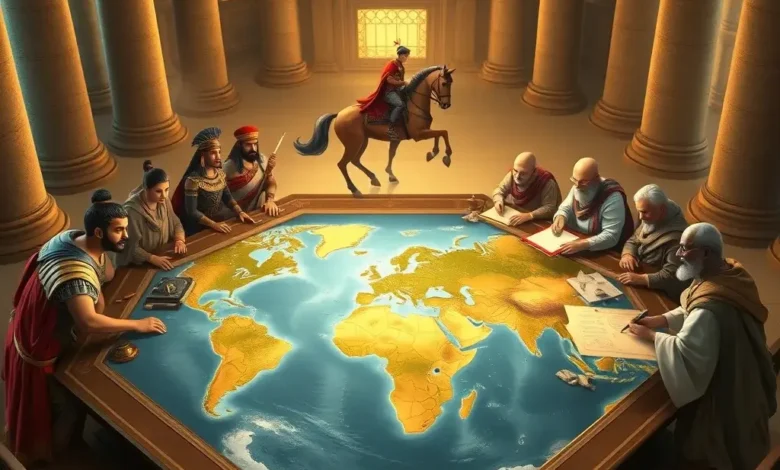
Civilization VI is not just a strategy game; it is a historical odyssey where players shape the destiny of humankind through diplomacy, warfare, and cultural development. At the heart of this experience lies a rich narrative woven through its characters, civilizations, and plotlines. This game, developed by Firaxis Games and published by 2K, invites players to rewrite history while immersing themselves in the stories of legendary leaders, pivotal moments, and the rise and fall of empires. Whether you are a seasoned veteran of the series or a newcomer drawn to its strategic depth, Civilization VI offers a narrative experience that is both educational and thrilling. The game’s plot is not linear but evolves dynamically based on player choices, making each playthrough a unique journey through time.
🌍 Why Civilization VI Stands Out in Narrative and Character Development
Civilization VI distinguishes itself from its predecessors and competitors by elevating storytelling to an art form. Unlike many strategy games that focus solely on mechanics, Civilization VI weaves history into its gameplay, turning every decision into a narrative moment. The game features a diverse cast of historical leaders, each with unique personalities, abilities, and historical contexts. From Augustus Caesar’s disciplined leadership to Cleopatra’s diplomatic prowess, the characters feel authentic and deeply rooted in historical records. The plot is not confined to a single storyline but unfolds across different eras, allowing players to experience the evolution of human civilization firsthand. This blend of strategy and storytelling creates an immersive experience that appeals to both history enthusiasts and gamers seeking deep strategic gameplay.
- ✅ Historical authenticity in character design and abilities
- 🎯 Dynamic storytelling shaped by player choices
- ⚔️ Strategic depth combined with narrative richness
- 🌍 Expansive world-building across multiple eras
- 🧠 Educational value through historical references and events
🔹 The Role of Historical Leaders in Shaping the Plot
Each leader in Civilization VI represents a unique civilization, and their abilities reflect their historical strengths and weaknesses. For example, Gandhi of India is known for his peaceful diplomacy and cultural prowess, while Genghis Khan of Mongolia embodies aggressive expansion and military dominance. These characters are not just avatars for the player but storytellers in their own right, bringing history to life through their actions and dialogues. The game’s plotline is further enriched by historical events such as the Renaissance, Industrial Revolution, and World Wars, which are triggered based on player progress and decisions. This approach ensures that the narrative remains engaging and relevant, regardless of whether you are playing as a peaceful builder or a ruthless conqueror.
The game’s AI-driven events and dynamic leaders add layers to the storytelling. For instance, if you choose to play as Hammurabi of Babylon, the game might trigger events related to the Code of Hammurabi, introducing unique quests and challenges that align with historical milestones. This level of detail makes Civilization VI feel like a living, breathing world where history is not just a backdrop but an active participant in the gameplay.
🔹 How Player Choices Influence the Storyline
One of Civilization VI’s most compelling features is its emphasis on player agency. Unlike traditional games with fixed narratives, Civilization VI allows players to shape their own story through their choices. Whether you decide to focus on cultural achievements, military conquests, or scientific advancements, your path will determine which events unfold and which leaders rise to prominence. For example, if you prioritize religious expansion, you might trigger events related to the spread of major world religions, while a focus on technology could lead to the discovery of nuclear weapons or space exploration.
The game’s victory conditions—such as Domination, Science, Culture, or Religion—further influence the plot. A Domination victory might lead to a storyline dominated by wars and territorial expansion, while a Culture victory could focus on artistic achievements and global influence. This dynamic storytelling ensures that no two games are alike, making Civilization VI a replayable masterpiece.
🕹️ Core Gameplay Mechanics That Enhance the Narrative Experience
The narrative richness of Civilization VI is tightly intertwined with its gameplay mechanics. The game’s turn-based system allows for strategic planning and storytelling, where every decision—whether it’s founding a city, declaring war, or signing a treaty—has consequences that ripple through the narrative. The AI’s behavior is another critical factor, as it dynamically responds to player actions, creating opportunities for alliances, betrayals, and unexpected historical events. For example, if you betray a friendly neighbor, the game might trigger a sequence of events where that civilization turns against you, leading to a dramatic shift in the storyline.
The game’s District System also plays a vital role in shaping the narrative. Unlike previous entries in the series, Civilization VI introduces a hexagonal tile system where districts—such as Commercial Hubs, Campuses, and Holy Sites—must be strategically placed near resources and city centers. This mechanic not only influences the game’s strategic depth but also contributes to its storytelling. For instance, a city focused on cultural districts might become a center of artistic innovation, while a militaristic city could grow into a dominant military powerhouse.
⚔️ Combat System and AI Behavior in Civilization VI
The combat system in Civilization VI is designed to be both accessible and deep, catering to players of all skill levels. Battles are resolved through a combination of unit strength, terrain bonuses, and tactical positioning, with the AI dynamically adapting to the player’s strategies. This creates a narrative where warfare feels consequential and impactful. For example, if you choose to play as Saladin of Arabia, your units gain bonuses in desert terrain, reflecting the historical prowess of Arab armies in arid environments. The AI’s behavior is equally sophisticated, with leaders making decisions based on their historical personalities and the current state of the game.
- ✅ Turn-based combat for strategic depth and storytelling
- 🎯 Unit promotions that allow for customization and evolution
- ⚔️ Dynamic AI responses to player actions
- 🌍 Terrain-based bonuses that influence battles
- 🧠 Historical accuracy in unit types and abilities
🌍 Open World and Level Design in Civilization VI
While Civilization VI is not an open-world game in the traditional sense, its level design is meticulously crafted to support its narrative and strategic depth. The game’s world map is procedurally generated, ensuring that each playthrough feels unique. The map design encourages exploration and discovery, with hidden resources, natural wonders, and strategic chokepoints that players must navigate. The game’s hexagonal tile system also enhances the level design by allowing for more organic and varied city layouts, making each civilization’s growth feel distinct.
The game’s mission structure is another key element of its level design. Missions such as “The Great Wall” or “The Internet” are triggered based on player progress and historical milestones, adding a layer of storytelling that is both educational and engaging. These missions often come with unique objectives and rewards, further enriching the gameplay experience.
- Procedurally generated maps ensure replayability and variety
- Natural wonders and resources add strategic depth and narrative moments
- Hexagonal tile system allows for more organic city layouts
- Dynamic events triggered by player actions and historical milestones
- Mission-based gameplay that guides the narrative arc
🎨 Graphics and Audio Quality in Civilization VI
Civilization VI’s visual and auditory design plays a crucial role in enhancing the game’s narrative and immersive experience. The game features a stylized, cartoony art style that harkens back to the classic Civilization games while incorporating modern graphical enhancements. The art direction is heavily influenced by historical aesthetics, with each civilization’s units, buildings, and leaders designed to reflect their real-life counterparts. This attention to detail not only makes the game visually appealing but also deepens the narrative immersion, as players can easily recognize and connect with the historical figures and settings.
🖥️ Visual Quality and Art Direction
The game uses the Unity engine, which provides a balance between performance and visual fidelity. The art style is a blend of 2D and 3D elements, with units and leaders rendered in 3D while the world map and cities are presented in a 2D isometric view. This hybrid approach allows for detailed character animations and expressive facial expressions, which are essential for conveying the personalities of the game’s leaders. The lighting and environmental effects are also well-executed, with dynamic weather systems and day-night cycles that add depth to the visual experience.
- ✅ Stylized cartoony art style with modern enhancements
- 🎨 Historical aesthetics in unit and building designs
- 🖥️ Unity engine for optimal performance and visual balance
- 🌍 2D isometric world map with 3D units and leaders
- 💡 Dynamic lighting and weather for immersive environments
🔊 Sound Design and Music
The audio design in Civilization VI is a masterclass in atmospheric storytelling. The game’s soundtrack, composed by Geoff Knorr and Roland Rizzo, features a blend of orchestral and ambient tracks that evoke the grandeur of different historical eras. Each civilization has its own unique musical theme, which changes dynamically based on the game’s state. For example, if you are playing as Pedro II of Brazil, the soundtrack will incorporate Brazilian musical influences, creating a sense of cultural immersion. The game’s sound effects are equally impressive, with unit voices, city ambiance, and battle noises adding layers of realism to the experience.
The voice acting is another standout feature, with each leader voiced by talented actors who bring personality and depth to their characters. The dialogues are historically inspired, with leaders reacting to in-game events in ways that feel authentic and engaging. This combination of music, sound effects, and voice acting creates a fully immersive auditory experience that complements the game’s narrative depth.
🚀 Key Features That Define Civilization VI’s Narrative Experience
Civilization VI is packed with features that enhance its storytelling and strategic depth. One of the most notable additions is the Great Person System, which allows players to recruit historical figures like Leonardo da Vinci or Isaac Newton to gain unique bonuses. These characters not only provide gameplay advantages but also contribute to the game’s narrative by introducing quests, events, and dialogues that reflect their real-life accomplishments. For example, recruiting Galileo Galilei might trigger a quest to build a spaceport, while Ada Lovelace could help with scientific research.
The game’s Diplomatic Victory system is another key feature that enriches the narrative. Players can form alliances, sign treaties, and engage in diplomacy with AI-controlled civilizations, which can lead to unexpected storylines such as betrayals, wars, or unexpected friendships. The AI’s diplomatic behavior is influenced by the leaders’ personalities, making each interaction unique and memorable.
- Great Person System introduces historical figures with unique abilities and quests
- Diplomatic Victory encourages dynamic interactions and unexpected storylines
- District System enhances city development and strategic depth
- Dynamic Events triggered by player actions and historical milestones
- Victory Conditions such as Culture, Religion, and Science provide diverse narrative paths
📊 Civilization VI’s Strengths and Weaknesses
✅ Advantages of Civilization VI
Civilization VI excels in many areas, making it a standout title in the strategy genre. One of its greatest strengths is its historical authenticity, which is evident in every aspect of the game, from unit designs to leader abilities. The game’s dynamic storytelling ensures that each playthrough feels unique, with player choices shaping the narrative in meaningful ways. The District System adds a layer of strategic depth that rewards careful planning and adaptability, while the Great Person System introduces a level of customization and personalization that is unmatched in the genre.
Another major advantage is the game’s replayability. With a vast array of civilizations, leaders, and victory conditions to choose from, Civilization VI offers countless hours of gameplay. The AI’s sophisticated behavior and the game’s procedural generation ensure that no two games are alike, making it a favorite among strategy enthusiasts. Additionally, the game’s educational value cannot be overstated, as it encourages players to learn about history while engaging in strategic gameplay.
- ✅ Historical authenticity in every aspect of the game
- 🎯 Dynamic storytelling shaped by player choices
- ⚔️ Strategic depth through the District System
- 🌍 Unmatched replayability with diverse civilizations and leaders
- 🧠 Educational value through historical references and events
- 🎨 Immersive art and audio design that enhances the narrative
❌ Disadvantages of Civilization VI
Despite its many strengths, Civilization VI is not without its flaws. One of the most common criticisms is its steep learning curve, particularly for newcomers to the series. The game’s complex mechanics, such as the District System and Great Person System, can be overwhelming for players who are not familiar with strategy games. Additionally, the game’s AI can feel inconsistent at times, with some leaders making irrational decisions that disrupt the narrative flow.
Another potential drawback is the game’s monotony in late-game scenarios. As the game progresses, the pace can slow down, particularly in multiplayer matches where players may struggle to find meaningful ways to break the stalemate. The game’s lack of meaningful endgame content can also detract from the overall experience, as players may feel that the narrative loses momentum after achieving a victory condition.
- ❌ Steep learning curve for newcomers
- 🎭 Inconsistent AI behavior in some scenarios
- ⏳ Late-game monotony in multiplayer matches
- 📉 Lack of meaningful endgame content in some cases
- 💾 Performance issues on low-end hardware
💻 Performance and Technical Analysis
🖥️ PC System Requirements
Civilization VI is a well-optimized game that runs smoothly on a wide range of hardware, but its performance can vary depending on your system specifications and in-game settings. Below is a detailed breakdown of the game’s system requirements and performance metrics based on different hardware tiers.
| Component | Minimum Requirement | Recommended Requirement | High-End Requirement |
|---|---|---|---|
| Operating System | Windows 7 SP1, 64-bit | Windows 10, 64-bit | Windows 10, 64-bit |
| Processor | Intel Core i3 2.5 GHz / AMD FX 4500 | Intel Core i5 2.5 GHz / AMD FX 8350 | Intel Core i7 3.5 GHz / AMD Ryzen 7 1700 |
| Memory | 4 GB RAM | 8 GB RAM | 16 GB RAM |
| Graphics | Intel HD 4000 / NVIDIA GeForce 650 / AMD Radeon 7750 | NVIDIA GeForce GTX 960 / AMD Radeon R9 290 | NVIDIA GeForce GTX 1080 / AMD Radeon RX 5700 XT |
| Storage | 60 GB HDD Space | 60 GB SSD Space | 60 GB SSD Space |
On minimum hardware, Civilization VI runs at 30 FPS with low graphics settings, which is playable but may feel sluggish during complex turns. The recommended specifications provide a much smoother experience, with stable 60 FPS gameplay and high graphics settings. High-end systems can easily achieve 60+ FPS even with ultra settings, making the game look and feel stunning. However, players with older hardware may experience performance drops during large multiplayer matches or when playing on high-resolution displays. To optimize performance, consider lowering the graphics settings, disabling unnecessary visual effects, and using a solid-state drive for storage.
📱 Civilization VI on Mobile Devices
Civilization VI is also available on mobile devices, where its performance is heavily dependent on the hardware specifications. On high-end Android devices such as the Samsung Galaxy S21 or Google Pixel 6, the game runs smoothly at medium settings with 60 FPS. However, older or mid-range devices may struggle with performance, particularly during complex turns or when multiple AI civilizations are active. Battery consumption is another consideration, as the game can drain the battery quickly during extended play sessions. To improve mobile performance, close background apps, lower the graphics settings, and use a cooling pad to prevent overheating.
- ✅ Smooth performance on high-end Android devices
- 🎯 Medium graphics settings recommended for mid-range devices
- ⚠️ Battery drain during extended play sessions
- 🌡️ Overheating risks on older devices
- 💾 Large file size (6+ GB) requires sufficient storage
🏁 Final Verdict and Conclusion
Civilization VI is a masterpiece of strategy gaming, blending historical authenticity, dynamic storytelling, and deep strategic gameplay into a cohesive and immersive experience. Whether you are a history buff, a strategy enthusiast, or a casual gamer looking for a challenge, Civilization VI offers something for everyone. Its rich narrative, driven by the unique personalities of historical leaders and the consequences of player choices, sets it apart from other games in the genre. The game’s District System, Great Person System, and dynamic AI ensure that no two playthroughs are alike, making it a title that rewards both skill and creativity.
That said, Civilization VI is not without its flaws. The steep learning curve may deter newcomers, and the late-game monotony can make multiplayer matches feel stale. Additionally, players with older hardware may experience performance issues, particularly in large, complex games. However, these drawbacks are minor compared to the overall quality of the experience. Civilization VI is a game that will challenge your strategic mind, deepen your appreciation for history, and provide countless hours of engaging gameplay.
If you are looking for a strategy game that offers more than just mechanics—one that tells a story, shapes your decisions, and immerses you in a living, breathing world—then Civilization VI is the game for you. Whether you play on PC or mobile, this title is a must-try for anyone who loves history, strategy, or both.
❓ Frequently Asked Questions
- What is the best way to learn the basics of Civilization VI?
The best way to learn Civilization VI is to start with the in-game tutorial and experiment with different civilizations on lower difficulties. Firaxis Games also offers a comprehensive beginner’s guide on their official website, which covers everything from city placement to combat tactics. Additionally, watching walkthroughs on YouTube or Twitch can provide valuable insights into advanced strategies.
- How does the District System work in Civilization VI?
The District System requires players to strategically place districts such as Commercial Hubs, Campuses, and Holy Sites around their cities. Each district must be adjacent to a city center and provides unique bonuses to the civilization. For example, a Commercial Hub boosts gold income, while a Campus enhances science output. The system encourages careful planning and adaptability, as poor district placement can hinder a civilization’s growth.
- Can I play Civilization VI in multiplayer mode?
Yes, Civilization VI supports multiplayer mode, allowing you to compete or cooperate with other players online. The multiplayer experience is dynamic and unpredictable, as AI-controlled civilizations can interact with both you and your opponents. However, multiplayer matches can sometimes feel slow-paced, particularly in late-game scenarios where players struggle to find meaningful ways to break stalemates.
- What are the best civilizations to play for beginners?
For beginners, civilizations like America (led by Theodore Roosevelt), China (led by Qin Shi Huang), or Egypt (led by Cleopatra) are excellent choices. These civilizations have straightforward abilities and strong early-game advantages, making it easier to learn the game’s mechanics. As you become more comfortable, you can experiment with more complex civilizations like England or Russia.
- How does the Great Person System impact gameplay?</b
The Great Person System allows players to recruit historical figures who provide unique bonuses and quests. For example, Leonardo da Vinci can be used to build wonders, while Isaac Newton enhances scientific research. These characters add a layer of customization and personalization to the game, making each playthrough feel unique. Recruiting Great People early in the game can provide a significant strategic advantage.
- What are the best settings for optimal performance on PC?
For optimal performance on PC, set the graphics to medium or high and enable V-Sync to reduce screen tearing. Disable unnecessary visual effects like dynamic lighting and shadows if you are experiencing performance drops. Using an SSD for storage can also improve load times and overall smoothness. Additionally, closing background apps and updating your graphics drivers can enhance performance.
- Is Civilization VI suitable for mobile play?
Civilization VI is playable on mobile devices, but its performance depends on your hardware. High-end devices like the Samsung Galaxy S21 or Google Pixel 6 can run the game smoothly at medium settings. However, older or mid-range devices may struggle with performance, particularly during complex turns. Battery consumption is also a concern, so consider using a game controller and enabling battery saver mode for extended play sessions.
- How does the AI behave in Civilization VI?
The AI in Civilization VI is designed to mimic historical leaders’ personalities and behaviors. For example, Genghis Khan is aggressive and expansionist, while Gandhi is diplomatic and peaceful. The AI’s behavior can feel inconsistent at times, with some leaders making irrational decisions that disrupt the narrative flow. However, the AI’s dynamic responses to player actions create opportunities for unexpected storylines and interactions.
- What are the best victory conditions in Civilization VI?
The best victory condition depends on your playstyle. If you prefer a peaceful game, the Culture or Religion victories are excellent choices. For a more competitive experience, the Domination or Science victories offer challenging and dynamic gameplay. Each victory condition provides a unique narrative path, so experiment with different strategies to find the one that suits you best.
- Does Civilization VI have any post-launch content?
Yes, Civilization VI has received several expansions and DLCs since its launch, including Rise and Fall and Gathering Storm. These expansions introduce new civilizations, leaders, wonders, and gameplay mechanics that enhance the game’s depth and replayability. The Gathering Storm expansion, in particular, adds environmental events and climate change mechanics, which further enrich the narrative and strategic elements of the game.