
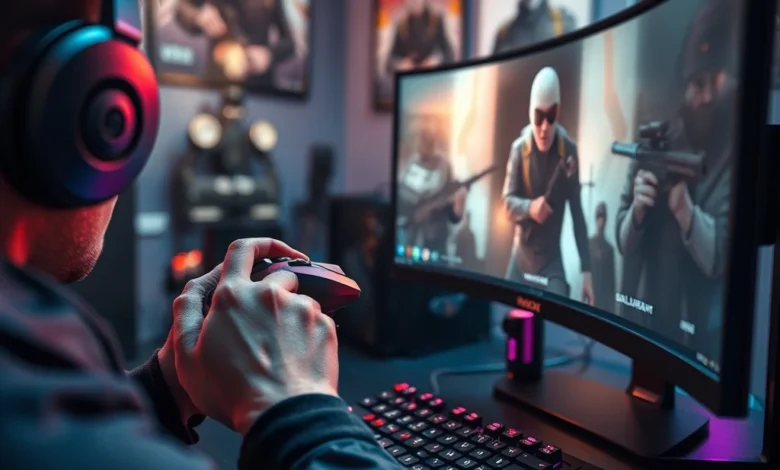
Valorant, the tactical first-person shooter developed by Riot Games, has taken the online gaming world by storm since its release. Combining precise gunplay with unique agent abilities, it demands a blend of strategy, teamwork, and mechanical skill. Among these skills, aiming stands as the most critical factor separating casual players from competitive ones. Whether you’re a newcomer struggling to land headshots or a seasoned player aiming to climb the ranked ladder, refining your aim is an ongoing journey. This guide dives deep into proven techniques, practice routines, and in-game settings to help you elevate your Valorant aiming prowess.
🎯 Why Aim Matters More in Valorant Than Other Shooters
Valorant isn’t just another run-and-gun shooter like Call of Duty or Apex Legends. Its gunplay is designed to feel weighty and realistic, with bullets that drop over distance and recoil patterns that must be mastered. Unlike games where spray-and-pray works, Valorant rewards precision and consistency. A single well-aimed shot can secure a kill, while a spray of uncontrolled bullets often wastes ammo and exposes your position. This emphasis on accuracy makes aim improvement not just helpful but essential for success.
Moreover, Valorant’s agents have unique abilities that can turn the tide of a round, but without the ability to land shots, those abilities become ineffective. For example, Jett’s dash and Phoenix’s flash are powerful tools, but if you can’t hit your shots afterward, they won’t matter. Aiming is the foundation that allows all other skills to shine. Whether you’re playing Sentinel, Duelist, or Initiator, your aim will dictate your impact on the game.
🔥 The Role of Aim in Different Agent Roles
Not all agents in Valorant require the same level of aiming skill. Here’s how aim factors into each role:
– ✅ Duelists (Jett, Phoenix, Reyna, Raze) – These agents rely almost entirely on their ability to land headshots. Their kits are built around aggressive playstyles, so precise aiming is non-negotiable.
– 🎯 Sentinels (Sage, Killjoy, Cypher, Chamber) – While positioning and ability usage are key, Sentinels still need solid aim to hold angles and trade kills. A well-placed shot can mean the difference between holding a site and losing it.
– 🛡️ Initiators (Sova, Breach, Skye, Fade) – Initiators often enter fights first, using their abilities to gather information. However, they still need reliable aim to secure kills after their utility is deployed.
– 🧠 Controllers (Brimstone, Omen, Viper, Astra) – Controllers excel at map control, but in close-quarters combat, their aim must be sharp to avoid being outgunned by aggressive opponents.
Regardless of your role, improving your aim will make you a more versatile and effective player. Even agents like Sage, who rely on healing, benefit from being able to land a quick Sheriff shot when needed.
🕹️ Mastering the Basics: Crosshair Placement and Movement
⚔️ The Fundamentals of Crosshair Placement
Crosshair placement is the cornerstone of good aim in Valorant. Many players make the mistake of placing their crosshair randomly or at chest level, only to panic when an enemy appears. Proper crosshair placement means keeping your crosshair at head height and pre-aiming common angles before you even see an opponent. This reduces the time it takes to land a headshot when an enemy does appear.
Here’s how to optimize your crosshair placement:
– ✅ Angle Pre-aiming – If you’re holding a tight angle (like on Ascent’s A Main), keep your crosshair at head level where enemies are most likely to peek.
– 🎯 Wallbanging – Practice aiming at common wall-peek spots (like on Bind’s Hookah or Lotus’s B Main) to pre-aim for potential enemies.
– ⚡ Peek Discipline – When peeking an angle, aim at head level before you fully expose yourself. This gives you the split second needed to land a shot before your enemy reacts.
🏃♂️ Movement Techniques for Better Aim
Movement in Valorant isn’t just about getting from point A to point B—it’s about minimizing your exposure while maximizing your accuracy. Poor movement habits, like jiggle peeking without control or sprinting randomly, can ruin your aim and get you killed. Here’s how to move effectively while maintaining aim:
– ✅ Counter-Strafing – Before firing, stop moving completely. Valorant guns have significant recoil when fired while moving, making it harder to land shots. Counter-strafing (tapping the opposite key to stop abruptly) helps stabilize your aim.
– 🎯 Crouch Peeking – When peeking an angle, crouch before you expose yourself. This reduces your hitbox size and makes you a harder target to hit while giving you time to aim.
– ⚡ Strafe Shooting – If you must move while shooting (like when retreating or repositioning), strafe in small, controlled movements. Avoid random sprinting, which destabilizes your aim.
Mastering movement takes practice, but it’s a skill that separates good players from great ones. Many high-elo players spend hours in Deathmatch or Spike Rush refining their movement to pair with their aim.

🎮 Practice Routines: Building Aim Consistency
🔥 Deathmatch: The Ultimate Aim Trainer
Deathmatch is Valorant’s built-in aim trainer, and it’s the best place to improve your raw aiming skills. Unlike competitive matches, where mistakes can cost rounds, Deathmatch allows you to focus solely on gunplay without the pressure of team performance. Here’s how to maximize its potential:
– ✅ Warm-Up Routine – Spend 10-15 minutes in Deathmatch before jumping into ranked. Focus on landing headshots consistently rather than just getting kills.
– 🎯 Weapon-Specific Drills – If you’re struggling with a particular gun (like the Sheriff or Guardian), spend extra time practicing with it in Deathmatch.
– ⚡ Tracking and Flicking – Mix up your aim training between tracking (following a moving target) and flicking (quickly snapping to a stationary or slow-moving target). Both skills are essential in Valorant.
📈 Aim Trainers: Third-Party Tools for Faster Improvement
While Valorant’s Deathmatch is great, third-party aim trainers can provide more structured and challenging exercises. Tools like Aim Lab, Kovaak’s, and Aiming.Pro are designed specifically for FPS games and can help you develop muscle memory faster. Here’s how to integrate them into your routine:
– ✅ Aim Lab – Offers drills for tracking, flicking, and recoil control. The Flicking and Tracking packs are particularly useful for Valorant.
– 🎯 Kovaak’s – Provides highly customizable scenarios, including Valorant-specific modes. Focus on drills that mimic in-game scenarios, like flicking to head-level targets.
– ⚡ Aiming.Pro – A free web-based trainer with a variety of FPS-specific exercises. Great for quick warm-ups before a gaming session.
When using third-party trainers, aim for consistency over speed. Start slow, focus on clean, controlled movements, and gradually increase your speed as your accuracy improves.
🎯 Recoil Control: The Secret to Spraying Like a Pro
Spraying in Valorant isn’t about emptying your magazine—it’s about controlling recoil to keep your shots on target. Each gun has a unique recoil pattern, and mastering these patterns is key to winning gunfights. Here’s how to practice recoil control:
– ✅ Recoil Mastery Drills – In Deathmatch or a third-party trainer, spend time firing full mags at walls. Observe the recoil pattern and practice moving your mouse in the opposite direction to counteract it.
– 🎯 Short Bursts – Instead of spraying wildly, use controlled 3-5 shot bursts. This reduces recoil buildup and increases accuracy.
– ⚡ Recoil Patterns by Gun – Each weapon in Valorant has a specific recoil pattern. For example:
– Vandal – Recoil goes up and slightly to the right.
– Phantom – Recoil has a noticeable horizontal pull to the left.
– Sheriff – Minimal recoil, making it ideal for one-taps.
🖥️ Optimizing Your Settings for Maximum Aim Potential
🎮 In-Game Sensitivity Settings
Sensitivity is one of the most personal aspects of FPS aiming. What works for one player might feel completely wrong for another. However, there are general principles you can follow to find your ideal sensitivity:
– ✅ DPI and In-Game Sensitivity – Your DPI (dots per inch) setting on your mouse determines how far your cursor moves per inch of physical mouse movement. Lower DPI (e.g., 400-800) is often preferred for precision aiming, while higher DPI (e.g., 1600+) allows for faster flicks. Experiment to find what feels comfortable.
– 🎯 eDPI Calculation – Your eDPI (effective DPI) is calculated as DPI × In-Game Sensitivity. Many pro players use an eDPI between 200-400. For example, a player with 800 DPI and 0.3 in-game sensitivity has an eDPI of 240.
– ⚡ Sensitivity Testing – Use Valorant’s built-in sensitivity tester (found in the settings menu) to check your mouse sensitivity. Aim for a setting where you can comfortably make 180-degree turns without lifting your mouse.
Once you find a sensitivity that feels right, stick with it for at least a few weeks to build muscle memory. Switching sensitivity frequently can hinder your progress.
🖱️ Crosshair Customization: Personalizing for Clarity
Your crosshair is your aiming guide, and customizing it can significantly improve your accuracy. A poorly chosen crosshair can distract you or obscure your view. Here’s how to optimize yours:
– ✅ Crosshair Style – Most players prefer a simple dot or small crosshair. Avoid overly complex designs that can clutter your screen.
– 🎯 Crosshair Color – Use a bright, contrasting color (like green or cyan) that stands out against different backgrounds. Avoid red or orange, as they can blend with explosions or enemy flashes.
– ⚡ Crosshair Size and Outline – Adjust the size so it’s visible but not overwhelming. An outline can help the crosshair stand out against bright or dark backgrounds.
Experiment with different crosshair styles in Deathmatch to see what feels most natural. Many players also use crosshair guides from sites like Crosshair.pro to find pre-made designs.
🎨 Graphics and Performance Settings
While graphics settings don’t directly affect your aim, they can impact your performance and comfort. Here are some settings to consider:
– ✅ Graphics Quality – Set to Performance or Custom to prioritize FPS over visuals. Higher FPS reduces input lag, which can improve your reaction time.
– 🎯 Shader Detail – Lower shader detail reduces visual clutter (like smoke and fire) that can obscure enemies.
– ⚡ Resolution and Aspect Ratio – Play at a resolution that matches your monitor’s native resolution (e.g., 1920×1080 for a 1080p monitor). Avoid stretching your resolution, as it can distort your aim.
For competitive players, every frame counts. Optimizing your settings for maximum FPS can give you a slight edge in fast-paced gunfights.
🎯 Advanced Techniques: Elevating Your Aim to the Next Level
🔥 Tracking vs. Flicking: When to Use Each
In Valorant, you’ll encounter two primary types of aiming scenarios: tracking (following a moving target) and flicking (quickly snapping to a target). Mastering both is essential for becoming a well-rounded player.
– ✅ Tracking – Used when an enemy is moving unpredictably (e.g., a Jett looping around you). Practice keeping your crosshair slightly ahead of the target and adjusting as they move.
– 🎯 Flicking – Used for quick, precise snaps to stationary or slow-moving targets (e.g., an enemy peeking a corner). Focus on quick mouse movements and smooth corrections.
Many players naturally favor one over the other, but dedicating time to both will make you a more versatile aimer. Use Deathmatch or third-party trainers to practice each skill separately.
🏹 Pre-Aiming and Positioning
Pre-aiming is the art of positioning your crosshair where an enemy is likely to appear before they do. This gives you a split-second advantage in gunfights. Here’s how to practice pre-aiming:
– ✅ Common Angle Pre-Aiming – If you’re holding a site, keep your crosshair at head level where enemies are most likely to peek. For example, on Bind, pre-aim the hookah angle at head height.
– 🎯 Wallbanging – Practice aiming at common wall-peek spots (like on Lotus or Pearl) to pre-aim for potential enemies. This is especially useful for Controllers and Sentinels.
– ⚡ Retake Situations – When retaking a site, pre-aim common entry points (like doors or windows) to catch enemies off guard.
🧠 Game Sense and Aim: Reading Your Opponent
Aiming isn’t just about mechanics—it’s also about reading your opponent’s movement and predicting their actions. Good players don’t just aim at where an enemy is; they aim where they will be. Here’s how to develop game sense:
– ✅ Economy Management – If an enemy is low on cash, they’re more likely to take risks. Pre-aim angles where they might push for a cheap kill.
– 🎯 Ability Usage – If an enemy uses a flash (like Omen’s Dark Cover), expect them to push immediately after. Pre-aim the angle where they’re likely to appear.
– ⚡ Audio Cues – In competitive play, sound is everything. If you hear footsteps, pre-aim the direction of the noise to catch an enemy off guard.
Combining game sense with mechanical aim creates a deadly combination. The best players in Valorant aren’t just accurate—they’re also highly aware of their surroundings.
📊 Tracking Your Progress: Metrics That Matter
🔢 Aim Statistics in Deathmatch
Valorant’s Deathmatch mode provides valuable statistics that can help you track your improvement. Pay attention to these key metrics:
– ✅ HS% (Headshot Percentage) – Aim for an HS% of 50% or higher in Deathmatch. This indicates you’re landing shots on target consistently.
– 🎯 K/D Ratio – While not as important as HS%, a high K/D ratio (e.g., 2.0+) suggests you’re winning gunfights frequently.
– ⚡ Accuracy – Track your accuracy with different guns. If you’re struggling with a particular weapon, spend more time practicing with it.
Use these statistics to identify weaknesses in your aim. For example, if your HS% is low, focus on crosshair placement and recoil control. If your K/D is inconsistent, work on tracking and flicking mechanics.
📈 Recording and Analyzing Your Gameplay
Recording your gameplay and reviewing it is one of the most effective ways to improve. Many players avoid this step because it can be uncomfortable, but it’s the fastest way to identify and fix mistakes. Here’s how to analyze your gameplay:
– ✅ Focus on Deaths – Instead of watching highlights, review the moments you died. Ask yourself:
– Was my crosshair placement correct?
– Did I counter-strafe before firing?
– Did I panic or make a rushed shot?
– 🎯 Compare to Pros – Watch gameplay from top players (like TenZ, Boaster, or Shroud) and compare their aiming habits to yours. Notice where they pre-aim and how they position their crosshair.
– ⚡ Set Goals – After reviewing, set specific goals for your next session. For example, “Today I will focus on crosshair placement in A Main on Ascent.”
Recording might feel tedious, but it’s the fastest way to identify patterns in your gameplay and make targeted improvements.
🚀 Common Aim Mistakes and How to Fix Them
❌ Over-Flicking and Chasing
One of the most common mistakes new players make is over-flicking—moving their mouse too aggressively when aiming. This often results in overshooting the target and wasting shots. Over-flicking is especially problematic when using guns with heavy recoil, like the Vandal or Phantom.
To fix over-flicking:
– ✅ Slow Down Your Flicks – Practice making smooth, controlled movements when flicking to targets. Avoid jerky, aggressive motions.
– 🎯 Use Tracking Instead – If an enemy is moving unpredictably, switch to tracking instead of flicking. Keep your crosshair slightly ahead of the target and adjust as they move.
– ⚡ Reduce Mouse Sensitivity – If you’re struggling with over-flicking, try lowering your mouse sensitivity slightly. This gives you more control over your aim.
🛑 Ignoring Crosshair Placement
Poor crosshair placement is one of the biggest reasons players miss easy shots in Valorant. If your crosshair is at chest level when an enemy peeks, you’re forced to flick up to their head, which takes valuable time. Many players don’t realize they’re making this mistake until they review their gameplay.
To improve crosshair placement:
– ✅ Pre-Aim Common Angles – Before peeking an angle, position your crosshair at head level where enemies are most likely to appear.
– 🎯 Practice in Deathmatch – Spend time in Deathmatch focusing solely on crosshair placement. Avoid taking unnecessary fights—just practice holding angles.
– ⚡ Use the “Peek Test” – After every match, ask yourself: “Was my crosshair placement correct in this round?” If not, make a mental note to improve it next time.
💨 Ignoring Movement and Counter-Strafing
Movement is just as important as aim in Valorant. Sprinting randomly, jiggle peeking without control, and failing to counter-strafe can all ruin your accuracy. Many players focus solely on aiming and neglect their movement habits, which leads to inconsistent performance.
To fix movement-related aim issues:
– ✅ Master Counter-Strafing – Before firing, stop moving completely. This stabilizes your aim and increases accuracy.
– 🎯 Practice Crouch Peeking – Crouch before exposing yourself to reduce your hitbox size and give yourself time to aim.
– ⚡ Use Strafe Shooting Sparingly – If you must move while shooting, strafe in small, controlled movements. Avoid sprinting, which destabilizes your aim.
Movement and aim go hand in hand. Improving one will naturally enhance the other.
🎮 Hardware and Tools for Better Aim
🖱️ Choosing the Right Mouse and Mousepad
Your mouse and mousepad play a huge role in your aiming consistency. Not all mice are created equal, and the wrong setup can hinder your performance. Here’s what to look for:
– ✅ Mouse Weight – Lighter mice (under 80g) are easier to move quickly, while heavier mice (over 100g) provide more stability. Experiment to find what feels best for you.
– 🎯 Sensor Quality – A high-quality sensor (like those from PixArt) ensures accurate tracking and minimal lift-off distance. Avoid cheap mice with poor sensors.
– ⚡ Mousepad Size – A larger mousepad (e.g., 400x400mm or bigger) gives you more room to move and reduces the need for resets. Cloth mousepads are preferred for control, while hard pads offer faster glide.
🖥️ Monitor and Refresh Rate
Your monitor’s refresh rate and response time can significantly impact your aiming performance. A high refresh rate monitor (e.g., 240Hz or 360Hz) reduces input lag and makes movements feel smoother. Here’s what to consider:
– ✅ Refresh Rate – A higher refresh rate (240Hz+) is ideal for competitive play, as it provides a smoother experience and reduces motion blur.
– 🎯 Response Time – Aim for a response time of 1ms or lower to minimize ghosting and trailing effects.
– ⚡ Resolution – Play at a resolution that matches your monitor’s native resolution (e.g., 1920×1080 for 1080p). Avoid scaling, as it can distort your aim.
If you’re serious about improving your aim, investing in a high-refresh-rate monitor is one of the best upgrades you can make.
🏁 Final Verdict: Your Path to Aim Mastery
Improving your aim in Valorant isn’t about quick fixes or one-size-fits-all solutions. It’s a journey that requires patience, practice, and a willingness to analyze your mistakes. Whether you’re a beginner struggling to land headshots or an intermediate player looking to climb the ranked ladder, the principles outlined in this guide will set you on the right path.
Start by mastering the fundamentals: crosshair placement, movement, and recoil control. Use Deathmatch and third-party aim trainers to build muscle memory, and don’t shy away from recording and reviewing your gameplay. Optimize your settings for comfort and performance, and don’t forget the importance of game sense and pre-aiming. With consistent effort and the right mindset, you’ll see steady improvement in your aiming skills.
Remember, aim improvement isn’t a linear process. Some days will feel like you’re making progress, while others might leave you frustrated. Stay patient, keep practicing, and trust the process. Before you know it, those once-elusive headshots will become second nature, and you’ll be well on your way to becoming a formidable force in Valorant’s competitive scene.
❓ Frequently Asked Questions
What’s the best sensitivity for improving aim in Valorant?
There’s no one-size-fits-all answer, as sensitivity is highly personal. However, many pro players use an eDPI (effective DPI) between 200-400. Try experimenting with different settings in Valorant’s sensitivity tester to find what feels most comfortable for you. Consistency is key, so avoid frequently changing your sensitivity once you’ve found a setting you like.
How often should I practice aim in Valorant?
Aim is a skill that improves with repetition, so consistency is more important than duration. Even 30 minutes of focused Deathmatch or aim trainer sessions daily can lead to noticeable improvement over time. If you’re serious about climbing the ranked ladder, aim for at least 1-2 hours of dedicated aim practice per day.
Is it better to use low DPI or high DPI for Valorant?
Both low and high DPI have their advantages. Lower DPI (e.g., 400-800) provides more precision and control, making it ideal for tracking and recoil control. Higher DPI (e.g., 1600+) allows for faster flicks and movements. The key is to find a balance that feels comfortable for your playstyle. Many players use a lower DPI with higher in-game sensitivity to achieve the best of both worlds.
What’s the best crosshair for improving aim in Valorant?
The best crosshair is one that’s easy to see and doesn’t distract you. Most players prefer a simple dot or small crosshair with a contrasting color (like green or cyan). Avoid overly complex designs that can clutter your screen. Experiment with different styles in Deathmatch to see what feels most natural for you.
How can I improve my aim in ranked matches specifically?
Ranked matches are more stressful and unpredictable than Deathmatch, so it’s important to stay calm and focused. Before jumping into ranked, warm up with 10-15 minutes of Deathmatch to get your aim in the groove. Play with a consistent team if possible, as communication can help you read opponents and anticipate their movements. Finally, review your gameplay after each session to identify and fix mistakes.
What’s the difference between tracking and flicking, and which should I practice more?
Tracking is used for following moving targets (like an enemy Jett looping around you), while flicking is for quickly snapping to stationary or slow-moving targets (like an enemy peeking a corner). Both skills are essential, but many players naturally favor one over the other. Dedicate time to practicing both in Deathmatch or third-party trainers to become a well-rounded aimer.
How do I reduce recoil when spraying in Valorant?
Recoil control is all about practicing the specific recoil pattern of each gun. Spend time firing full mags at walls in Deathmatch to observe the recoil pattern, then practice moving your mouse in the opposite direction to counteract it. Use short bursts (3-5 shots) instead of spraying wildly, as this reduces recoil buildup and increases accuracy. Over time, your muscle memory will take over, and recoil control will become second nature.
Should I use third-party aim trainers like Aim Lab or Kovaak’s?
Third-party aim trainers can be incredibly useful for building muscle memory faster than Valorant’s Deathmatch alone. Tools like Aim Lab, Kovaak’s, and Aiming.Pro offer structured drills for tracking, flicking, and recoil control. However, they shouldn’t replace Deathmatch entirely. Use them as a supplement to your practice routine, especially if you’re struggling with specific skills like flicking or tracking.
How do I stay calm and avoid tilting when I’m missing shots?
Tilting is a natural part of competitive gaming, but it can ruin your performance if left unchecked. Take breaks when you feel yourself getting frustrated—even a 5-minute pause can reset your focus. Focus on one aspect of your aim at a time (e.g., crosshair placement or recoil control) rather than trying to fix everything at once. Finally, remind yourself that improvement takes time. Every great aimer has gone through periods of frustration, so don’t get discouraged.
What’s the best way to review my gameplay and find mistakes?
Recording and reviewing your gameplay is one of the most effective ways to improve. Focus on your deaths and ask yourself:
– Was my crosshair placement correct?
– Did I counter-strafe before firing?
– Did I panic or make a rushed shot?
– Could I have played the situation differently?Compare your gameplay to top players to see where you can improve. Set specific goals for your next session based on your review, and track your progress over time.