
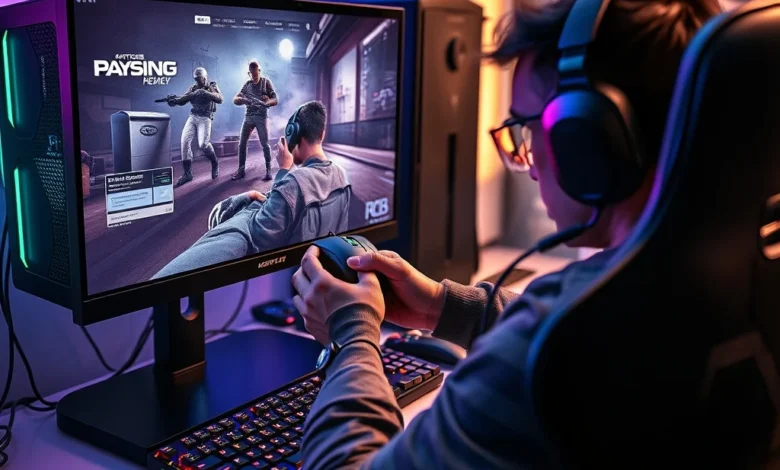
Mastering aim in shooting games is the difference between victory and defeat. Whether you’re playing competitive FPS titles, tactical shooters, or fast-paced battle royales, precision and speed are critical. Many players underestimate the importance of aim training, assuming natural talent is enough. However, consistent practice and the right techniques can elevate your accuracy from average to elite. This guide provides actionable tips to refine your aim, covering everything from fundamental mechanics to advanced strategies. We’ll explore how to adjust sensitivity, utilize in-game tools, and develop muscle memory for consistent headshots.
🎮 Why Aim Matters in Shooting Games
In shooting games, aim is the foundation of success. Every shot fired must land where you intend it to, whether for elimination, securing objectives, or controlling the battlefield. Poor aim leads to wasted ammunition, missed opportunities, and ultimately, defeat. Even games with strong team coordination or powerful abilities cannot compensate for consistently inaccurate shots. The best players aren’t necessarily the fastest or strongest; they’re the ones who land every shot with precision. Aim training is not just about reflexes—it’s about understanding angles, timing, and weapon characteristics. Games like Counter-Strike 2, Valorant, and Call of Duty demand split-second decision-making, where a single misplaced shot can cost the entire round. By improving your aim, you reduce reliance on luck and increase your chances of outplaying opponents.
Another critical aspect of aim is consistency. Players who can replicate their accuracy across matches maintain a competitive edge. Randomly hitting shots due to luck doesn’t help in the long run. Developing muscle memory ensures that your aim remains steady under pressure, whether you’re facing a rookie or a seasoned veteran. Aim training also translates to better spatial awareness, allowing you to predict enemy movements and adjust your shots accordingly. In high-stakes matches, every millisecond counts, and refined aim gives you the edge to make split decisions without hesitation. Ultimately, improving aim isn’t just about mechanical skill—it’s about turning chaos into controlled precision.
- ✅ Precision over speed – Focus on landing shots, not just firing rapidly.
- 🎯 Predict enemy movement – Use angles and cover to anticipate where enemies will appear.
- ⚠️ Minimize recoil control – Mastering recoil patterns is essential for sustained accuracy.
🔥 Setting Up Your Aim for Success
The first step to improving your aim is ensuring your setup is optimized for precision. This includes adjusting your mouse sensitivity, choosing the right mousepad, and selecting a mouse with appropriate DPI settings. Sensitivity plays a crucial role in how quickly you can track enemies and make adjustments. A sensitivity that is too high makes it difficult to control recoil and maintain accuracy, while a sensitivity that is too low can slow down your reaction time. Most professional players recommend starting with a lower sensitivity and gradually increasing it as you become more comfortable. A good rule of thumb is to keep your in-game sensitivity low enough that a 180-degree turn requires a full arm movement rather than a wrist flick.
Your mousepad also plays a significant role in aim consistency. Larger mousepads allow for more freedom of movement, which is essential for tracking fast-moving targets. Smooth, low-friction surfaces like cloth mousepads provide better control and reduce the risk of overcorrecting. Additionally, your mouse’s DPI (dots per inch) should be set to a level that feels natural for your hand size and playstyle. Most gaming mice offer adjustable DPI, allowing you to switch between lower settings for precise aiming and higher settings for quick flicks. Finding the right balance between speed and control is key—experiment with different settings during practice sessions to determine what works best for you.
- ✅ Adjust your DPI – Start with a lower DPI (400-800) for better control and increase gradually.
- 🎯 Use a large mousepad – Aim for at least 30 inches wide to accommodate full arm movements.
- ⚠️ Avoid high sensitivity – High sensitivity makes recoil control nearly impossible and reduces accuracy.
🖥️ Mouse and Mousepad Selection
Choosing the right mouse and mousepad can significantly impact your aim performance. For competitive shooters, lightweight mice with high-precision sensors are ideal. Mice with adjustable weights allow you to customize the feel to match your playstyle. Wired mice are preferred for their consistent connection and lower latency, which is crucial in fast-paced games. Wireless mice have improved but still introduce a slight delay that some players find distracting. For mousepads, cloth surfaces are the gold standard due to their balance of speed and control. Hard surfaces like aluminum or glass are faster but offer less friction, making it harder to stabilize your aim. Consider your playstyle when selecting a mousepad—if you rely on precise tracking, a cloth pad is your best bet.
Another factor to consider is the mouse’s polling rate. A higher polling rate (1000Hz or above) ensures that your inputs are registered with minimal delay, giving you a slight advantage in reaction time. However, the difference between 500Hz and 1000Hz is negligible for most players, so focus on comfort and responsiveness rather than getting caught up in specs. Ultimately, the best mouse and mousepad are the ones that feel natural in your hand and allow you to aim with consistency. If possible, try out different options before committing to a purchase, as comfort plays a huge role in long-term performance.
📊 Sensitivity and Crosshair Settings
Sensitivity settings are highly personal, but there are general guidelines that can help you find the right balance. Many players make the mistake of using a sensitivity that is too high, sacrificing control for speed. A good starting point is to set your in-game sensitivity to a low value (e.g., 2-4) and your Windows mouse speed to 6/11. This ensures that your mouse movements translate directly to on-screen actions without unnecessary acceleration. Once you’ve found a comfortable sensitivity, experiment with different crosshair styles. A crosshair that is too distracting can pull your focus away from the game, while one that is too subtle may make it harder to track your shots.
Color and design also play a role in crosshair effectiveness. A bright, high-contrast crosshair stands out against different backgrounds, making it easier to spot. Many players prefer a simple, minimalist crosshair with no distracting outlines or effects. The size and gap of your crosshair should be adjustable to match your preferences—some players use a small crosshair for precision, while others prefer a larger one for better visibility. Additionally, consider enabling dynamic crosshairs that change size based on weapon recoil. This feature helps you visualize where your shots will land, especially during sustained fire. Ultimately, your crosshair should enhance your aim rather than hinder it, so take the time to tweak it until it feels right.
- ✅ Keep DPI low – 400-800 DPI is ideal for most players.
- 🎯 Disable mouse acceleration – Ensure your mouse moves at a consistent speed regardless of movement speed.
- ⚠️ Avoid overly complex crosshairs – Simple designs are easier to focus on during fast-paced gameplay.
🎯 Mastering Fundamental Aim Techniques
Improving your aim begins with mastering the basics: tracking, flicking, and recoil control. Tracking involves following a moving target with your crosshair, which is essential in games with fast-paced movement like battle royales or zombie modes. Flicking, on the other hand, is the ability to quickly snap your aim from one target to another, which is crucial in tactical shooters where enemies appear suddenly. Recoil control is the art of managing weapon kickback to keep your shots on target. Each of these skills requires dedicated practice to develop muscle memory and reflexes.
Tracking is often overlooked in favor of flicking, but it’s equally important. To improve tracking, practice in aim training maps where enemies move unpredictably. Focus on keeping your crosshair glued to the target, making small adjustments as it changes direction. Flicking requires sharp reflexes and the ability to anticipate enemy movements. Use training tools like Kovaak’s or Aim Lab to simulate flick shots and track targets at high speeds. Recoil control is weapon-specific, so spend time familiarizing yourself with the recoil patterns of your favorite guns. Most weapons in tactical shooters have a predictable recoil cycle, which you can learn to compensate for by pulling down or to the side during sustained fire.
- ✅ Practice tracking – Follow moving targets smoothly to improve consistency.
- 🎯 Work on flick shots – Quickly snap your aim to react to sudden enemy appearances.
- ⚠️ Learn recoil patterns – Each weapon has a unique kickback; practice managing it to maintain accuracy.
📈 Tracking Practice
Tracking is the ability to keep your crosshair on a moving target without losing sight of it. This skill is critical in games where enemies move erratically, such as in battle royales or objective-based modes. To practice tracking, use aim training maps that feature moving bots or targets. Start with slow-moving enemies and gradually increase the speed as you improve. Focus on smooth, fluid movements rather than jerky flicks, as this helps build muscle memory. Many players struggle with tracking because they rely too much on wrist movements, which lack the precision needed for consistent results. Instead, use your entire arm to make controlled, sweeping motions.

One effective drill is the “1w4t” challenge, where you track a target moving in a figure-eight pattern. This drill helps improve your ability to follow unpredictable movements while maintaining crosshair stability. Another useful exercise is to track multiple targets at once, simulating real-game scenarios where enemies may appear from different angles. Over time, you’ll develop the reflexes needed to keep your aim locked onto moving targets, even under pressure. Tracking practice also enhances your spatial awareness, allowing you to predict enemy paths and adjust your aim preemptively.
🔄 Flicking and Reaction Time
Flicking is the ability to quickly snap your aim from one target to another, which is essential in tactical shooters where enemies can appear suddenly. Reaction time is a key component of flicking, and it can be improved with targeted exercises. Start by practicing on static targets, focusing on quickly moving your crosshair to the center of the target and clicking. Gradually introduce moving targets to simulate real-game scenarios. Use training software like Aim Lab to create flick-shot drills, where targets appear at random locations and must be eliminated as quickly as possible.
To improve reaction time, play games or use tools that require fast responses, such as reaction time tests or fast-paced shooters. Additionally, ensure you’re well-rested and hydrated, as fatigue can significantly slow your reflexes. Some players also benefit from practicing with a metronome or timer to develop a sense of rhythm, which helps in timing your flicks more accurately. Over time, your muscle memory will improve, allowing you to react faster and more accurately in high-pressure situations.
🔫 Recoil Control and Weapon Mastery
Recoil control is the process of managing a weapon’s kickback to keep your shots on target during sustained fire. Each weapon in tactical shooters has a unique recoil pattern, which can be learned and compensated for with practice. The key to recoil control is pulling down or to the side in a smooth, controlled motion rather than jerking the mouse randomly. Start by firing short bursts (2-3 rounds) to get a feel for the recoil, then gradually increase to longer bursts as you become more comfortable. Many players make the mistake of pulling down too hard, which can cause the crosshair to dip below the target. Instead, aim to pull down in a straight line, keeping your crosshair as close to the center of the target as possible.
Recoil control is not just about pulling down—it’s also about timing and consistency. Practice in a controlled environment like a private match or aim training map, where you can focus solely on managing recoil without distractions. Over time, you’ll develop the muscle memory needed to compensate for recoil automatically, allowing you to land more shots in rapid succession. Some weapons, like snipers or pistols, have minimal recoil and are easier to control, while others, like assault rifles or LMGs, require more finesse. Spend extra time practicing with high-recoil weapons to build your skills and improve your overall accuracy.
🌍 Advanced Aim Strategies for Competitive Play
Once you’ve mastered the fundamentals, it’s time to move on to advanced strategies that give you an edge in competitive play. These techniques go beyond basic aim training and focus on game sense, positioning, and psychological factors. Advanced players don’t just aim—they anticipate. They use angles, cover, and enemy behavior to position themselves advantageously. In high-stakes matches, every decision matters, and advanced aim strategies can be the difference between winning and losing. This section covers pre-aiming, counter-strafing, and peek shooting—techniques that separate amateurs from professionals.
Pre-aiming involves positioning your crosshair where you expect enemies to appear, reducing the time it takes to react when they do. This strategy is especially effective in tactical shooters where enemies often hold common angles. Counter-strafing is the act of stopping your movement before firing, which increases your accuracy and reduces bloom (spread) when moving. Peek shooting is another advanced technique where you expose yourself just enough to take a shot before retreating behind cover. These strategies require a deep understanding of map layouts and enemy tendencies, but they can dramatically improve your performance in competitive matches.
- ✅ Pre-aim common angles – Place your crosshair where enemies are likely to appear to reduce reaction time.
- 🎯 Master counter-strafing – Stop moving before firing to improve accuracy and reduce spread.
- ⚠️ Use peek shooting – Expose yourself just enough to take a shot, then retreat behind cover.
🗺️ Pre-Aiming and Angle Control
Pre-aiming is one of the most underrated skills in competitive shooters. Instead of reacting to enemies as they appear, pre-aiming involves positioning your crosshair where you expect them to be based on map knowledge and common player behavior. For example, in Counter-Strike, many players hold the same angles on maps like Mirage or Inferno. By pre-aiming these spots, you reduce the time it takes to acquire a target, giving you a split-second advantage. This technique requires a deep understanding of map layouts and enemy tendencies, which comes with experience and observation.
To practice pre-aiming, spend time in deathmatch or casual matches observing where players tend to hold. Take note of common angles and spots that are frequently contested. Over time, you’ll develop an intuition for where enemies are likely to appear, allowing you to pre-aim more effectively. Additionally, use utility like smokes or flashbangs to block off angles, forcing enemies to reposition and giving you more control over the battlefield. Pre-aiming isn’t just about aim—it’s about game sense and positioning. The best players don’t just aim well; they control the flow of the game.
🔄 Counter-Strafing and Movement Techniques
Counter-strafing is a fundamental movement technique that dramatically improves your accuracy while moving. When you strafe (move sideways) in most shooters, your weapon’s accuracy and spread increase, making it harder to land precise shots. Counter-strafing involves stopping your movement just before firing, which resets your weapon’s spread and improves accuracy. This technique is essential in games like Valorant and Counter-Strike, where movement and positioning are key to outplaying opponents. To counter-strafe effectively, practice stopping your movement with the opposite key (e.g., if strafing right, press left to stop abruptly).
In addition to counter-strafing, mastering movement techniques like bunny hopping (in older shooters) or advanced strafe-jumping can give you an edge in positioning. However, these techniques require precise timing and practice. Focus on smooth, controlled movements rather than erratic sprinting, as sudden stops and starts can make you an easy target. Movement isn’t just about speed—it’s about maintaining accuracy while navigating the battlefield. The best players use movement to control engagements, either by peeking corners carefully or repositioning to gain a tactical advantage.
👁️ Peek Shooting and Positioning
Peek shooting is an advanced technique where you expose a small portion of your character to take a shot before retreating behind cover. This strategy is particularly effective in tactical shooters where enemies hold angles, as it allows you to gain information or secure a kill without fully committing to a firefight. To peek shoot effectively, use cover to minimize your exposure. For example, in Valorant, you can stand just behind a corner and flick your aim to shoot an enemy before they see you. The key is to make yourself a small, difficult target while still being able to land accurate shots.
Positioning goes hand-in-hand with peek shooting. Instead of holding obvious angles, smart players use cover and elevation to their advantage. For example, taking a high vantage point gives you a better view of the battlefield and makes you harder to hit. Similarly, using cover to break line of sight forces enemies to reposition, giving you more control over engagements. The best players don’t just aim well—they use the environment to their advantage. Spend time in each map learning the best angles, cover spots, and high-ground positions. Over time, you’ll develop a playstyle that maximizes your strengths while minimizing your weaknesses.
💻 Aim Training Tools and Resources
No aim improvement guide is complete without discussing the tools and resources available to players. Aim training software like Kovaak’s, Aim Lab, and CS2DM are designed to help players refine their tracking, flicking, and recoil control. These tools simulate real-game scenarios and provide data-driven feedback to track your progress. Additionally, community-made maps in games like Counter-Strike and Valorant offer dedicated aim training modes that you can use to practice specific skills. Whether you’re a beginner or an experienced player, these resources can help you take your aim to the next level.
Kovaak’s is one of the most popular aim training tools, offering a wide range of scenarios for tracking, flicking, and precision. The software includes built-in challenges and allows you to create custom scenarios to target specific weaknesses. Aim Lab is another excellent option, with a user-friendly interface and gamified training modes that make practice feel less like a chore. CS2DM and other community maps are free alternatives that you can use in-game to practice aim mechanics. These maps often include moving targets, recoil trainers, and spray control drills. The key to using these tools effectively is consistency—regular practice is far more valuable than sporadic, marathon sessions.
- ✅ Use Kovaak’s for tracking and flicking – Offers a variety of scenarios to improve different aspects of aim.
- 🎯 Try Aim Lab for gamified training – Makes practice more engaging with competitive challenges.
- ⚠️ Practice in community maps – Free and accessible, these maps are great for in-game aim training.
🖥️ Kovaak’s and Aim Lab: Which One to Choose?
Kovaak’s and Aim Lab are two of the most popular aim training tools, each with its own strengths and weaknesses. Kovaak’s is highly customizable, allowing you to create custom scenarios tailored to your specific needs. It’s ideal for players who want to focus on tracking, flicking, or recoil control with precision. The software includes a wide range of built-in challenges, from simple target tracking to advanced flick-shot drills. Kovaak’s also tracks your progress over time, giving you insights into your improvement. However, its interface can be overwhelming for beginners, and the steep learning curve may deter casual players.
Aim Lab, on the other hand, is designed with beginners in mind. Its user-friendly interface and gamified approach make it accessible to players of all skill levels. Aim Lab includes a variety of training modes, from basic target tracking to competitive scenarios that simulate real-game situations. The software also offers performance analytics, allowing you to track your progress and identify areas for improvement. Aim Lab is a great choice for players who want a straightforward, engaging way to improve their aim without getting bogged down in complex customization. Ultimately, the best tool for you depends on your playstyle and preferences—try both and see which one resonates more with your training needs.
🎮 In-Game Aim Training Maps
In-game aim training maps are a free and accessible way to practice your aim without relying on third-party software. Games like Counter-Strike 2, Valorant, and Overwatch 2 have vibrant communities that create and share custom maps designed for aim training. These maps often feature moving targets, recoil trainers, and spray control drills, allowing you to practice specific skills in a familiar environment. For example, Counter-Strike has maps like “aim_bots” and “training_aim” that are widely used by competitive players. Valorant includes a built-in practice mode with aim training scenarios, making it easy to warm up before matches.
In-game maps are particularly useful for players who prefer a more organic training experience. Since the maps are designed within the game, they often include mechanics and weapons that you’re already familiar with. This makes it easier to translate your training directly into real matches. Additionally, community maps are regularly updated and improved, ensuring that you always have access to fresh content. To find these maps, browse community workshop pages or join Discord servers dedicated to the game. Many players also share their favorite training maps on Reddit or YouTube, complete with tips and tutorials. The key is to explore different maps and find the ones that best suit your playstyle and training goals.
📊 Tracking Your Progress
Tracking your progress is essential for staying motivated and identifying areas for improvement. Most aim training tools and software include built-in analytics that track your accuracy, reaction time, and consistency over time. Use these metrics to set goals and measure your improvement. For example, aim to reduce your average reaction time by 10% over the course of a month or increase your headshot percentage in deathmatch matches. Additionally, record your gameplay and review it regularly to spot patterns and mistakes. Look for areas where your aim falters, such as during recoil control or tracking moving targets.
It’s also helpful to compare your progress to others in the community. Many aim training tools include leaderboards or community challenges that allow you to compete against other players. While it’s important not to get too caught up in rankings, these challenges can provide a benchmark for your skill level and motivate you to improve. Remember that aim training is a marathon, not a sprint—consistent practice over time yields the best results. Celebrate small wins, like hitting a personal best in a training scenario, and use setbacks as opportunities to learn and grow. The key is to stay patient and persistent, as improvement takes time and dedication.
🔥 Common Aim Mistakes and How to Fix Them
Even experienced players make aim mistakes, but recognizing and correcting them is key to long-term improvement. One of the most common mistakes is relying too much on wrist movements instead of arm movements. Wrist flicks are fast but lack the precision needed for consistent accuracy, especially at longer ranges. Instead, use your entire arm to make controlled, sweeping motions. This allows for more stability and better tracking of moving targets. Another common mistake is ignoring recoil control, which leads to wasted ammunition and missed shots. Many players spray wildly without compensating for recoil, resulting in bullets flying off-target. Practice recoil control in a controlled environment to build muscle memory and improve your sustained accuracy.
Over-reliance on auto-aim or aim assist (in console or mobile games) is another pitfall that can hinder your improvement. While aim assist can be helpful for beginners, it doesn’t teach the fundamental skills needed to aim consistently. Instead, turn off aim assist and focus on developing your own aim mechanics. Additionally, many players neglect their crosshair settings, using designs that are too distracting or ineffective. A poorly chosen crosshair can pull your focus away from the game, making it harder to track shots. Take the time to tweak your crosshair until it feels natural and enhances your aim rather than hindering it.
- ✅ Use arm movements for stability – Avoid relying solely on wrist flicks, as they lack precision.
- 🎯 Practice recoil control – Learn the recoil patterns of your favorite weapons to maintain accuracy during sustained fire.
- ⚠️ Turn off aim assist – Relying on aim assist can hinder your long-term improvement.
🖱️ Wrist vs. Arm Aiming
The debate between wrist and arm aiming is a long-standing one in the FPS community. Wrist aiming involves using small, quick movements of the wrist to snap your aim from one target to another. This technique is fast and allows for quick flicks, but it lacks the stability needed for precise tracking or long-range shots. Arm aiming, on the other hand, uses larger, controlled movements of the entire arm. This technique is slower but far more stable, making it ideal for tracking moving targets or managing recoil. Most professional players use a combination of both techniques, relying on wrist flicks for quick reactions and arm movements for stability.
To determine which technique works best for you, experiment with different sensitivities and playstyles. Start with a lower sensitivity and focus on using your arm for most movements. Gradually increase your sensitivity and incorporate wrist flicks for faster reactions. The key is to find a balance that allows you to react quickly while maintaining control over your aim. Over time, you’ll develop a natural aiming style that combines the best of both techniques. Remember, there’s no one-size-fits-all solution—what works for one player may not work for another. The goal is to find a technique that feels comfortable and enhances your performance.
🔫 Ignoring Recoil Control
Recoil control is one of the most overlooked aspects of aim improvement, yet it’s essential for sustained accuracy in tactical shooters. Many players spray their weapons wildly without compensating for recoil, resulting in bullets flying off-target. Each weapon has a unique recoil pattern, which can be learned and managed with practice. The key to recoil control is pulling down or to the side in a smooth, controlled motion. Start by firing short bursts (2-3 rounds) to get a feel for the recoil, then gradually increase to longer bursts as you become more comfortable. Avoid jerking the mouse randomly, as this can cause your crosshair to dip below the target.
Recoil control is not just about pulling down—it’s also about timing and consistency. Practice in a controlled environment like a private match or aim training map, where you can focus solely on managing recoil without distractions. Over time, you’ll develop the muscle memory needed to compensate for recoil automatically, allowing you to land more shots in rapid succession. Some weapons, like snipers or pistols, have minimal recoil and are easier to control, while others, like assault rifles or LMGs, require more finesse. Spend extra time practicing with high-recoil weapons to build your skills and improve your overall accuracy.
🎯 Neglecting Crosshair Customization
Your crosshair is one of the most important visual elements in a shooting game, yet many players neglect to customize it properly. A poorly chosen crosshair can be distracting, obscure your view, or make it harder to track shots. The best crosshairs are simple, high-contrast designs that stand out against different backgrounds. Avoid overly complex crosshairs with outlines, animations, or excessive gaps, as these can pull your focus away from the game. Instead, opt for a minimalist design with a clear center dot or line.
Color is another important factor in crosshair customization. Bright colors like white, yellow, or red work well in most scenarios, but consider using a color that contrasts with the game’s HUD and environment. For example, a white crosshair with a black outline is easy to spot in most games. Additionally, adjust the size and gap of your crosshair to match your preferences. Some players use a small crosshair for precision, while others prefer a larger one for better visibility. The key is to find a crosshair that enhances your aim rather than hinders it. Take the time to tweak your settings until you find a design that feels natural and effective.
🏁 Final Tips for Consistent Improvement
Improving your aim in shooting games is a journey that requires patience, practice, and persistence. The key to long-term success is consistency—small, regular improvements add up over time. Set aside dedicated practice time each day, even if it’s just 15 minutes. Focus on specific skills, such as tracking, flicking, or recoil control, and gradually expand your training to cover all aspects of aim. Additionally, play regularly to apply what you’ve learned in real-game scenarios. The more you play, the more comfortable you’ll become with your aim mechanics, and the better you’ll perform under pressure.
Another critical aspect of improvement is analyzing your gameplay. Record your matches and review them to identify patterns, mistakes, and areas for growth. Look for moments where your aim faltered, such as during recoil control or tracking moving targets. Use this feedback to adjust your training and focus on your weaknesses. Additionally, seek out resources like tutorials, guides, and community forums to learn from experienced players. The shooting game community is vast and supportive, with plenty of tips and tricks to help you improve. Finally, stay patient and avoid getting discouraged by setbacks. Improvement takes time, and every player goes through ups and downs. Focus on progress, not perfection, and celebrate small wins along the way.
- ✅ Practice daily, even for short sessions – Consistency is key to long-term improvement.
- 🎯 Analyze your gameplay regularly – Record and review your matches to identify mistakes and areas for growth.
- ⚠️ Stay patient and persistent – Improvement takes time, so focus on progress rather than perfection.
❓ Frequently Asked Questions
- How long does it take to improve my aim in shooting games?
Improvement timelines vary depending on your starting skill level and how consistently you practice. Beginners may see noticeable progress within a few weeks, while more experienced players might take months to refine their aim. The key is consistent practice—even 15 minutes daily can make a significant difference over time. Focus on specific skills like tracking, flicking, and recoil control, and apply what you learn in real-game scenarios.
- What’s the best sensitivity for aiming in shooting games?
The best sensitivity is highly personal and depends on your playstyle and hardware. Most professional players recommend starting with a lower sensitivity (400-800 DPI) and adjusting from there. Your in-game sensitivity should be low enough that a 180-degree turn requires a full arm movement. Disable mouse acceleration in your operating system to ensure consistent, predictable movements. Experiment with different settings during practice sessions to find what feels most natural.
- Do aim training tools like Kovaak’s really work?
Yes, aim training tools like Kovaak’s and Aim Lab are highly effective for improving aim. These tools simulate real-game scenarios and provide data-driven feedback to track your progress. They’re designed to help you develop muscle memory, reflexes, and tracking skills that translate directly to in-game performance. However, the key is consistency—regular practice is far more valuable than sporadic, marathon sessions. Use these tools to supplement your in-game practice, not replace it.
- How can I reduce my reaction time in shooting games?
Reducing reaction time requires a combination of practice, rest, and focus. Start by playing games or using tools that require fast responses, such as reaction time tests or fast-paced shooters. Ensure you’re well-rested and hydrated, as fatigue can significantly slow your reflexes. Some players also benefit from practicing with a metronome or timer to develop a sense of rhythm, which helps in timing your actions more accurately. Additionally, play regularly to keep your reflexes sharp and your aim calibrated.
- What’s the best way to practice recoil control?
The best way to practice recoil control is to use a recoil trainer or aim training map that simulates weapon kickback. Start by firing short bursts (2-3 rounds) to get a feel for the recoil, then gradually increase to longer bursts as you become more comfortable. Pull down or to the side in a smooth, controlled motion to compensate for the recoil. Avoid jerking the mouse randomly, as this can cause your crosshair to dip below the target. Spend extra time practicing with high-recoil weapons to build your skills and improve your overall accuracy.
- Should I use a wired or wireless mouse for gaming?
For competitive gaming, wired mice are generally preferred due to their consistent connection and lower latency. Wireless mice have improved significantly in recent years, but they still introduce a slight delay that some players find distracting. If you prefer a wireless mouse, opt for one with a high polling rate (1000Hz or above) and a reliable connection. Ultimately, the best choice depends on your playstyle and preferences—try both wired and wireless options to see which one feels more comfortable.
- How do I choose the right crosshair for my playstyle?
Choosing the right crosshair involves balancing visibility, simplicity, and personal preference. Start with a minimalist design that stands out against different backgrounds. Avoid overly complex crosshairs with outlines, animations, or excessive gaps, as these can distract from your aim. Adjust the size, gap, and color to match your preferences—some players use a small crosshair for precision, while others prefer a larger one for better visibility. Test your crosshair in different lighting conditions and maps to ensure it remains visible in all scenarios.
- What are the most common aim mistakes players make?
The most common aim mistakes include relying too much on wrist movements instead of arm movements, ignoring recoil control, and neglecting crosshair customization. Other mistakes include using a sensitivity that is too high, not disabling mouse acceleration, and over-relying on aim assist. These habits can hinder long-term improvement and lead to inconsistent accuracy. To fix these mistakes, focus on developing muscle memory through practice, analyzing your gameplay, and tweaking your settings to enhance your aim.
- How can I tell if my aim is improving?
You can tell if your aim is improving by tracking your progress over time. Use aim training tools or software to monitor your accuracy, reaction time, and consistency. Record your gameplay and review it regularly to identify patterns and areas for growth. Compare your performance in matches before and after implementing new techniques or training routines. Additionally, seek feedback from other players or communities to gain outside perspectives on your improvement.
- What’s the best way to warm up before playing ranked matches?
The best way to warm up is to spend 10-15 minutes in aim training maps or deathmatch to get your reflexes sharp and your aim calibrated. Focus on specific skills like tracking, flicking, and recoil control to prepare for the demands of ranked play. Avoid jumping straight into competitive matches without warming up, as this can lead to poor performance due to uncalibrated sensitivity or unsharp reflexes. Treat warm-ups as a ritual to get your mind and body ready for high-pressure situations.