
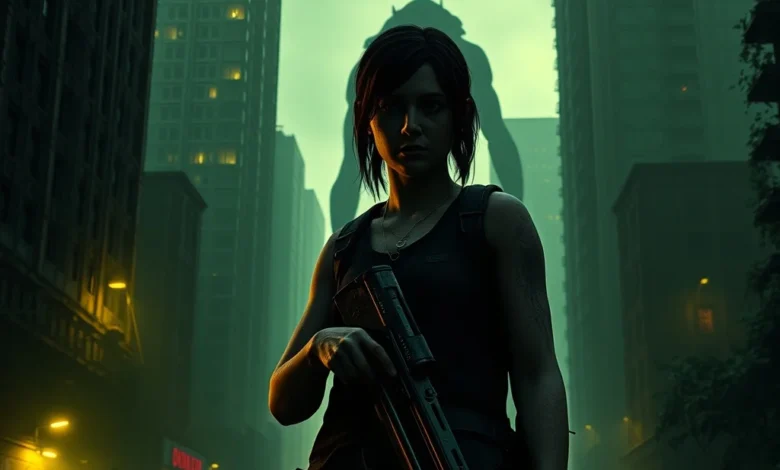
The Last of Us Part II is one of the most intense and emotionally gripping horror survival games ever created. Set in a post-apocalyptic world ravaged by the Cordyceps fungus, players must navigate unforgiving environments, scavenge for resources, and outsmart relentless enemies to survive. Whether you’re facing off against human hunters or the terrifying Clickers and Bloaters, every decision matters. This guide dives deep into advanced survival tactics that will help you conquer even the most brutal challenges in the game.
🕹️ Introduction
The Last of Us Part II, developed by Naughty Dog and released in 2020, is a masterpiece of narrative-driven survival horror. Set in a world overrun by infected creatures and hostile survivors, the game follows Ellie as she seeks revenge in a landscape where trust is a luxury and every shadow could hide danger. The game’s immersive storytelling, breathtaking visuals, and intense gameplay mechanics make it a must-play for horror enthusiasts. But surviving in this brutal world requires more than just reflexes—it demands strategy, patience, and adaptability.
The game blends action, stealth, and exploration, forcing players to constantly weigh the risks of combat versus the need for resources. Whether you’re playing on PC with a controller or on console, mastering the mechanics of survival is key to progressing through the game’s harrowing chapters.
- Genre: Action-Adventure, Survival Horror
- Release Date: June 19, 2020
- Developer & Publisher: Naughty Dog (Sony Interactive Entertainment)
- Why It Gained Attention: Emotional storytelling, cinematic gameplay, and brutal survival mechanics.
- Target Audience: Fans of narrative-driven horror, survival games, and post-apocalyptic settings.
- Market Impact: Widely regarded as one of the best story-driven games of the last decade, with a dedicated fanbase and critical acclaim.
🎯 Story Overview and Narrative Analysis
The Last of Us Part II continues the story of Ellie, a teenager who lost everything in the first game and now seeks vengeance against the Seraphites, a violent cult that has taken over parts of the Pacific Northwest. The game explores themes of grief, trauma, and the cycle of violence, all while immersing players in a world where humanity is barely holding on. The narrative is divided between Ellie’s journey and Abby’s perspective, offering a dual narrative that forces players to question who the true villains are.
The game’s world is meticulously crafted, with every location telling a story of its own. From the overgrown ruins of Seattle to the desolate beaches of Santa Barbara, the environments are filled with details that hint at the past lives of those who once inhabited them. The infected, too, play a crucial role in the story, serving as both obstacles and symbols of the world’s decay. The Clickers, with their eerie vocalizations, and the towering Bloaters, which unleash devastating attacks, create a sense of constant dread that permeates every encounter.
The game’s characters are deeply developed, with Ellie’s determination and Abby’s conflicted morality driving the plot forward. The emotional weight of the story makes survival feel more urgent, as every loss feels personal. The narrative choices—such as whether to spare an enemy or take a life—add layers of complexity, ensuring that players remain invested in the outcome.
🔹 Key Story Themes
- Revenge and Its Consequences: Ellie’s journey is driven by a desire for vengeance, but the game forces players to question whether this path leads to healing or further destruction.
- The Cycle of Violence: The game critiques the idea of violence as a solution, showing how it perpetuates suffering in a broken world.
- Humanity’s Fragility: The infected and the remnants of civilization highlight how easily society can collapse under the right (or wrong) conditions.
- Moral Ambiguity: The game avoids clear-cut heroes and villains, presenting characters with complex motivations and flaws.
🕹️ Gameplay Mechanics and Systems
The Last of Us Part II is a survival horror game at its core, blending action, stealth, and exploration into a seamless experience. The gameplay is designed to be punishing, rewarding players who plan their moves carefully and punishing those who act impulsively. The game features a mix of melee combat, ranged weapons, and environmental storytelling, all of which require precision and strategy to master.
The game’s mechanics are deeply interconnected. For example, your choice of weapons affects your stealth options, while your inventory management determines how long you can survive between safe zones. The game also introduces new mechanics in Part II, such as the ability to dodge and counter attacks, which adds a layer of depth to combat. Understanding these systems is crucial to surviving the game’s most challenging sections.
⚔️ Combat System and Core Controls
Combat in The Last of Us Part II is brutal and visceral, with an emphasis on melee weapons and improvised tools. Unlike traditional shooters, the game forces players to get up close and personal with enemies, using a combination of stealth, dodging, and quick reflexes to survive. The combat system is built around timing and precision, with headshots being the most effective way to take down human enemies and the Flashlight being critical for dealing with Clickers.
The game’s control scheme is designed to be intuitive yet demanding. Melee attacks can be chained together for combos, while dodging allows you to avoid enemy strikes or reposition yourself for a better attack. The game also features a crafting system, where players can combine resources to create health kits, Molotov cocktails, and other essential items. Mastering these mechanics is key to surviving the game’s many encounters, from scripted boss fights to random ambushes.
- Combat Mechanics:
- Melee attacks can be chained for combos, but overusing them leaves you vulnerable to counters.
- Dodging is essential for avoiding enemy attacks and repositioning during combat.
- Headshots are the most effective way to take down human enemies quickly.
- Improvised weapons, like pipes and bricks, can be used in desperate situations.
- AI Behavior:
- Human enemies will flank you, use cover, and call for reinforcements during combat.
- Infected enemies rely on sound and smell, making stealth a critical survival tool.
- Some enemies, like the Bloaters, require specific strategies, such as using a Flashlight to blind them before attacking.
- Physics and Movement:
- Environmental interactions, like throwing objects to distract enemies, can create opportunities for stealth or escape.
- Climbing and crawling allow you to navigate tight spaces and avoid detection.
- Stamina management is crucial, as sprinting and dodging consume stamina, leaving you vulnerable if exhausted.
- Skill Progression:
- Upgrading weapons and crafting items requires collecting parts and resources scattered throughout the world.
- Skill trees allow you to customize Ellie’s abilities, such as improving melee damage or increasing stealth efficiency.
- Difficulty Balance:
- The game offers multiple difficulty settings, from Relaxed to Grounded, each adjusting enemy health, damage, and resource scarcity.
- Grounded mode removes the ability to aim down sights, forcing players to rely on melee combat and improvised tactics.
🌍 Open World and Level Design
The Last of Us Part II’s world is a masterclass in environmental storytelling. From the crumbling streets of Seattle to the eerie quiet of the countryside, every location is designed to immerse players in the game’s post-apocalyptic setting. The open-world sections are filled with side quests, collectibles, and hidden stories that enrich the main narrative, while the linear sections serve as tightly controlled encounters that escalate tension to unbearable levels.
Exploration is rewarded with resources, lore, and opportunities to avoid combat entirely. The game’s level design encourages players to observe their surroundings, plan routes, and use the environment to their advantage. For example, climbing to high ground can provide a clear vantage point for scouting enemies, while hiding in bushes or behind cover can help you avoid detection.


- Map Design: The game’s maps are divided into districts, each with its own unique atmosphere and challenges. Seattle’s urban decay contrasts sharply with the serene beaches of Santa Barbara, creating a dynamic experience.
- Exploration Freedom: While the main story is linear, players can choose to explore side areas, scavenge for supplies, or take on optional challenges that unlock new abilities or story details.
- Mission Structure: Missions are designed to build tension gradually, often culminating in intense set-piece encounters that test your combat and stealth skills.
- Replay Value: The game’s New Game+ mode and unlockable skins offer additional content for players looking to revisit the story or try different playstyles.
🎨 Graphics and Audio Quality
The Last of Us Part II is a visual and auditory masterpiece, pushing the boundaries of what is possible in gaming. The game’s graphics are a testament to Naughty Dog’s expertise, with lifelike character models, dynamic lighting, and breathtaking environmental details. Every frame feels like a work of art, from the way sunlight filters through overgrown trees to the haunting expressions on Ellie’s face during pivotal moments.
The game’s audio design is equally impressive, with a meticulously crafted soundscape that immerses players in its world. The infected’s vocalizations—ranging from the guttural growls of the Clickers to the eerie hums of the Stalkers—create a constant sense of unease. Meanwhile, the game’s score, composed by Gustavo Santaolalla, adds emotional weight to every scene, from the melancholic guitar melodies to the tense percussion during combat.
🖥️ Visual Quality and Engine
The Last of Us Part II runs on Naughty Dog’s proprietary engine, which has been optimized to deliver stunning visuals across multiple platforms. The game features advanced rendering techniques, such as ray tracing and dynamic resolution scaling, which enhance the realism of the environments. The attention to detail is staggering, with textures that look almost photorealistic and animations that capture the weight and impact of every movement.
- Game Engine: Naughty Dog Engine (proprietary)
- Texture Quality: Ultra-high-resolution textures that showcase even the smallest details, from rust on metal to the fraying edges of clothing.
- Lighting: Dynamic lighting that reacts to the environment, creating realistic shadows and highlights.
- Shadows: Soft shadows that add depth to the world, making it feel more immersive and alive.
- Environmental Effects: Realistic weather effects, such as rain and fog, that alter the atmosphere and gameplay dynamics.
🔊 Sound Effects and Music
The audio design in The Last of Us Part II is a standout feature, contributing significantly to the game’s horror and immersion. The infected creatures emit a variety of eerie sounds, from the guttural clicks of the Clickers to the wet, squelching noises of the Bloaters. These sounds are not just for atmosphere—they serve as critical gameplay mechanics, alerting players to the presence of enemies and guiding their actions.
The game’s music, composed by Gustavo Santaolalla, is minimalist yet powerful. The haunting guitar melodies and somber piano compositions underscore the game’s emotional depth, enhancing moments of tragedy, tension, and hope. The music is dynamic, shifting seamlessly between quiet, melancholic tones and intense, adrenaline-pumping crescendos during combat.
The voice acting is another highlight, with performances that bring the game’s characters to life. Ellie’s voice, provided by Ashley Johnson, captures her resilience and vulnerability, while the supporting cast delivers performances that are both nuanced and authentic. The dialogue feels natural, and the emotional weight of the story is amplified by the actors’ performances.
🚀 Key Features of The Last of Us Part II
The Last of Us Part II is packed with features that set it apart from other survival horror games. From its deep crafting system to its dynamic combat mechanics, every aspect of the game is designed to immerse players in its world and challenge their survival instincts. The game also introduces new mechanics, such as the ability to dodge and counter attacks, which add a layer of depth to combat and make encounters feel more tactical.
One of the game’s most impressive features is its attention to detail. Every environment, character, and interaction is crafted with care, creating a world that feels alive and reactive. Whether it’s the way enemies react to noise or how the environment changes based on your actions, the game rewards observant players and punishes those who act recklessly.
- Deep Crafting System: Combine resources to create health kits, Molotov cocktails, and other essential items.
- Dynamic Combat: Dodge, counter, and chain melee attacks for strategic combat encounters.
- Open-World Exploration: Side quests, collectibles, and hidden stories enrich the main narrative.
- Multiple Difficulty Settings: Adjust the game’s difficulty to match your playstyle, from Relaxed to Grounded.
- Photo Mode: Capture breathtaking screenshots of the game’s stunning environments.
- New Game+ Mode: Replay the game with unlocked abilities and additional challenges.
- Immersive Audio Design: A meticulously crafted soundscape that enhances horror and immersion.
- Emotional Storytelling: A gripping narrative that explores themes of grief, revenge, and redemption.
📊 Key Points
| Feature | Description | Impact on Gameplay |
|---|---|---|
| Crafting System | A deep system that allows players to combine resources into useful items like health kits and Molotov cocktails. | Enhances survival by providing essential tools, but requires careful resource management. |
| Dynamic Combat | Introduces dodging, countering, and chaining melee attacks for strategic combat. | Makes combat more tactical and rewarding, but requires precise timing and reflexes. |
| Open-World Exploration | Side quests, collectibles, and hidden stories enrich the main narrative. | Rewards observant players with resources, lore, and opportunities to avoid combat. |
| Multiple Difficulty Settings | Offers settings from Relaxed to Grounded, adjusting enemy health and resource scarcity. | Allows players to tailor the challenge to their skill level, with Grounded offering the most punishing experience. d> |
| Photo Mode | Allows players to capture stunning screenshots of the game’s environments. | Encourages players to appreciate the game’s visuals and share their experiences. d> |
| New Game+ Mode | Unlocks new abilities and challenges for replayability. | Provides additional content for players looking to revisit the story or try different playstyles. d> |
| Immersive Audio Design | A meticulously crafted soundscape that enhances horror and immersion. | Uses sound to guide gameplay and create tension, making enemies feel more threatening. d> |
| Emotional Storytelling | A gripping narrative that explores themes of grief, revenge, and redemption. | Deepens player investment in the story and characters, making survival feel more urgent. d> |
The Last of Us Part II is a game that excels in nearly every aspect, from its stunning visuals and immersive audio to its deep gameplay mechanics and emotional storytelling. The crafting system, dynamic combat, and open-world exploration are just a few of the features that make it a standout title in the survival horror genre. The game’s multiple difficulty settings ensure that players of all skill levels can enjoy the experience, while New Game+ mode offers additional replay value for those looking to dive deeper into the story.
One of the most impressive aspects of the game is its attention to detail. Every environment, character, and interaction is crafted with care, creating a world that feels alive and reactive. The game rewards observant players with resources, lore, and opportunities to avoid combat entirely, while punishing those who act recklessly. The audio design is equally impressive, using sound to guide gameplay and create tension, making enemies feel more threatening and immersive.
Ultimately, The Last of Us Part II is more than just a survival horror game—it’s an emotional journey that challenges players to confront their own morality and resilience. Whether you’re a veteran of the genre or a newcomer looking for a gripping experience, this game offers something truly special.
📊 Pros and Cons
✅ Advantages
The Last of Us Part II is a masterpiece of storytelling and gameplay, offering a deeply immersive experience that few games can match. One of its greatest strengths is its emotional narrative, which explores themes of grief, revenge, and redemption in a way that feels raw and authentic. The game’s characters are among the most well-developed in gaming, with performances that bring them to life and make their struggles feel personal. Ellie’s journey, in particular, is gripping, and her determination to survive in a world that has taken everything from her is both heartbreaking and inspiring.
The game’s combat mechanics are another standout feature. The introduction of dodging, countering, and chaining melee attacks adds a layer of depth to combat that makes encounters feel more tactical and rewarding. The crafting system is also a highlight, allowing players to combine resources into useful items like health kits and Molotov cocktails. This system encourages players to explore and scavenge, adding an extra layer of strategy to survival.
The game’s visuals and audio are equally impressive. The attention to detail in the environments, from the overgrown ruins of Seattle to the desolate beaches of Santa Barbara, creates a world that feels alive and reactive. The audio design, with its haunting score and realistic sound effects, enhances the horror and immersion, making every encounter feel tense and unpredictable. The game’s dynamic lighting and shadows also contribute to its cinematic quality, making it a visual feast for players.
- Emotional Storytelling: The game’s narrative is one of its strongest assets, exploring complex themes with depth and nuance.
- Deep Combat Mechanics: The introduction of dodging, countering, and chaining attacks makes combat more tactical and rewarding.
- Immersive World: The game’s environments are richly detailed and reactive, creating a sense of realism and immersion.
- Dynamic Audio Design: The soundscape enhances horror and gameplay, with infected vocalizations and a haunting score.
- Multiple Difficulty Settings: Players can tailor the experience to their skill level, with options ranging from Relaxed to Grounded.
- Replay Value: New Game+ mode and unlockable skins offer additional content for players looking to revisit the story.
❌ Disadvantages
Despite its many strengths, The Last of Us Part II is not without its flaws. One of the most contentious aspects of the game is its pacing. Some players have criticized the game’s slow start, which can feel monotonous as Ellie travels through empty areas searching for clues. While the exploration is rewarded with resources and lore, the lack of immediate action can test the patience of players expecting constant tension and excitement.
The game’s stealth mechanics are also divisive. While stealth is a viable strategy, the game’s design sometimes makes it frustratingly difficult. Enemies can detect you from unnaturally long distances, and the absence of a dedicated stealth meter (unlike in the first game) can make it hard to gauge your safety. This lack of clarity can lead to unfair encounters where players feel punished for trying to avoid combat.
Another issue is the game’s combat balance. While the combat mechanics are deep and rewarding, some encounters can feel overwhelming, especially on higher difficulties. The game’s AI can also be exploitative, with enemies using cheap tactics like ganging up on you or blocking your escape routes. This can make the game feel unfair at times, particularly for players who prefer a more balanced challenge.
Finally, the game’s story has been a subject of debate among fans. While the narrative is emotionally powerful, some players have criticized its pacing and structure, arguing that certain plot points feel rushed or underdeveloped. The game’s dual narrative, while ambitious, can also feel disjointed at times, with some players preferring the tighter storytelling of the first game.
- Pacing Issues: The game’s slow start can feel monotonous, with long stretches of exploration that lack immediate action.
- Frustrating Stealth Mechanics: Enemies can detect you from unnaturally long distances, and the lack of a stealth meter can make it hard to gauge safety.
- Overwhelming Combat: Some encounters feel unfairly difficult, especially on higher difficulties, with enemies using cheap tactics.
- Story Controversy: The game’s pacing and structure have been criticized, with some players arguing that certain plot points feel rushed or underdeveloped.
- AI Exploitation: The game’s AI can sometimes feel unfair, with enemies ganging up on you or blocking escape routes.
💻 Performance and Technical Analysis
🖥️ PC System Requirements
The Last of Us Part II is a demanding game, even on PC, where it can run at up to 60 FPS at 4K resolution on high-end hardware. The game supports ray tracing and DLSS, which can significantly enhance visuals but also increase system requirements. Players with mid-range or low-end PCs may need to adjust settings to achieve smooth performance, particularly in combat-heavy sections where frame drops can be detrimental to gameplay.
Benchmark tests show that the game performs best on high-end GPUs like the NVIDIA RTX 3080 or AMD RX 6800 XT, which can maintain 60 FPS at 1440p or 4K with ray tracing enabled. Mid-range GPUs, such as the RTX 2060 or RX 5700, can run the game at 1080p or 1440p with medium to high settings, though frame drops may occur during intense sequences. Low-end GPUs, like the GTX 1650 or RX 5500 XT, will struggle to maintain 60 FPS, even at lower resolutions, and may require further graphics settings reductions.
| Graphics Setting | 1080p (60 FPS) | 1440p (60 FPS) | 4K (60 FPS) | Notes |
|---|---|---|---|---|
| Low | GTX 1060 / RX 570 | GTX 1660 / RX 5600 XT | RTX 2060 / RX 5700 | Achieves stable 60 FPS with minor visual compromises. |
| Medium | GTX 1070 / RX 5700 XT | RTX 2070 / RX 6700 XT | RTX 3070 / RX 6800 | Balances performance and visuals for smooth gameplay. |
| High | GTX 1080 Ti / RTX 2080 | RTX 2080 Ti / RX 6800 XT | RTX 3080 / RX 6900 XT | Requires high-end hardware for 60 FPS at 1440p or 4K. |
| Ultra (with Ray Tracing) | RTX 3080 Ti / RX 6900 XT | RTX 3090 / RX 6900 XT | RTX 4090 / RX 7900 XTX | Demands top-tier hardware for ray tracing at 60 FPS. |
For players with mid-range or low-end PCs, the game offers a variety of graphics presets that can be adjusted to improve performance. The “Performance” mode, which reduces resolution and applies upscaling, can help maintain smooth frame rates on weaker hardware. Additionally, disabling ray tracing and lowering shadow quality can significantly boost FPS without drastically impacting visuals. Players should experiment with these settings to find the best balance between performance and aesthetics.
The game’s optimization is generally solid, with few instances of severe frame drops or glitches. However, some players have reported issues with screen tearing or input lag, particularly when using certain controller configurations. These issues can usually be resolved by adjusting in-game settings or updating graphics drivers.
📱 Console Performance (PS4/PS5)
On PlayStation 4, The Last of Us Part II runs at 30 FPS with dynamic resolution scaling, which can lead to occasional dips in performance during intense sequences. The game’s visuals are impressive for a PS4 title, with detailed textures and dynamic lighting, but the frame rate can feel inconsistent, particularly in combat-heavy sections. Players on PS4 Pro can expect slightly better performance, with the option to run the game at 60 FPS in Performance Mode, though this comes with reduced visual fidelity.
On PlayStation 5, the game is a technical marvel, running at a native 4K resolution and 60 FPS with ray tracing support. The PS5 version also benefits from faster load times, improved draw distances, and enhanced visual effects, making it the definitive way to experience the game. The DualSense controller’s haptic feedback and adaptive triggers add an extra layer of immersion, particularly during combat and environmental interactions.
- PS4 Performance:
- 30 FPS with dynamic resolution scaling.
- Occasional frame drops during intense sequences.
- PS4 Pro offers 60 FPS in Performance Mode with reduced visuals.
- PS5 Performance:
- Native 4K resolution at 60 FPS.
- Ray tracing support for enhanced visuals.
- Faster load times and improved draw distances.
- DualSense controller integration for immersive feedback.
🏁 Final Verdict and Conclusion
The Last of Us Part II is a masterpiece of survival horror, blending emotional storytelling, deep gameplay mechanics, and breathtaking visuals into an unforgettable experience. It’s a game that demands patience, strategy, and adaptability, rewarding players who approach it with care and precision. While it has its flaws—such as pacing issues and frustrating stealth mechanics—these are outweighed by its many strengths, from its immersive world to its dynamic combat and emotional narrative.
This game is best suited for players who appreciate narrative-driven experiences and are willing to engage with its complex themes. If you’re looking for a game that challenges you intellectually and emotionally, The Last of Us Part II is a must-play. However, if you prefer fast-paced action or games with simpler mechanics, you may find the game’s pacing and challenges frustrating.
For those who do dive in, the rewards are immense. The game’s world is one of the most immersive in gaming, and its story will stay with you long after you’ve finished playing. Whether you’re a veteran of the genre or a newcomer, The Last of Us Part II offers an experience that is as thought-provoking as it is thrilling.
So, if you’re ready to face the horrors of a post-apocalyptic world and test your survival skills, pick up The Last of Us Part II. Just remember: in this world, every decision matters, and trust is a luxury you can’t afford.
❓ Frequently Asked Questions
- Does The Last of Us Part II support ray tracing?
The game supports ray tracing on PC and PlayStation 5, with options to enable ray-traced lighting, shadows, and reflections. However, ray tracing significantly increases system requirements, so players with mid-range or low-end hardware may need to disable it for smooth performance.
- Can I play The Last of Us Part II on a PS4?
Yes, the game is fully playable on PS4, though it runs at 30 FPS with dynamic resolution scaling. PS4 Pro owners can enable 60 FPS mode in Performance Mode, though this reduces visual fidelity. The PS5 version offers the best experience, with native 4K resolution and 60 FPS.
- Is The Last of Us Part II available on PC?
Yes, the game was released on PC in 2021, with support for keyboard and mouse, as well as controller input. The PC version includes NVIDIA DLSS support, ray tracing options, and a variety of graphics presets to optimize performance.
- Does The Last of Us Part II require an internet connection?
No, the game is fully playable offline. However, an internet connection is required for online features such as leaderboards, multiplayer (if available), and cloud saves. Single-player content can be enjoyed without an internet connection.
- What is the hardest difficulty in The Last of Us Part II?
The hardest difficulty is Grounded Mode, which removes the ability to aim down sights, increases enemy health and damage, and reduces the availability of resources. This mode is designed for experienced players looking for the ultimate challenge.
- Can I change the difficulty mid-game?
No, the game does not allow players to change the difficulty mid-game. You must select your desired difficulty at the start of a new game or New Game+ playthrough.
- Does The Last of Us Part II have New Game+ Mode?
Yes, New Game+ Mode is available after completing the game. This mode unlocks new abilities, challenges, and story details, offering additional replay value for players looking to experience the game again.
- Are there any multiplayer modes in The Last of Us Part II?
No, The Last of Us Part II is a single-player experience. Naughty Dog has focused solely on the narrative and survival aspects of the game, without including multiplayer modes.
- Can I use a keyboard and mouse on PC?
Yes, the PC version fully supports keyboard and mouse input, in addition to controller support. Players can customize their controls to suit their preferred playstyle.
- Does The Last of Us Part II have photo mode?
Yes, the game includes a robust photo mode that allows players to capture screenshots of the game’s environments. This mode offers a variety of customization options, including camera controls, filters, and post-processing effects.