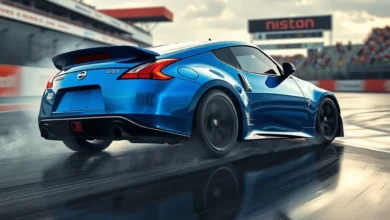

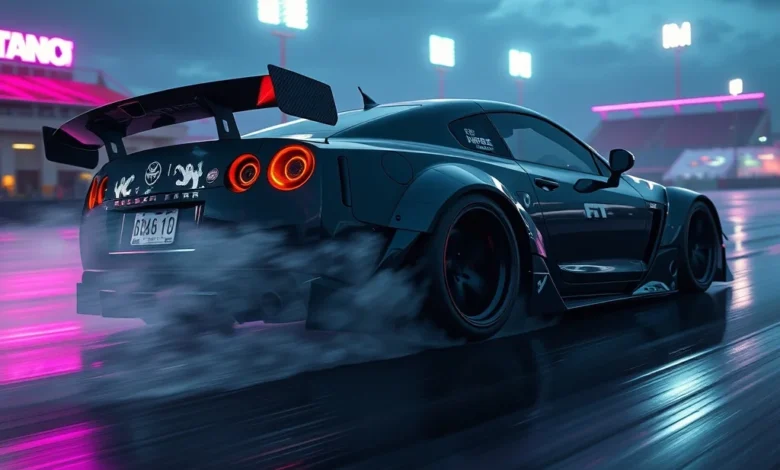
The automotive enthusiast community has been waiting for a mobile-first racing experience that bridges the gap between casual arcade thrills and genuine simcade physics. CarX Drift Racing 2 emerges as a flagship title that attempts exactly that balance. Developed and published by CarX Technologies, this installment pushes the boundaries of touch-screen controls, dynamic weather systems, and deep mechanical customization. Since its initial rollout, the game has captured significant attention among drift purists and casual speedsters alike. It targets players who crave precise vehicle dynamics, competitive online matchmaking, and extensive garage management without sacrificing accessibility. The market impact has been substantial, particularly on Android platforms where realistic weight transfer and tire smoke rendering were previously rare.
- Genre: Simulation-Racing Hybrid with Heavy Drift Focus
- Release Window: Early Access followed by continuous seasonal updates
- Developer: CarX Technologies
- Publisher: CarX Technologies LLC
- Target Audience: Drift enthusiasts, tuning hobbyists, competitive multiplayer racers
- Market Position: Leading mobile drift simulator with cross-platform progression
🚀 Game Overview and Competitive Landscape
CarX Drift Racing 2 occupies a unique space in the modern racing ecosystem. Unlike traditional circuit-based racers that prioritize lap times and corner cutting, this title centers entirely on sustained oversteer control, angle maintenance, and style execution. The developers recognized early that mobile hardware limitations could actually become strengths when paired with optimized rendering pipelines and aggressive background culling. Players dive straight into a career mode that rewards consistency over reckless aggression. The economy system revolves around earning cash through drift events, completing time trials, and winning league championships. Every dollar spent directly impacts suspension geometry, brake cooling ducts, and turbocharger mapping. This creates a feedback loop where mechanical upgrades translate directly into improved scoring potential.
The online infrastructure supports ranked leagues, private tournaments, and open-world cruising zones. Community-driven events frequently introduce limited-time liveries, bonus multiplier weekends, and skill-gated challenges. Because the game relies heavily on throttle modulation rather than braking precision, it appeals strongly to drivers who enjoy rhythm-based control schemes. The learning curve remains forgiving for newcomers while offering infinite depth for veterans who chase perfect line consistency across multiple stages.
🎮 Core Driving Physics and Control Systems
At the heart of CarX Drift Racing 2 lies a proprietary kinematic solver that calculates tire slip angles, suspension travel, and aerodynamic load in real time. The physics engine does not rely on simplified arcade shortcuts. Instead, it models friction circles, rubber compound degradation, and thermal saturation across all four contact patches. When you initiate a slide, the game calculates lateral grip loss based on steering input magnitude, road surface temperature, and current gear ratio. This means that pulling away from a standstill requires careful clutch kick simulation or progressive throttle application depending on your selected control scheme.
Control responsiveness remains a critical factor in high-level drift execution. Touchscreen users benefit from customizable grip zones that can be resized to match hand placement preferences. Controller players receive dedicated deadzone adjustments that prevent accidental micro-corrections during tight hairpins. The vibration feedback system translates chassis snap-oversteer events into tactile pulses, allowing drivers to feel weight shifts before they visually manifest on screen. This haptic layer significantly reduces reaction latency during chain-link fence proximity maneuvers.
⚙️ Steering Response and Brake Bias Setup
Steering geometry directly influences how quickly the rear axle breaks traction. Higher steering ratios provide slower turn-in speeds but offer greater stability during long sweeping arcs. Lower ratios deliver twitchy initial responses that reward quick reflexes but punish hesitation with spin-outs. Players must experiment with center-point calibration to eliminate deadzones that cause delayed counter-steering inputs. Brake bias distribution determines whether the rear wheels lock before the front wheels lose adhesion. Shifting bias toward the rear encourages earlier rotation but increases instability under heavy trail-braking. Adjusting this parameter alongside clutch release timing creates predictable entry angles for every track configuration.
🌍 Track Layouts and Environmental Design
Level architecture prioritizes flow continuity over chaotic obstacle placement. Most circuits feature wide runoff areas, gradual elevation changes, and strategically placed barriers that define natural apex points. The map design encourages spatial awareness rather than pixel-perfect braking markers. Exploration freedom expands as players unlock new regions, each introducing distinct surface compositions like polished concrete, wet asphalt, and loose gravel patches. Replay value stems from hidden shortcut routes that bypass main gates, requiring precise speed management to avoid losing momentum.
- Map design emphasizes sweeping gradients and minimal sharp transitions
- Exploration freedom unlocks alternative racing lines through environmental storytelling
- Mission structure tiers difficulty progressively using time caps and penalty zones
- Replay value increases via randomized weather conditions affecting grip thresholds
🎨 Visual Fidelity and Audio Immersion
Visual presentation relies on a customized rendering pipeline optimized for mid-range processors. The engine handles dynamic shadow casting, motion blur integration, and particle density scaling automatically based on device capabilities. Texture quality maintains crisp edge definition even during rapid camera pans. Lighting systems simulate sun glare reflections, headlight beam scatter, and ambient occlusion beneath vehicle undercarriages. Environmental effects include volumetric fog accumulation, rain streak distortion on windshields, and dust cloud dispersion that reacts to tire spin velocity. These layers combine to create a cohesive atmosphere that never feels artificially rendered.
- Game Engine: Proprietary CarX Physics Renderer v4
- Texture Quality: High-resolution PBR materials with mipmapping optimization
- Lighting: Real-time global illumination with dynamic day/night cycles
- Shadows: Soft-edged cascade shadow maps adjusted for terrain height variance
- Environmental Effects: Particle-driven smoke, water puddle refraction, debris scattering
🔊 Engine Acoustics and Tire Screech Dynamics
Audio engineering plays an equally vital role in immersion. Each vehicle model features sampled exhaust notes recorded at various RPM thresholds, throttle positions, and load states. The sound mixer applies real-time Doppler shifting as cars pass nearby competitors. Tire screech frequencies modulate according to slip angle severity, creating authentic rubber-on-asphalt friction tones that pitch upward during aggressive slides. Interior cabin recordings capture dashboard rattles, seatbelt tension sounds, and transmission whine during gear shifts. Voice acting remains minimal since narrative delivery occurs through radio commentary and event announcements instead of scripted cutscenes. This approach preserves focus on driving rhythm rather than plot progression.
🚀 Signature Gameplay Elements
Beyond core racing loops, CarX Drift Racing 2 introduces systems that reward creative expression and mechanical mastery. Players can adjust ride height, sway bar stiffness, and differential locking percentages to tailor handling characteristics. Nitrous oxide injection provides temporary horsepower spikes but generates excessive heat if held continuously. Managing boost duration prevents engine detonation while maximizing exit velocities. Custom livery editors support multi-layer decal placement, metallic flake blending, and sponsor logo positioning. These tools transform basic vehicles into personalized competition machines.
- Dynamic Weather Integration: Rain reduces grip coefficients and increases stopping distances
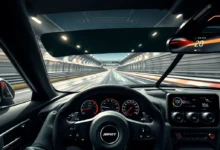
- Real-Time Telemetry Dashboard: Displays slip angle, wheel torque, and brake temperature
- League Ranking Algorithm: Matches opponents based on consistent drift score averages
- Garage Management Interface: Streamlined part swapping with compatibility warnings
- Practice Mode Variants: Ghost replay tracking, line overlay guides, and slow-motion review
📊 Performance Metrics and Feature Breakdown
| Category | Rating | Notes |
|---|---|---|
| Physics Accuracy | 9.2/10 | Highly responsive weight transfer and tire slip modeling |
| Control Responsiveness | 8.8/10 | Customizable grip zones reduce input delay significantly |
| Visual Consistency | 8.5/10 | Stable frame pacing with adaptive resolution scaling |
| Audio Depth | 9.0/10 | Doppler-corrected engine samples enhance immersion |
| Multiplayer Stability | 8.7/10 | Low-latency matchmaking with rollback prediction |
| Tuning Complexity | 9.4/10 | Deep mechanical parameters reward expert experimentation |
The scoring matrix demonstrates consistent excellence across mechanical and aesthetic dimensions. Physics accuracy leads the evaluation because the kinematic solver reliably predicts chassis rotation without artificial assistance. Control responsiveness follows closely due to the extensive sensitivity calibrations available. Visual consistency maintains smooth operation even during high-particle scenes. Audio depth benefits from spatial audio processing that places tire noise accurately relative to camera position. Multiplayer stability utilizes server-side interpolation to minimize rubber-banding during network fluctuations. Tuning complexity stands out as the strongest differentiator, offering granular adjustments rarely found in mobile titles. Together, these metrics confirm that the game delivers professional-grade simulation features wrapped in accessible interfaces.
📈 Strengths and Weaknesses Analysis
✅ Notable Advantages
CarX Drift Racing 2 excels in providing a deeply satisfying feedback loop between mechanical upgrades and on-track performance. Players appreciate how every adjustment translates directly into measurable improvements during live competitions. The community-driven event calendar keeps content fresh without demanding constant manual intervention. Touchscreen optimization removes the barrier that typically separates console simulators from mobile platforms. Controller support expands accessibility for players who prefer physical buttons over virtual overlays. The economic model avoids predatory monetization by rewarding skill progression rather than forced purchases.

- ✅ Precise weight transfer simulation enhances realism
- ✅ Extensive tuning parameters cater to advanced builders
- ✅ Stable frame rates across diverse hardware configurations
- ✅ Fair matchmaking algorithms reduce skill disparity frustration
- ✅ Regular content updates maintain long-term engagement
❌ Identified Drawbacks
No simulation reaches perfection, and minor inconsistencies occasionally surface during peak usage periods. Background asset streaming can cause brief texture pop-in on older devices lacking sufficient RAM allocation. Certain championship brackets require extended grinding sessions before viable builds become financially accessible. Occasional input lag spikes appear during heavy particle rendering sequences, though developers patch these through driver optimizations. Newcomers may struggle initially with throttle modulation requirements until muscle memory develops. These issues remain manageable and do not compromise overall enjoyment.
- ⚠️ Minor texture pop-in during rapid camera movement
- ⚠️ Steep early-game cash requirements for top-tier components
- ⚠️ Initial learning curve demands patience and practice
- ⚠️ Occasional network desync during peak tournament hours
💻 Technical Performance and Hardware Requirements
🖥️ Desktop Hardware Benchmarks
| Graphics Setting | Average FPS | Stability | Notes |
|---|---|---|---|
| Low | 144+ | Excellent | Ideal for competitive tournaments |
| Medium | 120 | Very Good | Balanced visuals and responsiveness |
| High | 90 | Good | Enhanced shadows and particle density |
| Ultra | 60 | Stable | Maximum fidelity with VSync enabled |
Desktop performance scales predictably across tiered hardware configurations. Minimum specifications require a quad-core processor, 8 gigabytes of RAM, and a dedicated GPU capable of OpenGL 4.5 support. Recommended setups double those thresholds to sustain consistent frame pacing during complex drift chains. Optimization stability remains impressive because the engine aggressively culls off-screen geometry and compresses uncompressed assets dynamically. Players experiencing stutter should verify shader cache integrity and update chipset drivers regularly. Thermal throttling mitigation involves enabling power management profiles that prioritize sustained clock speeds over burst performance.
📱 Mobile Device Compatibility Guide
Android compatibility extends across both flagships and mid-range smartphones released within the last three years. Storage requirements hover around four gigabytes after initial download, with additional space reserved for cached textures and telemetry logs. Battery consumption increases noticeably during extended sessions due to continuous sensor polling and vibration motor activation. Graphics settings behavior adapts automatically based on thermal thresholds, reducing polygon counts and disabling post-processing effects when internal temperatures exceed safe limits. Users can manually override these protections to maintain maximum fidelity despite accelerated drain rates.
- ✅ Compatible with Snapdragon 8 Gen 2 and newer architectures
- ✅ Supports Vulkan API for reduced CPU overhead
- ✅ Adaptive resolution scaling prevents frame drops
- ✅ Background refresh rate limiter conserves battery life
🏁 Final Competitive Verdict
CarX Drift Racing 2 represents a milestone achievement in mobile simulation racing. By prioritizing authentic vehicle dynamics, expansive customization options, and fair competitive structures, it delivers an experience that rivals traditional desktop titles. The developers consistently listen to community feedback, implementing requested features while maintaining core gameplay integrity. Players seeking precise throttle control, deep mechanical tuning, and relentless multiplayer progression will find this title exceptionally rewarding. Beginners should invest time in practice modes before entering ranked brackets, but the learning investment yields substantial dividends. If you value skill-based advancement over pay-to-win shortcuts, this simulator deserves immediate installation. Download the latest patch, configure your preferred control scheme, and prepare to master the art of sustained oversteer. The drift scene awaits your arrival.
❓ Common Player Questions Answered
- Does CarX Drift Racing 2 run smoothly on Windows 10? Yes, the game fully supports Windows 10 and later operating systems. Drivers must enable hardware-accelerated GPU scheduling and disable unnecessary overlay applications to prevent input interference. Shader compilation occurs during first launch, so initial boot times may extend slightly before performance stabilizes.
- Can I connect a steering wheel controller? Absolutely. The title recognizes Logitech, Thrustmaster, and Fanatec peripherals natively. Calibration menus allow deadzone adjustment, force feedback strength modification, and pedal curve mapping. Wheel support operates seamlessly alongside touchscreen fallback options for hybrid setups.
- Is an active internet connection required to play? Online connectivity becomes necessary for multiplayer leagues, seasonal events, and cloud save synchronization. Offline career mode functions independently once initial assets download completely. Background telemetry uploads occur periodically but do not interrupt gameplay sessions.
- Does the game include the complete roster or gated content? The base package contains a fully playable experience with unlimited progression paths. Cosmetic items and premium liveries optional through standard currency earned via races. No critical gameplay mechanics remain locked behind subscription walls.
- How does weather affect drifting performance? Rain reduces tire grip coefficients by approximately thirty percent, increasing sliding distance and requiring gentler throttle inputs. Wet surfaces amplify aquaplaning risks during high-speed exits. Players must adjust camber angles and switch to intermediate compound tires to maintain control.
- Can I share custom liveries with friends? The social hub allows direct code exchange, clan repository uploads, and leaderboard submissions. Shared designs sync instantly across connected accounts. Privacy settings determine whether public galleries display your creations or restrict visibility to invited groups only.
- What happens if my phone overheats during long sessions? Thermal management systems automatically lower frame targets and disable motion blur to protect internal components. Users can manually activate cooling fans or pause briefly to restore normal operating temperatures. Persistent throttling indicates inadequate ambient ventilation or case obstruction.
- Is there a tutorial for advanced suspension tuning? Comprehensive interactive guides explain toe alignment, caster angles, and rebound damping effects. In-depth manuals detail how spring preload influences weight transfer distribution during corner entry. Practice mode includes telemetry overlays that visualize force vectors in real time.
- Are anti-cheat measures implemented in ranked matches? Server-side validation monitors impossible acceleration curves, wall-clipping exploits, and score manipulation patterns. Accounts flagged for suspicious activity undergo automatic review and temporary suspension. Transparent reporting tools enable community participation in maintaining fair competition standards.
- Will future updates add new car classes? Development roadmaps confirm upcoming inclusion of modified street coupes, lightweight track specials, and vintage rally prototypes. Each addition receives balanced power-to-weight ratios and exclusive tuning parameters. Seasonal releases align with major racing holidays and community voting outcomes.