

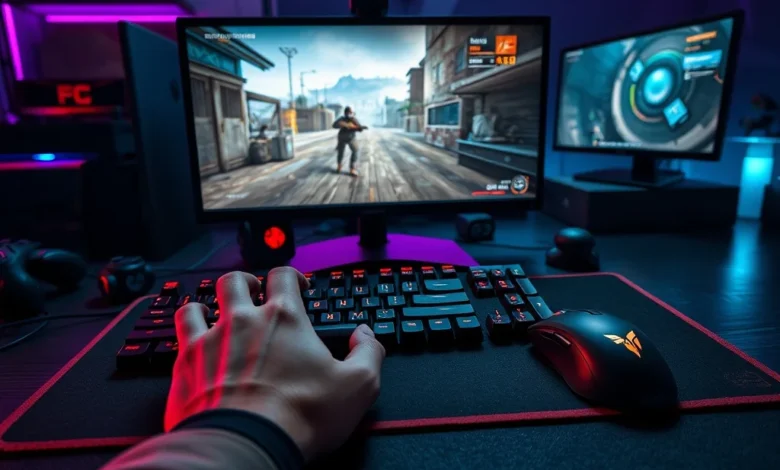
Mastering the perfect sensitivity settings in first-person shooter (FPS) games is crucial for unlocking your true potential, whether you’re aiming for headshots in Counter-Strike 2, dominating in Call of Duty: Warzone, or sniping with precision in PUBG Mobile. Poor sensitivity settings can make even the most skilled players feel like they’re playing with a handicap, while the right configuration can turn you into a sharpshooter capable of outplaying opponents effortlessly.
In this comprehensive guide, we’ll dive deep into the science behind sensitivity settings, explain how to find your ideal DPI (dots per inch) and in-game sensitivity, and provide platform-specific recommendations for both PC and Android devices. Whether you’re a competitive esports athlete or a casual gamer looking to improve, this article will equip you with the knowledge to optimize your FPS experience like never before.
🎮 Why Sensitivity Settings Matter in FPS Games
Sensitivity settings in FPS games determine how your mouse or touchscreen movements translate into in-game camera movements. A well-tuned sensitivity allows for quick target acquisition during fast-paced firefights while maintaining the precision needed for long-range shots. Too high, and you risk overshooting targets and losing control; too low, and your reaction time suffers as you struggle to turn quickly enough to react to threats.
Beyond just aiming, sensitivity also affects movement mechanics. Many modern FPS games incorporate advanced movement systems—like bunny hopping, crouch spamming, or slide jumping—that rely heavily on consistent and responsive camera control. A mismatched sensitivity can disrupt these mechanics, making advanced techniques nearly impossible to perform smoothly. This is why professional esports players spend hours tweaking their settings to achieve the perfect balance between speed and accuracy.
The relationship between your physical mouse movements and in-game cursor speed is governed by several factors:
- 🖱️ Mouse DPI – Determines how many pixels your cursor moves per inch of physical mouse movement.
- 🎮 In-Game Sensitivity – Scales the DPI value to control how fast your character turns or aims.
- 🔄 Windows Mouse Sensitivity – An additional scaling factor on Windows systems that can override or compound your DPI settings.
- 🖥️ Game Engine Settings – Some games (like Unreal Engine-based titles) apply their own sensitivity multipliers.
Understanding and harmonizing these factors is essential for achieving a seamless gaming experience. Let’s break down each component to see how they interact and influence your overall performance.
🔍 The Role of Mouse DPI in FPS Gaming
Mouse DPI refers to the number of dots (or pixels) your mouse sensor detects per inch of movement. Higher DPI values mean your cursor moves faster across the screen with less physical mouse movement, while lower DPI values provide more granular control at the cost of requiring larger mouse strokes.
Most gaming mice offer DPI ranges from 400 to 3200, with high-end models supporting up to 16,000 DPI or more. While it might seem beneficial to crank up the DPI for faster cursor movement, using an excessively high DPI can actually hinder precision. Here’s why:
- 📏 Higher DPI = Less Pixel Accuracy – At 3200 DPI, even a tiny flick of your wrist can send your crosshair flying across the screen, making precise tracking of slow-moving targets nearly impossible.
- 🧠 Lower DPI = Better Muscle Memory – Lower DPI values (800-1600) allow for more consistent and repeatable movements, which is critical for flick shots and tracking.
- 🖱️ Sensor Quality Matters – Cheap sensors at high DPI settings often introduce jitter or acceleration, ruining consistency.
Most professional FPS players use DPI settings between 400 and 1600, with 800 being a popular sweet spot. The key is to find a DPI that feels natural for your mousepad size and hand movements. If you’re using a large mousepad, you can afford to use a higher DPI without sacrificing control. Conversely, if you’re gaming on a small surface, lower DPI values will help prevent your mouse from running out of room during intense firefights.
🎯 In-Game Sensitivity and Its Impact
In-game sensitivity acts as a multiplier for your mouse DPI. A low in-game sensitivity paired with a high DPI can result in the same effective sensitivity as a high in-game sensitivity with a low DPI. The challenge lies in balancing these two values to achieve the desired mouse speed without sacrificing precision.
For example:
- 🖱️ DPI 800 + In-Game Sensitivity 2.0 = Effective Sensitivity of 1600
- 🖱️ DPI 1600 + In-Game Sensitivity 1.0 = Effective Sensitivity of 1600
Both setups result in the same effective sensitivity, but the feel can be quite different. Lower DPI values generally provide smoother tracking and less jitter, while higher DPI values can feel more responsive but may introduce inconsistencies. Many players prefer to keep their in-game sensitivity low (0.5-2.0) and adjust primarily through DPI, as this allows for finer control over small adjustments.


Another critical factor is the game’s engine. Some engines, like Unreal Engine, apply additional sensitivity scaling that can make your settings feel different from what you’ve configured. Always check if your game has engine-specific sensitivity multipliers and adjust accordingly.
🖥️ Best Sensitivity Settings for FPS Games on PC
PC gaming offers the most flexibility when it comes to sensitivity settings, thanks to the ability to adjust DPI, in-game sensitivity, and Windows mouse settings independently. This level of control allows you to fine-tune your configuration to match your playstyle, hardware, and preferences. Below, we’ll explore the best practices for optimizing sensitivity settings on PC, covering popular FPS titles like Counter-Strike 2, Valorant, Call of Duty: Warzone, and Apex Legends.
🔥 Counter-Strike 2 – Pro-Level Sensitivity Guide
Counter-Strike 2 (CS2) is one of the most competitive FPS games in the world, and as such, precision is paramount. The game’s movement system rewards consistent and repeatable aim, making sensitivity settings a critical component of high-level play. Professional CS2 players typically use low in-game sensitivities with moderate DPI values to achieve a balance between speed and control.
Here’s a recommended setup for Counter-Strike 2:
- 🖱️ Mouse DPI: 800
- 🎮 In-Game Sensitivity: 1.5-2.0
- 🖥️ Windows Mouse Sensitivity: 6/11
- 📏 Mouse Polling Rate: 1000Hz
This configuration provides a good starting point, allowing for quick flicks while maintaining the precision needed for headshots. However, the optimal settings can vary depending on your mousepad size and personal preference. Some players prefer even lower sensitivities (e.g., DPI 400 with in-game sensitivity 1.0) for extreme precision, while others opt for higher values (e.g., DPI 1600 with in-game sensitivity 0.8) for faster target acquisition.
Another essential aspect of CS2 sensitivity is the use of mouse acceleration. While some players swear by disabling mouse acceleration for the most consistent aim, others find that enabling it helps with tracking moving targets. Experiment with both options to see what feels best for you.
⚔️ Valorant – Finding Your Ideal Sensitivity
Valorant, Riot Games’ tactical FPS, blends the precision of CS2 with hero abilities and unique gunplay mechanics. The game’s movement system is slightly different from traditional FPS titles, so sensitivity settings need to account for its distinct feel. Valorant also features a built-in sensitivity slider that players can use to fine-tune their aim without adjusting Windows settings.
For Valorant, a balanced sensitivity setup might look like this:
- 🖱️ Mouse DPI: 800-1600
- 🎮 In-Game Sensitivity: 0.7-1.5
- 🖥️ Windows Mouse Sensitivity: 6/11
- 🔧 Additional Settings: Enable Raw Input, Disable Mouse Acceleration
Valorant’s engine applies its own sensitivity scaling, so the in-game slider isn’t always linear with your DPI. Start with a low in-game sensitivity and gradually increase it until you find a comfortable middle ground. Many players recommend keeping the in-game sensitivity below 2.0 to avoid overshooting targets during fast-paced engagements.
One unique feature in Valorant is the ability to adjust the sensitivity for ADS (Aim Down Sights) separately from hip-fire sensitivity. This allows for greater customization, as you can optimize your aim for scoped weapons while maintaining control with unsupported guns. For example:
- 🎯 Hip-Fire Sensitivity: 1.0
- 🔫 ADS Sensitivity: 0.8
This setup ensures that your crosshair doesn’t jerk around when zooming in, making shots with snipers or rifles more manageable.
🎯 Call of Duty: Warzone – Optimal Sensitivity for Battle Royale
Call of Duty: Warzone is a fast-paced battle royale that demands quick reactions and precise aim. Unlike competitive FPS titles, Warzone features a more forgiving movement system, allowing for higher sensitivities without sacrificing too much control. However, finding the right balance is still crucial for success, especially in close-quarters combat and long-range sniping.
For Warzone, a versatile sensitivity setup could be:
- 🖱️ Mouse DPI: 1000-1600
- 🎮 In-Game Sensitivity: 3.0-5.0
- 🖥️ Windows Mouse Sensitivity: 8/11
- 🔧 Additional Settings: Enable Mouse Acceleration (Optional)
Warzone’s movement mechanics reward quick turns and flicks, so a slightly higher sensitivity can be beneficial. However, avoid going too high, as this can make it difficult to track enemies or land precise shots. Many players find that a sensitivity of around 4.0 works well for most situations, with adjustments made for specific weapons or playstyles.
Warzone also features a unique aim assist mechanic for controller players, but mouse users can still benefit from the game’s built-in aim smoothing and assist features. If you’re using these, you may want to lower your in-game sensitivity slightly to compensate for the added assistance.
🏹 Apex Legends – Precision and Movement Balance
Apex Legends is a hero-based battle royale that emphasizes movement and ability usage alongside gunplay. The game’s unique mechanics, such as slide hopping and wall bouncing, require a sensitivity setup that balances precision with responsiveness. Apex also features a wide variety of weapons, each with different recoil patterns and handling characteristics, so your sensitivity should accommodate these variations.
For Apex Legends, consider the following sensitivity configuration:
- 🖱️ Mouse DPI: 400-800
- 🎮 In-Game Sensitivity: 1.0-2.0
- 🖥️ Windows Mouse Sensitivity: 6/11
- 🔧 Additional Settings: Disable Mouse Acceleration, Enable Raw Input
Lower DPI values are often preferred in Apex due to the game’s emphasis on precise tracking and recoil control. Many players use DPI 400 or 800 with in-game sensitivity settings between 1.0 and 2.0 to achieve a balance between speed and accuracy. This setup allows for smooth flicks and precise tracking of enemies, especially when using weapons like the R-99 or Flatline.
Apex Legends also features a sensitivity for legend abilities, such as Bloodhound’s scan or Horizon’s lift. You can adjust this separately to ensure that ability use feels natural without disrupting your overall aim. For example:
- 🎮 Legend Ability Sensitivity: 1.0
This prevents your crosshair from jerking around when using abilities, maintaining consistent aim throughout matches.
📊 Universal PC Sensitivity Settings Table
| Game | Recommended DPI | In-Game Sensitivity | Windows Sensitivity | Mouse Acceleration | Raw Input |
|---|---|---|---|---|---|
| Counter-Strike 2 | 800 | 1.5-2.0 | 6/11 | Disabled | Enabled |
| Valorant | 800-1600 | 0.7-1.5 | 6/11 | Disabled | Enabled |
| Call of Duty: Warzone | 1000-1600 | 3.0-5.0 | 8/11 | Optional | Enabled |
| Apex Legends | 400-800 | 1.0-2.0 | 6/11 | Disabled | Enabled |
| Overwatch 2 | 800-1600 | 1.5-3.0 | 6/11 | Disabled | Enabled |
| Fortnite | 1000-1600 | 2.0-4.0 | 8/11 | Disabled | Enabled |
The table above provides a general starting point for optimizing sensitivity settings in popular PC FPS games. However, these are not one-size-fits-all configurations. Your ideal settings will depend on factors like your mousepad size, grip style, and personal preference. The key is to experiment with different values and adjust based on how they feel during actual gameplay.
For example, if you’re using a small mousepad (e.g., 12×10 inches), a higher DPI (1600) with a lower in-game sensitivity (e.g., 0.8) might work better to prevent running out of space during intense firefights. Conversely, if you’re gaming on a large mousepad (e.g., 30×20 inches), you can afford to use a lower DPI (400-800) for greater precision.
📱 Best Sensitivity Settings for FPS Games on Android
Mobile FPS games present a different set of challenges when it comes to sensitivity settings. Unlike PC gaming, where you have precise control over DPI and in-game sensitivity, mobile games often rely on simplified touch controls or gyroscopic aiming. This makes optimizing sensitivity more about finding the right balance between responsiveness and control within the game’s interface.
Most mobile FPS games offer two primary sensitivity options:
- 🖱️ Touch Sensitivity – Controls how fast your crosshair moves in response to touchscreen swipes.
- 🌐 Gyroscope Sensitivity – Uses the device’s gyroscope to aim, similar to a mouse on PC.
Touch sensitivity is the most common option, as not all mobile devices support gyroscopes. Gyroscope aiming can provide a more precise and natural feel, especially for players who are accustomed to PC gaming. However, it requires a steady hand and good device stability to be effective.
🎮 PUBG Mobile – Touch and Gyro Sensitivity Guide
PUBG Mobile is one of the most popular battle royale games on mobile, offering both touch and gyroscope controls. Optimizing sensitivity in PUBG Mobile is essential for success, especially in close-quarters combat and long-range sniping.
For PUBG Mobile, the following sensitivity settings are recommended:
- 🖱️ Free Look Sensitivity: 50-70
- 🎯 ADS Sensitivity: 30-50
- 🌐 Gyroscope Sensitivity: 200-300
- 🔄 Gyroscope Toggle: Enabled (if available)
Touch sensitivity in PUBG Mobile is divided into two categories: free look (for general movement) and ADS (for scoped weapons). Many players prefer to keep free look sensitivity slightly higher than ADS sensitivity to allow for quick target acquisition, while maintaining control when zooming in.
Gyroscope sensitivity can be a game-changer for mobile FPS players, but it requires some getting used to. Start with a lower value (e.g., 200) and gradually increase it until you find a comfortable setting. The goal is to achieve smooth, precise aiming without overshooting targets. If you’re new to gyroscope controls, consider enabling the gyroscope toggle option, which allows you to switch between gyro and touch controls on the fly.
Another critical setting in PUBG Mobile is the recoil control system. While not directly related to sensitivity, recoil control is essential for maintaining accuracy during sustained fire. Many players recommend using the automatic recoil control option, which helps counteract weapon recoil automatically.
🔫 Call of Duty Mobile – Balancing Speed and Accuracy
Call of Duty Mobile (CODM) offers a streamlined FPS experience on mobile, with touch controls that are optimized for quick reactions and precise aim. Unlike PUBG Mobile, CODM doesn’t feature gyroscope controls, so all aiming is done via touchscreen swipes.
For Call of Duty Mobile, the following sensitivity settings are a good starting point:
- 🖱️ General Sensitivity: 8-10
- 🎯 ADS Sensitivity: 5-7
- 🎯 Red Dot Sensitivity: 7-9
- 🎯 2x Scope Sensitivity: 6-8
- 🎯 4x Scope Sensitivity: 4-6
CODM’s sensitivity settings are divided into multiple categories, allowing for fine-tuning based on weapon attachments and scopes. General sensitivity controls your base aiming speed, while ADS sensitivity determines how fast your crosshair moves when zoomed in. The scope-specific sensitivities allow you to optimize aim for different magnification levels, which is particularly useful for snipers and long-range engagements.
Many players recommend keeping general sensitivity between 8 and 10 for most situations, with ADS sensitivity slightly lower to maintain control when zooming in. For scope-specific settings, it’s often best to start with the general sensitivity and adjust as needed. For example, if you find that your crosshair moves too fast with a 4x scope, try lowering the 4x scope sensitivity to match your ADS sensitivity.
CODM also features a gyroscope option, but it’s not as refined as PUBG Mobile’s implementation. If your device supports it, you can experiment with gyroscope controls, but most players find that touch controls are more reliable for competitive play.
⚡ Free Fire – Optimizing for Fast-Paced Action
Free Fire is another hugely popular battle royale game on mobile, known for its fast-paced gameplay and high-octane action. The game’s touch controls are designed to be responsive and intuitive, but finding the right sensitivity settings can make a significant difference in your performance.
For Free Fire, consider the following sensitivity configuration:
- 🖱️ Normal Sensitivity: 90-100
- 🎯 Sniper Sensitivity: 50-70
- 🌐 Gyroscope Sensitivity: 300-400
- 🎮 Custom Controls: Enabled (if available)
Free Fire’s sensitivity settings are divided into normal (for general gameplay) and sniper (for scoped weapons) categories. Normal sensitivity is typically kept at 90 or 100 for quick reactions, while sniper sensitivity is lowered to allow for precise aiming. This setup ensures that you can acquire targets quickly in close-quarters combat while maintaining control for long-range snipes.
Gyroscope sensitivity in Free Fire can be a powerful tool, but it requires a stable device and steady hands. Start with a lower value (e.g., 300) and increase it gradually until you find a comfortable setting. If you’re using a smartphone with a small screen, you may need to lower the gyroscope sensitivity to avoid overshooting targets.
Free Fire also offers custom controls, which allow you to adjust the size and position of on-screen buttons. Enabling custom controls can improve your comfort and control, especially if you’re playing on a device with a small screen or if you prefer a specific button layout.
📱 Universal Android Sensitivity Settings Table
| Game | Touch Sensitivity | Gyroscope Sensitivity | ADS Sensitivity | Scope Sensitivity | Additional Tips |
|---|---|---|---|---|---|
| PUBG Mobile | 50-70 | 200-300 | 30-50 | N/A | Enable gyro toggle for flexibility |
| Call of Duty Mobile | 8-10 | N/A | 5-7 | 7-9 (Red Dot), 4-6 (4x Scope) | Use scope-specific sensitivities |
| Free Fire | 90-100 | 300-400 | N/A | 50-70 (Sniper) | Enable custom controls for comfort |
| Garena Free Fire MAX | 95-100 | 350-450 | N/A | 60-80 (Sniper) | Use high frame rate settings if available |
| Call of Duty: Mobile Seasonal | 9-10 | N/A | 6-8 | 8-10 (Red Dot), 5-7 (4x Scope) | Adjust based on weapon attachments |
The table above provides a general starting point for optimizing sensitivity settings in popular mobile FPS games. However, mobile gaming is highly dependent on the device you’re using. Factors like screen size, touch responsiveness, and gyroscope stability can all impact how your sensitivity settings feel in-game.
For example, if you’re playing on a smartphone with a large screen (e.g., 6.5 inches or larger), you may find that higher touch sensitivity values work better, as you have more room to swipe. Conversely, if you’re using a smaller device, lower sensitivity values can help prevent overshooting targets due to limited screen space.
Gyroscope controls are a game-changer for mobile FPS players, but they require a steady hand and good device stability. If you’re experiencing issues with gyro aiming, try lowering the sensitivity or using a phone stand to minimize hand movements. Additionally, some devices have more responsive gyroscopes than others, so your mileage may vary depending on your hardware.
🔧 Advanced Sensitivity Optimization Techniques
Now that we’ve covered the basics of sensitivity settings for both PC and Android FPS games, let’s dive into advanced techniques that can take your aim to the next level. These methods go beyond simple DPI and in-game sensitivity adjustments, focusing instead on refining your muscle memory, improving reaction times, and optimizing your overall gameplay experience.
🎯 The Science of Aim Training
Aim training is a critical component of mastering sensitivity settings, especially for competitive players. While adjusting your sensitivity is a one-time setup, aim training is an ongoing process that helps you develop the muscle memory and reflexes needed to excel in FPS games. There are several popular aim training tools available, each designed to improve different aspects of your aim:
- 🎯 Kovaak’s FPS Aim Trainer – A comprehensive training tool with customizable scenarios for flick shots, tracking, and precision.
- 🎯 Aim Lab – Offers a variety of training modules, including reflex tests, tracking challenges, and scenario-based drills.
- 🎯 CS2DM – A community-driven aim trainer designed specifically for Counter-Strike players.
When using aim trainers, focus on the following aspects:
- 🔄 Flick Accuracy – Practice quick, precise flicks to acquire targets at varying distances.
- 🎯 Tracking – Improve your ability to follow moving targets smoothly.
- 📏 Precision – Work on landing headshots in small target areas, such as the head hitbox in CS2.
- 🏃 Movement and Aim – Combine aim training with movement drills to simulate real-game scenarios.
Aim trainers often provide performance metrics, such as accuracy percentages and reaction times, which can help you track your progress over time. Use these metrics to identify your weaknesses and focus your training on improving those areas.
📏 Mousepad Size and Grip Style
Your mousepad size and grip style play a significant role in determining your ideal sensitivity settings. The larger your mousepad, the more room you have for large, sweeping motions, which can allow you to use higher DPI values without sacrificing precision. Conversely, smaller mousepads require more controlled, smaller movements, making lower DPI values a better fit.
There are three primary grip styles in PC gaming:
- 🖐️ Fingertip Grip – Your palm doesn’t touch the mouse; instead, you use your fingertips for control. This grip style favors lower DPI values (400-800) and lower in-game sensitivities, as it allows for precise, small movements.
- 🤲 Palm Grip – Your entire palm rests on the mouse, providing stability and comfort. This grip style can accommodate higher DPI values (800-1600) and in-game sensitivities, as the larger surface area allows for smoother, more controlled movements.
- 🦶 Claw Grip – Your palm hovers above the mouse, with your fingertips and the base of your palm making contact. This grip style is a hybrid of fingertip and palm grips, and it can work well with mid-range DPI values (800-1600) and in-game sensitivities.
Experiment with different grip styles and mousepad sizes to find what feels most comfortable and natural for you. If you’re using a claw grip, you may find that slightly higher sensitivities work well, as the grip allows for quick, precise flicks. Palm grip players, on the other hand, might prefer lower sensitivities for greater stability.
🖥️ Color and Crosshair Customization
While not directly related to sensitivity settings, your crosshair and color scheme can significantly impact your aiming performance. A well-designed crosshair can help you track targets more effectively, while a poorly chosen color can make it difficult to spot enemies in different environments.
Here are some tips for customizing your crosshair and colors:
- 🎨 Crosshair Style – Choose a crosshair that matches your playstyle. For example, a small, centered crosshair with minimal distractions is ideal for precise aiming, while a larger crosshair with dynamic outlines can help with target tracking.
- 🌈 Crosshair Color – Select a color that contrasts well with your game’s environments. Bright colors like green or yellow work well in most maps, while red or blue can blend in with certain backgrounds.
- 📏 Crosshair Size and Thickness – Adjust the size and thickness of your crosshair to ensure it’s visible but not overly distracting. A crosshair that’s too large can obscure your view, while a crosshair that’s too small can be difficult to see.
- 🔄 Dynamic Crosshair – Some games offer dynamic crosshairs that change based on your movement or firing status. If available, enable these options to help you track recoil and movement more effectively.
Many FPS games also allow you to customize your field of view (FOV), which can impact your aiming experience. A higher FOV provides a wider view of your surroundings, making it easier to spot enemies, but it can also make your crosshair feel smaller and more difficult to track. A lower FOV narrows your view but can make your crosshair feel larger and more stable. Experiment with different FOV settings to find the right balance for your playstyle.
🔄 Sensitivity Switching Between Games
Switching between different FPS games can be jarring if each game has wildly different sensitivity settings. For example, the sensitivity that feels perfect in Valorant might feel sluggish in CS2 or too fast in Warzone. To mitigate this issue, many players use sensitivity converters or calculators to translate their settings between games.
Sensitivity converters work by calculating the effective sensitivity of your current settings and providing recommendations for other games based on that value. For example, if your effective sensitivity in CS2 is 1600 (DPI 800 + in-game sensitivity 2.0), a converter can suggest settings for Valorant or Warzone that result in the same effective sensitivity.
Here are some popular sensitivity converters:
- 🔗 Nixie’s Sensitivity Converter – A comprehensive tool for converting sensitivities between different games and engines.
- 🔗 Mouse Sensitivity – Offers a wide range of game-specific converters and tools.
- 🔗 CP Mouse – Focuses on FPS games and provides detailed sensitivity calculations.
Using a sensitivity converter can save you hours of trial and error, ensuring a smoother transition between games. However, keep in mind that these tools provide approximations, and you may still need to make minor adjustments based on your personal preference.
⚠️ Common Sensitivity Mistakes to Avoid
Even with the best intentions, it’s easy to make mistakes when configuring sensitivity settings. These errors can hinder your performance, making even simple tasks like landing headshots or tracking enemies feel like a chore. Below, we’ll highlight some of the most common sensitivity mistakes and how to avoid them.
🚫 Using Default Settings Without Adjustment
Many players stick with the default sensitivity settings provided by the game, assuming they’re optimized for most players. However, default settings are often designed to cater to a wide range of users, meaning they’re rarely ideal for competitive or high-level play. Default sensitivities can feel either too slow or too fast, depending on your playstyle and hardware.
For example, Call of Duty: Warzone defaults to a sensitivity of 4.0, which might feel sluggish for PC players accustomed to lower values. Similarly, PUBG Mobile defaults to a touch sensitivity of 50, which may be too low for players who prefer faster aiming.
Always start by adjusting your sensitivity settings to match your comfort level, even if you’re new to FPS gaming. As you gain experience, fine-tune your settings to optimize performance.
🚫 Ignoring Mouse Acceleration
Mouse acceleration is a feature that scales your cursor speed based on how fast you move your mouse. While this can feel natural for general computer use, it wreaks havoc on FPS gaming by introducing inconsistency. A small flick at low speed might move your crosshair only slightly, while the same flick at high speed could send it flying across the screen. This inconsistency makes it nearly impossible to develop consistent muscle memory.
Most competitive FPS players disable mouse acceleration entirely, as it provides the most predictable and repeatable aiming experience. To disable mouse acceleration on Windows:
- Open the Windows Settings menu.
- Navigate to Devices > Mouse > Additional mouse options.
- In the Mouse Properties window, go to the Pointer Options tab.
- Uncheck the box labeled Enhance pointer precision.
- Click Apply and OK to save your changes.
Some games, like Counter-Strike 2 and Valorant, have their own mouse acceleration settings that should also be disabled for the best results.
🚫 Not Accounting for Mouse Polling Rate
The polling rate of your mouse determines how often it sends data to your computer. A higher polling rate (e.g., 1000Hz) means your computer receives more frequent updates, resulting in a smoother and more responsive gaming experience. Lower polling rates (e.g., 500Hz) can introduce slight delays and inconsistencies, which can negatively impact your aim.
Most gaming mice support polling rates up to 1000Hz, and it’s generally recommended to use the highest polling rate your mouse supports. To check and adjust your polling rate:
- 🖱️ Mouse Software – Many gaming mice come with proprietary software (e.g., Logitech G HUB, Razer Synapse, Corsair iCUE) that allows you to adjust polling rates.
- 🖥️ Windows Device Manager – Some mice allow you to change polling rates via Device Manager, though this is less common.
If your mouse supports multiple polling rates, experiment with different settings to see which feels best for your gameplay. Keep in mind that higher polling rates can increase CPU usage slightly, but the difference is negligible on modern systems.
🚫 Overlooking Game Engine Differences
Different game engines handle sensitivity scaling in unique ways, which can make your settings feel inconsistent when switching between titles. For example, Unreal Engine-based games (like Fortnite or Overwatch 2) apply additional sensitivity multipliers that can make your settings feel slower or faster than expected.
To account for engine differences, use sensitivity converters or manually adjust your in-game sensitivity to match your preferred effective sensitivity. For example, if you’re used to playing CS2 with an effective sensitivity of 1600, you might need to lower your in-game sensitivity in Unreal Engine games to achieve the same feel.
The key is to experiment and find what works best for each game, even if it means slightly different settings across titles.
🏆 Final Verdict – Finding Your Perfect Sensitivity Settings
Mastering sensitivity settings in FPS games is a journey of experimentation and refinement. What works for one player might not suit another, and even small adjustments can make a significant difference in your performance. The key is to approach sensitivity optimization methodically, testing different configurations and refining your setup over time.
For PC players, start with a moderate DPI (800-1600) and a low in-game sensitivity (0.5-2.0), then adjust based on your comfort and playstyle. Disable mouse acceleration and ensure your Windows mouse settings are optimized for gaming. Use aim trainers to develop muscle memory and track your progress.
For Android players, focus on touch and gyroscope sensitivity, adjusting these values to match your device’s responsiveness and your personal preference. Experiment with different sensitivity ranges for various scopes and weapons to find the ideal balance between speed and accuracy.
Remember, sensitivity settings are not set in stone. As you improve your skills and adapt to different games, don’t hesitate to revisit and tweak your configurations. The goal is to create a setup that feels intuitive and enhances your gameplay, allowing you to focus on strategy, movement, and precision rather than fighting against your controls.
Whether you’re a competitive esports athlete striving for the top of the leaderboards or a casual gamer looking to improve your aim, the right sensitivity settings can make all the difference. Take the time to experiment, analyze your performance, and refine your setup. With dedication and practice, you’ll be well on your way to becoming a sharpshooter capable of dominating any FPS game.
❓ Frequently Asked Questions
-
What is the ideal DPI for FPS games?
The ideal DPI depends on your playstyle, mousepad size, and grip style. Most competitive FPS players use DPI values between 400 and 1600, with 800 being a popular sweet spot. Lower DPI values provide more granular control, while higher values allow for faster flicks. Experiment to find what works best for you.
-
Should I disable mouse acceleration?
Yes, mouse acceleration should be disabled for the most consistent aiming experience. Mouse acceleration introduces inconsistencies that can disrupt your muscle memory and make precise aiming nearly impossible. Most competitive FPS players disable it entirely.
-
How do I calculate effective sensitivity?
Effective sensitivity is calculated by multiplying your DPI by your in-game sensitivity. For example, DPI 800 with in-game sensitivity 2.0 results in an effective sensitivity of 1600. Use sensitivity converters to translate settings between games or to find equivalent values.
-
What is the best sensitivity for sniping in FPS games?
The best sensitivity for sniping depends on the game, but it’s generally lower than your general aim sensitivity. Many players lower their in-game sensitivity when using scoped weapons to maintain control and reduce overshooting. For example, in Valorant, you might use an ADS sensitivity of 0.8 while keeping your hip-fire sensitivity at 1.0.
-
How does mouse polling rate affect sensitivity?
Mouse polling rate determines how often your mouse sends data to your computer. Higher polling rates (e.g., 1000Hz) provide more responsive and smoother aiming, while lower rates (e.g., 500Hz) can introduce slight delays. Most gaming mice support 1000Hz polling, which is recommended for competitive play.
-
Can I use the same sensitivity settings for all FPS games?
While you can use the same sensitivity settings across multiple FPS games, the feel may vary due to differences in game engines and movement systems. Some games apply additional sensitivity multipliers or have unique recoil patterns, so you may need to make minor adjustments. Use sensitivity converters to translate settings between games.
-
What is the best grip style for FPS gaming?
The best grip style depends on your personal preference and hand size. Fingertip grip favors lower DPI values and sensitivities for precise control, palm grip accommodates higher sensitivities for stability, and claw grip is a hybrid that works well with mid-range sensitivities. Experiment to find what feels most comfortable.
-
How do I adjust sensitivity for gyroscope controls on mobile?
Gyroscope sensitivity in mobile FPS games should be adjusted based on your device’s responsiveness and your personal comfort. Start with a lower value (e.g., 200-300) and increase it gradually until you find a setting that feels natural. Gyroscope aiming requires a steady hand, so practice in aim trainers or low-pressure environments first.
-
What is the best sensitivity for movement-based mechanics like bunny hopping?
Movement-based mechanics like bunny hopping require a balance between speed and precision. Many players use slightly higher sensitivities for these mechanics to allow for quick turns and jumps. For example, in CS2, some players use an in-game sensitivity of 2.5-3.0 for movement while keeping their aim sensitivity lower for precise shots.
-
How often should I adjust my sensitivity settings?
Adjust your sensitivity settings whenever you feel uncomfortable or when you switch to a new game. As you improve your skills, you may find that your preferences change, requiring minor tweaks. Regularly practicing aim training can help you identify areas for improvement and guide your sensitivity adjustments.