
In the ever-evolving landscape of digital entertainment, few genres capture the passion of enthusiasts quite like car racing games. Modern technology has allowed developers to create experiences that blur the line between the virtual and the physical world. Players are no longer satisfied with arcade-style fun; they demand immersion, authentic physics, and detailed vehicle modeling. This article explores the pinnacle of simulation racing, analyzing the titles that have set the gold standard for realism in the automotive gaming community.
The journey of racing simulation has been long and arduous, with early titles focusing on speed over accuracy. Today, however, the focus has shifted dramatically towards fidelity. From the sound of the engine to the way the tires grip the asphalt, every detail matters. This comprehensive analysis will delve into the mechanics, graphics, and platforms that define the most realistic car games available today. We will examine the technical requirements, the community impact, and the future of driving simulation.
🏎️ The Evolution of Racing Simulation
The history of racing games is a testament to the rapid advancement of computing power and software engineering. Decades ago, pixelated sprites represented vehicles, and physics were non-existent. Fast forward to the modern era, and we see photorealistic environments, dynamic weather systems, and license-accurate cars. This evolution has not only changed how we play but how we perceive the sport in a digital format. The demand for realism has driven developers to partner with real-world automotive manufacturers and engineering firms.
Understanding this history is crucial for appreciating the current state of the art. The transition from arcade to simulation has been gradual. Early simulators focused on lap times and cornering, often ignoring the visual fidelity of the car. Modern titles balance both, ensuring that the visual experience matches the tactile feedback. This dual focus creates a more convincing experience for the player.
The community has also played a massive role in this evolution. Enthusiast groups have pushed boundaries, creating mods and patches that enhance realism beyond the developer’s initial release. This collaborative effort ensures that the games remain relevant and engaging for years after launch. The feedback loop between players and developers is tighter than ever, leading to continuous improvement.
🚗 Core Physics and Driving Mechanics
The heart of any realistic racing game lies in its physics engine. This is the mathematical model that calculates how the car interacts with the track. A poor physics engine can make a car feel floaty or unresponsive, breaking immersion instantly. Top-tier simulations use complex algorithms to model suspension, tire deformation, aerodynamics, and weight transfer. These factors combine to create a driving feel that mimics reality.
Tire physics are particularly critical. Tires do not just slide; they generate heat, wear down, and lose grip under stress. Realistic games simulate the temperature of the tire compound, affecting how much grip is available during a race. This means that managing tire wear becomes a strategic element, just as it is in real motorsport. Players must adapt their driving style to preserve grip over the duration of the event.
Weight transfer is another vital component. When a car accelerates, brakes, or turns, the mass shifts. A realistic simulation accounts for this, affecting the traction of each wheel. Drivers must learn to balance the car through their inputs, rather than relying on assist systems. This depth of mechanics rewards skilled players and provides a steep learning curve for newcomers.
⚙️ Control Responsiveness and Feedback
The way a game responds to player input is just as important as the underlying physics. In a realistic racing game, the steering wheel should feel responsive and weighted. Force Feedback (FFB) technology is essential for this. It allows the controller or wheel to vibrate in response to road conditions, providing tactile information about the car’s behavior.
Without proper force feedback, the experience becomes purely visual. Players rely on audio cues or visual indicators to know when they are losing traction. High-fidelity games integrate advanced FFB to convey this data directly through the hardware. This creates a connection between the driver and the machine that is difficult to replicate in lower-quality titles.
🌍 Platform Performance and Accessibility
Realism comes at a cost, primarily in terms of hardware requirements. High-fidelity simulations demand significant processing power to render detailed environments and calculate complex physics in real-time. This has led to a divide between PC enthusiasts and mobile gamers. However, developers are working to bridge this gap.
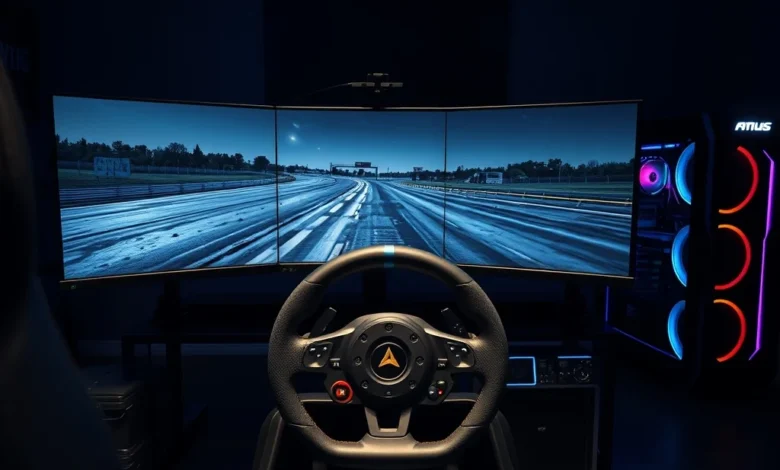
PC remains the gold standard for simulation racing. The ability to upgrade components allows players to achieve high frame rates and ultra-detailed graphics. This platform supports the most advanced peripherals, including triple-monitor setups and racing wheels with high torque motors.


Mobile platforms are catching up quickly. Thanks to advancements in smartphone processors, some realistic racing games can now run on Android devices. While the level of detail may be slightly lower, the core driving experience remains intact. This accessibility allows a broader audience to enjoy simulation racing without the need for expensive hardware.
🎨 Visual Fidelity and Environmental Detail
Visuals are the first thing players notice. A realistic racing game must look the part to sell the experience. Modern engines like Unreal Engine and proprietary in-house engines allow for stunning lighting, shadows, and reflections. These elements contribute to the overall atmosphere of the track.
Dynamic weather systems add another layer of realism. Rain changes the color of the asphalt and increases tire slip. Fog reduces visibility, requiring players to rely more on auditory cues and instinct. These environmental factors keep the gameplay fresh and unpredictable.
Vehicle modeling is also crucial. Cars must look like their real-world counterparts, from the paint job to the interior details. High-resolution textures ensure that every scratch and dent on the car body is visible. This level of detail enhances the sense of ownership and care for the vehicle.
🖥️ Lighting and Shadow Technology
Lighting plays a massive role in setting the mood of a race. Day and night cycles change the way the track looks, casting long shadows and altering contrast. Real-time lighting engines ensure that reflections on the car body are accurate to the surrounding environment.
Shadow mapping has improved significantly. Shadows are no longer static; they move and change shape as the sun moves across the sky. This adds depth to the scene and helps players judge distances and corners more accurately. The interplay of light and shadow is a key indicator of a high-quality simulation.
🔊 Sound Design and Audio Immersion
Sound is often overlooked in racing games, but it is a critical component of realism. The engine note, the sound of tires screeching, and the wind noise all contribute to the experience. High-quality audio engines use spatial audio to place sounds in a 3D space, allowing players to hear the car approaching from behind.
Voice acting and commentary add a layer of narrative to the race. Announcers reacting to overtakes or crashes make the event feel like a broadcasted sporting event. This immersion helps players feel like they are part of the racing world.
Interior sounds are equally important. The sound of shifting gears or the hum of the transmission helps players gauge the performance of the car. These details are often captured through recordings of real vehicles, ensuring authenticity.
🚀 Key Features of Top Realistic Titles
Several games have dominated the market by offering the best combination of these features. They have set the benchmark for what players expect from a simulation. These titles are not just games; they are digital driving schools.
They offer extensive customization options. Players can tune every aspect of the car, from suspension settings to gear ratios. This level of control allows for a personalized experience that matches the player’s driving style. It also extends the longevity of the game, as players experiment with different setups.
Multiplayer integration is another key feature. Racing against real people adds an element of unpredictability that AI cannot match. The skill level of opponents varies, making every race a unique challenge. Online leaderboards and seasonal events keep the community engaged and competitive.
- Advanced Physics Engine: Accurate tire and suspension modeling for realistic handling.
- Dynamic Weather Systems: Changing conditions that affect track grip and visibility.
- Force Feedback Support: Full compatibility with sim racing wheels and pedals.
- Extensive Car Roster: A wide variety of licensed vehicles from different eras.
- Realistic Track Scans: Laser-scanned circuits for precise layout accuracy.
📊 Performance Metrics and Technical Analysis
Understanding the technical requirements is essential for running these games smoothly. A game may look great, but if it runs poorly, the experience is ruined. Developers provide system requirements to help players determine if their hardware is capable.
Performance varies significantly between platforms. High-end PCs can run these games at 60 frames per second or higher with ray tracing enabled. Consoles offer a stable experience but are limited by their fixed hardware. Mobile devices offer the most challenge, often requiring graphical downgrades to maintain playable frame rates.
Optimization is key. Some games are better optimized than others, allowing them to run on lower-spec hardware. This is crucial for players who want to experience realism without upgrading their entire system. Developers are increasingly focusing on optimization to reach a wider audience.
| Component | Minimum Requirement | Recommended Requirement |
|---|---|---|
| Processor | Quad-Core 3.0 GHz | Hexa-Core 3.5 GHz |
| RAM | 8 GB | 16 GB |
| Graphics Card | DirectX 11 Compatible | DirectX 12 Compatible |
| Storage | 50 GB | 100 GB SSD |
The table above outlines the general hardware needed for a smooth experience. Note that specific titles may vary in their requirements. Always check the official documentation for the specific game you intend to play. Investing in a Solid State Drive (SSD) is highly recommended to reduce loading times.
✅ Advantages of Simulation Racing
Simulation racing offers a unique set of benefits compared to arcade games. It teaches real driving skills and techniques that can be applied on the track. The attention to detail fosters a deeper appreciation for automotive engineering.
It also builds a strong community. Players share tips, setups, and modifications. This collaborative spirit enhances the learning process and keeps the games alive. The community is often more engaged in sims than in other genres.
- Real Skill Transfer: Techniques learned translate to real-world driving awareness.
- Deep Customization: Total control over vehicle setup and tuning.
- Competitive Integrity: Fair play is prioritized through anti-cheat systems.
- Vocal Feedback: High-fidelity audio enhances immersion.
❌ Disadvantages to Consider
Despite the benefits, simulation racing is not for everyone. The learning curve can be steep and frustrating for newcomers. The hardware costs can also be prohibitive for those on a budget.
Some games have a low barrier to entry but lack depth. Players may find themselves limited by the game’s mechanics. Additionally, the focus on realism can sometimes make the game feel less fun or fast-paced.
- High Learning Curve: Requires time to master controls and physics.
- Hardware Costs: Wheels and pedals can be expensive.
- Technical Issues: Bugs can disrupt the experience on launch.
- Less Arcade Fun: May feel too serious for casual players.
🏁 Final Verdict and Conclusion
The pursuit of realism in car racing games has reached an all-time high. With advanced physics, stunning visuals, and immersive audio, these titles offer experiences that rival reality. Whether on PC or Android, players can find a simulation that suits their needs.
For those seeking the ultimate driving experience, investing in a simulation title is highly recommended. The depth of gameplay and community support ensures that these games will remain relevant for years. As technology continues to advance, we can expect even higher levels of fidelity in the future.
❓ Frequently Asked Questions
- What is the most realistic car racing game currently available?
- Do I need a racing wheel to play simulation games?
- Can I play these games on a laptop?
- Are there free realistic racing games?
- How much storage space do these games require?
- Do simulation games support online multiplayer?
- Is it possible to race on real-world tracks?
- How often are updates released for these games?
- Can I tune my cars in the game?
- Do these games work on Android tablets?