
In the rapidly evolving landscape of digital entertainment, few genres have captured the imagination of players quite like car racing. However, the traditional circuit racing format has long since been surpassed by the immersive freedom offered by open world environments. Racing games with open world maps represent a paradigm shift, allowing enthusiasts to not only compete but to explore, customize, and live within a living, breathing virtual environment. This genre blends the adrenaline of high-speed competition with the satisfaction of exploration, creating a unique experience that stands apart from any other automotive simulation. Whether you are a casual player looking to cruise through scenic routes or a competitive racer seeking the ultimate challenge, open world racing titles offer a depth of engagement that is unmatched in the industry.
The transition from linear tracks to vast, navigable continents has revolutionized how players interact with their vehicles. No longer are you confined to a pre-determined path where the scenery is static and the objective is singular. Instead, the map becomes a playground filled with secrets, challenges, and opportunities for personal expression. This article delves deep into the mechanics, design, and performance aspects of the best racing games featuring expansive open worlds. We will analyze how these titles handle physics, graphics, and multiplayer integration to create a cohesive and engaging experience. From the neon-lit streets of fictional cities to the sprawling deserts of real-world inspired landscapes, these games redefine the boundaries of virtual driving.
🎮 The Evolution of Open World Racing
The concept of open world racing is not entirely new, but it has only recently reached a level of technical sophistication that makes it truly viable. Early attempts often suffered from loading screens that broke immersion or physics engines that could not handle the diverse terrain types required for a seamless experience. Modern titles have overcome these hurdles through advanced streaming technology and robust optimization. Developers now utilize sophisticated algorithms to load assets in real-time, ensuring that players can drive from a dense urban center to a remote wilderness without interruption. This technological leap has allowed for a level of detail in the environment that was previously impossible, with dynamic weather systems and day-night cycles adding layers of complexity to the driving experience.
Furthermore, the narrative integration in these games has improved significantly. While early open world racers focused purely on the driving, contemporary titles weave a compelling story into the fabric of the world. Players often take on the role of an underground racer or a professional driver building a reputation, which gives purpose to the exploration. The freedom to choose when to participate in a race or when to simply enjoy the scenery adds a layer of agency that enhances player retention. This evolution marks a significant milestone in gaming history, transforming the genre from a simple test of reflexes into a comprehensive lifestyle simulation.
🌍 Exploring the Worlds
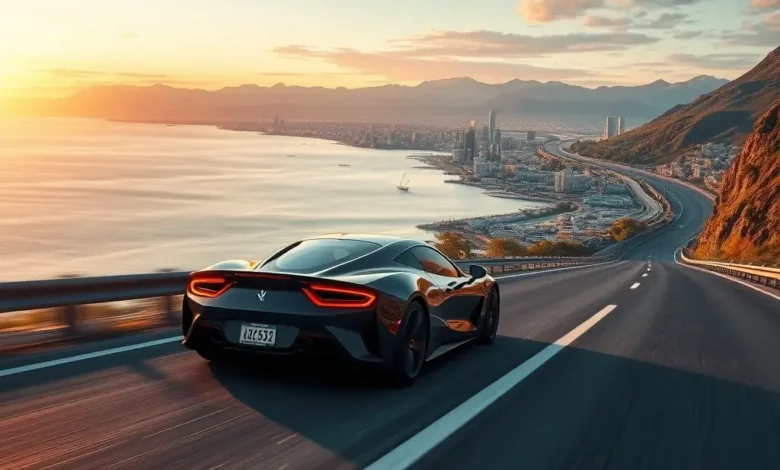
The map design in open world racing games is arguably the most critical component of the experience. A well-crafted world must offer variety in its geography to keep the gameplay engaging over hundreds of hours. Successful titles typically include a mix of urban environments, highways, off-road trails, and coastal routes. Each environment often comes with unique driving characteristics that require the player to adapt their style. For instance, driving on a smooth asphalt highway requires precision and high top speeds, while navigating a muddy off-road trail demands torque management and careful suspension control.
One of the most exciting aspects of these worlds is the presence of secrets and easter eggs. Developers frequently hide rare vehicle skins, achievement bonuses, or unique track layouts in obscure locations. This encourages players to engage with the environment beyond the main objectives, fostering a sense of discovery. The map is not just a backdrop for the action but a character in itself, with its own lore and history that can be uncovered through in-game documentation or environmental storytelling. This depth ensures that the world feels alive and worth returning to, even after the main storyline has been completed.
🏎️ Core Gameplay Mechanics
While the environment is vast, the core gameplay loop remains centered on the driving experience. The physics engine is the heart of any racing game, dictating how the vehicle handles under various conditions. In open world titles, the physics must balance realism with accessibility. Too realistic, and the game becomes a simulator that alienates casual players. Too arcade-like, and it loses the prestige that serious racing fans seek. The best games find a middle ground, allowing for drift mechanics and nitrous boosts while maintaining a sense of weight and momentum that feels authentic.
- Vehicle Customization: The ability to modify every aspect of the car, from engine tuning to cosmetic parts, is essential.
- AI Traffic Behavior: Realistic traffic patterns add challenge and immersion to the open world driving.
- Dynamic Weather: Rain, snow, and fog alter traction and visibility, requiring adaptive driving strategies.
- Damage Systems: Visual and performance-based damage adds consequence to collisions and crashes.
⚔️ Combat and Race Systems
In many modern open world racers, the concept of racing has expanded to include combat mechanics. This introduces a tactical element where players must balance speed with the ability to disable opponents. Weapons or traps can be deployed to hinder rivals, adding a layer of unpredictability to every race. This mechanic is particularly popular in games that lean towards an arcade style, where the goal is entertainment over strict simulation. It creates memorable moments where a lead can be lost in seconds due to a well-placed obstacle, keeping the competition intense and unpredictable.
The difficulty balance in these games is crucial for player retention. The game must scale challenges appropriately so that players feel a sense of progression. Early races should be manageable, allowing players to learn the controls and the car handling. As the player advances, the AI opponents should become more aggressive and faster, pushing the player to refine their skills. This progression curve ensures that the game remains challenging without becoming frustratingly difficult, maintaining a healthy balance of fun and skill development.
🖥️ Graphics and Performance
The visual fidelity of open world racing games is often the primary selling point. With the power of modern gaming hardware, developers can render stunning environments with photorealistic lighting and texture quality. Ray tracing technology has become a standard feature in high-end versions, casting realistic reflections on wet roads and chrome parts. Shadows are dynamic and react to the time of day, creating a dynamic atmosphere that changes throughout the game. These visual enhancements are not just for show; they provide critical information to the player about the environment, such as detecting ice patches or avoiding obstacles in low-light conditions.
🔊 Audio and Atmosphere
Sound design plays an equally important role in immersion. The engine roar, the screech of tires, and the wind noise all contribute to the feeling of speed. High-quality audio engines allow for positional sound, meaning you can hear cars approaching from behind or the sound of the environment changing as you drive through different zones. The music soundtrack is also curated to match the energy of the gameplay, often featuring licensed tracks that appeal to a wide audience and help set the tone for the driving sessions.
📊 Performance Metrics
To understand how these games perform across different platforms, we must look at the technical benchmarks. The following table summarizes the typical performance expectations for major titles in this genre across PC and mobile devices.


| Platform | Resolution | Average FPS | Stability |
|---|---|---|---|
| PC High-End | 4K | 60+ FPS | Excellent |
| PC Mid-Range | 1080p | 60 FPS | Good |
| Android High-End | 1080p | 30-40 FPS | Moderate |
| Android Mid-Range | 720p | 25-30 FPS | Fair |
As shown in the table, PC platforms offer significantly higher performance stability and resolution options compared to mobile devices. This is due to the superior cooling and processing power available on desktop hardware. However, mobile developers have made impressive strides in optimization, allowing flagship smartphones to run these titles with acceptable frame rates. For competitive players, the PC platform remains the preferred choice for precision and consistency, while mobile offers convenience and accessibility for casual play.
📱 Mobile vs PC Experience
The choice between playing on PC or Android often depends on the player’s priorities. PC gaming offers the highest fidelity, with support for ultrawide monitors, triple-A graphics settings, and modding capabilities. This makes it ideal for players who want the most realistic experience possible. However, it requires a significant financial investment in hardware. On the other hand, Android racing games are designed for portability. They allow players to experience open world driving on the go, though typically with compromised graphics and controls.
Both platforms have their merits, and many players utilize both depending on their situation. The cross-platform functionality in some titles allows players to transfer progress or compete against friends regardless of their device. This connectivity is vital for the longevity of the game, ensuring that the community remains active across different hardware ecosystems.
✅ Pros and ❌ Cons
Every game genre has its strengths and weaknesses, and open world racing is no exception. Understanding these factors helps players decide if a specific title is worth their time and money. The following analysis breaks down the common advantages and disadvantages found in this genre.
✅ Advantages
The primary benefit of open world racing is the freedom it offers. Players are not restricted by the linear nature of traditional track races. They can choose their own pace, explore the map at their leisure, and engage in activities that interest them. This freedom leads to higher player satisfaction and longer engagement times. The ability to customize vehicles to a high degree also adds a layer of personalization that makes the game feel unique to each player.
- Freedom of Movement: Drive anywhere, anytime without loading barriers.
- Rich Customization: Extensive tuning and visual modification options.
- Immersion: Engaging worlds that feel alive and reactive.
- Multiplayer Variety: Diverse modes including races, stunts, and social hubs.
❌ Disadvantages
Despite the strengths, there are common issues that plague this genre. The most significant challenge is the optimization required to run these massive worlds smoothly. Many players report stuttering or frame rate drops when driving at high speeds in dense areas. Additionally, the sheer size of the map can sometimes lead to a feeling of emptiness, where there are too many miles to cover with too little content in between. This can result in a repetitive loop of driving from point A to point B without meaningful events occurring.
- Performance Issues: Struggles on lower-end hardware due to large asset loads.
- Repetitive Content: Side missions can become repetitive after extended play.
- Technical Bugs: Occasional glitches with physics or vehicle spawning.
- Pay-to-Win Elements: Some games lock best cars behind paywalls.
🏁 Final Verdict
Racing games with open world maps represent the pinnacle of automotive gaming. They combine the thrill of speed with the joy of exploration, creating an experience that is both challenging and relaxing. While technical issues and optimization concerns exist, the overall quality of the best titles in this genre is exceptional. For players seeking a game that offers endless hours of entertainment, deep customization, and a living world to inhabit, these titles are a must-play. Whether you choose the high-fidelity PC experience or the convenient mobile version, the core appeal remains the same: the freedom to drive your dream car wherever you please.
Ultimately, the decision to play these games depends on your hardware and preferences. If you prioritize graphical fidelity and competitive performance, PC is the clear winner. If you value portability and ease of access, mobile platforms offer a surprisingly robust experience. Regardless of the platform, the open world racing genre continues to evolve, pushing the boundaries of what is possible in digital entertainment. We recommend trying out multiple titles to find the one that best suits your driving style and personal taste.
❓ Frequently Asked Questions
Here are the most common questions asked by players regarding open world racing games, answered in detail to help you get the most out of your experience.
- Do open world racing games require an internet connection? While many titles allow for single-player offline play, features like multiplayer, cloud saves, and live events usually require an active internet connection. Some games offer a robust offline mode, but full functionality is best experienced online.
- Can I play these games on a low-end PC? It depends on the specific game. Some titles are optimized for lower specs, but high-end open world racers typically require a dedicated graphics card and at least 8GB of RAM for a smooth experience.
- Are there controllers supported on mobile versions? Yes, most modern racing games on Android and iOS support Bluetooth controllers, including Xbox and PlayStation controllers, which significantly improve the driving feel.
- Is the game free to play? Many open world racing titles follow a free-to-play model supported by in-app purchases. Others are premium games with a one-time cost. Always check the pricing model before downloading.
- Can I transfer my progress between PC and Mobile? Some publishers offer cross-progression features, allowing you to sync your garage and level across platforms. However, this is not universal and depends on the specific game’s infrastructure.
- Do these games have realistic damage modeling? Some simulation-focused titles feature detailed damage that affects handling. Arcade-style games often focus on visual damage only, with no performance impact on the vehicle.
- Is voice chat available in multiplayer modes? Most competitive multiplayer modes include voice chat to facilitate team coordination. However, some games may have chat filters or require a subscription service for voice features.
- How often are new cars added to the game? Live service games typically add new vehicles and maps through seasonal updates. The frequency ranges from monthly to quarterly, depending on the developer’s roadmap.
- Can I create my own tracks? Some games feature robust level editors that allow players to design and share their own tracks. This feature is more common in PC versions due to the complexity of track creation tools.
- Are there any pay-to-win mechanics? In free-to-play titles, it is common for the fastest cars to be locked behind paywalls or difficult grinding. Premium titles generally ensure all cars are accessible through gameplay progression.
In conclusion, the world of open world racing is vast and full of opportunities for both casual and hardcore gamers. By understanding the mechanics, hardware requirements, and features discussed in this guide, you can make an informed decision about which title is right for you. The future of racing games looks bright, with technologies like virtual reality and cloud gaming promising even more immersive experiences in the coming years. Until then, the open road awaits, ready to be explored by players around the globe.