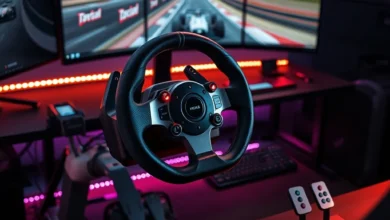


The automotive enthusiast community has long sought the perfect blend of speed, freedom, and mechanical mastery. In recent years, the sub-genre of open world racing games has exploded in popularity, offering players vast landscapes to explore rather than confined tracks. These titles redefine the driving experience by merging high-octane competition with the freedom of exploration. Whether you are cruising through sun-drenched coastal highways or navigating treacherous mountain passes under stormy skies, the best open world racing games provide an unparalleled sense of agency.
This comprehensive analysis delves into the intricacies of what makes a racing game stand out in this crowded market. We examine the nuances of vehicle physics, the depth of customization options, and the scale of the environments available to players. From realistic simulations to arcade-style thrills, the variety is immense, catering to every type of driver.
🏁 Understanding the Open World Racing Genre
Open world racing games differ significantly from traditional circuit racing titles. While classic racing games focus on precision and lap times on closed circuits, open world titles emphasize the journey itself. Players are given a sandbox environment where they can drive freely without strict lane markers or barriers. This freedom allows for spontaneous races, photo opportunities, and discovery events that keep the gameplay fresh.
The genre has evolved to include dynamic weather systems that change how vehicles handle. Rain-slicked roads offer less traction, requiring drivers to adjust their throttle inputs and braking points accordingly. Snow and mud add another layer of complexity, turning high-performance sports cars into powerful but slippery machines. These environmental factors test the adaptability of both the player and the game engine.
- ✅ Sandbox Freedom: Explore maps without restrictions
- 🎯 Dynamic Weather: Real-time changes affecting handling
- ⚠️ Map Size: Larger maps mean longer travel times
🚗 Top Contenders in the Market
Several titles dominate the landscape of open world racing. Each brings unique strengths to the table, whether through superior physics, stunning visuals, or robust online communities. Identifying the right game depends on what aspect of driving appeals most to the individual player.
The Forza Horizon series is often cited as the gold standard for this genre. It combines the technical prowess of the mainline simulation series with the accessibility and freedom of an open world. Players can participate in festivals, engage in street racing, and modify their cars extensively. The attention to detail in the vehicle models ensures that every car feels distinct on the road.
Test Drive Unlimited Solar Crown represents another major entry into the scene, focusing on lifestyle and social interaction alongside racing. Players can own properties, manage crews, and travel across massive islands. The emphasis here is on living the life of a professional racer rather than just competing in timed laps.
Grand Theft Auto V remains a phenomenon in this space due to its sheer scale. Although primarily an action-adventure game, its driving physics and vast city environments rival dedicated racing sims. The modding community continues to push the boundaries, creating entirely new racing scenarios within the existing framework.
🔧 Gameplay Mechanics and Systems
The core loop of any successful racing game relies on satisfying controls and meaningful progression. In open world settings, the progression system often ties into unlocking new areas or vehicles. As players earn credits through races and challenges, they gain access to better equipment and modifications.
⚙️ Physics and Handling Models
Physics engines determine how a car reacts to driver input. Some games lean towards arcade physics where cars feel floaty and forgiving, allowing for easy drifts and stunts. Others strive for simulation accuracy, where tire grip, suspension travel, and aerodynamics play critical roles in cornering speeds.
A balanced approach is often preferred by the broader audience. This means the game acknowledges the weight of the vehicle and the friction of the tires but does not punish minor mistakes too harshly. This balance keeps casual players engaged while still offering depth for enthusiasts.
- ✅ Tire Grip Modeling: Affects cornering stability
- 🎯 Damage Systems: Visual and performance impact
- ⚠️ Control Responsiveness: Input lag can ruin immersion
🌍 Map Design and Exploration
The environment is the stage upon which the racing drama unfolds. A well-designed map encourages exploration through hidden shortcuts, scenic viewpoints, and collectibles scattered throughout the terrain. Developers must balance density with traversal time. If the map is too large, getting from point A to point B becomes tedious.
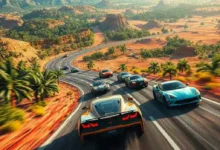

Modern maps utilize procedural generation and hand-crafted assets to create variety. Urban areas feature traffic patterns that simulate real cities, while rural zones offer off-road trails and dirt paths. This diversity ensures that the driving experience does not become monotonous over long play sessions.
- 1) Map Design: Balanced mix of city and countryside
- 2) Exploration Freedom: Ability to leave main roads
- 3) Mission Structure: Varied objectives beyond racing
- 4) Replay Value: Hidden content encourages return visits
🎨 Graphics and Audio Quality
Visual fidelity plays a crucial role in immersion. High-definition textures, realistic lighting, and particle effects contribute to the belief that the virtual world is tangible. Ray tracing technology has become a staple in newer releases, providing accurate reflections on wet surfaces and metallic paintwork.
Audio quality is equally important. The sound of the engine should match the visual model. A roaring V8 engine should sound aggressive, while a quiet electric motor should hum with efficiency. Dynamic audio mixing adjusts volume levels based on proximity to other vehicles and environmental acoustics.
- ✅ Game Engine: Unreal or proprietary custom engines
- 🎯 Texture Quality: 4K support available on high-end rigs
- ⚠️ Battery Consumption: High graphics drain mobile power quickly
📊 Technical Performance and Requirements
To run these graphically demanding titles smoothly, players need capable hardware. Performance varies significantly between platforms, with PC offering the highest potential for optimization. Console versions provide a stable experience but may lack the flexibility of PC tweaking.
| Component | Minimum Requirement | Recommended Requirement |
|---|---|---|
| CPU | Intel Core i5-2500K | Intel Core i7-9700K |
| GPU | NVIDIA GTX 1050 Ti | NVIDIA RTX 4070 |
| RAM | 8 GB | 16 GB |
| Storage | 100 GB SSD | 100 GB NVMe SSD |
Analyzing these requirements reveals that storage speed is becoming as critical as processing power. Solid State Drives reduce loading times significantly, preventing interruptions during gameplay. Integrated graphics solutions generally struggle to maintain playable frame rates in these demanding environments.
📱 Mobile Platform Considerations
Not all racing fans have access to high-end gaming PCs. Android devices have seen significant improvements in rendering capabilities. Developers optimize settings specifically for touchscreens, adjusting control layouts and reducing background processes to maintain battery life.
While mobile versions may lack the graphical fidelity of their console counterparts, they offer portability. Cloud gaming services further bridge the gap, allowing users to stream high-quality versions to lower-spec devices. This accessibility expands the market reach considerably.
- ✅ Device Compatibility: Checks against mid-range phones
- 🎯 Touch Controls: Customizable button placement
- ⚠️ Heat Management: Extended play causes throttling
✅ Advantages of Open World Racing
The primary benefit of this genre is the freedom it offers. Players are not bound by a script to follow a specific path. They can choose their own pace and style of racing. This autonomy creates memorable moments that scripted campaigns often fail to replicate.
- ✅ Immersion: Deep engagement with the world
- 🎯 Customization: Extensive tuning options
- 🎯 Community: Shared creations and mods
❌ Disadvantages and Limitations
No game is without flaws. Open world titles often suffer from technical bugs that disrupt the experience. Pop-in textures or physics glitches can break immersion. Additionally, the sheer size of some maps can lead to repetitive driving sequences.
- ❌ Technical Issues: Occasional crashes or bugs
- ❌ Optimization: Heavy load on older hardware
- ⚠️ Repetitive Tasks: Grind-heavy progression loops
🏁 Final Verdict and Conclusion
The current generation of open world racing games sets a high bar for quality and engagement. By combining realistic physics with expansive maps, developers have created worlds worth exploring. Whether you prefer drifting on asphalt or tearing up dirt trails, there is a title that suits your preferences.
For those seeking the best experience, we recommend prioritizing titles with active development support. Regular updates ensure that bugs are fixed and new content keeps the game fresh. Ultimately, the choice depends on your hardware capabilities and personal taste in driving dynamics.
❓ Frequently Asked Questions
- Do these games require an internet connection to play?
- Is controller support available on PC versions?
- Can I save my progress without finishing missions?
- Are there microtransactions in these games?
- How much storage space do these games occupy?
- Does the game support cross-platform multiplayer?
- Can I customize the camera angles?
- Are there tutorials for beginners?
- Does the game work on Linux operating systems?
- Is voice chat enabled during multiplayer sessions?
Most open world racing games allow offline play for single-player modes. However, some features like daily challenges or multiplayer matchmaking require a persistent internet connection to function correctly.
Yes, nearly all modern racing games support Xbox or PlayStation controllers on PC. This provides a more authentic driving experience compared to keyboard and mouse inputs.
Automatic saving is common in open world titles. You can stop playing at any time and resume later without losing your current location or vehicle upgrades.
Many titles include optional microtransactions for cosmetic items or currency boosts. Single-player campaigns typically remain unaffected by pay-to-win mechanics.
Expect installations to range from 80 GB to 150 GB depending on the specific title and included content packs. High-resolution texture packs can increase this requirement further.
Cross-play functionality varies by developer. Some games allow PC and console players to compete together, while others restrict matches to specific ecosystems.
Advanced customization options usually allow players to adjust camera height, distance, and rotation. This helps find the optimal view for different driving styles.
Yes, built-in training modes help new players understand the controls and physics. Completing these tutorials is recommended before jumping into competitive races.
Native Linux support is limited. Most games rely on compatibility layers like Proton to run, which may introduce performance penalties or compatibility issues.
In-game voice chat is usually supported for squad communication. External applications like Discord are also commonly used for team coordination.