

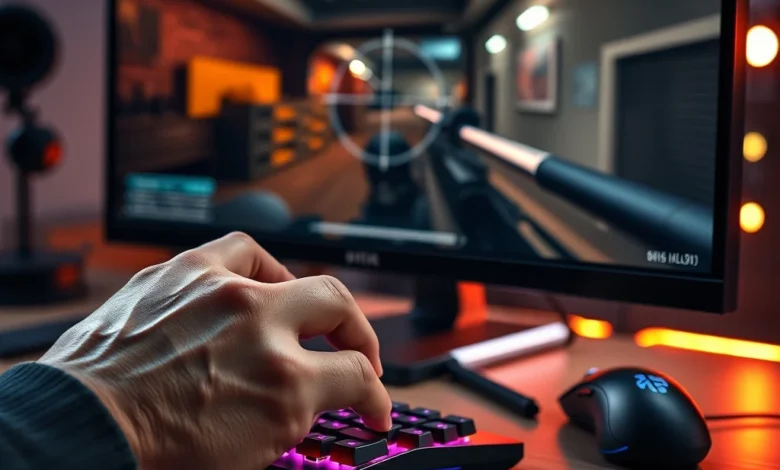
Mastering recoil control stands as one of the most critical skills for players diving into modern action shooters. Whether you are competing in high-stakes tactical environments or dominating casual firefights, understanding how weapons kick, climb, and drift directly impacts your survival rate and overall effectiveness. This guide breaks down the fundamental mechanics, platform-specific adjustments, and progressive training methods that separate average aimers from elite marksmen. We will explore how weapon systems behave across different genres, analyze hardware dependencies, and provide actionable routines to build lasting muscle memory. By the end of this deep dive, you will possess a complete framework for taming unpredictable spray patterns and maintaining precision under pressure.
- Action shooters demand consistent recoil management for competitive success
- Weapon physics vary significantly based on engine design and update patches
- Platform choice dictates input latency and control responsiveness
- Structured training routines accelerate muscle memory development
- Optimized settings reduce input lag and improve tracking stability
🎮 Understanding the Mechanics of Recoil in Action Games
⚔️ Core Systems and Control Dynamics
Recoil is not merely a visual effect; it is a calculated mathematical simulation embedded within game engines to mimic real-world firearm dynamics while balancing gameplay accessibility. When a weapon fires, the engine applies vertical force to push the crosshair upward, followed by horizontal sway that often follows predictable patterns. Modern action titles have refined these systems to reward players who learn spray trajectories rather than relying solely on tap-fire accuracy. The challenge lies in counteracting these forces through precise input reversal, commonly known as drag-down or counter-pulling techniques. As players progress, they must adapt to shifting weapon stats introduced through seasonal updates, which frequently alter base recoil values, recovery frames, and movement penalties during sustained fire.
The physics system governing recoil interacts heavily with player movement, sprint-to-fire delays, and stance modifiers. Standing still typically yields tighter clusters, while moving introduces lateral drift that compounds vertical climb. Difficulty balance remains a constant developer focus, ensuring that fully automatic weapons do not dominate melee engagements or rocket-based combat. Skill progression revolves around recognizing pattern breakpoints, managing ammo consumption, and transitioning seamlessly between burst firing and sustained suppression. Players who internalize these dynamics gain a decisive advantage in close-quarters engagements where reaction speed and trajectory prediction matter most.
- ✅ Vertical climb requires steady downward mouse or thumbstick input
- ✅ Horizontal sway follows symmetrical left-right oscillation patterns
- ✅ Movement penalty increases lateral drift during active strafes
- ✅ Recovery frames dictate pause duration after releasing trigger
- ✅ Pattern memorization reduces reliance on reactive correction
🌍 Platform Considerations: PC vs Mobile
Platform architecture fundamentally changes how recoil control translates to physical input. PC gamers benefit from high polling rate mice, mechanical keyboards with rapid actuation, and display refresh rates exceeding hundred twenty hertz. These components minimize input delay, allowing pixel-perfect adjustments when correcting sudden spray spikes. Conversely, mobile players rely on touchscreens with variable friction coefficients and software-driven acceleration curves. Thumbstick deadzones, gyro aiming toggles, and auto-aim assist create distinct handling profiles that require separate training methodologies. Console controllers sit between these extremes, offering analog curvature but suffering from inherent trigger pull resistance and sensor smoothing algorithms.
Understanding platform limitations prevents frustration during early learning phases. PC users can fine-tune sensitivity sliders to achieve zero acceleration curves, ensuring linear correlation between hand movement and on-screen rotation. Mobile players must optimize touch grip positioning, enable raw input modes, and disable unnecessary screen smoothing to preserve tactile feedback. Both platforms demand consistent practice, but the translation layer differs drastically. Adapting to these variations early accelerates mastery and prevents bad habits from solidifying.
🔥 Step-by-Step Techniques for Perfect Recoil Control
🖱️ Mouse and Keyboard Mastery
Precision dragging forms the foundation of desktop recoil management. Players should begin with moderate sensitivity settings, typically ranging from eight hundred to one thousand six hundred dots per inch combined with in-game multipliers that yield effective resolution near six thousand. Lower sensitivity provides finer granular control, reducing overshoot errors during steep climb corrections. The technique involves pressing the fire button while simultaneously pulling the mouse downward in smooth arcs that mirror the weapon’s projected trajectory. Over time, players transition from conscious tracking to subconscious muscle memory, enabling instant correction without visual confirmation.
Burst firing serves as a crucial intermediate strategy for players struggling with sustained spray control. Firing three to five round bursts allows the weapon to reset its internal recoil timer, restoring tight grouping before the next engagement cycle. This method proves highly effective against medium-range targets where precision outweighs volume of fire. Combining burst rhythms with peek-shooting mechanics maximizes damage output while minimizing exposure time. Players who integrate burst timing with positional awareness consistently outperform those reliant on continuous trigger holds.
📱 Touchscreen and Controller Adaptation
Mobile recoil control relies heavily on thumbstick curvature programming and gyro assistance. Players should configure dual-thumb layouts to isolate movement and aiming inputs, preventing accidental drift during intense firefights. Enabling gyroscope functionality transforms device tilt into micro-adjustments, allowing subtle upward compensation without lifting thumbs off the screen. This hybrid approach bridges the gap between analog imprecision and digital rigidity. Practice ranges become essential testing grounds for mapping gyro sensitivity to individual weapon behaviors.
Controller users must navigate trigger travel distance and analog shoulder tension. Many action titles implement adaptive triggers that resist backward pressure during heavy weapon fire, simulating mechanical resistance. Players can bypass this by adjusting deadzone thresholds and enabling rapid-fire toggle switches. Thumbstick deadzones should remain minimal to prevent input hesitation, while acceleration curves stay disabled to maintain linear response. Consistent grip pressure and wrist stabilization reduce fatigue during extended sessions, preserving accuracy until the final rounds.
🎨 Visual Feedback and Audio Cues
👁️ Screen Shake and Camera Behavior
Camera shake intensity directly influences perception of recoil magnitude. High-amplitude shaking obscures crosshair alignment, forcing players to rely on auditory and haptic feedback rather than visual confirmation. Reducing camera bob and disabling motion blur during combat sequences preserves clarity, allowing faster pattern recognition. Some titles offer toggleable recoil dampening options that limit vertical excursion while preserving horizontal sway. Experimenting with these settings helps identify personal comfort thresholds without compromising competitive fairness.
Environmental lighting and particle effects also mask trajectory data. Muzzle flashes, dust clouds, and blood splatter create visual noise that distracts from crosshair position. Prioritizing high-contrast color palettes and disabling excessive post-processing effects sharpens focus on core aiming elements. Players who train in stripped-down graphical modes often develop faster reaction times, later transferring those gains to visually rich environments.
🔊 Sound Design Impact on Timing
Audio cues provide rhythmic markers for fire cadence. Each gunshot delivers distinct acoustic signatures indicating chamber status, overheating warnings, or reload prompts. Experienced players synchronize breathing and trigger pulls with these sounds, creating internal metronomes that stabilize shooting rhythm. Suppressors alter frequency profiles, requiring adjusted correction speeds due to dampened feedback loops. Learning to associate pitch shifts with recoil escalation enables proactive rather than reactive adjustment.


🚀 Key Features and Training Methods
Structured progression transforms theoretical knowledge into executable skill. Dedicated aim trainers offer customizable recoil maps that replicate exact weapon behaviors from popular action titles. These tools measure correction accuracy, track consistency over time, and generate heatmaps highlighting weak correction zones. Custom deathmatch servers provide live-pressure testing grounds where human opponents disrupt predicted patterns. Integrating both simulated and live environments ensures adaptable mastery.
- 🎯 Daily ten-minute spray map drills establish baseline correction speed
- 🎯 Randomized weapon rotations prevent pattern dependency
- 🎯 Voice chat coordination improves team-wide suppression tactics
- 🎯 Replay analysis identifies missed correction frames and overshoot errors
- 🎯 Progressive difficulty scaling maintains optimal challenge threshold
📊 Performance Metrics and Tracking Progress
| Metric Category | Baseline Average | Target Benchmark | Improvement Indicator |
|---|---|---|---|
| Correction Accuracy | Fifty percent | Ninety percent | Reduced crosshair drift |
| Spray Stability | Three second hold | Seven second hold | Consistent group formation |
| Reaction Delay | One hundred fifty milliseconds | Seventy-five milliseconds | Faster trajectory adaptation |
| Burst Precision | Four point two shots | Five point eight shots | Higher headshot conversion |
Analyzing these metrics reveals tangible growth beyond subjective feeling. Correction accuracy measures how effectively inputs align with projected spray paths, directly impacting kill efficiency. Spray stability tracks sustained fire duration before losing target lock, indicating endurance under pressure. Reaction delay quantifies processing speed between initial kick detection and corrective movement, a critical factor in close-range exchanges. Burst precision evaluates grouped shot density, reflecting fine motor control refinement. Players who log weekly benchmarks consistently outpace those relying on intuition alone, transforming vague improvement goals into measurable milestones.
✅ Advantages of Mastering Recoil
Developing reliable recoil management unlocks unprecedented freedom in engagement selection. Players stop avoiding heavy automatic weapons and embrace them as primary tools for area denial and suppression. Confidence surges when facing opponents who rely on erratic movement, as controlled fire neutralizes dodging attempts. Team compositions benefit from dedicated suppressors who pin enemies behind cover, enabling flanking maneuvers and objective pushes. Competitive ranks naturally elevate as kill-death ratios improve and tournament placements increase.
- ✅ Dominates mid-range corridors with sustained suppression
- ✅ Neutralizes evasive maneuvers through predictable trajectory locking
- ✅ Enables seamless weapon switching without accuracy penalty
- ✅ Boosts team morale through consistent pressure application
- ✅ Accelerates rank progression via higher elimination efficiency
❌ Common Mistakes and Drawbacks
Overcorrecting represents the most frequent error among beginners. Players yank controls downward too aggressively, causing crosshair to dip below target and miss vital hitboxes entirely. This stems from misinterpreting linear spray patterns as exponential climbs. Another prevalent issue involves ignoring movement penalties, assuming static positioning guarantees perfect clusters. In reality, tactical repositioning while firing introduces lateral drift that ruins grouping. Hardware dependency also creates false expectations; premium monitors and mice enhance precision but cannot compensate for flawed technique. Finally, neglecting rest periods leads to repetitive strain injuries, degrading performance over time.
- ⚠️ Aggressive dragging causes severe undershoot and missed shots
- ⚠️ Ignoring strafing penalties destroys vertical consistency
- ⚠️ Relying on expensive gear masks underlying mechanical flaws
- ⚠️ Skipping warmup routines increases injury risk and fatigue
- ⚠️ Fixating on single weapons limits adaptive combat flexibility
💻 Technical Settings and Optimization
🖥️ In-Game Graphics and Sensitivity Configurations
Input optimization begins with eliminating software-induced latency. Disabling vertical sync prevents frame pacing interruptions that stall cursor response. Lowering shadow quality and volumetric fog reduces GPU load, stabilizing frame times and minimizing stutter during intense firefights. Windows mouse acceleration must remain disabled to preserve raw pointer translation. Pointer speed should stay at native twelve steps, ensuring unaltered sensor data reaches the game engine.
| Component | Minimum Requirement | Recommended Configuration |
|---|---|---|
| Display Refresh Rate | Sixty hertz | One hundred forty-four hertz or higher |
| In-Game Sensitivity | Two point zero multiplier | Point eight to one point two multiplier |
| Mouse Polling Rate | One thousand hertz | Two thousand four hundred hertz |
| Graphics Preset | Medium | Low or Custom Balanced |
These configurations collectively reduce input-to-photon delay, granting players faster visual feedback loops. Higher refresh rates smooth trajectory visualization, making subtle spray deviations easier to track. Optimized presets maintain stable frame delivery, preventing frame drops that interrupt correction momentum. Players who standardize these settings across multiple titles experience smoother transitions and reduced cognitive load during competitive matches.
🏁 Final Verdict and Conclusion
Mastering recoil control demands patience, deliberate practice, and systematic troubleshooting. There exists no shortcut to replacing thousands of corrected sprays with flawless accuracy. Players who commit to structured training routines, monitor their progress through measurable metrics, and adjust settings to eliminate latency barriers will inevitably see dramatic improvements in combat effectiveness. The journey transforms chaotic gunfire into predictable, controllable patterns, elevating everyday engagements into calculated executions.
Whether you compete professionally or enjoy casual sessions with friends, applying these principles ensures consistent growth and deeper immersion. Start with foundational drills, gradually increase complexity, and never neglect rest intervals to preserve physical health. Visit dedicated training communities, share replay analyses, and stay updated on weapon balancing patches. Take control of your aim today, and watch your performance soar across every battlefield.
❓ Frequently Asked Questions
- Does mastering recoil control work across all shooting genres? Yes, the core principles apply universally, though pattern shapes and correction speeds vary significantly between tactical shooters, arena FPS titles, and battle royale formats. Adjust your training maps to match your preferred genre.
- Can I use aim trainers to simulate exact in-game weapon behavior? Most reputable aim trainers allow custom spray map uploads and sensitivity matching. However, engine-specific quirks and movement penalties may differ slightly, so always verify results in actual gameplay.
- Is hardware expensive equipment strictly necessary for recoil mastery? While premium peripherals enhance precision and reduce latency, technique remains the deciding factor. Players on modest setups regularly outperform high-end users by prioritizing consistent practice and optimized settings over gear prestige.
- How long does it take to develop reliable muscle memory? Typical progression spans three to six months of daily thirty-minute sessions. Individual variance depends on prior aiming experience, neurological adaptability, and training consistency. Patience yields permanent results.
- Should I disable all visual effects to improve tracking? Completely stripping visuals reduces immersion and may hinder spatial awareness. Instead, selectively disable motion blur, excessive bloom, and high-intensity particle effects that obscure crosshair alignment.
- Does controller gyro aim outperform mouse dragging? Gyro assists fine adjustments but lacks the raw range and speed of mouse inputs. Hybrid setups combining thumbstick navigation with gyro micro-corrections often deliver the best compromise for console and mobile players.
- What causes sudden spray pattern shifts during matches? Engine updates, weapon balancing patches, and random seed variations occasionally alter recoil algorithms. Additionally, overheating mechanics or ammo degradation systems may introduce temporary trajectory changes.
- How do I prevent finger and wrist strain during extended practice? Maintain neutral joint positioning, utilize ergonomic grips, incorporate stretching routines between sessions, and cap daily practice at ninety minutes. Hydration and proper posture further reduce repetitive stress risks.