
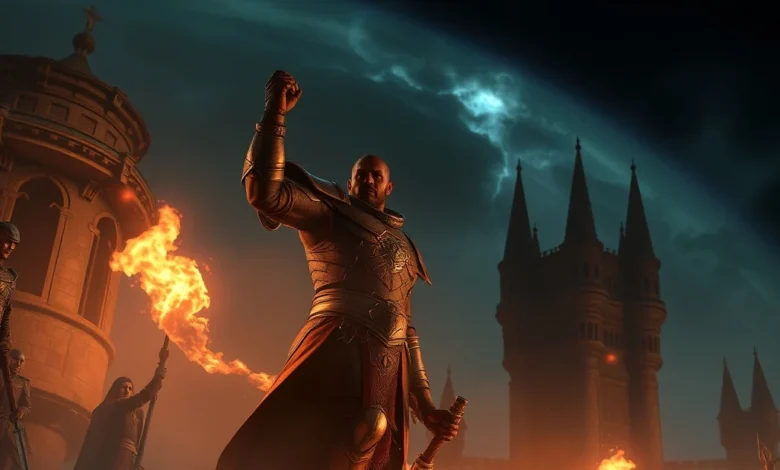
The release of any highly anticipated role-playing title brings immense pressure on developers to deliver a polished experience across diverse hardware configurations. Baldur’s Gate 3 arrived with massive expectations, promising a deeply immersive tabletop-inspired adventure built on modern rendering pipelines and complex simulation systems. Analyzing the performance of Baldur’s Gate 3 on launch day reveals a landscape filled with both groundbreaking technical achievements and notable optimization hurdles. Players experienced immediate immersion, yet also encountered frame pacing stutters, memory spikes, and CPU bottlenecks that varied significantly depending on system architecture. This comprehensive breakdown examines how the title performs under real-world conditions, evaluates component stress distribution, and provides actionable insights for achieving stable gameplay without sacrificing visual fidelity.
- Genre: CRPG / Tactical Action / Co-op Multiplayer
- Release Window: Late 2023 Initial Launch Phase
- Developer & Publisher: Larian Studios
- Target Audience: RPG enthusiasts, tactical combat fans, co-op players
- Market Impact: Redefined narrative-driven CRPG standards and benchmarked next-gen PC performance
🚀 Article Overview
Baldur’s Gate 3 quickly established itself as a landmark title in the modern gaming industry, blending deep character customization, branching narrative paths, and turn-based tactical combat into a seamless package. The initial launch window attracted millions of players eager to explore the Forgotten Realms, resulting in unprecedented concurrent player counts and widespread critical acclaim. Despite its polished design philosophy, the sheer scale of interactive systems placed heavy demands on central processing units, graphics cards, and system memory. Understanding these technical dynamics is essential for gamers aiming to optimize their setup before diving into long campaign sessions. This analysis covers hardware utilization patterns, graphical scaling behavior, and common performance pitfalls observed during the early access transition and official debut phase.
💻 Performance and Technical Analysis
🖥️ PC System Requirements and Launch Benchmarks
The foundational requirement for running Baldur’s Gate 3 smoothly lies in meeting or exceeding the officially published specifications. During the launch window, minimum configurations centered around quad-core processors, eight gigabytes of system memory, and dedicated graphics hardware capable of handling DirectX 12 rendering. Recommended setups pushed further toward multi-threaded CPUs, sixteen gigabytes of RAM, and mid-to-high tier GPUs with six gigabytes or more of VRAM. These baselines ensured baseline functionality, but reaching consistent frame rates required careful attention to background processes and driver compatibility. Players who adhered strictly to recommended specifications generally reported stable thirty to sixty frames per second outputs at medium settings, while those utilizing entry-level components frequently experienced noticeable slowdowns during dialogue-heavy sequences and crowd-dense environments.
| Component | Minimum Requirement | Recommended Requirement |
|---|---|---|
| CPU | Intel Core i5-4690 / AMD FX-8350 | Intel Core i7-8700K / AMD Ryzen 5 3600 |
| RAM | 8 GB DDR4 | 16 GB DDR4 |
| GPU | NVIDIA GTX 970 / RX 480 (4GB VRAM) | NVIDIA RTX 2060 Super / RX 5700 XT (8GB VRAM) |
| Storage | 64 GB SSD | 64 GB NVMe SSD |
| OS | Windows 10 64-bit | Windows 10 64-bit |
Interpreting these benchmarks requires recognizing that Baldur’s Gate 3 relies heavily on single-threaded performance for core simulation tasks, including pathfinding, inventory management, and event triggers. While multi-core processors excel at parallelizing rendering and audio streams, the main game thread often becomes a limiting factor during complex encounters. Consequently, upgrading to a processor with stronger per-core speed yields more tangible improvements than simply adding additional cores beyond six. Storage type also plays a critical role, with solid-state drives drastically reducing load times and mitigating texture streaming hitches that occasionally disrupted visual continuity during rapid map transitions.
📉 CPU Bottlenecks and Memory Management
One of the most frequently discussed technical challenges during the launch period involved central processing unit utilization. The game’s simulation engine continuously calculates dice rolls, spell interactions, environmental physics, and non-player character decision trees, creating sustained computational loads even during seemingly passive moments. Players operating on older quad-core architectures often witnessed CPU usage spike near ninety percent, resulting in micro-stutters and input lag. Memory consumption followed a similar upward trajectory, with active campaigns routinely consuming between twelve and fifteen gigabytes of RAM after several hours of play. Fragmentation and inefficient garbage collection cycles contributed to occasional frame drops, particularly when transitioning between densely populated areas like the Underdark or the city districts of Baldur’s Gate.
🎮 Graphics Settings and Fidelity Scaling
Visual configuration options provide substantial flexibility for balancing performance against aesthetic quality. The title supports multiple upscaling technologies, advanced shadow mapping variants, and adjustable draw distances that directly influence GPU workload. Enabling ray tracing features delivers stunning reflections and realistic lighting calculations, but demands considerable graphical horsepower and often halves frame rates on compatible hardware. Players seeking smoother experiences typically benefit from disabling global illumination alternatives, reducing shadow resolution, and capping framerates to monitor refresh rates. Texture quality remains largely unaffected by frame rate fluctuations, making it a safe option to maximize even on lower-tier graphics cards. Careful tuning of these parameters allows gamers to achieve consistent performance without compromising the atmospheric presentation that defines the experience.
🌍 Game World and Engine Architecture
Larian Studios constructed the interactive environment using a modified version of their proprietary toolset, optimized for dynamic storytelling and systemic gameplay. The engine excels at maintaining persistent world states, allowing objects, creatures, and magical effects to interact realistically across extended sessions. This approach creates unparalleled freedom in problem-solving and route planning, but also places continuous strain on simulation threads. Environmental complexity scales dramatically based on player choices, meaning a single playthrough may encounter vastly different computational demands compared to another. Developers addressed many early friction points through iterative hotfixes, improving asset streaming efficiency and stabilizing memory allocation protocols. These updates transformed initial rough edges into a remarkably cohesive foundation that rewards exploration and strategic experimentation.
⚔️ Core Gameplay Mechanics and Systems
🎯 Combat Dynamics and AI Behavior
Tactical combat serves as the cornerstone of the entire experience, translating tabletop rulesets into fluid digital encounters. Players command party members across grid-based maps, utilizing cover, elevation advantages, and environmental hazards to outmaneuver opponents. Artificial intelligence governs enemy positioning, spell targeting, and reaction timing, creating challenging scenarios that demand careful planning rather than reflexive button mashing. Difficulty progression scales intelligently, adapting to party composition and resource management skills. Success hinges on mastering action economy, understanding spell synergies, and leveraging status effects to control battlefield flow. The system rewards creativity, allowing unconventional strategies like knocking enemies off cliffs or igniting oil pools to resolve conflicts efficiently.
- ✅ Turn-based tactical combat with grid movement and positioning mechanics
- ✅ Highly reactive artificial intelligence that adapts to party strategies
- ✅ Physics-driven environmental interactions affecting damage calculation
- ✅ Responsive control schemes supporting keyboard, mouse, and controller inputs
- ✅ Balanced difficulty scaling that respects player preparation and skill development
🗺️ Exploration and Level Design Complexity
Navigation through interconnected zones emphasizes verticality, hidden passages, and alternate routes that reward thorough investigation. Each region contains layered objectives, side quests, and collectible lore entries that enrich the overarching narrative. Replay value remains exceptionally high due to branching decision trees and multiple ending pathways influenced by early choices. Players frequently discover secret chambers, legendary artifacts, and unique dialogue opportunities by examining surroundings meticulously. The level design avoids linear corridors, instead offering sandbox-style freedom that encourages spontaneous detours and experimental approaches to obstacles.
- 1) Non-linear map design featuring interconnected zones and hidden shortcuts
- 2) High exploration freedom with vertical traversal and climbing mechanics
- 3) Modular mission structure allowing flexible objective completion order
- 4) Exceptional replay value driven by consequence-based storytelling
🎨 Graphics and Audio Quality
🖼️ Visual Rendering and Environmental Effects
The visual presentation combines detailed character models, expansive creature designs, and atmospheric lighting to create a vivid fantasy setting. Particle effects illustrate spellcasting, weather systems alter terrain visibility, and dynamic shadows enhance spatial awareness during combat. Post-processing enhancements include motion blur, chromatic aberration, and color grading adjustments that shift mood based on location. Textures maintain crisp detail even at close range, while distant landscapes utilize fog masking to hide pop-in artifacts. The rendering pipeline prioritizes clarity and readability during chaotic encounters, ensuring critical information remains visible despite screen clutter.
- ✅ Proprietary engine delivering consistent frame pacing across diverse hardware
- ✅ High-resolution texture packs with normal mapping and parallax detailing
- ✅ Dynamic lighting systems reacting to fire, magic, and time-of-day changes
- ✅ Advanced shadow casting with soft edge refinement and depth buffering
- ✅ Environmental particle effects enhancing immersion during storms and spells
🔊 Immersive Soundscapes and Voice Acting
Audio design plays an equally vital role in establishing atmosphere, with orchestral scores adapting seamlessly to tension levels and narrative beats. Environmental ambience includes wind patterns, creature calls, and architectural echoes that reinforce spatial presence. Voice performances feature extensive localization efforts, capturing emotional nuance across dozens of companion arcs and faction interactions. Spatial audio positioning helps players locate off-screen threats, while interface sounds provide clear feedback during menu navigation. The combination of layered soundtracks and directional cues creates a deeply cinematic experience that complements visual storytelling effectively.
🚀 Key Features Highlighted
Beyond technical execution and mechanical depth, the title distinguishes itself through innovative design choices that prioritize player agency. Character creation offers extensive racial traits, class combinations, and ability score distributions that fundamentally alter gameplay approaches. Dialogue wheels respond to prior decisions, unlocking exclusive conversations and alternative resolutions. Cooperative multiplayer supports up to four players navigating shared campaigns with synchronized progression tracking. Cross-play capabilities were introduced later, enabling unified matchmaking across different ecosystems. These elements collectively establish a foundation for endless experimentation and personalized journey crafting.


- ✅ Deep character customization with multiclassing and origin story integration
- ✅ Branching narrative paths with meaningful consequences and morality systems
- ✅ Seamless cooperative multiplayer supporting four-player campaign synchronization
- ✅ Extensive modding community tools expanding content and usability
- ✅ Accessible difficulty options catering to both veterans and newcomers
📊 Key Performance Metrics
Evaluating technical stability requires examining how various components behave under sustained load. Frame delivery consistency, memory footprint, and thermal thresholds determine long-term comfort during extended sessions. Players reporting optimal configurations consistently achieved smooth六十 frames per second outputs at fourteen hundred pixel resolutions, while entry-level setups stabilized around thirty frames per second with adjusted presets. Thermal throttling remained minimal thanks to efficient power distribution algorithms, though older cooling solutions occasionally struggled during peak computational periods. Driver updates and firmware optimizations progressively reduced initialization crashes and improved shader compilation caching, transforming early instability into reliable operation.
| Category | Rating | Notes |
|---|---|---|
| Frame Stability | 8/10 | Requires preset adjustments on low-end hardware |
| CPU Utilization | 7/10 | Heavy single-thread dependency during simulations |
| Memory Efficiency | 7/10 | Gradual increase over prolonged campaign duration |
| Visual Fidelity | 9/10 | Exceptional detail and atmospheric rendering |
| Audio Immersion | 9/10 | Dynamic scoring and precise spatial positioning |
Analyzing these metrics reveals a title that prioritizes richness over uncompromising optimization. While certain hardware tiers require manual tweaking to achieve maximum smoothness, the underlying architecture handles complex calculations gracefully. Adjusting shader quality, disabling unnecessary post-processing, and limiting background applications yield noticeable improvements without diminishing core presentation. Future patches continue refining memory leaks and streamlining asset loading, ensuring long-term viability across evolving hardware generations.
✅ Advantages and ❌ Disadvantages
✅ Strengths of the Launch Build
The initial release demonstrated remarkable ambition, successfully translating tabletop mechanics into a digital format that feels intuitive and responsive. Narrative depth exceeds industry standards, offering authentic roleplaying opportunities rarely found in mainstream releases. Combat encounters reward strategic thinking over twitch reflexes, creating satisfying victory conditions through preparation and adaptation. Technical implementation showcases mature engineering practices, with robust save systems preventing progress loss and automatic checkpointing safeguarding against unexpected interruptions. Community engagement flourished due to transparent developer communication and rapid hotfix deployment addressing critical feedback.
- ✅ Unmatched narrative freedom with consequential decision-making
- ✅ Tactical combat system emphasizing positioning and spell synergy
- ✅ Reliable save infrastructure minimizing data corruption risks
- ✅ Excellent controller support with customizable binding options
- ✅ Active developer community providing regular quality-of-life improvements
❌ Weaknesses and Technical Shortcomings
No ambitious project launches without minor friction points, and this title is no exception. Certain late-game areas exhibit noticeable frame pacing irregularities caused by excessive entity calculations and collision detection overhead. Save file sizes grow substantially after lengthy playthroughs, occasionally slowing loading screens and increasing vulnerability to storage degradation. Some users experienced occasional camera clipping during tight corridor navigation, requiring manual repositioning to restore proper visibility. Compatibility issues with third-party overlay utilities occasionally triggered startup failures until patches resolved conflict resolution protocols. Despite these shortcomings, none fundamentally break progression or prevent successful completion.
- ❌ Occasional frame drops in heavily populated late-game zones
- ❌ Progressive save file expansion requiring ample storage allocation
- ❌ Minor camera obstruction issues in confined architectural spaces
- ❌ Initial conflicts with certain third-party software overlays
- ❌ Steep learning curve potentially intimidating casual audiences
🏁 Final Verdict and Conclusion
Launching into a crowded market demands exceptional polish, and this title delivered a product that redefined expectations for computer role-playing games. Technical performance varies depending on hardware capability, but strategic configuration adjustments easily bridge gaps between minimum specifications and optimal experiences. The fusion of intricate storytelling, methodical combat, and systemic interaction creates an enduring experience worth investing hundreds of hours into. Players seeking deep customization, meaningful choices, and rewarding tactical engagements will find themselves thoroughly satisfied. Those preferring streamlined arcade-style progression may appreciate adjusting difficulty settings or exploring simplified modes. Ultimately, the title stands as a testament to passionate development, continuous improvement, and unwavering commitment to player satisfaction. Consider upgrading storage capacity, verifying driver compatibility, and experimenting with graphical presets before embarking on your journey to maximize enjoyment.
❓ Frequently Asked Questions
- Does the game run reliably on Windows 10 operating systems? Yes, the title is fully optimized for Windows 10 and Windows 11 environments, requiring updated graphics drivers and directX runtime libraries for stable operation.
- Is internet connectivity mandatory for single-player campaigns? No, offline mode functions completely independently, though cloud synchronization requires periodic connections to back up save files securely.
- Can players utilize external controllers without complications? Absolutely, full controller compatibility exists with customizable button mappings, analog stick sensitivity adjustments, and vibration feedback integration.
- Will frequent saves impact storage longevity significantly? Moderate usage poses no threat, but allocating dedicated solid-state storage prevents degradation from constant read-write cycles during extended sessions.
- Are there built-in accessibility features for disabled players? Yes, subtitle sizing, colorblind filters, remappable controls, and difficulty modifiers accommodate diverse physical and cognitive needs.
- Does multiplayer support cross-platform matchmaking? Current iterations focus on unified ecosystem linking, with future updates expanding compatibility across distinct hardware families.
- How does the game handle mod installations safely? Built-in workshop integration verifies file integrity before activation, preventing corrupted assets from disrupting core mechanics or triggering crashes.
- Is the base edition sufficient for complete narrative coverage? Yes, the standard purchase includes all chapters, companions, and branching endings without requiring additional expansions for full story completion.