

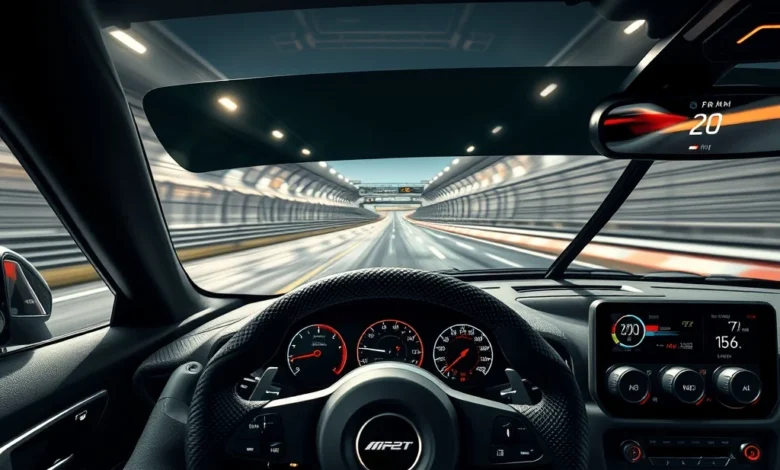
The world of motorsport simulation has evolved significantly over the past decade, transforming from simple arcade experiences into complex digital driving environments that rival real-world physics. Players today demand authenticity in every aspect, from tire deformation to aerodynamic drag. This comprehensive analysis explores the most realistic racing games ever created, focusing on their attention to detail and authentic driving experiences. Whether you are a professional sim racer or an enthusiast looking for the next best thing, understanding the nuances of these titles is essential. We will dive deep into the mechanics, graphics, and systems that define the pinnacle of racing simulation.
🏁 Introduction to Simulation Racing
Realistic racing games represent the intersection of technology, art, and engineering. These titles are engineered to replicate the physical sensations of driving high-performance machinery. Unlike arcade racers that prioritize speed and fun, simulation games prioritize accuracy and predictability. The goal is to create a virtual environment where the car behaves exactly as it would on a real track. This involves complex calculations for grip, weight transfer, and engine torque. The community surrounding these games is dedicated to refining their skills to compete with real-world standards.
In 2026, the standard for realism is higher than ever before. Developers utilize advanced motion capture technology, LiDAR scanning of real tracks, and partnerships with authentic tire manufacturers. This ensures that the feedback loop between the player and the machine is as close to reality as possible. The audience for these games includes aspiring professional drivers who use them for training, as well as casual gamers who appreciate the immersion. The market impact of these titles has been profound, influencing how real-world teams approach vehicle setup and telemetry analysis.
⚙️ Physics and Handling Mechanics
The core of any realistic racing game lies in its physics engine. This is the mathematical model that determines how the car interacts with the game world. A superior physics engine accounts for variables such as suspension travel, damping, and spring rates. It also calculates the friction coefficient of the tires based on temperature and wear. When a player brakes hard, the weight transfer must feel heavy and realistic. This dynamic shift affects the grip available at the front and rear axles, challenging the driver to adjust their inputs accordingly.
🔹 Tire Models and Wear
Tire simulation is one of the most critical components of driving realism. In top-tier titles, tires degrade over the course of a race. The rubber wears down, changing the contact patch and reducing grip levels. Heat buildup is also a factor, where overheating can lead to blistering and loss of traction. Advanced games allow players to adjust tire pressures and compounds to suit different track conditions. This adds a layer of strategic depth that is often missing in other racing genres. Understanding tire management is key to achieving consistent lap times.
🔹 Aerodynamics and Downforce
Aerodynamic drag and downforce play a crucial role in high-speed corners and straights. Realistic simulators model the airflow around the vehicle to simulate how wings and bodywork generate grip. Increasing downforce improves cornering speed but adds drag, slowing the car on straights. Drivers must find the balance that suits their driving style and the specific track layout. This requires a deep understanding of how the car interacts with the air at different speeds. It is a skill that separates novice drivers from experts in the simulation community.
- ✅ Accurate tire wear modeling
- ✅ Dynamic weather impact on grip
- ✅ Realistic suspension geometry
- ⚠️ Complex setup requirements
🎨 Graphics and Audio Quality
Visual fidelity is essential for immersion in a racing simulation. Players need to see the track clearly to anticipate corners and braking zones. Modern engines use ray tracing to simulate realistic lighting and reflections. Shadows move dynamically as the sun rises or sets during a race. The environment is detailed with realistic textures for asphalt, grass, and barriers. Every surface reacts differently to the car, providing visual feedback on traction loss. High-resolution textures ensure that the car itself looks polished and authentic.
🖥️ Visual Quality and Engine
The graphics engine is the backbone of the visual experience. Leading games utilize proprietary or heavily modified versions of industry-standard engines. These engines support high frame rates, which is critical for smooth gameplay. Motion blur is carefully tuned to avoid disorientation while conveying speed. The camera angles can be adjusted to provide the best view of the action. Some games even support virtual reality headsets for a fully immersive cockpit experience. The attention to detail in the car models is often museum-quality.
- ✅ 4K texture support
- ✅ Dynamic day-night cycle
- ✅ Real-time weather effects
- 🎯 Ray-traced reflections
🔊 Sound Effects and Music
Audio is often overlooked but is vital for the feeling of speed. Engine sounds are recorded from real cars to ensure authenticity. The pitch of the engine changes as the RPMs increase, mimicking a real transmission. Tire squeal and suspension clunks provide feedback on the car’s behavior. The crowd noise reacts to the action on track, adding to the atmosphere. Music is usually kept minimal to avoid distracting the driver during intense moments. The soundscape transports the player directly into the cockpit.
🏎️ Top Realistic Racing Titles Analysis
Several titles have set the standard for realism in the industry. Each brings unique features to the table, catering to different types of sim racers. Some focus on single-player campaigns while others emphasize online multiplayer competition. The choice of game often depends on the hardware available and the specific type of racing desired. We will break down the key contenders that define the genre.
🔹 Assetto Corsa Competizione
This title is widely regarded as the gold standard for GT3 racing. It features official licenses for the GT World Challenge series. The car models are based on real-life data from manufacturers. The track scanning technology ensures that circuits are accurate to the millimeter. Players can experience the intense competition of endurance racing with realistic fatigue mechanics. The physics are incredibly detailed, allowing for fine-tuned setup adjustments.
🔹 iRacing
iRacing is the premier platform for competitive online racing. It attracts professional drivers who use it for training. The matchmaking system ensures fair competition based on skill ratings. The track layouts are certified by real-world organizations. The community is active and dedicated to maintaining high standards of sportsmanship. While the learning curve is steep, the rewards are significant for those who master the system.


🔹 rFactor 2
Known for its moddability, rFactor 2 offers a deep physics engine. It allows for extensive customization of cars and tracks. The game supports a wide variety of racing disciplines from Formula 1 to touring cars. The tire model is particularly praised for its accuracy. Players can create their own content and share it with the community. This flexibility makes it a favorite for hardcore enthusiasts.
| Feature | Assetto Corsa | iRacing | rFactor 2 |
|---|---|---|---|
| Physics Engine | High | Very High | Very High |
| Multiplayer | Good | Excellent | Good |
| Modding | Excellent | Limited | Excellent |
| License | GT3 | Multiple | Multiple |
💻 Performance and Technical Analysis
Running these simulations requires significant hardware power. The physics calculations are intensive and demand a strong CPU. A dedicated graphics card is necessary to render complex environments at high frame rates. RAM requirements have increased as track data becomes more detailed. Players on lower-end systems may need to adjust settings to maintain stability. Optimization is key to ensuring a smooth experience without lag spikes.
🖥️ PC System Requirements
PC gamers have the most flexibility in terms of hardware. High-end rigs can run games at 4K resolution with ray tracing enabled. The CPU is often the bottleneck during heavy multiplayer sessions. A stable internet connection is crucial for online racing to prevent desync. Storage space is also a factor, as modern games can exceed 100GB. SSDs are recommended to reduce loading times between sessions.
| Graphics Setting | Average FPS | Stability | Notes |
|---|---|---|---|
| Ultra | 60-80 | High | Requires RTX 3080+ |
| High | 90-120 | Very High | Best for 144Hz monitors |
| Medium | 144+ | Excellent | Good for mid-range PCs |
📱 Mobile and Console Performance
Console versions are optimized for specific hardware to ensure consistency. Mobile platforms face more challenges due to thermal limitations. Battery consumption can be high during long sessions. Touch controls are often inferior to a wheel, but some games support controllers. Cloud gaming services offer a viable alternative for high-end experiences on low-end devices.
🏆 Pros and Cons of Simulation Racing
While these games offer incredible depth, they are not without their drawbacks. The complexity can be overwhelming for newcomers. The cost of entry includes not just the game but also the necessary peripherals. However, the sense of achievement is unmatched when mastering a difficult track.
✅ Advantages
The primary benefit is the authentic driving experience. Players can train for real-world racing without the risk. The community aspect allows for competition with people globally. The graphics and audio are visually and sonically stunning. There is a constant stream of updates and new content to keep the experience fresh.
- ✅ Realistic physics
- ✅ Professional training tool
- ✅ Active competitive scene
- 🎯 High visual fidelity
❌ Disadvantages
The learning curve is steep and can discourage casual players. Hardware costs for wheels and pedals are significant. Some games require a subscription for full online access. Bugs can occasionally disrupt the experience during critical races. The complexity of setup menus can be daunting for beginners.
- ⚠️ High barrier to entry
- ⚠️ Expensive peripherals required
- ⚠️ Complex setup systems
- ⚠️ Occasional connectivity issues
🏁 Final Verdict and Conclusion
The most realistic racing games ever made offer an unparalleled driving experience. They bridge the gap between virtual and reality better than any other genre. For those seeking authenticity, these titles are the definitive choice. The technology continues to advance, promising even greater immersion in the future. Whether you are racing on a PC or a console, the commitment to detail is evident.
If you are looking for the ultimate driving simulator, invest in a high-quality wheel and pedal set. The difference in control is immediate and transformative. These games are worth your time and money for the depth they provide. They are not just games; they are digital motorsport platforms. Start your engine and experience the thrill of the track.
❓ Frequently Asked Questions
- Does it run on Windows 10? Yes, most modern racing simulations are fully compatible with Windows 10 and Windows 11 operating systems.
- Does it support controllers? While controllers are supported, a racing wheel is highly recommended for the best experience and accuracy.
- Is internet required? Online multiplayer modes require a stable internet connection, but single-player modes often work offline.
- Is it the full version? Most games are sold as complete titles with free updates, though some have DLC content for extra tracks or cars.
- Can I play on a Mac? Some titles have Mac versions, but PC is generally the preferred platform for the best performance and features.
- Is it suitable for beginners? It can be difficult for beginners, but many games offer training modes to help new players learn the ropes.
- How much storage do I need? Expect to allocate at least 100GB of space on your hard drive for the game and updates.
- Does it support VR? Yes, several top-tier simulators are fully compatible with virtual reality headsets for immersion.
- Is there a mobile version? There are mobile racing games, but they generally lack the depth of PC and console simulation titles.
- Can I race with friends? Yes, online multiplayer allows you to compete with friends or join public races with players globally.



It’s an remarkable article in support of all the web people; they will take benefit from
it I am sure.