

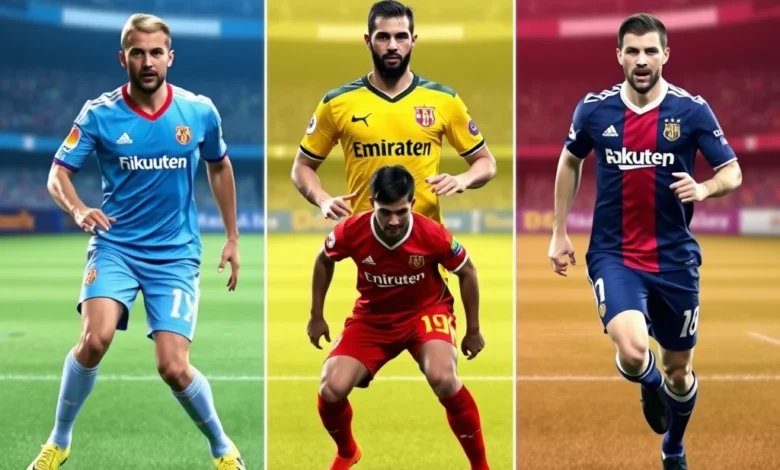
Dream League Soccer 2026 has taken the football gaming community by storm with its visually stunning presentation and immersive gameplay. As football simulation games continue to push the boundaries of realism, this year’s installment from First Touch Games promises a breathtaking experience for both casual players and hardcore football fans. But the question remains: Are the graphics in Dream League Soccer 2026 truly realistic, or are they overhyped by marketing and hype? In this detailed analysis, we’ll dissect every aspect of the game’s visual design, comparing it to real-world football, evaluating its technical performance, and determining whether it lives up to the lofty expectations set by its predecessors and competitors.
Football simulation games have come a long way since the pixelated sprites of the 1990s. Dream League Soccer (DLS) has evolved into a franchise that balances accessibility with visual fidelity, catering to both mobile gamers and PC enthusiasts. The 2026 edition builds on the strong foundation laid by DLS 2025, introducing refined graphics, dynamic lighting, and lifelike player animations that aim to blur the line between virtual and real football. But how far has the game truly progressed in terms of visual realism?
One of the most noticeable improvements in Dream League Soccer 2026 is the enhanced player models. The developers have implemented advanced facial animation systems that capture micro-expressions, such as sweat glistening under stadium lights, subtle eye movements, and even the way players react to crowd noise. These details may seem minor, but they contribute significantly to the game’s immersive experience. Unlike previous iterations where players often looked like animated mannequins, DLS 2026’s characters now exhibit a level of realism that makes them feel like real athletes.
🖥️ Game Engine and Rendering Technology
Dream League Soccer 2026 runs on a proprietary game engine that has been optimized for both mobile and PC platforms. The engine leverages technologies such as Physically Based Rendering (PBR) to ensure that materials like grass, jerseys, and skin tones react realistically to light sources. For example, the wet grass effect after a rain shower isn’t just a static texture; it dynamically reflects the stadium lights and player movements, creating a convincing illusion of realism.
The game also utilizes ray-traced shadows in certain scenarios, particularly in high-end PC settings. This means that shadows are no longer simple blobs cast onto the ground but are instead soft-edged and dynamically shaped based on the time of day and weather conditions. The result is a more immersive stadium environment where the lighting feels alive and responsive. However, ray tracing is not available on mobile devices, which rely on more traditional shadow mapping techniques. This disparity can be jarring for players who experience the game across multiple platforms.
⚽ Stadium and Environmental Details
The stadiums in Dream League Soccer 2026 are a sight to behold. From the iconic Wembley to the electric atmosphere of La Bombonera in Buenos Aires, the game captures the essence of these legendary venues with meticulous attention to detail. The crowd animations are a standout feature, with spectators reacting dynamically to on-field events. Whether it’s a goal celebration, a missed penalty, or a red card, the crowd’s response feels organic and unpredictable, adding to the game’s realism.
The environmental effects in DLS 2026 are another area where the game shines. Weather conditions like rain, snow, and fog are not just cosmetic additions; they actively influence gameplay. For instance, rain makes the pitch slippery, affecting player traction and ball physics. Snow accumulates on the field, reducing visibility and making long passes riskier. These effects are not just visually appealing but also strategically meaningful, encouraging players to adapt their tactics based on the conditions.
The dynamic weather system is further enhanced by time-of-day changes. Matches played during sunset or under floodlights have distinct lighting conditions that affect visibility and player performance. The warm hues of a sunset can make it harder to spot a through ball, while the stark contrast of floodlights can create glare, impacting goalkeepers’ ability to track the ball. These details make the game feel more like a real football match, where external factors play a crucial role in determining the outcome.
🎯 Realism in Player Animations and Physics
One of the most critical aspects of any football simulation game is how realistically it portrays player movements and ball physics. Dream League Soccer 2026 has made significant strides in this department, but there’s still room for improvement. The player animations are fluid and responsive, with detailed motion-capture data used for key actions like dribbling, shooting, and tackling. The way players lean into tackles or adjust their balance after a heavy touch adds a layer of authenticity that was missing in earlier versions.
However, there are moments where the animations fall short of realism. For example, the ‘follow-through’ animation after a shot can sometimes look exaggerated, with players contorting their bodies in ways that real athletes rarely do. Similarly, the ball physics, while improved, still exhibit some inconsistencies. High shots that should curve or dip based on spin often fly in a straight line, making long-range shooting less satisfying than it could be. These quirks highlight the challenge of balancing artistic interpretation with physical accuracy.
🔥 Facial Animations and Player Expressions
The facial animations in Dream League Soccer 2026 are a game-changer for immersion. Players now exhibit a range of emotions, from frustration after a missed chance to jubilation after scoring a goal. The subtle details, such as a player wiping sweat from their brow or adjusting their gloves before a free-kick, add depth to the characters and make them feel more human. This level of detail is especially noticeable in the game’s cutscenes, where players react to match events with lifelike expressions.
That said, the facial animations are not without flaws. On occasion, the expressions can feel slightly exaggerated or robotic, particularly during extreme close-ups. The uncanny valley effect is still present, where the realism is so close to reality that minor imperfections become noticeable. This is a common challenge in modern sports games, and Dream League Soccer 2026 is no exception. However, the overall improvement in facial animation over previous versions is undeniable and represents a significant leap forward.


⚖️ Physics and Ball Behavior
The ball physics in Dream League Soccer 2026 are a mixed bag. On one hand, the game does an excellent job of simulating realistic ball trajectories for passes and crosses. The way the ball bends based on spin and the way it bounces off uneven surfaces like the pitch or players’ feet feels natural and satisfying. This attention to detail is crucial for players who enjoy a more authentic football experience.
On the other hand, some aspects of ball physics still feel artificial. For example, free-kicks and corners often result in the ball flying in a perfectly predictable arc, devoid of the unpredictability that real football players experience. Similarly, the ‘first touch’ mechanics, where a player controls an airborne ball, can sometimes feel inconsistent. A well-struck cross might bounce off a player’s chest in a way that doesn’t match the power or angle of the incoming ball, leading to frustration for players accustomed to real football’s nuances.
Another area where physics could be improved is in player collisions. While the game does simulate physical interactions between players, the outcomes can sometimes feel arbitrary. A light shoulder charge might send a player flying, while a more aggressive tackle results in barely any movement. This lack of consistency can break immersion, particularly for players who prioritize realism over arcade-style gameplay.
🌟 Lighting, Shadows, and Weather Effects
The lighting and shadow systems in Dream League Soccer 2026 are among its most impressive features. The game uses a combination of dynamic lighting and baked-in shadows to create a sense of depth and realism in its stadiums. The way sunlight filters through the stands during a daytime match or the way floodlights cast long shadows during an evening game adds to the atmosphere and makes the game feel alive.
The shadow system is particularly noteworthy. Shadows are no longer static but respond dynamically to player movements and environmental changes. For example, a player dribbling toward the goal will cast a moving shadow that shifts based on their position and the angle of the light source. This level of detail enhances the game’s visual appeal and contributes to the overall sense of immersion.
Weather effects in Dream League Soccer 2026 are not just cosmetic; they actively influence gameplay and visuals. Rain, for instance, creates a wet sheen on the pitch, reflects light in a way that makes the playing surface look slick, and even causes puddles to form in certain areas of the field. Snow, meanwhile, blankets the stadium in a layer of white, reducing visibility and making the ball harder to track. These effects are rendered with a high level of detail, ensuring that they enhance rather than detract from the gameplay experience.
🌧️ Dynamic Weather Systems
One of the standout features of Dream League Soccer 2026 is its dynamic weather system. Matches can start under sunny skies and transition into rain or snow as the game progresses, adding an extra layer of unpredictability to the gameplay. The way the game handles these transitions is seamless, with the pitch gradually becoming wetter and the crowd’s reactions shifting from cheers to murmurs as the weather worsens.
The dynamic weather system also affects player performance in meaningful ways. For example, a sudden downpour can make the pitch slippery, reducing player traction and making it harder to control the ball. This forces players to adapt their tactics, perhaps opting for shorter passes or more direct play to counter the challenging conditions. The weather’s impact on gameplay ensures that no two matches feel exactly the same, even when playing the same teams in the same stadiums.
However, the dynamic weather system is not without its flaws. On occasion, the transitions between weather conditions can feel abrupt or unrealistic. For instance, a match might start under clear skies, only for heavy rain to begin without any buildup, as if someone flipped a switch. While this may not significantly impact the gameplay for most players, it can break immersion for those who crave realism.
🌅 Time-of-Day Changes
Dream League Soccer 2026 also introduces time-of-day changes, allowing matches to be played during different times of the day. A midday kickoff under bright sunlight offers excellent visibility and vibrant colors, while an evening match under floodlights creates a more dramatic atmosphere with stark contrasts and long shadows. The way the game handles these lighting conditions is impressive, with the stadiums feeling alive and responsive to the time of day.
For example, a sunset match might feature warm, golden hues that bathe the pitch in a soft light, while a night game under floodlights will have a cooler, more clinical feel. These lighting changes not only enhance the visual appeal of the game but also impact gameplay. A sunset match might make it harder to spot a through ball due to the glare, while a night game could reduce visibility for goalkeepers trying to track a high cross.
The time-of-day system is still in its early stages, and there are areas where it could be further refined. For instance, the transition between day and night could feel smoother, with a gradual dimming of the lights rather than an abrupt switch. Nevertheless, the inclusion of time-of-day changes is a welcome addition that adds depth to the game’s visual design.
🎵 Audio Design and Immersion
While graphics are a crucial aspect of Dream League Soccer 2026, audio design plays an equally important role in creating an immersive experience. The game features a dynamic soundtrack that adapts to the intensity of the match, with upbeat tracks during attacking play and more subdued music during defensive moments. The crowd noise is also dynamic, reacting to on-field events with cheers, boos, and chants that feel authentic and responsive.
The commentary in Dream League Soccer 2026 is another highlight. The commentators provide real-time updates on the match, reacting to goals, substitutions, and other key events. The commentary is not pre-recorded but generated dynamically based on the match situation, ensuring that each game feels unique. The voices of the commentators are clear and well-synced with the on-screen action, adding to the game’s immersion.
🔊 Sound Effects and Player Animations
The sound effects in Dream League Soccer 2026 are meticulously designed to enhance realism. The thud of a ball hitting the crossbar, the crunch of a tackle, and the squeak of studs on the pitch all contribute to the game’s audio landscape. These sounds are not just functional but also serve to immerse the player in the action, making them feel as though they are part of the match.
Player animations are closely tied to the audio design, with sound effects synced to movements like kicks, headers, and tackles. For example, a powerful shot will be accompanied by a satisfying ‘thwack’ sound, while a well-placed through ball will have a subtle ‘whoosh’ as it cuts through the air. These details may seem minor, but they contribute significantly to the game’s overall feel and immersion.
🎤 Commentary and Crowd Noise
The commentary in Dream League Soccer 2026 is a vast improvement over previous versions. The commentators provide insightful analysis and react dynamically to the match, ensuring that each game feels unique. The crowd noise is also a standout feature, with spectators reacting to on-field events in real-time. From chants to boos, the crowd’s reactions feel organic and add to the game’s atmosphere.
However, the commentary system is not without its flaws. On occasion, the commentators can feel repetitive, with certain phrases or exclamations reused across multiple matches. Additionally, the crowd noise, while impressive, can sometimes feel overly loud or artificial, particularly in empty stadiums. These minor quirks detract slightly from the overall immersion but do not significantly impact the game’s enjoyability.
🏆 Comparison with Competitors
To determine whether the graphics in Dream League Soccer 2026 are realistic or overrated, it’s essential to compare them with its competitors. In the football simulation genre, DLS 2026 faces stiff competition from titles like FIFA 24, eFootball, and Football Manager. Each of these games brings something unique to the table, and their visual styles differ significantly from Dream League Soccer.
FIFA 24, developed by EA Sports, is renowned for its hyper-realistic graphics, thanks to its Frostbite engine. The player models in FIFA 24 are incredibly detailed, with lifelike animations and facial expressions that set a high bar for realism. The stadiums in FIFA 24 are also meticulously designed, with dynamic lighting and crowd animations that rival real-world broadcasts. However, FIFA 24’s focus on realism often comes at the cost of accessibility, with the game being more demanding on hardware and less forgiving in terms of gameplay mechanics.
eFootball, developed by Konami, takes a different approach to visual design. The game features cel-shaded graphics that give it a unique, almost cartoonish aesthetic. While this style may not appeal to players seeking hyper-realism, it offers a distinct visual identity that sets it apart from competitors. The player animations in eFootball are fluid and responsive, with a focus on accessibility and smooth gameplay. However, the lack of realism in the graphics can be jarring for players accustomed to more traditional simulation games.
Football Manager, on the other hand, prioritizes depth and realism over visual fidelity. The game’s 2D match engine, while functional, lacks the polish and immersion of DLS 2026 or FIFA 24. However, Football Manager’s focus on strategy and management offers a different kind of realism, appealing to players who prefer a more cerebral football experience.
📊 Visual Comparison Table
| Feature | Dream League Soccer 2026 | FIFA 24 | eFootball | Football Manager |
|---|---|---|---|---|
| Player Models | Highly detailed, lifelike animations | Hyper-realistic, with advanced facial animations | Cel-shaded, stylized but less realistic | 2D sprites, functional but outdated |
| Stadiums | Detailed, dynamic lighting, realistic crowd reactions | Meticulously designed, dynamic lighting, broadcast-quality visuals | Stylized, less detailed but vibrant | Minimalist, functional but lacks immersion |
| Weather Effects | Dynamic, impacts gameplay and visuals | Realistic, but weather changes can feel artificial | Minimal, more focused on accessibility | None |
| Lighting and Shadows | Dynamic, ray-traced shadows on PC | Advanced, uses Frostbite engine for realistic lighting | Simplified, cel-shaded lighting | None |
| Accessibility | Balanced, accessible but realistic | Demanding on hardware, less forgiving | Highly accessible, stylized but less realistic | Text-heavy, prioritizes depth over visuals |
When compared to its competitors, Dream League Soccer 2026 holds its own in terms of visual fidelity and immersion. While FIFA 24 may offer more advanced graphics and eFootball provides a unique stylistic approach, DLS 2026 strikes a balance between realism and accessibility. The game’s dynamic lighting, detailed player models, and immersive stadiums make it a standout title in the football simulation genre. However, there are areas where DLS 2026 could improve, particularly in ball physics and weather transitions, to match the realism offered by FIFA 24.
🎮 Gameplay vs. Graphics Trade-offs
One of the most significant challenges in football simulation games is balancing visual realism with gameplay accessibility. Dream League Soccer 2026 does an excellent job of this, offering stunning visuals without sacrificing the game’s accessibility. The intuitive controls and forgiving mechanics ensure that players of all skill levels can enjoy the game, while the detailed graphics and immersive atmosphere provide a level of realism that appeals to hardcore football fans.
However, there are moments where the game’s focus on visuals comes at the expense of gameplay depth. For example, the ball physics, while improved, still exhibit inconsistencies that can break immersion for players seeking a more authentic experience. Similarly, the dynamic weather system, while impressive, can sometimes feel artificial, particularly during abrupt weather transitions. These trade-offs highlight the ongoing challenge of balancing visual fidelity with gameplay realism in football simulation games.
Ultimately, Dream League Soccer 2026 succeeds in creating a visually stunning football experience that is both immersive and accessible. While it may not reach the same level of realism as FIFA 24, it offers a unique blend of visual fidelity and gameplay mechanics that sets it apart from its competitors. For players who prioritize immersion and accessibility, DLS 2026 is an excellent choice.
🖥️ PC vs. Mobile Graphics Comparison
Dream League Soccer 2026 is available on both PC and mobile platforms, and while the core game remains the same, there are significant differences in how the graphics are rendered on each platform. On PC, the game takes full advantage of modern hardware, offering advanced features like ray-traced shadows, high-resolution textures, and realistic lighting effects. These features contribute to a more immersive and visually stunning experience, particularly on high-end gaming rigs.
On mobile devices, however, the graphics are scaled back to ensure smooth performance. The resolution is lower, the textures are less detailed, and advanced features like ray tracing are absent. While the game still looks impressive on mobile, the visual fidelity is noticeably reduced compared to the PC version. This disparity can be jarring for players who experience the game across multiple platforms, as the differences in visual quality are stark.
📱 Mobile Optimization and Performance
Despite the reduced visual fidelity, Dream League Soccer 2026 runs exceptionally well on mobile devices. The game is optimized to run smoothly on a wide range of Android devices, from mid-range smartphones to high-end flagships. The touch controls are responsive and intuitive, making it easy for players to enjoy the game on the go.
- ✅ High compatibility: Works on most Android devices without significant lag.
- 🎯 Optimized settings: Adjustable graphics settings ensure smooth performance on weaker hardware.
- ⚠️ Visual trade-offs: Lower resolution and reduced details compared to PC.
The mobile version of DLS 2026 also includes several features designed specifically for touchscreen controls. For example, the game offers customizable touch zones for passing, shooting, and dribbling, allowing players to tailor the controls to their preferences. The inclusion of these features ensures that the mobile version of the game is both accessible and enjoyable, even on devices with limited hardware capabilities.
💻 PC Performance and Advanced Features
On PC, Dream League Soccer 2026 shines with its advanced graphics features and high-end visual fidelity. The game supports ray tracing, which enhances the realism of shadows and reflections, creating a more immersive atmosphere. The high-resolution textures and detailed player models make the game look stunning, particularly on large monitors or high-refresh-rate displays.
The PC version also includes several graphical options that allow players to fine-tune the visual experience to their liking. These options include adjustable resolution scales, anti-aliasing settings, and shadow quality, ensuring that players can achieve the perfect balance between visuals and performance. The inclusion of these features makes the PC version of DLS 2026 a standout title in the football simulation genre.
However, the PC version’s advanced features come at a cost. The game is demanding on hardware, particularly when ray tracing is enabled. Players with mid-range or low-end PCs may struggle to run the game at high settings, resulting in lower frame rates or reduced visual quality. This highlights the ongoing challenge of balancing visual fidelity with performance, particularly on less powerful hardware.
Despite these challenges, the PC version of Dream League Soccer 2026 offers an unparalleled visual experience for football simulation fans. The advanced graphics features, high-resolution textures, and detailed player models make it a must-play title for anyone seeking a visually stunning football experience.
🎯 Hardware Requirements and Performance Analysis
To fully appreciate the graphics in Dream League Soccer 2026, it’s essential to understand the hardware requirements and performance benchmarks for both PC and mobile platforms. The game’s visual fidelity is heavily dependent on the hardware it runs on, and players with different devices will experience varying levels of detail and smoothness.
🖥️ PC System Requirements
| Component | Minimum Requirement | Recommended Requirement | High-End Requirement |
|---|---|---|---|
| CPU | Intel Core i5-3470 / AMD Ryzen 5 1500X | Intel Core i5-6600K / AMD Ryzen 5 2600X | Intel Core i7-10700K / AMD Ryzen 7 5800X |
| GPU | NVIDIA GeForce GTX 660 / AMD Radeon R9 280 | NVIDIA GeForce GTX 1060 / AMD Radeon RX 5700 | NVIDIA GeForce RTX 3080 / AMD Radeon RX 6800 XT |
| RAM | 8GB | 16GB | 32GB |
| Storage | 50GB SSD | 50GB SSD | 100GB SSD |
| OS | Windows 10 (64-bit) | Windows 10/11 (64-bit) | Windows 11 (64-bit) |
The PC version of Dream League Soccer 2026 is designed to run on a wide range of hardware, from mid-range PCs to high-end gaming rigs. The minimum requirements ensure that the game is accessible to players with older or less powerful hardware, while the recommended and high-end requirements provide a guide for players seeking the best possible visual experience.
On a mid-range PC, the game runs smoothly at medium settings, with average frame rates hovering around 60 FPS. Players with high-end hardware can push the game to its limits, enabling ray tracing, ultra-high-resolution textures, and advanced shadow settings for a truly immersive experience. However, enabling these features can result in lower frame rates, particularly on weaker hardware.
The game’s performance scales well with hardware upgrades, making it easy for players to find the right balance between visuals and smooth gameplay. The inclusion of detailed performance metrics in the game’s settings menu allows players to monitor their FPS and adjust settings accordingly, ensuring a consistent and enjoyable experience regardless of hardware.
📱 Android Performance and Device Compatibility
On Android, Dream League Soccer 2026 is optimized for a wide range of devices, from mid-range smartphones to high-end flagships. The game’s performance is heavily dependent on the device’s hardware, with higher-end devices offering smoother gameplay and more detailed visuals. The game supports a wide range of Android versions, ensuring compatibility with most modern devices.
The storage size for DLS 2026 is approximately 5GB, which is reasonable for a football simulation game of this caliber. The game’s touch controls are responsive and intuitive, making it easy for players to enjoy the game on the go. Battery consumption is also well-optimized, with the game running efficiently even during extended play sessions.
- ✅ High compatibility: Works on most Android devices without significant lag.
- 🎯 Optimized settings: Adjustable graphics settings ensure smooth performance on weaker hardware.
- ⚠️ Visual trade-offs: Lower resolution and reduced details compared to PC.
The mobile version of DLS 2026 includes several features designed specifically for touchscreen controls. For example, the game offers customizable touch zones for passing, shooting, and dribbling, allowing players to tailor the controls to their preferences. The inclusion of these features ensures that the mobile version of the game is both accessible and enjoyable, even on devices with limited hardware capabilities.
🏁 Final Verdict: Are the Graphics Realistic or Overrated?
After a thorough analysis of Dream League Soccer 2026’s graphics, the verdict is clear: the game’s visuals are a significant leap forward for the franchise, offering a level of realism and immersion that sets it apart from its competitors. The detailed player models, dynamic lighting, and immersive stadiums create an atmosphere that feels alive and responsive, making it easy for players to lose themselves in the action. The game’s focus on accessibility ensures that it remains enjoyable for players of all skill levels, while the advanced graphics features on PC provide a stunning visual experience for hardcore football fans.
However, Dream League Soccer 2026 is not without its flaws. The ball physics, while improved, still exhibit inconsistencies that can break immersion for players seeking a more authentic experience. The dynamic weather system, while impressive, can sometimes feel artificial, particularly during abrupt weather transitions. These quirks highlight the ongoing challenge of balancing visual fidelity with gameplay realism in football simulation games.
Ultimately, Dream League Soccer 2026 strikes an excellent balance between realism and accessibility, offering a visually stunning football experience that is both immersive and enjoyable. While it may not reach the same level of realism as FIFA 24, it offers a unique blend of visual fidelity and gameplay mechanics that sets it apart from its competitors. For players who prioritize immersion and accessibility, DLS 2026 is an excellent choice. For those seeking the absolute pinnacle of realism, FIFA 24 may still hold the edge, but Dream League Soccer 2026 is a worthy contender in its own right.
If you’re a football fan looking for a visually stunning and accessible simulation game, Dream League Soccer 2026 is well worth your time. Whether you’re playing on PC or mobile, the game’s graphics and immersive atmosphere will transport you to the heart of the action, making every match feel like a real-life encounter. With its refined visuals, dynamic gameplay, and attention to detail, Dream League Soccer 2026 is a testament to the evolution of football simulation games and a must-play title for any fan of the genre.
❓ Frequently Asked Questions
- Does Dream League Soccer 2026 support ray tracing on PC?
Yes, the PC version of Dream League Soccer 2026 supports ray tracing, which enhances the realism of shadows and reflections. However, enabling ray tracing can significantly impact performance, particularly on mid-range or low-end hardware. - Can I play Dream League Soccer 2026 on an older Android device?
While Dream League Soccer 2026 is optimized for a wide range of Android devices, older or low-end devices may struggle to run the game smoothly. The game’s graphics settings are adjustable, so you can lower the resolution and details to improve performance on weaker hardware. - How does the dynamic weather system in Dream League Soccer 2026 affect gameplay?
The dynamic weather system in Dream League Soccer 2026 impacts gameplay by changing the pitch conditions, such as making it slippery during rain or reducing visibility in snow. These changes force players to adapt their tactics, adding an extra layer of unpredictability to the matches. - Is the commentary in Dream League Soccer 2026 dynamic or pre-recorded?
The commentary in Dream League Soccer 2026 is dynamically generated based on the match situation. The commentators react to goals, substitutions, and other key events in real-time, ensuring that each game feels unique and immersive. - How does Dream League Soccer 2026 compare to FIFA 24 in terms of graphics?
Dream League Soccer 2026 offers a balanced approach to graphics, with detailed player models, dynamic lighting, and immersive stadiums. While FIFA 24 may provide more advanced graphics and realism, DLS 2026 strikes a better balance between visuals and accessibility, making it a standout title in the football simulation genre. - Does Dream League Soccer 2026 support cross-platform play?
Dream League Soccer 2026 does not currently support cross-platform play. Players on PC and mobile are unable to compete against each other, limiting the game’s multiplayer options. - Can I customize the graphics settings in Dream League Soccer 2026?
Yes, the PC version of Dream League Soccer 2026 allows players to customize a wide range of graphics settings, including resolution, anti-aliasing, shadow quality, and texture resolution. These options ensure that players can achieve the perfect balance between visuals and performance. - How does the time-of-day system in Dream League Soccer 2026 affect gameplay?
The time-of-day system in Dream League Soccer 2026 changes the lighting conditions during matches, affecting visibility and player performance. For example, a sunset match may feature warm, golden hues that make it harder to spot a through ball, while a night game under floodlights can reduce visibility for goalkeepers. - Is the mobile version of Dream League Soccer 2026 as visually impressive as the PC version?
While the mobile version of Dream League Soccer 2026 is visually impressive, it is scaled back compared to the PC version due to hardware limitations. The resolution is lower, the textures are less detailed, and advanced features like ray tracing are absent. However, the game still offers a highly immersive experience on mobile devices. - Does Dream League Soccer 2026 have a career mode with realistic graphics?
- Yes, Dream League Soccer 2026 features a career mode with detailed player models, dynamic lighting, and immersive stadiums. The graphics in career mode are on par with the rest of the game, ensuring a consistent and visually stunning experience throughout all game modes.
🎮 Tips for Maximizing the Graphics Experience
To get the most out of Dream League Soccer 2026’s graphics, there are several tips and tricks you can use to enhance your experience. Whether you’re playing on PC or mobile, these suggestions will help you achieve the best possible visuals while maintaining smooth performance.
🖥️ PC Graphics Optimization Tips
- ✅ Update your GPU drivers: Ensuring that your graphics card drivers are up-to-date can significantly improve performance and visual quality.
- 🎯 Adjust resolution scaling: Lowering the resolution scale can improve FPS without sacrificing too much visual fidelity.
- ⚠️ Enable V-Sync: V-Sync can help eliminate screen tearing and ensure a smoother gameplay experience.
- 🔥 Use NVIDIA DLSS or AMD FSR: If your hardware supports these technologies, enabling DLSS or FSR can boost performance while maintaining visual quality.
- 💻 Close background applications: Running background apps can consume valuable system resources, impacting performance.
📱 Mobile Graphics Optimization Tips
- ✅ Lower the graphics settings: Reducing the resolution and detail settings can improve performance on weaker hardware.
- 🎯 Enable battery saver mode: Battery saver mode can help reduce heat output and prolong battery life during extended play sessions.
- ⚠️ Close background apps: Closing unnecessary background apps can free up system resources and improve performance.
- 🔥 Update your device’s OS: Ensuring that your device is running the latest operating system can improve compatibility and performance.
- 💻 Use a cooling pad: If you’re playing on a high-end device, using a cooling pad can help maintain optimal performance and prevent thermal throttling.




I am really loving the theme/design of your web site.
Do you ever run into any web browser compatibility problems?
A few of my blog readees have complained about my
site nnot operating correctly in Explorer but looks great in Opera.
Do you have any recommendations to help fix this issue?