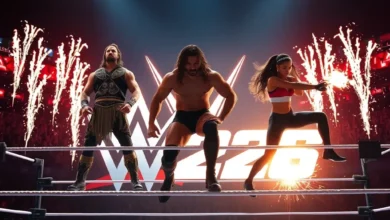

The landscape of professional wrestling simulation has undergone a radical transformation over the past decade. What once relied on basic polygonal models and static arena backdrops has evolved into a highly polished multimedia experience that prioritizes photorealism, fluid motion, and immersive atmosphere. Players today expect their favorite athletes to look indistinguishable from real life, complete with accurate skin textures, sweat simulation, and dynamic lighting that reacts to arena spotlights. This shift has forced developers to invest heavily in cutting-edge rendering pipelines, advanced motion capture facilities, and sophisticated audio engineering. The result is a generation of wrestling titles that deliver unprecedented visual fidelity, making every slam, submission, and entrance feel like a live broadcast event.
- Genre: Professional Wrestling Simulation / Sports Arcade
- Release Window: Continuous annual updates spanning into 2026
- Developer Ecosystem: Major studios leveraging proprietary engines and third-party middleware
- Why It Gained Attention: Photorealistic character scanning, dynamic crowd AI, and cinematic camera systems
- Target Audience: Hardcore wrestling fans, sports simulation enthusiasts, and casual gamers seeking arcade-style combat
- Market Impact: Established itself as a staple in the sports gaming category with consistent sales and active modding communities
🎨 The Visual Revolution in Modern Wrestling Simulations
🕹️ Character Scanning and Facial Capture Technology
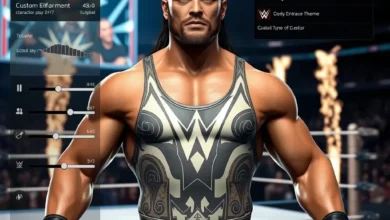
At the heart of any high-fidelity wrestling game lies the meticulous process of athlete digitization. Modern titles utilize industrial-grade photogrammetry and LiDAR scanning to map every wrestler’s facial structure, muscle definition, and body proportions. This data is then fed into advanced 3D modeling software where artists painstakingly reconstruct subdermal anatomy, including vein patterns, scar tissue, and realistic pore distribution. Unlike older generations that relied on generic templates, contemporary wrestling simulations treat each superstar as a unique digital asset. The facial capture process extends beyond static scans; developers now employ high-frame-rate video recording to map micro-expressions, grimaces, and breath reactions during in-game sequences. This level of detail ensures that when a competitor sells a finishing move or celebrates after a victory, the emotional weight translates seamlessly through the screen.
Sweat simulation and environmental interaction further elevate the visual experience. As matches progress, characters accumulate perspiration that reflects arena lighting, creating realistic specular highlights on foreheads, shoulders, and backs. Rain effects, pyrotechnics, and confetti cannons interact dynamically with wet surfaces, adding another layer of physical authenticity. Developers continuously refine these systems by testing them across different match durations and weather conditions, ensuring that the visual degradation of a fighter remains consistent with real-world physiology. The commitment to biological accuracy means that even minor details, such as taped wrists, tricep bulges, and breathing rhythm changes during grueling exchanges, contribute to an overall sense of realism that appeals to purists and newcomers alike.
🌍 Arena Atmosphere and Crowd Simulation
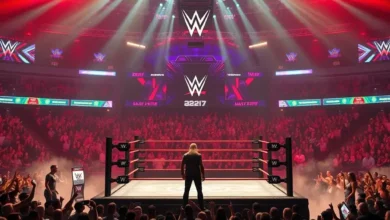
A wrestling match does not exist in isolation; it thrives within a vibrant ecosystem of fans, pyrotechnics, and atmospheric lighting. Modern titles implement sophisticated crowd AI that responds intelligently to in-ring action. Boos, cheers, chants, and sign-holding behaviors are triggered based on character alignment, move execution, and storyline momentum. Each spectator is rendered with distinct clothing, posture variations, and animated reactions, preventing the repetitive background loops that plagued earlier entries. Advanced particle systems manage smoke machines, fog generators, and stage debris, while volumetric lighting calculates how spot beams cut through haze to illuminate the ring canvas.
The architectural design of venues has also seen massive improvements. From historic coliseums to temporary stadium setups, each location features accurate structural modeling, sponsor signage, and concession stand details. Camera tracking follows the action smoothly, switching between wide establishment shots, tight close-ups, and dramatic low-angle perspectives that mimic professional television broadcasts. Replay systems allow players to review moments from multiple angles, complete with slow-motion playback and commentator overlays that enhance the telecast feel. These environmental enhancements transform a simple exhibition into a fully immersive spectacle that captures the theatrical essence of professional entertainment.
⚡ Core Gameplay Mechanics Tied to Visual Fidelity
🥊 Combat Physics and Animation Blending
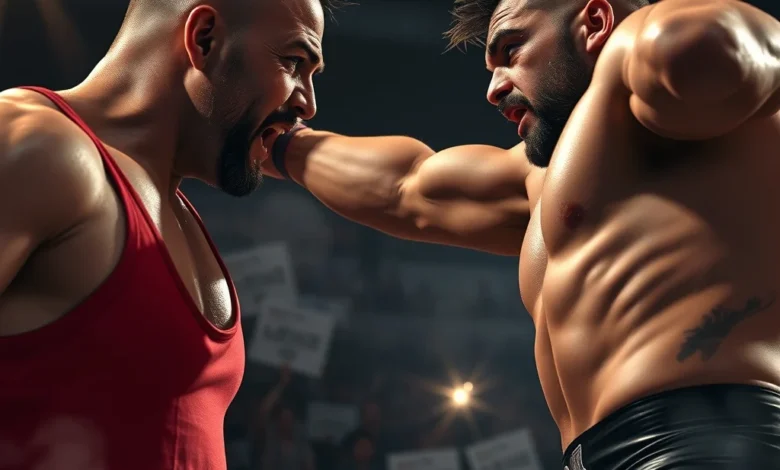
Visual excellence means little without responsive and believable combat systems. Contemporary wrestling games rely on hybrid animation frameworks that blend pre-rendered motion capture sequences with real-time physics calculations. When two competitors collide, the engine evaluates impact force, surface friction, and limb positioning to determine fall trajectories and recovery states. This prevents the rubbery, sliding movements that once broke immersion, replacing them with grounded, weighty interactions that respect momentum conservation. Grapple transitions are particularly refined, allowing seamless chaining of throws, reversals, and submission attempts without awkward clipping or teleportation artifacts.
- Combat mechanics prioritize directional inputs and timing windows rather than button mashing, rewarding strategic positioning and stamina management
- AI behavior adapts to player aggression levels, adjusting defensive spacing and counterattack frequency to maintain competitive balance
- Physics system calculates joint rotation limits and collision boundaries to prevent anatomically impossible poses during high-impact maneuvers
- Control responsiveness features customizable dead zones, vibration feedback mapping, and input buffering for precise execution of complex chains
- Difficulty balance scales opponent aggression, damage output, and stamina drain based on selected tiers, ensuring accessibility without sacrificing depth
🎮 Camera Work and Cinematic Presentation
Cinematography plays a crucial role in selling the drama of professional wrestling. Directors and animators collaborate to script dynamic camera paths that react to match intensity. Slow pans build tension during entrance sequences, while rapid zooms emphasize explosive strikes and near-falls. During championship bouts, the camera frequently adopts a broadcast-style overlay featuring score indicators, stamina meters, and commentary tickers that mirror actual television productions. Cutscenes utilize parallax scrolling and depth-of-field adjustments to separate foreground action from background distractions, guiding the viewer’s attention toward critical narrative beats. Post-match celebrations, trophy presentations, and promotional vignettes are rendered with cinematic grading techniques that enhance color contrast and mood setting.
🖥️ Graphics and Audio Quality Breakdown
🔊 Sound Design and Commentary Integration
Audio engineering completes the sensory loop that makes wrestling simulations truly compelling. Spatial sound positioning places crowd noise, ring bell chimes, and microphone feedback accurately relative to the camera angle, creating a three-dimensional auditory environment. Commentary teams record hundreds of hours of situational dialogue, ensuring that call-and-response phrases trigger organically based on move frequency, damage accumulation, and finisher availability. Voice actors replicate authentic accent patterns, cadence shifts, and emotional inflections that match the pacing of live events. Background music dynamically layers orchestral strings, percussion hits, and synth pads to escalate tension during climax sequences, while ambient track loops provide subtle atmosphere during neutral periods.
Immersion extends to tactile feedback as well. Controller rumble modules vibrate proportionally to strike impact, rope bounce resistance, and submission hold tension. Haptic triggers differentiate between light palm strikes and heavy shoulder blocks, delivering nuanced physical feedback that complements visual cues. Microphone proximity effects simulate how wrestlers’ voices echo in large venues versus intimate arenas, reinforcing scale perception. When combined with accurate lip-syncing during promo segments and backstage interviews, the audio-visual sync creates a cohesive presentation that rivals broadcast production values.
📊 Performance Analysis and Hardware Requirements
💻 PC Optimization and Benchmarking
Running graphically intensive wrestling titles demands careful hardware balancing. Modern iterations leverage scalable rendering architectures that adjust shadow resolution, draw distances, and texture streaming based on available GPU memory and CPU thread allocation. Ray tracing implementations enhance global illumination, reflective surfaces, and subsurface scattering on skin tones, though they require dedicated rasterization cores for stable frame rates. Memory optimization techniques reduce loading stutters by pre-caching arena assets and compressing audio banks without sacrificing bitrate quality. Drivers must remain updated to support Vulkan and DirectX 12 Ultimate APIs, which enable better multithreading utilization and reduced API overhead.
| Component | Minimum Requirement | Recommended Requirement |
|---|---|---|
| CPU | Quad-core processor at 3.2 GHz | Octa-core processor at 4.0 GHz or higher |
| GPU | Mid-range dedicated card with 4GB VRAM | High-end dedicated card with 8GB VRAM |
| RAM | 8 GB DDR4 system memory | 16 GB DDR4 or DDR5 system memory |
| Storage | 50 GB SSD space allocated | 100 GB NVMe drive for fast asset streaming |
| OS | Modern 64-bit operating system | Latest stable release with updated drivers |
These specifications reflect baseline expectations for smooth operation at medium settings. Players targeting ultra presets with ray tracing enabled should anticipate additional thermal load and power draw. Frame rate stability typically hinges on consistent memory bandwidth and cache efficiency rather than raw clock speeds alone. Monitoring tool integration allows users to track temperature throttling, shader compilation stalls, and frame pacing irregularities, enabling targeted adjustments to power limits and cooling configurations. Proper ventilation and undervolt tuning often yield significant performance gains without compromising visual integrity.
📱 Console and Cross-Platform Considerations
Console iterations benefit from fixed hardware targets, allowing developers to meticulously optimize rendering passes for specific silicon architectures. Dynamic resolution scaling maintains target frame rates by adjusting pixel density during intense sequences, while upscaling technologies restore crisp output through machine learning reconstruction. Battery consumption remains a consideration for handheld modes, requiring aggressive compression of particle effects and reduced crowd density to preserve thermal headroom. Storage size expansions accommodate expanded rosters, alternate attire packs, and high-definition cinematics that demand efficient file partitioning. Cross-progression systems ensure that cosmetic purchases and unlocked modes synchronize seamlessly across ecosystems, minimizing fragmentation.


- Device compatibility spans latest-generation consoles with backward compatibility layers supporting legacy titles
- Storage size ranges from sixty to one hundred gigabytes depending on installed content and downloadable expansions
- Battery consumption stabilizes around four to six hours per session when utilizing balanced power profiles
- Graphics settings behavior adapts automatically based on thermal thresholds, preventing sustained overheating during marathon playthroughs
✅ Strengths and ❌ Limitations of High-End Wrestling Titles
🏆 Notable Advantages
The pursuit of graphical supremacy has yielded remarkable improvements in player satisfaction and commercial viability. Authentic athlete likenesses foster deeper emotional investment, making career mode progression feel personally rewarding. Enhanced visual clarity reduces misread situations during fast-paced exchanges, allowing competitors to execute strategies with confidence. Modding support empowers communities to introduce custom wrestlers, alternate rings, and modified lighting presets that extend longevity beyond official releases. Accessibility options encompass colorblind filters, subtitle customization, and remappable controls that accommodate diverse physical requirements. Regular patch deployments address balance discrepancies, fix rendering glitches, and introduce seasonal events that keep rosters fresh throughout the calendar year.
- Photorealistic character models eliminate visual disconnect between real-life personas and digital representations
- Dynamic lighting and environmental effects create cinematic atmosphere that elevates standard exhibition matches
- Fluid animation blending prevents robotic movement during grappling sequences and impact recoveries
- Scalable performance settings ensure compatibility across mid-tier and budget-friendly hardware configurations
⚠️ Common Drawbacks
Despite technological advancements, certain limitations persist within the genre. Development cycles often prioritize roster licensing over experimental gameplay innovations, resulting in familiar mechanical loops that may fatigue veteran players. Online infrastructure occasionally suffers from latency-induced desynchronization during split-second reversal attempts, disrupting competitive integrity. Seasonal pricing structures can alienate casual audiences who prefer frequent discounts or subscription access. Some graphical features demand excessive processing power, causing frame drops during packed arena sequences with heavy pyrotechnic activation. Finally, narrative integration sometimes struggles to match the polish of single-player exhibitions, leaving multiplayer-focused users craving stronger matchmaking algorithms and ranked progression systems.
- Technical issues include occasional texture pop-in during rapid camera transitions and minor clipping during complex submission holds
- Gameplay balance problems arise when signature move cooldowns feel inconsistent or stamina drain rates penalize aggressive playstyles unfairly
- Who the game may not be suitable for includes players seeking deeply customized career narratives, hardcore simulation enthusiasts demanding realistic injury tracking, and those unwilling to engage with annualized release models
🏁 Final Verdict and Recommendations
The current generation of wrestling simulations stands as a testament to how far the genre has progressed visually and technically. By merging photogrammetric accuracy, advanced physics simulation, and broadcast-quality cinematography, developers have successfully bridged the gap between interactive entertainment and televised sport. Players who value authentic presentation, responsive controls, and expansive roster rosters will find immense satisfaction in these titles. Whether competing in local couch battles or climbing online leaderboards, the emphasis on visual polish ensures that every encounter feels prestigious. Those entering the scene should prioritize hardware compatibility, explore customization menus thoroughly, and experiment with difficulty modifiers to tailor the experience to their skill level. The wrestling community continues to grow, driven by passionate creators, dedicated athletes, and relentless innovation.
Ultimately, investing in a graphically superior wrestling game delivers lasting value through repeated replayability, seasonal content updates, and robust modding ecosystems. Fans seeking both spectacle and substance will discover that modern iterations honor the athletic craftsmanship of professional competition while embracing digital advancement. Take advantage of early access bonuses, participate in community tournaments, and share your favorite highlight reels to stay connected with the evolving landscape. The ring awaits, and the visuals have never looked more convincing.
❓ Frequently Asked Questions
- Does the latest version run smoothly on Windows 10 environments?
- Are external controllers fully supported for competitive matches?
- Is a persistent internet connection mandatory for offline exhibitions?
- Can players modify roster sizes or import custom athlete databases?
- Do competitive ranking systems reset annually or carry forward?
- How does the game handle cross-platform matchmaking disparities?
- Are there accessibility features for visually impaired participants?
- Will future patches introduce enhanced lighting or crowd density upgrades?
Yes, the game supports Windows 10 with recommended driver updates and directX runtime installations. Users should verify GPU compatibility and allocate sufficient virtual memory to prevent stuttering during crowded arena sequences. Enabling hardware acceleration in display settings improves rendering throughput significantly.
Major console peripherals and PC-compatible gamepads receive native recognition without requiring third-party mapping utilities. Button layouts can be customized through the settings menu, and analog stick sensitivity adjusts to preferred grip styles. Vibration feedback maps accurately to impact types and rope elasticity responses.
No, single-player campaigns, exhibition matches, and practice modes function completely offline after initial installation verification. Online connectivity only becomes necessary for leaderboard synchronization, seasonal event participation, and downloadable content verification. Local save files store progress independently without cloud dependencies.
The official editor tools allow extensive customization, including height adjustments, finisher animations, and attire replacements. Community repositories host thousands of user-created profiles that integrate seamlessly through folder placement methods. Save file encryption prevents unauthorized commercial distribution while preserving personal modification freedom.
Ranked ladders typically refresh each fiscal cycle to maintain fair matchmaking brackets and reward recent performance trends. However, cosmetic achievements, emblem unlocks, and challenge completions persist across seasons. Seasonal resets encourage continuous engagement while acknowledging veteran contributions through exclusive reward tiers.
Input-based matching separates touch-screen users from controller operators to ensure equitable reaction time windows. Network latency compensation algorithms buffer packet loss and stabilize frame delivery across regions. Regional server selection minimizes ping fluctuations during tournament qualifiers and ladder promotions.
Audio cue enhancements highlight directional impacts, rope proximity warnings, and stamina depletion alerts through spatialized soundscapes. High-contrast UI themes improve readability during menu navigation, while subtitle scaling accommodates varying vision requirements. Haptic pattern differentiation assists in recognizing special meter charges and reversal windows.
Development roadmaps prioritize graphical fidelity improvements alongside balance adjustments. Upcoming builds will refine volumetric fog calculations, upgrade NPC behavioral trees, and implement dynamic weather propagation systems. Beta testing phases gather community feedback to prioritize feature implementation based on usage analytics and performance telemetry.