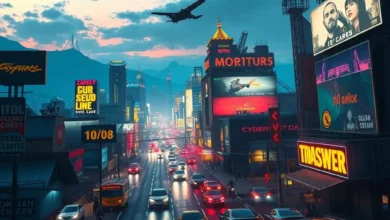
Most Realistic Open World Games Ever Created: A Gamer’s Journey Through Immersive Worlds


Open-world games have evolved dramatically over the years, transforming from simple sandbox environments into breathtakingly realistic digital landscapes that blur the line between fantasy and reality. For gamers who crave immersion, these games offer unparalleled freedom, depth, and visual fidelity, making every moment feel alive. Whether you’re exploring sprawling cities, surviving harsh wilderness, or uncovering hidden secrets, the most realistic open-world games deliver experiences that resonate long after the controller is put down.
The appeal of these games lies not just in their scale but in their attention to detail. From dynamic weather systems and day-night cycles to lifelike NPC behaviors and intricate ecosystems, the best open-world titles recreate the world with astonishing accuracy. This realism isn’t just about graphics—it’s about creating environments that feel real, where players can suspend disbelief and fully invest in the adventure. Whether you’re a casual player or a hardcore enthusiast, the most realistic open-world games provide endless opportunities for discovery, challenge, and storytelling.
🌍 The Evolution of Realism in Open-World Games
The journey toward realism in open-world games has been a gradual one, marked by technological advancements and creative innovation. Early titles like The Elder Scrolls III: Morrowind (2002) and Grand Theft Auto: San Andreas (2004) laid the groundwork with expansive worlds and basic physics, but they lacked the polish we associate with realism today. These games were ambitious but limited by the hardware of their time, offering a sense of freedom without the depth of modern experiences.
As gaming technology progressed, so did the ambition of developers. Titles like Red Dead Redemption 2 (2018) and The Witcher 3: Wild Hunt (2015) set new benchmarks for immersion, introducing dynamic ecosystems, realistic AI, and jaw-dropping visuals. These games didn’t just simulate a world—they made players feel like they were part of it. The introduction of motion capture, advanced physics engines, and procedural generation further elevated the experience, allowing for more organic interactions and unpredictable scenarios.
The rise of photorealistic graphics engines, such as Unreal Engine 5, has pushed realism to new heights. Games like Cyberpunk 2077 (2020) and Starfield (2023) leverage these technologies to create worlds that are nearly indistinguishable from reality. Even mobile games like Genshin Impact (2020) have embraced realism with stunning open worlds that rival console and PC experiences. Today, the bar for realism is higher than ever, and players expect nothing less than a fully immersive escape from the real world.
🔥 What Defines Realism in Open-World Games?
Realism in open-world games isn’t just about graphics—it’s a multi-faceted concept that encompasses several key elements. First and foremost is visual fidelity, which includes high-resolution textures, realistic lighting, and detailed environmental effects. Games like Ghost of Tsushima (2020) and Assassin’s Creed Valhalla (2020) excel in this area, recreating historical settings with astonishing accuracy.
Physics and environmental realism are equally important. A realistic open-world game should simulate real-world physics, from the way water flows to how foliage sways in the wind. Titles like Microsoft Flight Simulator (2020) take this to an extreme, replicating the entire planet Earth with such precision that players can virtually visit their own neighborhoods. Meanwhile, Death Stranding (2019) introduces a unique take on realism with its dynamic weather and terrain systems, which directly impact gameplay and narrative.
AI behavior and NPC interactions also play a crucial role in creating a believable world. Games like The Sims 4 (2014) and Cities: Skylines (2015) are masterclasses in AI-driven realism, where NPCs follow routines, form relationships, and react to the player’s actions. Even in action-heavy games like Metal Gear Solid V: The Phantom Pain (2015), the AI enemies exhibit tactical behaviors that make encounters feel authentic.
Sound design and music are often overlooked but equally vital. A realistic open-world game should immerse players with ambient noise, dynamic soundtracks, and realistic voice acting. Hellblade: Senua’s Sacrifice (2017) is a prime example, using binaural audio to create an unparalleled sense of immersion. Similarly, Death Stranding features a hauntingly beautiful score by Ludvig Forssell, which enhances the game’s melancholic atmosphere.
Narrative depth and world-building round out the realism equation. A truly immersive open-world game doesn’t just present a pretty landscape—it tells a story. Games like The Witcher 3: Wild Hunt and Elden Ring (2022) excel in this area, weaving intricate lore and meaningful choices into their worlds. Players should feel like they’re uncovering a living, breathing history rather than just following a checklist of objectives.
🏆 The Most Realistic Open-World Games of All Time
The gaming industry has produced countless open-world titles, but only a select few have achieved true realism. Below, we’ve compiled a list of the most realistic open-world games ever created, ranked based on their attention to detail, immersion, and overall impact on the genre. These games set the standard for what open-world experiences should aspire to be.
- ✅ Red Dead Redemption 2 (2018) – A masterpiece of environmental storytelling and realism.
- ✅ The Witcher 3: Wild Hunt (2015) – Unmatched in narrative depth and world-building.
- ✅ Cyberpunk 2077 (2020) – A futuristic dystopia brought to life with stunning detail.
- ✅ Microsoft Flight Simulator (2020) – The most realistic flight simulator ever made.
- ✅ Ghost of Tsushima (2020) – A breathtaking recreation of feudal Japan.
- ✅ Death Stranding (2019) – A unique blend of realism and surrealism.
- ✅ Elden Ring (2022) – A vast, open-world RPG with unparalleled depth.
- ✅ Starfield (2023) – A sci-fi epic with realistic planetary exploration.
- ✅ Assassin’s Creed Valhalla (2020) – A stunning recreation of Viking-era England.
- ✅ Genshin Impact (2020) – A mobile game that rivals console experiences in scale and detail.
Each of these games offers something unique, whether it’s the raw emotional impact of Red Dead Redemption 2, the narrative brilliance of The Witcher 3, or the sheer scale of Starfield. What they all share is an unwavering commitment to realism, making them essential experiences for any open-world enthusiast.

🎮 Red Dead Redemption 2: The Pinnacle of Environmental Storytelling
Red Dead Redemption 2 is often hailed as the gold standard for realistic open-world games, and for good reason. Developed by Rockstar Games, it transports players to a meticulously crafted recreation of the American Wild West in 1899. The game’s world is a living, breathing entity, filled with dynamic weather, realistic wildlife, and NPCs who follow their own routines. Every detail, from the way Arthur Morgan’s coat sways in the wind to the realistic gunfire mechanics, contributes to an experience that feels eerily authentic.
One of the most impressive aspects of Red Dead Redemption 2 is its attention to environmental storytelling. The world is filled with subtle details that hint at the game’s lore and history. For example, abandoned campsites tell stories of outlaws long gone, while wanted posters reveal the bounty on Arthur’s head. Even the way NPCs react to the player—whether it’s a child running away in fear or a saloon patron offering a drink—adds layers of realism that most games lack.
The game’s physics engine is another standout feature. Bullets behave realistically, horses tire and need to be fed, and even the simplest actions, like skinning a deer or washing clothes, are rendered with surprising depth. This level of detail extends to the game’s side activities, such as poker and blackjack, which are fully playable and even include AI opponents who bluff and strategize like real players.
Red Dead Redemption 2 also excels in its narrative and character development. Arthur Morgan is one of gaming’s most compelling protagonists, and his journey from a hardened outlaw to a man seeking redemption is told with unparalleled emotional depth. The game’s supporting cast, including Dutch van der Linde and John Marston, are equally well-developed, making the world feel populated by real people rather than mere quest-givers.
🔥 Core Gameplay Mechanics in Red Dead Redemption 2
The gameplay in Red Dead Redemption 2 is designed to feel as realistic as possible, which means players must adapt to its mechanics. Here’s a breakdown of the game’s core systems:
- ✅ Combat and Gunplay: The game features a weighty, realistic combat system where every shot counts. Players must aim carefully, take cover, and manage their stamina to survive firefights.
- ✅ Horseback Riding: Horses are more than just transportation—they’re companions that tire, need to be cared for, and can even be customized with saddles and coats.
- ✅ Survival Mechanics: Players must manage their health by eating, drinking, and treating wounds. Even simple actions like sleeping or bathing have consequences.
- ✅ Dynamic Weather and Time: The game features a fully dynamic day-night cycle and weather system, which affects visibility, wildlife behavior, and NPC routines.
- ✅ Law and Wanted System: The game’s morality system tracks Arthur’s honor, which influences how NPCs react to him. Higher honor unlocks better weapons and perks, while low honor makes the game more challenging.
These mechanics work together to create an experience that feels organic and unpredictable. Unlike many open-world games where the world remains static regardless of player actions, Red Dead Redemption 2 reacts dynamically to Arthur’s choices, making each playthrough feel unique.
🌍 Open World Design in Red Dead Redemption 2
The world of Red Dead Redemption 2 is divided into five distinct regions, each with its own culture, geography, and lore. From the snowy peaks of the Grizzlies to the sweltering bayous of Lemoyne, every area feels alive and unique. The game’s map is vast, but it’s designed in a way that encourages exploration without feeling overwhelming.
The mission structure is another highlight. While the main story is linear, the game’s side quests and activities are woven seamlessly into the world. Whether it’s hunting legendary animals, participating in poker games, or assisting strangers in need, these moments make the world feel populated by real people with real lives. The game also features a dynamic event system, where random encounters—such as a runaway stagecoach or a grizzly bear attack—can occur anywhere on the map, adding unpredictability to exploration.
Replay value is high thanks to the game’s multiple endings, which are influenced by Arthur’s honor and choices. Players who focus on high honor will unlock different story beats and endings compared to those who embrace their darker side. This level of depth ensures that Red Dead Redemption 2 remains engaging even after multiple playthroughs.
🎨 Graphics and Audio: A Feast for the Senses
Red Dead Redemption 2 is a visual and auditory masterpiece, setting a new standard for open-world games. The game runs on a heavily modified version of Rockstar’s proprietary RAGE engine, which was pushed to its limits to deliver breathtaking graphics. The attention to detail is staggering—every rock, tree, and building is rendered with astonishing realism, and the game’s draw distance is among the best in the industry.
The lighting and weather systems are particularly impressive. Dynamic weather affects not just the visuals but also gameplay. Rain makes surfaces slippery, snow slows down movement, and sunlight can reveal hidden details in the environment. The game’s day-night cycle is equally well-implemented, with the world transitioning smoothly from dawn to dusk and back again. Even the stars in the night sky are rendered with such accuracy that they match real-world constellations.
The audio design in Red Dead Redemption 2 is just as immersive. The game features a dynamic soundtrack composed by Woody Jackson and others, which adapts to the player’s actions. Whether it’s a tense standoff, a peaceful ride through the countryside, or a heart-wrenching moment of reflection, the music enhances the emotional impact of every scene. The voice acting is equally stellar, with a cast of talented actors bringing the game’s characters to life.
One of the most unique audio features is the game’s use of ambient noise. The world is filled with realistic sounds, from the chirping of birds to the distant tolling of church bells. These details might seem minor, but they contribute to an overall sense of immersion that few games can match.
🎭 The Witcher 3: Wild Hunt – A Narrative Masterpiece
If Red Dead Redemption 2 is the pinnacle of environmental realism, then The Witcher 3: Wild Hunt is the gold standard for narrative depth and world-building. Developed by CD Projekt Red, this open-world RPG follows Geralt of Rivia as he searches for his adopted daughter, Ciri, while navigating a war-torn fantasy world filled with political intrigue, dark magic, and mythical creatures. The game’s world is a sprawling, diverse landscape that blends medieval Europe with Slavic folklore, creating a setting that feels both familiar and fresh.
What sets The Witcher 3 apart from other open-world games is its emphasis on storytelling. The game’s main quest is a gripping saga filled with moral dilemmas, unexpected twists, and heart-wrenching choices. But the real magic lies in the side quests, which are some of the best in gaming history. From the tragic tale of the Bloody Baron to the haunting mystery of Heart of Stone, these quests are mini-masterpieces that rival the best novels and films.
The world itself is incredibly detailed, with each region feeling distinct and alive. Novigrad is a bustling, corrupt city filled with political intrigue, while the Skellige Isles are a rugged, Viking-inspired landscape where clans feud and monsters lurk in the mist. The game’s day-night cycle and dynamic events add to the immersion, making the world feel like a living, breathing entity.
🔥 Core Gameplay Mechanics in The Witcher 3
The gameplay in The Witcher 3 is designed to complement its narrative depth. The combat system is fast-paced and skill-based, with Geralt wielding a variety of swords, signs (magic abilities), and oils to defeat enemies. The game encourages players to adapt their playstyle based on the foes they face—using fast attacks against humans and silver swords against monsters. The alchemy system adds another layer of depth, allowing players to brew potions, bombs, and oils that can turn the tide in battle.
Exploration is another key aspect of the game. The world is filled with hidden treasures, Gwent card game matches, and environmental puzzles. The game also features a dynamic economy, where players can buy and sell goods, influence NPCs with their choices, and even own property. This level of detail makes the world feel like more than just a backdrop—it’s a place where every action has consequences.
The game’s difficulty scales dynamically, ensuring that players are always challenged but never overwhelmed. Enemies adapt to Geralt’s abilities, making each fight a unique experience. Whether it’s a brutal battle against a group of bandits or a tense standoff with a powerful monster, the combat in The Witcher 3 feels weighty and satisfying.
🌍 Open World Design in The Witcher 3
The world of The Witcher 3 is divided into three major regions: Velen, Novigrad, and the Skellige Isles. Each area has its own culture, geography, and lore, making exploration a constant delight. Velen is a dark, swampy region filled with cursed villages and monstrous threats, while Novigrad is a bustling metropolis where political intrigue runs deep. The Skellige Isles, meanwhile, are a rugged, Viking-inspired landscape where clans feud and ancient ruins hide dark secrets.
The game’s quest structure is another highlight. While the main story is compelling, the side quests are where The Witcher 3 truly shines. These quests range from heartwarming tales of redemption to horrifying encounters with supernatural horrors. The game also features a dynamic event system, where random encounters—such as a village under siege or a merchant’s caravan being attacked—can occur anywhere on the map.
Replay value is high thanks to the game’s multiple endings, which are influenced by Geralt’s choices throughout the story. Players who focus on different decisions will unlock different outcomes, making each playthrough feel unique. The game also features two expansion packs, Hearts of Stone and Blood and Wine, which add even more depth and content to the world.
🎮 Cyberpunk 2077: A Futuristic Dystopia
Cyberpunk 2077 is a game that pushes the boundaries of open-world realism in a science-fiction setting. Developed by CD Projekt Red, it drops players into Night City, a sprawling metropolis filled with neon lights, corporate skyscrapers, and cybernetic enhancements. The game’s world is a dark, gritty reflection of a possible future, where humanity’s quest for progress has come at a terrible cost.
What makes Cyberpunk 2077 stand out is its attention to detail. The game’s world is filled with life—NPCs go about their daily routines, traffic clogs the streets, and advertisements flicker in the rain. The level of immersion is staggering, with every corner of Night City feeling alive and real. The game’s narrative is equally compelling, following V, a mercenary caught in a web of corporate intrigue, identity theft, and cybernetic enhancements.
The game’s combat system is fast-paced and fluid, with V wielding a variety of cyberware abilities, guns, and melee weapons. The game encourages players to experiment with different playstyles, from stealthy takedowns to all-out gunfights. The hacking system adds another layer of depth, allowing players to bypass security systems, manipulate enemies, and even take control of robotic foes.
🔥 Core Gameplay Mechanics in Cyberpunk 2077
The gameplay in Cyberpunk 2077 is designed to feel as realistic as possible in a sci-fi setting. Here’s a breakdown of the game’s core systems:
- ✅ Combat and Gunplay: The game features a weighty, realistic combat system where every shot counts. Players must aim carefully, take cover, and manage their stamina to survive firefights.
- ✅ Cyberware Abilities: V’s cybernetic enhancements play a major role in combat. Players can unlock abilities like faster movement, increased damage resistance, and even hacking skills that allow them to control robotic foes.
- ✅ Hacking System: The hacking system allows players to bypass security systems, manipulate enemies, and even take control of robotic foes. This adds a layer of strategy to both combat and exploration.
- ✅ Street Cred: V’s reputation in Night City affects how NPCs react to him. Higher Street Cred unlocks better weapons and perks, while low Street Cred makes the game more challenging.
- ✅ Day-Night Cycle and Dynamic Events: The game features a fully dynamic day-night cycle and weather system, which affects visibility and NPC routines. Random events, such as gang wars or police chases, can occur anywhere on the map.
These mechanics work together to create an experience that feels organic and unpredictable. The game’s world reacts dynamically to V’s choices, making each playthrough feel unique.
🌍 Open World Design in Cyberpunk 2077
Night City is divided into six distinct districts, each with its own culture, geography, and lore. From the neon-lit streets of Westbrook to the industrial wasteland of Watson, every area feels alive and unique. The game’s map is vast, but it’s designed in a way that encourages exploration without feeling overwhelming.
The mission structure is another highlight. While the main story is gripping, the side quests are where Cyberpunk 2077 truly shines. These quests range from heartwarming tales of redemption to dark, morally ambiguous dilemmas. The game also features a dynamic event system, where random encounters—such as a gang war or a police chase—can occur anywhere on the map.
Replay value is high thanks to the game’s multiple endings, which are influenced by V’s choices throughout the story. Players who focus on different decisions will unlock different outcomes, making each playthrough feel unique. The game’s expansions, Phantom Liberty, add even more depth and content to the world.
📊 Comparison Table: Realism in Open-World Games
| Game | Visual Realism | Environmental Realism | AI and NPC Behavior | Narrative Depth | Sound Design |
|---|---|---|---|---|---|
| Red Dead Redemption 2 | ★★★★★ | ★★★★★ | ★★★★★ | ★★★★☆ | ★★★★★ |
| The Witcher 3: Wild Hunt | ★★★★☆ | ★★★★☆ | ★★★★☆ | ★★★★★ | ★★★★★ |
| Cyberpunk 2077 | ★★★★★ | ★★★★☆ | ★★★★☆ | ★★★★☆ | ★★★★★ |
| Microsoft Flight Simulator | ★★★★★ | ★★★★★ | ★★★☆☆ | ★★☆☆☆ | ★★★★☆ |
| Ghost of Tsushima | ★★★★☆ | ★★★★☆ | ★★★★☆ | ★★★★☆ | ★★★★★ |
| Death Stranding | ★★★☆☆ | ★★★★★ | ★★★☆☆ | ★★★☆☆ | ★★★★★ |
| Elden Ring | ★★★★☆ | ★★★★☆ | ★★★★☆ | ★★★★☆ | ★★★★☆ |
| Starfield | ★★★★☆ | ★★★★☆ | ★★★☆☆ | ★★★★☆ | ★★★★☆ |
| Assassin’s Creed Valhalla | ★★★★☆ | ★★★★☆ | ★★★☆☆ | ★★★☆☆ | ★★★★☆ |
| Genshin Impact | ★★★★☆ | ★★★☆☆ | ★★★☆☆ | ★★★☆☆ | ★★★★☆ |
This comparison table highlights the strengths and weaknesses of each game in terms of realism. Red Dead Redemption 2 and Microsoft Flight Simulator lead the pack in environmental and visual realism, while The Witcher 3 and Cyberpunk 2077 excel in narrative depth and sound design. Each game offers a unique take on realism, making them essential experiences for any open-world enthusiast.
✅ Pros and Cons: What Makes These Games Stand Out?
✅ Advantages of Realistic Open-World Games
Realistic open-world games offer several key advantages that set them apart from traditional titles:
- ✅ Immersive Experiences: These games transport players to fully realized worlds, making them feel like they’re part of the story rather than just observers.
- ✅ Endless Exploration: With vast, detailed worlds to explore, players are encouraged to venture off the beaten path and discover hidden secrets.
- ✅ Dynamic Gameplay: Realistic mechanics, such as day-night cycles and dynamic events, make every playthrough feel fresh and unpredictable.
- ✅ Emotional Engagement: Well-crafted narratives and lifelike characters create deep emotional connections, making players care about the outcomes of their actions.
- ✅ Replay Value: Multiple endings, side quests, and dynamic events ensure that players can experience these games in countless ways.
❌ Challenges and Limitations
While realistic open-world games offer unparalleled immersion, they also come with challenges and limitations:
- ⚠️ Technical Requirements: Many of these games demand high-end hardware to run at optimal settings, which can be a barrier for players with mid-range or low-end PCs.
- ⚠️ Performance Issues: Even on high-end systems, some games struggle with frame drops, long load times, or bugs, which can disrupt immersion.
- ⚠️ Complexity: The sheer depth and detail of these games can be overwhelming for casual players, making them less accessible to newcomers.
- ⚠️ Grind and Repetition: Some realistic open-world games feature repetitive side quests or grind-heavy mechanics, which can feel tedious over time.
- ⚠️ Narrative Overload: While deep storytelling is a strength, it can also lead to convoluted plots or excessive cutscenes that disrupt gameplay for some players.
These challenges don’t diminish the value of realistic open-world games, but they’re important to consider when choosing which titles to play. Players should weigh the pros and cons based on their preferences and hardware capabilities.
💻 Performance and Technical Analysis
🖥️ PC Performance in Realistic Open-World Games
Realistic open-world games are often resource-intensive, requiring powerful hardware to run smoothly at high settings. Below is a comparison of the system requirements for some of the most demanding titles:
| Game | Minimum Requirements | Recommended Requirements | Ultra Settings Performance |
|---|---|---|---|
| Red Dead Redemption 2 | GTX 1060 / Ryzen 5 3600 12GB RAM 55GB SSD | RTX 2080 / Ryzen 7 5700X 16GB RAM 55GB SSD | 60 FPS at 1440p |
| Cyberpunk 2077 | GTX 1060 / Ryzen 5 3600 12GB RAM 70GB SSD | RTX 3080 / Ryzen 7 5800X 16GB RAM 70GB SSD | 60 FPS at 4K (with DLSS) |
| The Witcher 3 | GTX 970 / Ryzen 5 2500X 8GB RAM 50GB HDD | RTX 2070 / Ryzen 7 3700X 16GB RAM 50GB SSD | 60 FPS at 1440p |
| Microsoft Flight Simulator | GTX 970 / Ryzen 5 2600 16GB RAM 150GB SSD | RTX 3070 / Ryzen 7 3700X 32GB RAM 150GB SSD | 60 FPS at 1440p |
| Elden Ring | GTX 1060 / Ryzen 5 3600 12GB RAM 60GB SSD | RTX 2080 / Ryzen 7 5800X 16GB RAM 60GB SSD | 60 FPS at 4K |
As the table shows, realistic open-world games demand significant hardware investment, especially at ultra settings. Players with mid-range PCs may need to compromise on graphics settings to achieve smooth performance. Features like DLSS (Deep Learning Super Sampling) and FSR (FidelityFX Super Resolution) can help bridge the gap, allowing players to enjoy these games at higher resolutions without sacrificing too much visual fidelity.
Optimization is another critical factor. Games like Red Dead Redemption 2 and The Witcher 3 have received multiple patches to improve performance, but others, like Cyberpunk 2077, have struggled with bugs and glitches at launch. Players should always check for updates and community patches to ensure the best possible experience.
📱 Mobile Performance in Realistic Open-World Games
Mobile gaming has come a long way, with titles like Genshin Impact and Honkai: Star Rail offering open-world experiences that rival console and PC games. However, mobile devices still face limitations in terms of hardware and battery life. Below is an analysis of how realistic open-world games perform on mobile:
- ✅ Genshin Impact: This game runs smoothly on most modern smartphones, with high frame rates and detailed graphics. However, players may need to lower settings on older devices to avoid overheating or battery drain.
- ✅ Honkai: Star Rail: Similar to Genshin Impact, this game offers stunning visuals but requires a powerful device for optimal performance. The turn-based combat system helps offset the load on mobile hardware.
- ⚠️ Performance Issues: Games like Cyberpunk 2077 and Red Dead Redemption 2 are not available on mobile, though ports of similar titles (e.g., GTA: San Andreas or The Elder Scrolls: Blades) are available. These ports often sacrifice visual fidelity for better performance.
- ⚠️ Battery Life: Running demanding open-world games on mobile can drain the battery quickly, especially with high brightness and Wi-Fi enabled. Players should use power-saving modes and close background apps to extend playtime.
Despite these challenges, mobile open-world games continue to improve, offering increasingly realistic experiences for players on the go. Titles like Genshin Impact prove that mobile devices can deliver stunning visuals and immersive gameplay, even if they can’t match the sheer scale of console or PC titles.
🏁 Final Verdict: Are Realistic Open-World Games Worth It?
Realistic open-world games represent the pinnacle of interactive entertainment, offering experiences that are as close to real life as any digital medium can provide. For players who crave immersion, depth, and freedom, these games are an absolute must-play. Whether you’re exploring the untamed wilderness of Red Dead Redemption 2, unraveling the mysteries of The Witcher 3, or navigating the neon-lit streets of Cyberpunk 2077, each game offers something unique and unforgettable.
That said, realistic open-world games are not for everyone. Their complexity, technical demands, and occasional grind-heavy mechanics can be overwhelming for casual players. Additionally, the high cost of entry—both in terms of hardware and game prices—means these titles are often inaccessible to budget-conscious gamers. Players should carefully consider their preferences and budget before diving into these immersive worlds.
For those who do take the plunge, the rewards are immense. Realistic open-world games provide an escape unlike any other, transporting players to worlds where every choice matters and every detail feels real. They are a testament to the power of interactive storytelling and a reminder of why gaming continues to evolve as an art form.
If you’re ready to experience the most realistic open-world games ever created, now is the perfect time to dive in. Whether you’re a seasoned veteran or a newcomer to the genre, these games promise an adventure you won’t forget.
❓ Frequently Asked Questions
- What makes a game “realistic” in the open-world genre?
A realistic open-world game is defined by its attention to detail in multiple areas: visuals, environmental realism, AI behavior, narrative depth, and sound design. These games strive to recreate the world with such accuracy that players feel immersed in a living, breathing entity. Features like dynamic weather, lifelike NPC routines, and weighty physics systems contribute to this realism.
- Are realistic open-world games more demanding on hardware?
Yes, most realistic open-world games require powerful hardware to run smoothly at high settings. Games like Cyberpunk 2077 and Red Dead Redemption 2 demand high-end GPUs and CPUs, especially at 4K resolutions. Even mid-range PCs may struggle with ultra settings, though features like DLSS and FSR can help improve performance.
- Which realistic open-world game has the best story?
This is subjective, but The Witcher 3: Wild Hunt is widely regarded as having the best narrative depth and storytelling in the open-world genre. Its main quest and side quests are masterfully crafted, offering emotional depth, moral dilemmas, and unforgettable characters. Other strong contenders include Red Dead Redemption 2 and Cyberpunk 2077.
- Can realistic open-world games be played on mobile devices?
Some mobile games offer realistic open-world experiences, such as Genshin Impact and Honkai: Star Rail. However, these games often sacrifice graphical fidelity or scale to run smoothly on mobile hardware. More demanding titles like Red Dead Redemption 2 or Cyberpunk 2077 are not available on mobile, though ports of older titles may exist.
- Do realistic open-world games have replay value?
Yes, most realistic open-world games offer high replay value thanks to multiple endings, side quests, dynamic events, and player choices. Games like The Witcher 3 and Red Dead Redemption 2 encourage players to explore different paths and make choices that impact the story, making each playthrough unique.
- What are the best settings to optimize performance in realistic open-world games?
The best settings depend on your hardware. For mid-range PCs, lowering resolution scaling (e.g., using 1440p instead of 4K) and enabling DLSS/FSR can significantly improve performance. Reducing shadow quality, turning off motion blur, and limiting post-processing effects can also help. Always check community benchmarks for your specific hardware to find the optimal balance between performance and visuals.
- Are realistic open-world games suitable for casual players?
Realistic open-world games can be overwhelming for casual players due to their complexity, depth, and sometimes grind-heavy mechanics. Titles like Red Dead Redemption 2 and Cyberpunk 2077 offer hundreds of hours of content, which may not appeal to players who prefer shorter, more accessible experiences. Casual players might enjoy games like Genshin Impact or Honkai: Star Rail for a more streamlined open-world experience.
- How do realistic open-world games handle AI and NPC behavior?
Realistic open-world games employ advanced AI systems to simulate lifelike NPC behavior. In games like Red Dead Redemption 2, NPCs follow daily routines, react to the player’s actions, and even remember past interactions. Other games, like The Sims 4, focus on simulating social dynamics, where NPCs form relationships and react to the player’s choices. These systems contribute to the immersion by making the world feel alive and unpredictable.
- Which realistic open-world game has the most detailed environment?
Microsoft Flight Simulator is widely regarded as having the most detailed environment, with its recreation of the entire planet Earth using real-world data. Every mountain, river, and city is rendered with astonishing accuracy, making it a standout title for players who appreciate environmental realism. Other strong contenders include Red Dead Redemption 2 and Ghost of Tsushima.
- Are there any realistic open-world games with multiplayer?
Most realistic open-world games are single-player experiences, but some titles offer multiplayer or co-op modes. Red Dead Redemption 2 features a limited multiplayer mode in the form of its online component, Red Dead Online, while Cyberpunk 2077 includes a co-op mode for certain missions. Games like GTA Online and Fortnite blend open-world exploration with multiplayer elements, though they are not purely realistic in their design.
🎯 Conclusion: The Future of Realistic Open-World Gaming
Realistic open-world games have come a long way since the early days of pixelated landscapes and static NPCs. Today, they represent the pinnacle of interactive storytelling, offering experiences that are as close to real life as any digital medium can provide. With advancements in graphics technology, AI, and procedural generation, the future of these games looks brighter than ever.
As we look ahead, we can expect even more immersive worlds, with games like Starfield and Cyberpunk 2077 pushing the boundaries of what’s possible. The rise of virtual reality and cloud gaming will further enhance immersion, allowing players to step into these worlds like never before. Whether you’re a seasoned gamer or a newcomer to the genre, realistic open-world games offer an adventure that is both thrilling and unforgettable.
So, if you’re ready to lose yourself in a world where every detail feels real, there’s no better time to dive in. Grab your controller, adjust your graphics settings, and prepare to be transported to some of the most breathtaking and immersive environments ever created. The journey awaits.