
FIFA 23, developed by EA Sports, is one of the most anticipated football simulation games released in recent years. The game promises to deliver an unparalleled visual experience, boasting enhanced graphics, lifelike player animations, and immersive stadium environments. But how does it truly stack up in terms of realism and graphical fidelity? In this in-depth analysis, we’ll dissect every aspect of FIFA 23’s graphics engine, compare it to its predecessors, and evaluate whether it lives up to the hype or falls short of expectations.
🎨 Why Graphics Matter in FIFA 23: The Visual Evolution of Football Games
The evolution of football games over the past two decades has been nothing short of remarkable. From pixelated sprites and limited animations in the early 2000s to today’s near-photorealistic visuals, the advancements in graphics technology have transformed how players experience virtual football. FIFA 23, a flagship title in the genre, represents the pinnacle of this evolution, leveraging cutting-edge technologies to create a visually stunning simulation of the beautiful game.
EA Sports has long been a pioneer in sports game graphics, and FIFA 23 is no exception. The game utilizes the Frostbite Engine, a powerhouse known for powering titles like Battlefield and Dragon Age. This engine enables FIFA 23 to deliver highly detailed environments, dynamic lighting, and fluid animations that were previously unimaginable. But does this technical prowess translate into a truly realistic football experience, or is it merely smoke and mirrors designed to impress casual players?
The visual bar has been set high by EA Sports, and FIFA 23 aims to push the boundaries further with features like HyperMotionV, which captures real player movements to create more authentic animations. But does this innovation genuinely enhance realism, or is it another marketing gimmick? Let’s dive deeper into the graphical elements that define FIFA 23 and assess their impact on the overall experience.
🖥️ The Engine Behind the Magic: Frostbite and HyperMotionV
FIFA 23’s graphics engine, Frostbite, is a technological marvel that has been refined over years of development. This engine is responsible for rendering everything from player models to stadium environments with unprecedented detail. One of its standout features is HyperMotionV, an AI-driven animation system that captures real-world player movements through motion capture technology. This system uses data from real footballers to create animations that feel more natural and lifelike than ever before.
The integration of HyperMotionV is a game-changer for FIFA 23. Traditional motion capture in sports games often relies on a limited set of animations, which can result in repetitive or unrealistic player movements. HyperMotionV, however, uses machine learning to generate new animations on the fly, ensuring that every player move feels unique and authentic. This technology is particularly noticeable in player celebrations, tackles, and dribbling sequences, where the fluidity and realism are taken to a new level.
For example, watch a forward dribble past a defender in FIFA 23, and you’ll notice subtle variations in their movements—something that was missing in previous iterations. The game no longer feels like a series of pre-recorded animations; instead, it mimics the unpredictability and spontaneity of real football. This level of detail extends to player reactions as well. If a player gets injured or reacts to a foul, their animations are more nuanced and empathetic, adding to the game’s emotional depth.
- ✅ HyperMotionV captures real player movements, making animations more fluid and less repetitive.
- 🎯 Player reactions are more nuanced, enhancing the emotional connection to the game.
- ⚠️ Requires a powerful PC or console to fully appreciate the graphical enhancements.
🌍 Stadiums and Environments: A Virtual Football Cathedral
One of the most striking aspects of FIFA 23’s graphics is its stadium environments. EA Sports has meticulously recreated some of the world’s most iconic football grounds, from Camp Nou in Barcelona to Wembley Stadium in London. The level of detail in these stadiums is breathtaking. Crowds cheer in real-time, banners wave in the wind, and even the weather conditions—like rain or snow—affect the pitch’s appearance and player behavior.
The dynamic lighting system in FIFA 23 is another standout feature. Stadiums are no longer static backdrops; they come alive with realistic lighting that changes based on the time of day or weather conditions. For instance, a match played under floodlights at night feels vastly different from an afternoon kickoff. The lighting affects player visibility, ball physics, and even the grass’s texture, making the environment feel more immersive.
The attention to detail extends to smaller elements as well. For example, the advertisements on the pitch are now dynamic, changing based on the region where the game is played. This level of authenticity is a far cry from the generic billboards seen in earlier FIFA titles. Even the grass itself is rendered with far greater realism, with individual blades reacting to player movements and weather effects.
However, while the stadiums are visually impressive, they are not without flaws. Some players have noted that certain stadiums, particularly those with unique architectural features, are not always perfectly replicated. For instance, the roof of Allianz Arena in Munich, which is known for its glowing exterior, occasionally loses its dynamic lighting effects during matches. These minor inconsistencies can break the immersion for observant players.
- ✅ Iconic stadiums are meticulously recreated, with dynamic lighting and realistic crowd reactions.
- 🎯 Weather effects impact gameplay and visuals, adding to the realism.
- ⚠️ Some stadiums have minor graphical inconsistencies, such as lost lighting effects.
🎭 Player Models and Animations: The Soul of Realism
Player models in FIFA 23 are more detailed than ever, with improved facial animations, muscle definition, and clothing textures. EA Sports has worked closely with football clubs to ensure that player likenesses are as accurate as possible. This attention to detail extends to the players’ kits, which now feature realistic fabric textures, wrinkles, and even sweat effects during intense gameplay.

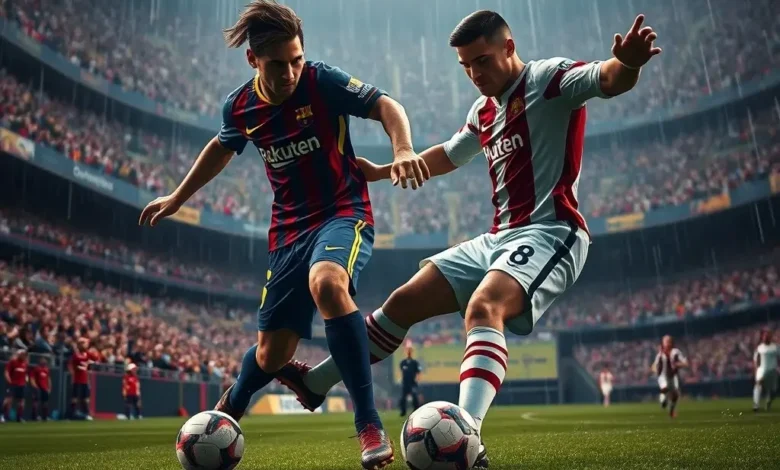
The animations, powered by HyperMotionV, are where FIFA 23 truly shines. Player movements feel more natural and less robotic than in previous titles. For example, a striker’s first touch is now more nuanced, with subtle adjustments based on the angle and speed of the incoming pass. Similarly, goalkeepers’ saves are more dynamic, with their body positioning reflecting real-world reactions to shots.
One area where FIFA 23 excels is in player facial animations. The game now features more expressive faces, with players reacting to goals, fouls, and other in-game events in a way that feels authentic. This level of detail adds a layer of emotional depth that was previously missing from the series.
However, there are still areas where FIFA 23 falls short. For instance, player customization remains limited. While you can adjust hairstyles and facial features, the game does not allow for in-depth customization like tattoos or scars, which would further enhance realism. Additionally, some players have noted that the facial animations can occasionally feel exaggerated or unnatural, breaking the immersion.
- ✅ Player models are highly detailed, with accurate likenesses and realistic clothing textures.
- 🎯 HyperMotionV animations are fluid and lifelike, enhancing the overall gameplay experience.
- ⚠️ Limited player customization reduces the sense of personalization in the game.
🌧️ Weather and Dynamic Effects: The Weather’s Role in Gameplay
FIFA 23 introduces a dynamic weather system that significantly impacts gameplay and visuals. Matches can now transition from clear skies to rain or snow, each with its own set of challenges. For example, rain makes the pitch slippery, affecting player movement and ball physics. Snow, on the other hand, reduces visibility and makes the ball harder to control.
Visually, the weather effects are impressive. Rain droplets streak across the screen, puddles form on the pitch, and snow accumulates on players’ clothing and hair. These effects are not just cosmetic; they actively influence gameplay, making matches feel more unpredictable and authentic. For instance, a slippery pitch can lead to unexpected turnovers, while reduced visibility forces players to adapt their strategies.
However, the weather system is not without its flaws. Some players have reported that the transitions between weather conditions can feel abrupt or unnatural. Additionally, the effects of weather on gameplay are not always consistent. For example, a player might slip on a dry patch of the pitch even when it’s raining elsewhere, which can feel unrealistic.
- ✅ Dynamic weather systems add unpredictability and challenge to matches.
- 🎯 Visual effects like rain and snow are immersive and well-executed.
- ⚠️ Weather transitions can feel abrupt, and its impact on gameplay is not always consistent.
🎵 Sound Design and Audio: The Unsung Hero of Immersion
While graphics often steal the spotlight, sound design plays a crucial role in creating an immersive football experience. FIFA 23’s audio team has worked tirelessly to deliver a sonic landscape that complements its visuals. From the roar of the crowd to the crunch of tackles, every sound effect is designed to enhance realism and engagement.
The game features a dynamic audio system that adjusts based on in-game events. For example, the volume of the crowd increases when your team scores a goal, and the commentary adapts to the flow of the match. The voice acting, provided by Martin Tyler and Alan Smith, is another highlight. Their commentary feels more natural and less scripted than in previous titles, with real-time reactions to gameplay events.
The sound of the ball, too, is a standout feature. The thud of a shot hitting the net or the swish of a perfect cross is rendered with impressive clarity. Even the ambient sounds of the stadium, such as chants or announcements, contribute to the game’s realism. These audio details might seem minor, but they collectively create an atmosphere that feels alive and reactive.
However, there are areas where FIFA 23’s audio could be improved. Some players have noted that the crowd sounds can become repetitive during long matches, and the commentary occasionally lacks the spontaneity of real football broadcasts. Additionally, the audio mix can feel unbalanced, with certain sound effects drowning out others.
- ✅ Dynamic audio system adjusts based on in-game events, enhancing immersion.
- 🎯 Voice acting is more natural, with real-time reactions to gameplay.
- ⚠️ Crowd sounds can become repetitive, and the audio mix may feel unbalanced.
🎤 Commentary and Broadcast Quality: Bringing the Stadium to Life
The commentary in FIFA 23 is a significant upgrade from previous titles. Martin Tyler and Alan Smith provide a more engaging and responsive experience, with their commentary adapting to the flow of the game. They react to key moments, such as near-misses or controversial decisions, in a way that feels authentic. This level of interactivity makes the matches feel more like watching a real football broadcast.
The broadcast quality has also improved, with camera angles and replays that mimic real-world football coverage. The presentation is polished and professional, adding to the game’s overall appeal. However, some players have noted that the commentary can occasionally feel scripted or overly dramatic, which breaks the immersion for those seeking a more realistic experience.
Another area where FIFA 23 excels is in its post-match analysis. After a game, the commentary team breaks down the key moments, providing insights that feel insightful and relevant. This adds another layer of realism, making the experience feel more like watching a real football match.
- ✅ Commentary is more responsive and engaging, with real-time reactions to gameplay.
- 🎯 Broadcast quality is polished, with professional camera angles and replays.
- ⚠️ Commentary can feel overly dramatic, which may break immersion for some players.
📊 Performance and Optimization: Can Your System Handle the Realism?
FIFA 23’s graphical enhancements come at a cost. The game is one of the most demanding titles in the FIFA series, requiring a powerful PC or console to run smoothly. EA Sports has provided recommended system requirements, but even these can feel optimistic for mid-range hardware. Let’s break down the performance of FIFA 23 across different platforms and settings.
| Graphics Setting | Minimum Requirement | Recommended Requirement | Notes |
|---|---|---|---|
| 1080p | GTX 1050 Ti / RX 560 | GTX 1660 / RX 5600 XT | Playable on low, but visuals suffer. |
| 1440p | GTX 1660 Ti / RX 5700 | RTX 2060 / RX 6700 XT | Enjoyable with medium settings. |
| 4K | RTX 2080 / RX 6800 XT | RTX 3080 / RX 6900 XT | Requires high-end hardware. |
| Ray Tracing | RTX 2080 / RX 6800 XT | RTX 3080 / RTX 4090 | Performance drops significantly. |
On a high-end PC, FIFA 23 runs smoothly at 1080p with ultra settings, delivering a consistent 60+ FPS. However, enabling Ray Tracing or increasing the resolution to 4K can cause frame rate drops, especially on mid-range hardware. The game’s optimization is decent but not perfect, with occasional stuttering or texture pop-ins during loading screens.
On consoles, FIFA 23 performs admirably, with the PlayStation 5 and Xbox Series X delivering near-4K visuals and 60 FPS gameplay. The load times are significantly reduced compared to previous generations, and the game runs consistently without major frame drops. However, some players have reported minor bugs, such as lighting glitches or player animation freezes, which can be distracting.
For mobile players, FIFA 23 is available on Android devices, but the experience is far less impressive. The game runs at lower resolutions and frame rates, with noticeable texture pop-ins and occasional lag. The touch controls can also feel clunky, making it difficult to fully appreciate the game’s graphical enhancements.
In summary, FIFA 23’s performance is heavily dependent on your hardware. While it runs well on high-end systems, mid-range or low-end PCs and consoles may struggle to deliver the full graphical experience. The game’s optimization is a step forward, but there’s still room for improvement.
- ✅ High-end PCs and next-gen consoles deliver a smooth 60+ FPS experience.
- 🎯 Ray Tracing and 4K are possible but come with performance costs.
- ⚠️ Mid-range and low-end hardware may struggle with visuals and frame rates.
📱 Mobile Performance: A Watered-Down Experience
FIFA 23’s mobile version is a stark contrast to its PC and console counterparts. While the game retains the same core mechanics, its visuals are significantly downgraded to accommodate lower-end hardware. The player models are less detailed, the stadiums lack dynamic lighting, and the animations are less fluid. The game also suffers from frequent texture pop-ins and lag, which can disrupt the experience.
The touch controls, too, feel less responsive than on other platforms. Input lag and imprecise gestures make it difficult to execute advanced moves, such as skill moves or accurate passes. While FIFA 23 on mobile is playable, it’s clear that EA Sports prioritized the PC and console versions when it came to graphical fidelity.
For mobile players, the game is best enjoyed on high-end devices with strong GPUs. Even then, compromises in visual quality and performance are inevitable. The mobile version is a testament to EA Sports’ focus on delivering the best experience on high-end platforms, leaving mobile players with a watered-down version of the game.
- ✅ Playable on high-end Android devices, but with downgraded visuals.
- 🎯 Touch controls feel less responsive compared to PC or console.
- ⚠️ Frequent lag and texture pop-ins disrupt the experience.
🔥 Comparison to FIFA 22 and Other Competitors
To fully appreciate FIFA 23’s graphics, it’s essential to compare them to its predecessor, FIFA 22, and other football games like eFootball and Football Manager. FIFA 22 introduced the Frostbite Engine and HyperMotion technology, setting a new standard for graphical realism. FIFA 23 builds on these foundations, refining the visuals and adding new features like dynamic weather and improved crowd animations.
When compared to FIFA 22, FIFA 23’s graphics are noticeably sharper and more detailed. The player models are more lifelike, the stadiums are more immersive, and the animations are fluid. The dynamic weather system is a welcome addition, adding unpredictability and challenge to matches. However, the improvements over FIFA 22 are incremental rather than revolutionary, which may leave some players underwhelmed.
In comparison to eFootball, FIFA 23’s graphics are far superior. eFootball, developed by Konami, has struggled to match the visual fidelity of FIFA series, with less detailed player models and stagnant animations. FIFA 23’s Frostbite Engine and HyperMotionV technology make it the clear winner in terms of graphical realism.
Football Manager, on the other hand, focuses more on simulation than graphics. While its visuals are functional, they lack the polish and detail of FIFA 23. For players seeking a visually stunning football experience, FIFA 23 is the undisputed leader.
However, FIFA 23’s graphics are not without competition. Games like PES 2023 (now rebranded as eFootball) have made significant strides in recent years, particularly in player likeness and animation quality. While FIFA 23 still holds the edge in most areas, the gap is narrowing, and players now have more high-quality football games to choose from.
- ✅ FIFA 23’s graphics are a significant improvement over FIFA 22, with sharper details and more fluid animations.
- 🎯 Superior to eFootball in terms of visual fidelity and immersion.
- ⚠️ Football Manager focuses on simulation, leaving FIFA 23 as the top choice for graphical realism.
🏆 Realism vs. Hype: Does FIFA 23 Deliver?
So, after all this analysis, does FIFA 23’s graphics live up to the hype? The answer is a resounding yes, but with caveats. FIFA 23 is visually stunning, with lifelike player models, dynamic stadiums, and fluid animations that set a new standard for football games. The HyperMotionV technology and Frostbite Engine are game-changers, delivering an experience that feels more authentic than ever before.
However, FIFA 23 is not without its flaws. The game’s performance can be demanding, with frame rate drops and stuttering on mid-range hardware. The dynamic weather system, while impressive, is not always consistent, and minor graphical glitches can break the immersion. Additionally, the mobile version is a watered-down experience that fails to deliver the same level of visuals as its PC and console counterparts.
Ultimately, FIFA 23’s graphics are a testament to EA Sports’ commitment to pushing the boundaries of football simulation. While it may not be a photorealistic masterpiece, it comes closer than any other game in the genre. For football fans seeking the most visually impressive and immersive experience, FIFA 23 is a must-play.
- ✅ FIFA 23 delivers stunning visuals with lifelike player models and dynamic stadiums.
- 🎯 HyperMotionV and Frostbite Engine set a new standard for realism.
- ⚠️ Performance issues and minor glitches hold it back from perfection.
🏁 Final Verdict: Who Should Play FIFA 23?
FIFA 23 is a visual masterpiece that pushes the boundaries of what’s possible in a football simulation game. Its graphics are a significant leap forward from FIFA 22, with lifelike player animations, dynamic stadiums, and immersive weather effects. The HyperMotionV technology and Frostbite Engine work in harmony to create an experience that feels more authentic than ever before.
However, FIFA 23 is not without its flaws. The game’s performance can be demanding, and minor graphical glitches can break the immersion. Additionally, the mobile version fails to deliver the same level of visuals as its PC and console counterparts. For players with mid-range or low-end hardware, FIFA 23 may not be worth the investment.
That said, if you’re a football fan looking for the most visually impressive and immersive football simulation experience, FIFA 23 is a must-play. Its graphics are a testament to EA Sports’ commitment to pushing the boundaries of the genre, and it comes closer to photorealism than any other football game on the market.
So, is FIFA 23’s graphics realistic or overrated? The answer is a resounding realistic, but with room for improvement. If you have the hardware to run it, FIFA 23 is an absolute gem that sets a new standard for football simulation graphics.
❓ Frequently Asked Questions
- Is FIFA 23’s graphics realistic enough for professional football players?
While FIFA 23’s graphics are highly detailed and visually impressive, they are not realistic enough to be indistinguishable from real football. Professional players may appreciate the attention to detail, but the game still falls short of true photorealism. The animations and physics are refined but not perfect.
- How does FIFA 23 compare to FIFA 22 in terms of graphics?
FIFA 23’s graphics are a significant improvement over FIFA 22, with sharper details, more fluid animations, and enhanced dynamic lighting. The HyperMotionV technology and Frostbite Engine deliver a more immersive experience, making FIFA 23 the better choice for players seeking visual realism.
- Does FIFA 23 support Ray Tracing?
Yes, FIFA 23 supports Ray Tracing on compatible hardware. However, enabling Ray Tracing can significantly impact performance, resulting in lower frame rates and occasional stuttering. It’s recommended to use Ray Tracing only on high-end PCs with powerful GPUs.
- Is FIFA 23 optimized for low-end PCs?
FIFA 23 is not optimized for low-end PCs. The game requires at least a GTX 1050 Ti or RX 560 to run, and even these components may struggle to deliver a smooth experience. For the best visuals and performance, a high-end PC or next-gen console is recommended.
- How does FIFA 23’s mobile version compare to its PC and console versions?
FIFA 23’s mobile version is significantly downgraded compared to its PC and console counterparts. The visuals are less detailed, the animations are less fluid, and the performance suffers from frequent lag and texture pop-ins. The mobile version is best enjoyed on high-end Android devices, but even then, compromises are inevitable.
- Does FIFA 23 feature dynamic weather systems?
Yes, FIFA 23 introduces a dynamic weather system that affects both gameplay and visuals. Matches can transition from clear skies to rain or snow, each with its own set of challenges. The weather effects are immersive and impact gameplay, making matches feel more unpredictable and authentic.
- Are player customization options limited in FIFA 23?
Yes, FIFA 23’s player customization options are somewhat limited. While you can adjust hairstyles and facial features, the game does not allow for in-depth customization like tattoos or scars. This limits the sense of personalization and realism for players who enjoy creating unique avatars.
- How does FIFA 23’s sound design compare to previous titles?
FIFA 23’s sound design is a significant improvement over previous titles. The dynamic audio system adjusts based on in-game events, and the commentary feels more natural and responsive. However, the crowd sounds can become repetitive during long matches, and the audio mix may feel unbalanced at times.
- Is FIFA 23 worth buying for its graphics alone?
FIFA 23’s graphics are a major selling point, and the game delivers an immersive and visually stunning experience. However, whether it’s worth buying depends on your hardware and preferences. If you have a high-end PC or next-gen console, FIFA 23 is absolutely worth it. For mobile players or those with mid-range hardware, the experience may not justify the cost.
- How does FIFA 23’s graphics compare to other football games like eFootball?
FIFA 23’s graphics are far superior to eFootball’s. While eFootball has made strides in recent years, it still lags behind FIFA 23 in terms of visual fidelity, player animations, and stadium details. FIFA 23’s Frostbite Engine and HyperMotionV technology make it the clear winner in terms of graphical realism.
🎯 Final Thoughts: A Visual Triumph with Room for Growth
FIFA 23 is a visual triumph that sets a new standard for football simulation graphics. Its lifelike player models, dynamic stadiums, and fluid animations create an immersive experience that feels closer to real football than ever before. The HyperMotionV technology and Frostbite Engine are game-changers, delivering a level of realism that was previously unimaginable.
However, FIFA 23 is not without its flaws. The game’s performance can be demanding, and minor graphical glitches can break the immersion. Additionally, the mobile version fails to deliver the same level of visuals as its PC and console counterparts. For players with mid-range or low-end hardware, FIFA 23 may not be worth the investment.
That said, if you’re a football fan looking for the most visually impressive and immersive football simulation experience, FIFA 23 is a must-play. Its graphics are a testament to EA Sports’ commitment to pushing the boundaries of the genre, and it comes closer to photorealism than any other football game on the market. While it may not be perfect, FIFA 23 is a visual masterpiece that deserves a spot in every football gamer’s library.
So, is FIFA 23’s graphics realistic or overrated? The answer is a resounding realistic, but with room for improvement. If you have the hardware to run it, FIFA 23 is an absolute gem that sets a new standard for football simulation graphics. For everyone else, it’s a tantalizing glimpse of what the future of football games might hold.