
The Witcher 3: Wild Hunt has long been considered one of the definitive open-world role-playing games in the industry. It offers a sprawling narrative, deep combat mechanics, and a world that feels truly alive. Whether you are a returning player revisiting the Continent or a newcomer embarking on Geralt of Rivia’s journey for the first time, there are numerous strategies to enhance your experience. This article serves as a comprehensive guide to mastering the game, covering everything from combat optimization to resource management. We will explore the mechanics that define the gameplay loop, ensuring you get the most out of your time in the world.
Understanding the core systems is essential before diving into the specific tips. The game rewards preparation and tactical thinking over mindless button mashing. By leveraging the environment, utilizing alchemy effectively, and understanding enemy weaknesses, you can overcome even the most difficult challenges. This guide breaks down these complex systems into actionable advice that will help you dominate battles and complete contracts efficiently.
🎮 Core Gameplay Mechanics Explained
The foundation of The Witcher 3 lies in its hybrid combat system. Geralt is a witcher, a monster hunter trained in swordplay, magic, and physical conditioning. Unlike many action RPGs that rely solely on combos, this game requires you to switch between different stances and signs depending on the situation. Mastery comes from recognizing when to dodge, when to parry, and when to cast a spell. The combat flow is designed to be rhythmic, allowing you to anticipate enemy attacks and counter them precisely.
Beyond combat, the game features a robust progression system. You can upgrade your character through experience points, which unlock new mutations and improve your stats. This allows for a high degree of customization. You might choose to focus on a build that emphasizes magic and swords, or perhaps one that relies heavily on oils and bombs. Each playthrough can feel different if you alter your approach to these systems significantly.
⚔️ Combat Stances and Techniques
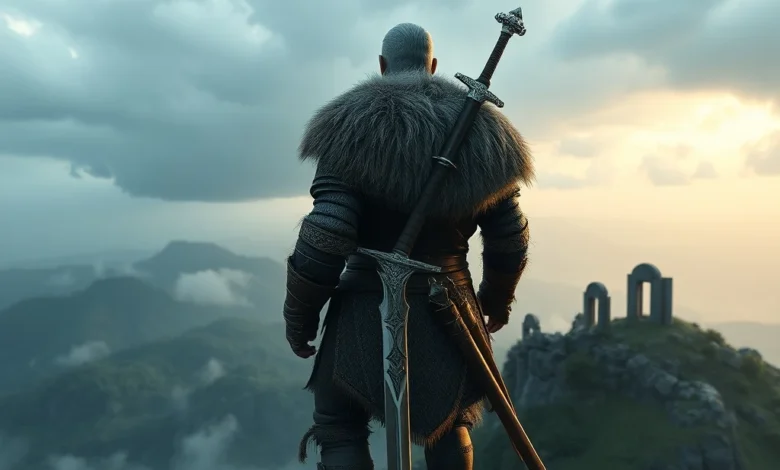
Geralt has three primary stances for his swords: Fast, Heavy, and Quen. The Fast stance is quick but deals less damage, making it ideal for smaller enemies or when you need to dodge quickly. The Heavy stance is slow but knocks enemies back and deals significant damage, useful for breaking guard or staggering large foes. The Quen sign is a shield that absorbs a hit, which is crucial for surviving sudden attacks. Balancing these stances is the key to fluid combat.
- Fast Stance: Best for small groups and dodging.
- Heavy Stance: Best for breaking enemy defenses.
- Signs: Use Quen for defense and Igni for damage.
- Bombs: Essential for crowd control.
🧪 Alchemy and Preparation
One of the most critical aspects of playing as a witcher is preparation. You cannot rely solely on your skills during a fight; you need potions, oils, and bombs. Potions grant temporary buffs like increased damage or health regeneration, but they come with side effects. You must manage your toxicity levels carefully to avoid dying to poison. Oils applied to your blade increase damage against specific monster types, making them mandatory for difficult contracts.
Creating these consumables requires access to an alchemy table. It is recommended to craft potions before entering dangerous areas. The game economy also plays a role here, as some ingredients are rare. Investing in the Brewing skill tree early allows you to reduce toxicity and increase potion potency, which is vital for higher difficulties. Never enter a boss fight without the appropriate oil and a stocked inventory of health potions.
📜 Deep Dive into Story and Lore
The narrative of The Witcher 3 is widely regarded as one of the finest in gaming history. It is not just about killing monsters; it is about navigating a complex political landscape filled with moral ambiguity. Your choices as the player have consequences that ripple through the entire story. These decisions can determine the fate of entire kingdoms and the survival of key characters. The branching narrative ensures that no two playthroughs are identical.
Exploring the world is also a form of storytelling. Side quests often contain more depth and emotional weight than the main story. Contracts given by hunters’ guilds reveal the grim reality of the monster-infested world. Reading the lore books scattered throughout the world provides context for the history of the Continent. Paying attention to these details helps players understand the motivations of the characters they meet along the way.
🗺️ World Building and Exploration
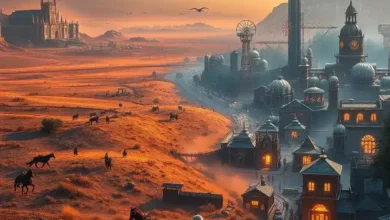
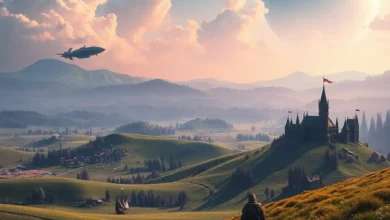
The map of The Witcher 3 is vast and interconnected. From the swamps of Velen to the snowy peaks of Skellige, each region has a distinct visual identity and set of challenges. Fast travel is available but comes with a cost in terms of in-game currency or time. Exploring on foot or by horse allows you to discover hidden caches and treasures that are missed by rushing between points. The world is dense with quests, ensuring there is rarely a dull moment.
- Hidden Treasures: Check everywhere for loot.
- Fast Travel Towers: Unlock them to save time.
- Side Quests: Never skip a dialogue option.
- Maps: Complete map sections for experience.
🎨 Visual Excellence and Next-Gen Updates
Visually, the game has been updated for modern hardware with the Next-Gen edition. This update includes improved lighting, texture quality, and ray tracing support for PC and current-generation consoles. The water physics have been overhauled to look more realistic, and the weather effects are more dynamic. Character models are sharper, and the facial animations convey emotion much better than the original release.
Audio design is also a highlight. The soundtrack composed by Marcin Przybyłowicz and others is iconic, adapting dynamically to the situation. Voice acting is top-tier, bringing depth to characters like Yennefer, Triss, and Dijkstra. Hearing the dialogue in full quality significantly enhances immersion. The sound of the wind, the clashing of steel, and the ambient noises of the world contribute to the atmosphere.


🖥️ Graphics Settings Optimization
For those playing on PC, the graphics settings offer granular control. To achieve the best visual fidelity, enabling Ray Tracing is recommended if your hardware supports it. However, this comes with a performance cost. If you are targeting higher frame rates, you may need to lower shadow quality or ambient occlusion. The game is well-optimized, and most modern mid-range hardware can run it smoothly at high settings.
- Ray Tracing: High visual quality impact.
- Texture Quality: High impact on VRAM usage.
- Shadows: Moderate impact on performance.
- Post-Processing: Affects overall image clarity.
💻 Performance and Technical Analysis
Running The Witcher 3 on various hardware tiers requires specific considerations. On PC, the game is generally stable, but some users may experience stuttering if their storage is fragmented or if the game is installed on a slow HDD. Installing the game on an SSD is highly recommended to reduce loading times. The Next-Gen update improved stability significantly compared to the original release, but bugs can still occur.
Console players benefit from the dedicated updates as well. The game runs in 4K on high-end consoles with dynamic resolution scaling. Performance mode is available on some platforms, prioritizing frame rate over resolution. It is important to check the specific settings for your console model to ensure the best experience. Network connectivity is not required for the single-player experience, making it accessible worldwide.
🔧 Optimization Tips for All Platforms
To ensure smooth gameplay, keep your drivers updated. For PC players, enabling VSync can prevent screen tearing, though it may add input lag. If you experience crashes, verify the integrity of the game files. For mobile or cloud streaming versions, a stable internet connection is crucial. Adjusting the resolution scale can help on lower-end devices without sacrificing too much visual quality.
- Update Drivers: Ensure GPU drivers are current.
- Verify Files: Fix corrupted data automatically.
- Adjust Resolution: Scale for performance.
- Closed Background Apps: Free up RAM.
🎲 Gwent Card Game Mechanics
Gwent is a minigame within The Witcher 3 that is often considered a game in itself. It is a card game played against various NPCs and players. Winning matches grants you in-game currency and valuable cards. The strategy involves managing your “melee” and “siege” cards effectively. Losing a round does not mean losing the game; you have two lives per match.
Collecting all the cards is a significant part of the completionist experience. You can find cards in shops, from merchants, or as rewards for quests. Hoarding cards early in the game is often a good strategy, as some cards are sold by specific vendors who may not restock. Playing Gwent can be a relaxing break from the intense combat of the main game.
🃏 Gwent Strategy Guide
Mastering Gwent requires understanding the deck composition. You should balance your deck with high-point cards and low-point cards. The “Weather” cards are particularly powerful as they can disable enemy units. Always save your best cards for the final round of the match. Avoid playing all your cards in the first round unless you are certain of victory.
- Deck Balance: Mix high and low point cards.
- Weather Cards: Use to disable enemies.
- Risk Management: Save cards for round three.
- Vendor Hunting: Buy all cards early.
✅ Advantages and Disadvantages
Understanding the strengths and weaknesses of the game helps set expectations. The Witcher 3 excels in narrative delivery and world-building. The combat is deep and rewarding for those who master it. However, some mechanics like inventory management can feel clunky without mods. The movement speed can also be slow for players used to faster action games.
🌟 Strengths
The primary strength lies in the sheer volume of content. There are hundreds of hours of gameplay available. The writing quality is consistently high across both main quests and side stories. The world feels lived-in and reactive to your actions. These factors contribute to a high replay value.
- Narrative Depth: Excellent storylines.
- World Size: Massive map to explore.
- Character Development: Memorable cast.
- Gameplay Variety: Combat, Gwent, Hunting.
📉 Weaknesses
Despite its quality, the game has some flaws. The inventory management system can be restrictive. Some controls, particularly for mounting and dismounting, can feel slightly unresponsive. The game does not have a fast travel system that works everywhere without cost. These minor issues are outweighed by the positives but are worth noting.
- Inventory Limits: Can be restrictive.
- Movement: Sometimes feels sluggish.
- Fast Travel: Costs money or time.
- Difficulty: Can be punishing on higher levels.
🏁 Final Verdict and Conclusion
The Witcher 3 remains a masterpiece of the open-world genre. It sets a benchmark for narrative-driven RPGs that few other titles achieve. Whether you are looking for a deep story, challenging combat, or a beautiful world to explore, this game delivers. It is a title that respects the player’s time and intelligence. For fans of fantasy and role-playing games, this is an essential purchase.
By following the tips and tricks outlined in this guide, you can maximize your enjoyment of the game. Proper preparation, understanding the combat mechanics, and engaging with the world will lead to a more rewarding experience. The journey of Geralt of Rivia is one that few gamers will forget. If you have not started yet, now is the perfect time to begin your adventure.
❓ Frequently Asked Questions
- Does The Witcher 3 support controller input? Yes, the game supports a wide variety of controllers on PC and consoles, including PlayStation and Xbox controllers.
- What are the system requirements for PC? Minimum requirements are an Intel Core i5-2500K or AMD Phenom II X4-940 with 6GB RAM. Recommended are an Intel Core i7-3770 or AMD FX-8350 with 8GB RAM.
- Can I play Gwent offline? Yes, the Gwent card game within The Witcher 3 is fully playable offline.
- Is the game difficult for beginners? On the default difficulty, the game is accessible. However, higher difficulties like Death March require careful preparation and strategy.
- Does the game have multiplayer? No, The Witcher 3 is a single-player experience only.
- How long is the main story? The main story takes about 50 hours, but the full game with side quests can take over 100 hours.
- Can I save the game manually? Yes, you can save the game manually at any time outside of combat, and the game also auto-saves frequently.
- Are there downloadable content packs? Yes, the game has two major DLC expansions, Hearts of Stone and Blood and Wine, which add significant content.
- Does the game support 4K resolution? Yes, the Next-Gen update supports 4K resolution on supported platforms.
- Is voice acting available in multiple languages? Yes, the game includes voice acting in multiple languages, including English, French, German, and Polish.